Author: Eric Magers

  • Discovering Talents

    Many people struggle to find their talents. Coming into high school, society puts a lot of pressure on high school students to figure out their hobbies or future career path. Discovering one’s talent while going through many challenges that come with being a high school student is not easy. However, not finding one’s talent could lead to the loss of potential for life-changing possibilities. People must discover their talent!

    Image Credit by Karolina Grabowska

    First, talent is the abilities that one is born with, which lead to a satisfactory performance both in learning and in the execution of skills. For example, the talent to negotiate, invent or communicate. Although many people use talent and hobbies interchangeably, the two should not be misused (Discovering your talent n.d). There is a difference between possessing a skill and having the talent to perform that skill. A person with a talent for a profession can learn to execute that profession far more easily. Talent can also be associated with vocation.

    When one first goes into high school, they are often bombarded with questions such as; “What sports do you play?” and  “What clubs are you apart of?” All of these questions can be quite overwhelming for most students in grades 9 – 12. With the pressure from friends and family to start thinking about one’s future with the abundance of schoolwork to complete alongside it, many people lose themselves and lose their youth and the opportunity to discover their talents.

    Unfortunately, genuine talent identification is simply not a high priority in most of our schools today. In contrast, we are quick to identify weaknesses rather than strengths… “George is struggling with his writing.” “Mary can’t handle science.” (Dixon 2018) With this being stated,  many high school students focus more on their failures and what they “cannot” do rather than putting energy into their talents and passions. 

    Moreover, discovering one’s talent is not something that could be done overnight. For someone to be able to find their talents and passion, they dig deep and know who they are first. To discover a talent, one has to be open to trying new things. For example, one could be interested in playing the guitar but be too scared to try because they are too afraid to fail. If only they would believe in themselves, they could unleash their potential. 

    Image Credit by Andrea Piacquadio

    An individual’s talent could also be shaped by their characteristics; ie the set of values, beliefs, paradigms, physical and psychogenic characteristics, and the influence of the external environment (Discovering your talent n.d). Although talent has been said to be something one is born with, the discovery of it could be influenced by one’s belief. If an individual has limiting beliefs, they will not be able to go out of their comfort zone and discover their true potential. 

    Furthermore, discovering one’s talent is important. Schools could aid in students’ talent discovery by structuring some learning activities that give students particularly good opportunities to demonstrate their talent potential (How to identify and develop special talents n.d.). For example, schools should provide interactive activities that will aid in students’ talent discovery. Rather than always engaging in blind and repetitive learning, students need the opportunity to grow themselves.  Students need to be able to engage in activities that broaden their horizons. One should be allowed to showcase their talents no matter how big or small. 

    Written by: Aisha Makama

    August 14, 2022

  • LLCipher Summer Program Introduces Students to Cryptography

    Image Credit by Lakshya Jain

    Last week, the Massachusetts Institute of Technology (MIT) Lincoln Laboratory hosted a one-week program introducing high school students to cryptography, a technique for securing data. This free program was held in person at MIT Beaver Works flagship location for high-school students curious about mathematics or cyber security. The admissions process is competitive, and people from underrepresented groups are encouraged to apply.

    What do students do in this program?

    During the duration of the program, students learn about various topics relating to cryptography. On the first day, students are introduced to the history of cryptography and encryption and its modern applications. They learn about ciphers, perfect and semantic security,

    and different methods of encryption and decryption. They also understand the flaws of many encryption schemes and attempt to decipher ciphertexts without the secret key. Near the end of the program, students learn about digital signatures and certificates, the public key infrastructure, zero-knowledge proofs, and the blockchain. There are no prerequisites, but the course covers modular arithmetic, abstract algebra, number theory, group theory, and some statistics. This workshop provides a solid foundation for cryptography and familiarizes students with new topics.

    My Experience in the Program

    I was fortunate enough to attend this program and thoroughly enjoyed it. The class consisted of only 23 students from diverse backgrounds and was taught by Lincoln Laboratory staff.  The instructors, who acquired at least a Master’s or PhD degree, rotated daily to teach topics they specialized in. It was an eye-opening experience and forced me to think outside the box. Unlike a conventional classroom, the students were engaged, and it was very fast-paced and challenging. It was mentally exhausting, but there were frequent breaks. All food and classroom supplies were also provided.

    I also learned a lot about the MIT campus and frequently traveled through Boston’s subway system. After this program, I knew I belonged in a competitive and diverse environment and wanted to study at a university like MIT. I also realized that I was interested in the field of cybersecurity and computer science and wanted to study STEM in college. On the last day of the program, we met with an MIT admissions officer who addressed questions regarding MIT campus living and the college application process.

    How to Apply?

    The selection process for LLCipher is very competitive because they only accept a small number of students. I applied last year and was waitlisted, but this year I was admitted. LLCipher applications usually open around early February and the deadline is at the end of April.

    You can access the application portal via the following link: https://mit-llc.smapply.io

    The online application requires personal information, transcripts, test scores, teacher recommendation letters, and a small essay. More information and requirements regarding this program can be found on the website: https://www.ll.mit.edu/outreach/llcipher. MIT and the Lincoln Laboratory also offer many other free and/or paid summer programs, which can be found on their respective websites: https://mitadmissions.org/apply/prepare/summer/ and https://www.ll.mit.edu/outreach.

    Written by Lakshya Jain

    August 21, 2022

  • Best STEM Middle Grade Books

    When studying STEM, children often tend to read lots of non-fiction books. However, there are plenty of fun fiction books that can be used to gain a child’s attention and provide them with the STEM knowledge that they need. Here are some STEM-related fiction books teachers can use for children in grades 3-5!

    Clues to the Universe

    Clues to the Universe tells the story of Rosalind Ling Geraghty who loves watching NASA launches and building rockets with her father. Unfortunately, her father passes away and Ro is left with an unfinished model rocket they had been working on. 

    Ro finds an unlikely friend in Benjamin Burns, who partners up with Ro in order to get a good grade on a science project. Ro finds out that Benji’s father left when he was little and Ro insists on helping to reunite the father and son. 

    The story switches between the perspectives of both Ro and Benji, so you get a good balance of Ro’s love for STEM and Benji’s artistic side. The plot showcases family struggles while emphasizing the strength of support and friendship.

    Solving for M

    Solving for M follows a girl named Mika who is just entering Middle School. She is forced to make new friends after her best friend is put into a separate group due to the school’s new pod system.

    Mika struggles with adapting to the changes in her life while also deeply struggling with her new math class. Her math teacher, Mr. Vann, assigns math journals that help her solve math problems in class and additional problems in her personal life.

    The book uses math illustrations and includes Mr. Vann’s math lessons, which are easy to follow along.

    The Unteachables

    The title of the book refers to a group of students that are considered to be unteachable, thus, called The Unteachables. This group is full of misfits that the school finds academically hopeless. The group includes Kiana, Parker, Aldo, Elaine, and Rahim. 

    The new schoolteacher, Mr. Zachary Kermit, is assigned to teach The Unteachables. Throughout the book, Mr. Kermit learns that this group of children are not unteachable at all. 

    The children work on an automobile, which brings in STEM concepts, while also learning about the effects support and encouragement can have on a child’s motivation to learn.

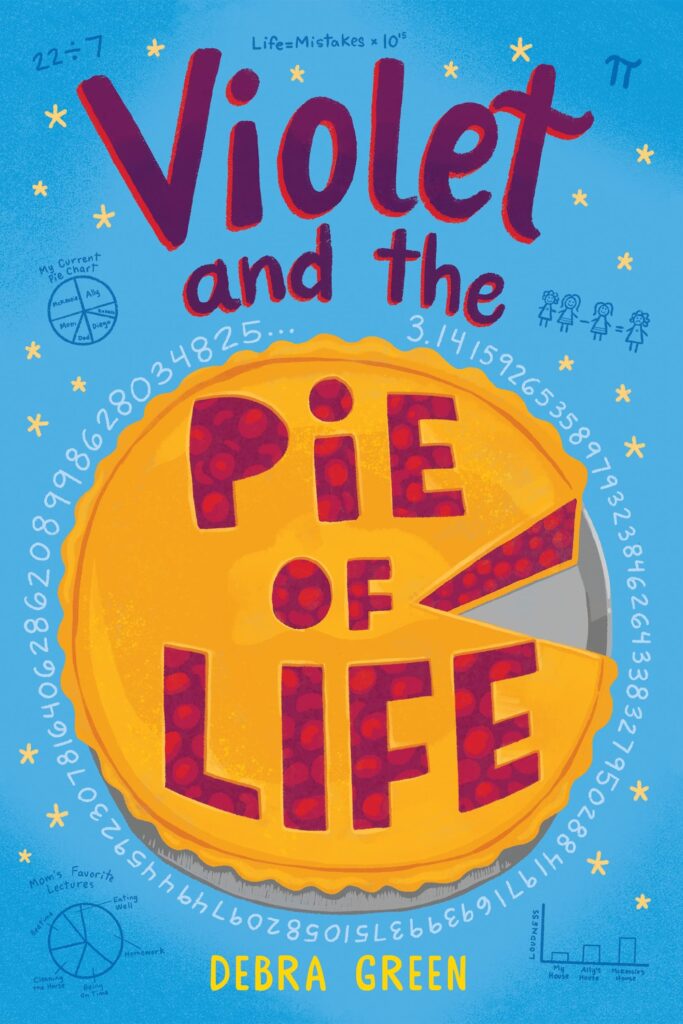
    Violet and the Pie of Life

    Violet is the main character in Violet and the Pie of Life and she loves math. Violet’s parents separate and she gets into a fight with her best friend. Violet wishes solving the problems in her life were as easy as solving math problems. 

    The story begins with Violet hiding her math skills, but as the story progresses, she becomes an advanced math student. The author uses flow charts, pie charts, venn diagrams, and equations to illustrate Violet’s issues. 

    The story deals with some serious topics while also keeping things light and humorous. The voice of the story is very realistic in portraying a Middle School student’s perspective. It makes Violet more believable and relatable to other students who may read the book. 

    These are great books for children to grow their interest in science, math, engineering and technology. Books like these will develop skills in STEM literacy while still allowing for students to build an emotional connection to characters in a story. 

    Written by: Amanda Aber

    April 7, 2022

  • Ways to Motivate Students During Hot Summer Months

    Ways to Motivate Students During Hot Summer Months

    Image Credit by Zen Chung

    With summer just around the corner, people are planning trips or vacations to relieve themselves of school and workplace stress. Students are mostly ecstatic to have the two and a half months’ time to do the things they want. However, the pandemic has changed the way students are educated, as everything starts to go online. Some students thrive, yet some are unable to keep up with the sudden change. Teachers themselves are also struggling to adapt, as it is more challenging for them to connect with their fellow students. Therefore, summer break may be the right time to allow students to catch up with their fellow classmates. Here is a list of ways teachers can help students to stay focused and motivated during the hot summer months.

    1. Set Achievable Goals 

    Many teachers start off their summer sessions with a list of objectives to complete during the time period. However, those goals can become unrealistic and hard to keep track of. Students should be encouraged to use journals to record their daily activities or plans under proper guidelines (Roggeman, 2021). This allows students to explore their creative writing skills and keep themselves organized to meet the goals they have set for this summer. Teachers can then use these journal records to help set doable goals or to act as a way to track their students’ progress. Realistic goals set the tone for the expectations of the students and provide them with a clear vision of their end goals towards the end of summer. 

    Image Credit by Pixabay

    2. Have a Clear Learning Objective

    It can be extremely frustrating for students to have a vague objective or expectations (TeachThought Staff, 2022). Without a clear guide, students may experience conflicts and be less inclined to complete their learning goals. The lack of rules or expectations in place can also make it confusing for students, which can hold them back from achieving their academic goals. Clear instructions must be in place to help students navigate their assignments, as it enables them to set up their own routine to accomplish their given tasks. 

    3. Offer Feedbacks for Assignments

    By providing insightful feedback, it allows students to discover their strengths and weaknesses. Some students may appreciate the feedback, as it gives an explanation for their results and enables them to make adjustments, where it can help bring out their true potential (National University, 2021). Students may also be more willing to seek help from their teachers, which eliminates confusion and helps build relationships between teacher and student. This encourages open communication between the two parties and allows students to freely express their own thoughts or opinions. 

    4. Have Group Discussions or Meetings

    Humans are social creatures as we need a certain amount of social interactions to maintain our level of contentment. Many softwares like Zoom, Google Meet or FaceTime allow group interactions or private chats with the students (National University, 2021). With the pandemic that has been going on, softwares like Zoom, serve as a main source of communication between teachers and students. It also helps improve a person’s communication skills and confidence for their speech. Face to face interaction is the best way to build trust. Students will be more inclined to reach out in times of need, given that there is a quick and easy way to reach out to the teachers.

    5. Reward Students

    Giving recognition for the work the students have done inspires them to continue to strive for success (National University, 2021). Like working adults, who are motivated after receiving verbal or financial rewards from the supervisors, students too have similar mindsets where they appreciate positive acknowledgements of their hard work. It also creates a healthy environment for the students to learn and be actively involved within their lessons. 

    Of course, different students have different needs. This is where feedback from students serves as a guideline for teachers to plan their lessons. It provides the opportunity to create a good learning environment for all students to enjoy, where they can retain valuable experiences that help with their future career paths. With all those ideas listed above, are you ready to motivate students during this summer? 

    Written by: Ya Pey Hew

    June 21, 2022

  • A New World Outside Of Our World

    A New World Outside Of Our World

    Image Credits

    Have you ever wondered what the world outside of our planet looks like? Did you know that the size of the observable universe is 93 billion light-years in diameter, and that it is nowhere near close to the actual size of the entire universe (The Nine Planets)? Don’t you ever wish that you can witness this extraordinary phenomenon with your very own eyes?

    Recently, the European Space Agency’s Gaia space observatory managed to expand the map of the milky way, opening up rooms for new possibilities and exploration towards unknown territories. The Milky way itself is made of gas, stars and dust that spreads around 100,000 light years across (The Nine Planets, 2021). It is shaped as a flat disk and is thousands of light years thick. Despite the size of the galaxy, it is merely a very small portion of the universe, as billions of the same galaxy existed simultaneously. Besides that, the new Gaia data allows astronomers to locate more than 156,000 asteroids. This helps to discover the past or the formation of the solar system and to take precautionary measures should the asteroids pose a threat to our planet (Stahl, 2022).

    Image Credits

    A discovery made by NASA this year, using the Hubble Space Telescope, suggests that the universe itself is expanding at a faster rate than what astronomers had predicted. The rate of expansion is 73 kilometers per second per megaparsec instead of the anticipated 67.5 kilometers (Cost, 2022). However, the question still remains on whether the universe will ever stop expanding. The expansion of the universe is a confusing concept and it’s hard to imagine what the expansion looked like in the first place. To quickly summarize it, the current measurements state that the universe has a flat geometry, indicating that the universe is infinite. Try imagining a checkerboard with coins at each vertex of the board (Gleiser, 2017). The board represents the universe while the coins are the milky ways. When expanding, the squares and coins would grow equally and put a greater distance between the coins. This means that there is no center in the universe as everything can be considered as the center due to the way the universe expands (Gleiser, 2017).

    Furthermore, there are an endless amount of possibilities and discoveries outside of our planet just waiting for us to uncover. It may take a long time to explore the unknown, but the fact that there might be other higher life forms or habitable planets out there, fuels our desire to continue to explore the vast universe. Besides, you’ll never know what you will find on your next adventure!

    Written by: Ya Pey Hew

    June 13, 2022


  • The Role of the Basolateral Amygdala

    The Role of the Basolateral Amygdala

    Image Credits

    The basolateral amygdala is a part of the brain that has almost been only studied for its responses to fear and emotion. Recently, researchers have begun to study how the basolateral amygdala affects memory and behavior. A team of neuroscience researchers at the Sainsbury Wellcome Centre in UCL wanted to observe the activity of the basolateral amygdala during natural activities.

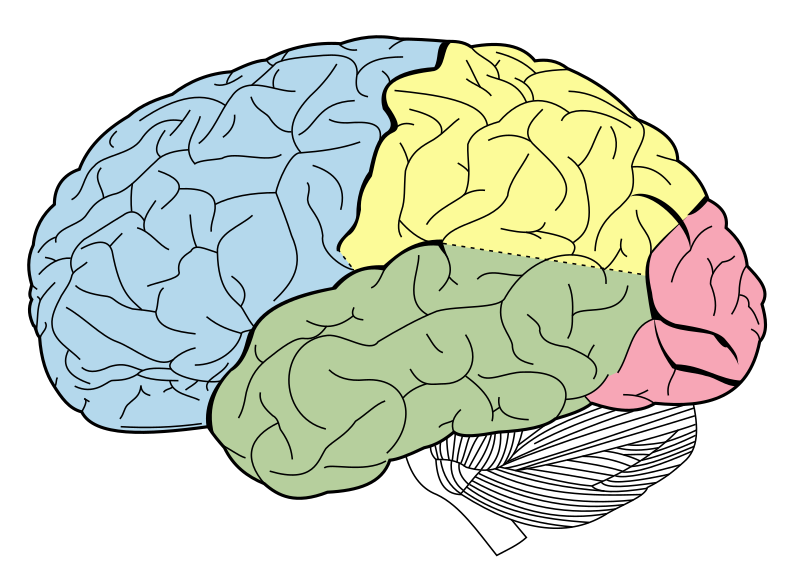
    The amygdala is an area of the brain located near the ear. With our current research, scientists know that it is mainly responsible for emotions and processing fearful and threatening stimuli. The amygdala develops over time, which is why adults usually have better control of their reactions to fear or threats. For example, young kids are not allowed to drive because they do not have a fully developed amygdala, which makes it more dangerous for them to be in situations like driving.

    The neuroscientists at UCL wanted to go beyond what is currently known and study how the basolateral amygdala behaves in a natural— not laboratory— setting. The researchers performed the experiment on rats and recorded their neurons using Neuropixels probes. It was important to the researchers that they used natural activities to stimulate the rats’ brains and not experiment induced activities, like tasks and mazes. They used natural stimuli that are around animals in their everyday lives, such as male and female rats, food smells and movement from a toy mouse.

    The scientists used their recordings of the BLA neurons to observe the neural activity of the rats when they responded to natural stimuli. Remarkably, an abundant 1/3 of the neuron cells showed a response and the response lasted throughout the whole event. Some of the cells even continued to stay activated for several minutes after the event ended. The researchers speculate that the after-response acts as a memory system telling the brain to store information and remember the event’s importance.

    Through the recordings, the researchers could also identify the flow of information between neurons and discover the different paths that were traveled in the brain according to different stimuli. They found that the information flowed from more tuned neurons to less tuned neurons.

    The neuroscience researchers were pleasantly surprised by the results of the study. Their findings indicate that the basolateral amygdala plays an important part when it comes to social and naturalistic activities. They were able to learn more about how the neuron cells in the amygdala behave and interact. The study also reveals more about the memory functions of the amygdala.

    These results give way to a lot more information that scientists need to research and learn more about. There are still 2/3 of the cells remaining that did not respond to the stimuli, and the researchers of the study want to know what they respond to and how they function. To fully understand the basolateral amygdala, we need to explore more of its memory functions and how its cells behave during different activities.

    Written By: Vivien Chen

    July 9, 2022