Author: Eric Magers

  • 6 Ways to Inspire High School Students to use STEM to Solve Real World Problems

    6 Ways to Inspire High School Students to use STEM to Solve Real World Problems


    A group of students sitting in a classroom during lecture.
    Photo courtesy of Pixabay

    As a high school teacher, you know how important it is to inspire your students to use their STEM skills to solve real world problems. By engaging your students in hands-on learning and problem solving, you not only help them develop their skills, but also encourage their curiosity and interest in science, technology, engineering and math. Here are 6 ways to inspire high school students to use STEM to solve real world problems:

    1. Project-based learning

    By assigning real-world problems or challenges as the focus of a project, students can use their STEM skills to come up with creative solutions. This approach not only allows students to apply their knowledge, but also encourages critical thinking and problem-solving skills. Here is a NSTEM resource to add project-based learning into your classroom.

    2. Guest speakers

    Inviting experts in various STEM fields to speak to your students can provide inspiration and real-world examples of how STEM skills are used in the workforce. Here is a NSTEM resource to add guest speakers into your classroom.

    3. Field trips

    Visiting a local business or organization that uses STEM skills can provide valuable insights into how these skills are applied in the real world. Each state has a number of land trusts and conservation organizations that offer outdoor exploration and field trips. NSTEM’s resource database is searchable by state. The Kessler Outdoor Classroom, a NSTEM resource, is one example of these vast resources.

    4. Internships or shadowing opportunities

    Giving students the opportunity to work with professionals in a STEM field can provide hands-on experience and inspire them to pursue careers in these fields. Here is a NSTEM resource to add internships into your classroom.

    5. Community service projects

    By collaborating with local organizations and using STEM skills to address community problems, students can make a tangible impact while also learning valuable skills. Here is a NSTEM resource to add community service into your classroom.

    6. Competitions

    Participating in science or engineering competitions can provide students with a sense of accomplishment and encourage them to continue developing their skills. Here is a NSTEM resource to add competitions into your classroom. 


    By incorporating these 6 ways to inspire high school students to use STEM to solve real world problems, you can engage your students in hands-on learning and encourage their curiosity and interest in STEM fields. By providing opportunities for hands-on experience, collaboration, and problem-solving, you can help your students develop their skills and inspire them to pursue careers in these fields. 

    By Lakshya Jain


    Do you want more resources on the topic of STEM education? NSTEM’s vast resources database provides thousands of STEM resources that are searchable by category, school level and state. This comprehensive library includes info on enrichment activities, curricula, internships, scholarships and more. Check out a free sampling here. Or get an NSTEM membership today to unlock the complete list.

    Project-based learning enrichment provides high school students with college and career readiness. It gives them real world relevance, transforming students into collaborators and imaginative problem solvers. They will gain the upper hand in a global landscape, stemming from enhanced confidence and grit. NSTEM provides these young STEM enthusiasts with a close community of like-minded fellow students and educators. To start your high school chapter of the National STEM Honor Society, click here.


  • 3 Easy Composting Projects for K-2 Students

    3 Easy Composting Projects for K-2 Students


    Two hands holding soil, which are the effects of composting. There is green grass in the background
    Photo courtesy of Pixabay

    For K-2 kids, nothing is more fun than digging in the dirt. So why not turn a messy playtime activity into a fun lesson on sustainability? 

    A composting experiment is a great tool for teaching children ways to reduce the amount of waste sent to landfills. They’ll be amazed to find out that our leftover food will magically transform into soil! Best of all, these enriching experiences instill lifelong sustainable practices in young children right from the start. With a bit of help from parents or teachers, the following composting projects for K-2 students can help kickstart the process.


    1. Build a soilarium and watch the soil grow

    Two jars displaying various composting materials, along with soil.
    Photo courtesy of Tom’s of Maine

    Think of a soilarium as a mini solarium, but instead of a large glass sunroom, you’re using a small see-through container. A mason jar or 2-liter soda bottle will do the trick. Follow these quick and easy steps from Tom’s of Maine to create one. Every two weeks, mark a line to show the “new” top as nature does her work and the contents settle. Be sure to label it with the date, so students can watch the progress of their microbes. Before their eyes, the organic matter will turn into a nutrient-rich soil that in about 12 weeks will be ready for a springtime garden. 


    2. Create a worm garden where kids do the composting

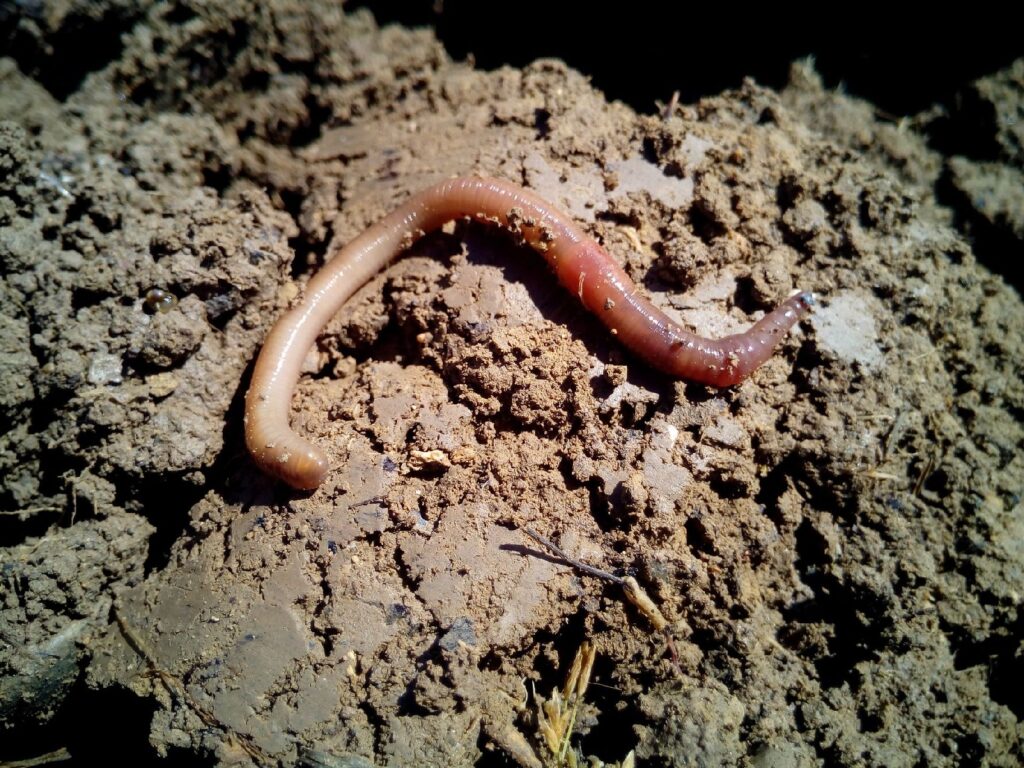
    An earthworm on the ground. There is mud underneath the earthworm.
    Photo courtesy of Pixabay

    Kids will be delighted when you tell them that worms can turn organic waste into a rich fertilizer, called worm castings—aka “worm poo.” Worm farming, or vermicomposting, is the process of raising worms to create a natural, nutrient-rich compost you can use in your garden or on plants at home. It’s a fun composting project to do with your K-2 students and requires minimal materials. You can purchase compost worms online or from an existing worm farm. Foam vegetable boxes or coolers work great. You need two boxes for this project.

    • Poke holes in bottom of first foam box, the “feeder box,” where the worms live and feed.
    • Half fill the feeder box with worm bedding: bucket of compost, shredded paper or straw.
    • If you use paper or straw, wet it first, then squeeze out excess water.
    •  Scatter a handful of worms on top of the worm bedding.
    • Soak the newspaper in water and lay it on top of the worm bedding to keep the worms’ home dark and moist.
    • Place the feeder box on top of the second box with no holes to collect the worm poo.
    • Place your worm farm in a shady spot in summer and a sunny spot in winter.

    Check out NSTEM resource, The Worm Ladies, for everything you need to know about worm farming.


    3. Start the composting lessons at home

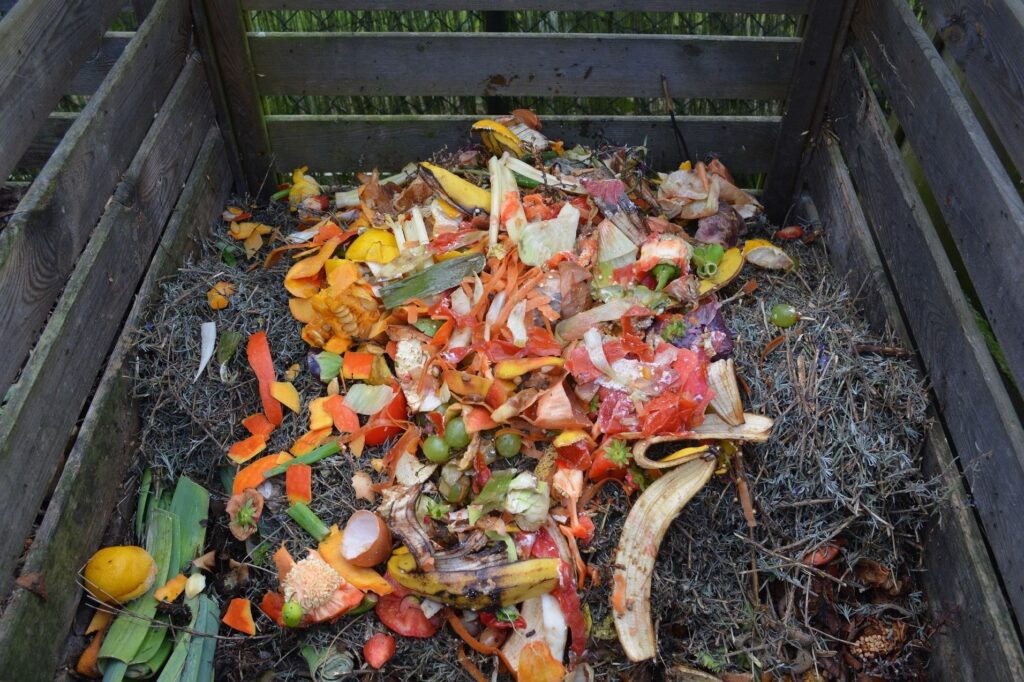
    A black bin with compost in it. Compost consists of various colorful food waste.
    Photo courtesy of Pixabay

    The easiest way to teach kids how to compost at home is to simply include it in your family routine. Ask your child to monitor the compost in your compost bin and regularly mix the contents while ensuring there is no excess water. Your child can add new organic waste periodically and check if the bottom layers are ready for use. Establish a schedule of chores for each member of the household to include composting tasks.

    Once your compost is ready to use, it’s time to put it into action. Have your child place the soil in a pail, bin or basket and spread it in the garden with a small trowel. If you don’t have space for garden beds, start a container garden. For city dwellers, a community garden is a great way to introduce gardening to your children. You can also find out if your local farm offers composting programs (for service hours and compost contributions) like the one seen here at NSTEM resource, Barrington Farm School.

    by Maureen Ryan Thorpe

    Do you want more resources on the topic of composting? NSTEM’s vast resources database provides thousands of STEM resources that are searchable by category, school level and state. This comprehensive library includes info on enrichment activities, curricula, internships, scholarships and more. Check out a free sampling here. Or get an NSTEM membership today to unlock the complete list. 

    K-2 is where it all starts with STEM Education. The National STEM Honor Society focuses on “From K to Career, NSTEM from the Start!” To start your K-2 Chapter of the National STEM Honor Society, click here.

  • Best Upcoming Educational Conferences for Educators

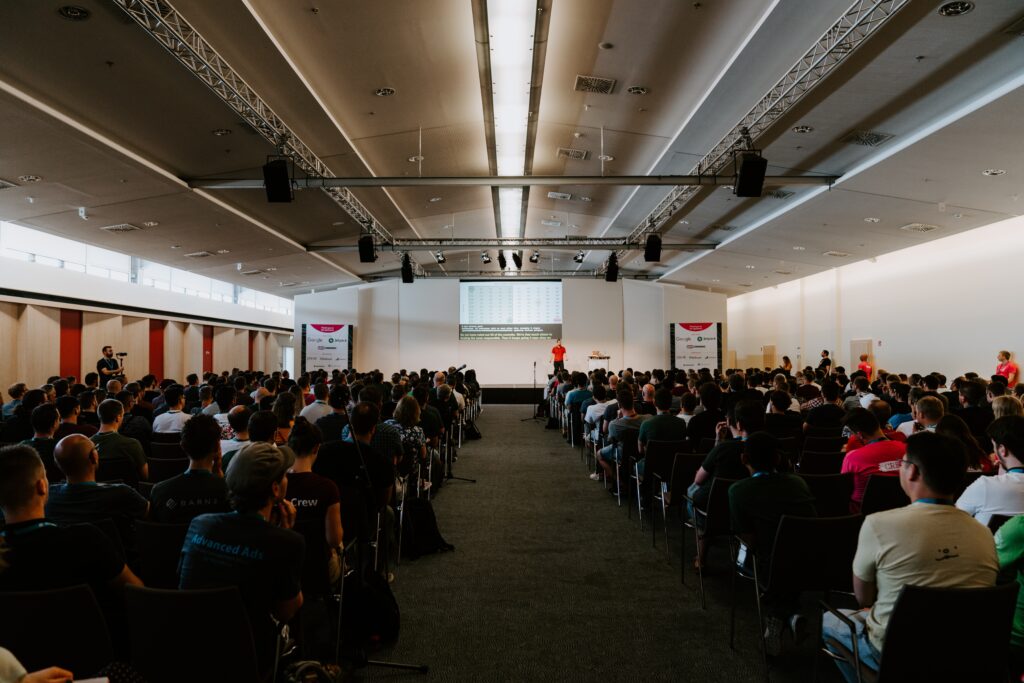
    Image Credit by Claudio Schwartz

    Educational Conferences, a dime of a dozen?

    As a reader, the word conference may stir some intriguing ideas; mass gatherings, monotonous lectures, and a futile way to spend time. Well, educational conferences are the epitome of the common expression, don’t judge a book by its cover. 

    Let’s take a look at educational conferences from a new perspective. Are you interested in seeking new, exciting, and appealing opportunities in teaching? Or perhaps meeting other like-minded individuals from the same field? Well, educational conferences are just the answer for you! These events allow you to diversify and expand your journey in teaching. Furthermore, they are a fun way to connect with others!

     The benefits of attending an Educational Conference

    There are a plethora of benefits to attending Educational Conferences. These events are a great way to meet other educators and teachers from different schools and states! Not only do they tackle mutual issues which are faced by a great extent of educators (including you), but also showcase recent innovations which can overall improve classroom experiences.  

    Furthermore, ever since the pandemic loomed over us, teaching has become extremely exhausting and taxing. Adapting to different methods of teaching, such as online Zoom sessions and Google Meets, was not only strenuous for students, but to educators too. In addition, the daily grind can often lead to an unceasing cycle of stress. However, it’s time to reinvigorate that passion for teaching. Remind yourself of why you love to teach, making a greater impact on tomorrow’s future. Educational conferences are a great way to learn and discuss aims for student success. Overall, these opportunities allow you to take a break from the classroom and allow you to grow as a teacher.  

    Here’s a list of upcoming educational conferences!

    Image Credit by The Climate Reality Project

    NCTM Annual Meeting and Exposition 

    An educational conference dedicated to math teachers! On this noteworthy occasion, thousands of math teachers from all around the globe join together to collaborate and discuss fresh ideas that you can implement into your classroom. It’s often trumpeted as the “Super Bowl Event of the Year”. There are an array of sessions to choose from, all comprising inspirational keynote speakers and intriguing seminars. 

    This riveting event takes place from September 28 to Oct 1, 2022. Seminars are presented in both virtual and in-person sessions. Offering flexibility according to your schedule. For admission fees, check out their website.

    NABSE 50th Annual Conference

    Established in the 1970s, the National Alliance of Black School Educators strives to improve Academic achievement for all children with a special focus on African Americans. It’s a tremendous platform to share, exchange experiences, and garner new perspectives. Allowing you to look at teaching and educational strategies from a new lens, perhaps unleashing a new sense of creativity along the way. 

    With over 200 exhibits, this event will take place from November 30 to December 4, 2022. The event costs from $350-$700. Sessions are also offered virtually and in person at National Harbor, Maryland.

    Reading, Literacy and Learning Conference 

    Hosted by the International Dyslexia Association (IDA), this conference explores issues and solutions for families and educators who help struggling readers, especially those with dyslexia. Not only is this event a hub of remarkable support and information, but it is also a great opportunity to connect with other inspirational mentors and individuals. Get a chance to enrich and deepen your knowledge of structured literacy, reading, and writing! 

    DyslexiaCon 22 has an extensive range of compelling topics lined up, an event you surely cannot miss out on! It is held in San Antonio, Texas from November 10 – 13, 2022.  Seminars are also virtually hosted too! 

    Leaning Forward 2022 Annual Conference

    A gateway to tap into the knowledge of industry experts, allowing you to acquire a vast array of information and tips in such a short time. The leaning Forward 2022 annual conference shares the same vision as all educators do, to provide exemplary experiences and learning opportunities so that every student excels. The conference presents state-of-the-art professional training and expertise, enabling teachers to tackle hurdles that may come in the way of students’ success. 

    Leaning Forward’s 53rd Annual Conference takes place from December 4 -7 2022 in Nashville, Tennessee. Can’t take the time out? Don’t worry just like the rest, virtual sessions are offered too. Join Leaning Forward to celebrate with this year’s theme “Reimagine”! 

    Conferences are a remarkable way to replenish your knowledge and be introduced to new concepts. Most importantly, it’s a great opportunity to meet new people and support your students’ learning.  

    Written by: Sachika Saxena

    July 28, 2022

  • Three Summer Programs for Teachers to Consider this Year

    Image Credit by JESHOOTS

    With Summer around the corner and schools approaching the end of another semester, both students and teachers are developing plans for the free time on hand. For teachers, there are many summer programs out there that allow teachers to have a productive summer. Some focus on technology and science, while others may include community engagement or classroom environment establishment. Here are a few lists of summer programs teachers can consider to have fun during the holidays, yet at the same time, retain valuable knowledge or experiences that can be utilized in classrooms. 

    NPS Teacher Ranger Teacher Program

    Running out of ideas or resources on lesson planning? Then this TRT program is the one for you. This program offers resources for teachers starting from K-12, where it helps teachers to integrate their teaching skills with Science, Technology, Engineering and Mathematics (STEM) (The National Parks Service, n.d.). The main goal of their program is to connect the National Park unit with teachers from underserved students in schools. Besides that, teachers will be spending time conducting place-based learning projects in their own fields of interest and developing personalized lesson plans for teachers to utilize in their classrooms. They will also be exposed to various works conducted by employees from different career paths in the National Park unit. Teachers will be able to gain new knowledge or insights towards their teaching skills, enabling them to create an inclusive learning environment that allows students to express themselves and encourage personal developments. 

    Physics in and Through Cosmology Workshop

    Of course, not everyone has the time or effort for in-person programs. If that’s the case, then this remote opportunity might just be the right solution to your problems. This program is targeted towards physics teachers or students interested in science, technology, engineering and mathematics (QuarkNet Workshop, n.d.). Both parties will work together in challenging research related to physics or cosmology. Besides that, this program also aims to create a learning community that emphasizes diversity, equity and inclusion for everyone who participated in this workshop. Another benefit is that this program is completely free of charge yet it provides a unique opportunity to interact with lab scientists, where it allows teachers and students to gain different perspectives in their own fields of interest.

    Image Credit by Max Fischer

    San Francisco’s Exploratorium (Summer Institute for Teachers)

    For teachers who are struggling to introduce inquiries in classrooms or are interested in connecting with a supportive teaching community, this summer institute for teachers from San Francisco might sound intriguing for you. This three week program engages teachers in a hands-on, question-based science exploration with fellow participants. This enables teachers to practise their own teaching methods and to discover new ways to improve their learning environments in classrooms. Other learning topics include natural phenomena related to human perception, physical science, life science, earth science, and our environment (Exploratorium, 2022). Not only are there no fees for middle and high school sections of the program, but participants can receive a $2500 allowance (Exploratorium, 2022). They are also eligible to attend alumni institutes or workshops for the rest of their teaching career. 

    To sum it up, there are many workshops or programs that are made available for teachers during the summer. Teachers should decide whether or not to attend a summer program based on their own availability and interest, not on obligations. These options above are merely suggestions for personal reference, therefore, it is important for interested participants to conduct their own research and choose the right program to suit different needs. The most important thing to remember is that being involved in something you like can make a huge difference in terms of experience and the levels of involvement. Don’t let this unique opportunity go to waste and don’t forget to have fun learning along the way!

    Written by: Ya Pey Hew

    June 18, 2022

  • The Future of Microchips in America

    Microchips have been used in the technology that we use on a daily basis for decades now. From your old game consoles to the most high-end desktop setups, microchips are the backbone or the motherboards of our technology. You might not know that here in the US; we rely heavily on chip manufacturers in China and other countries to provide us with chips. Becoming this reliant on a necessity like chips can cause an array of issues for American consumers. Hence the prolonged “chip” shortage that we have been dealing with since the start of the pandemic. In a society where we are only becoming more contingent on technology and the innovation of technology, chips are what we need to invest in now to make our future that much more progressive.

    Image Credit by Diego Torres Silvestre

    On Thursday, July 28th, The House of Representatives passed the legislation on a 243-187 vote to pass the CHIPS Act, which will provide $280 billion in subsidies to domestic semiconductor manufacturers. It also invests billions in science and technology innovation in a bid to strengthen the United States’ competitiveness and self-reliance in what is seen as a keystone industry for economic and national security. 

    You might be asking yourself what precisely a microchip is. How does such a small piece of technology play such a drastic role in my day-to-day life? Well, the answer may surprise you. A microchip is a set of electronic currents on a small flat piece of silicon. They can have either two functions to them, memory or logic.

    Similarly, your laptop or smartphone has storage or RAM (random access memory). Storage is just one function of a microchip. The fun begins when microchips are used for logic, such as artificial intelligence and virtual reality. As our desire for technological advances increases, so will our demand for these microchips. Since the start of the pandemic, there has been a short supply of chips produced to offset the neglected demand that was caused by the pandemic. Now that we are meticulously arriving at sustainable times, we need these chips now more than ever. We need to create new vehicles and more innovative technology to make our lives easier, not just for us but for our future generations.  

    “It is a major step forward for our economic security, national security, supply chains, and, as I said, America’s future,” New York Senator Chuck Schumer said Tuesday afternoon.

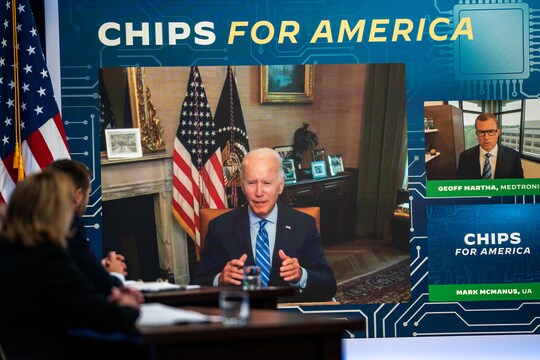
    Image Credit by The Washington Post

    White House press secretary Karine Jean – Pierre stated at a white house press briefing, “CHIPS ACT is intended to bolster American competitiveness and our own domestic supply chain security. “Ensure chip incentives generate more semiconductor investment here in the US, not China.” One controversial aspect of this ACT is that the US wants to set strict guardrails (policies that will help slow the growth of investment in China) to encourage domestic growth within the US and not be so reliant on oversea factories to manufacture chips for US consumers. The CHIPS ACT does “have bipartisan support in congress,” we can expect a bill to be on the president’s desk as soon as early August. The future of technology and innovation in the US is at stake with this ACT. An investment as significant as this can make a drastic difference in the way our future generations will perceive technology, and the technological advances that this ACT will bring will be extensive. 

    Written by: Baalaaj Harris

    July 30, 2022

  • A Deeper Look at the Unknown

    Image Credit by Pixabay

    For years, scientists have been trying to explore outside of our beloved planet, to seek out new possibilities or other unknown life forms that exist. People were curious about what our stars and galaxies looked like. As we continue to further advance our technology, we are getting closer and closer into achieving our goals of exploration. On July 7, 2022, the white house released the first ever coloured picture of the universe using the James Webb Space Telescope. That picture was also known as the highest-resolution infrared image that was ever taken of the universe (Walsh, 2022). The name of the area where the photo was taken, was called SMACS 0723 cluster, which existed over 4.6 billion years ago. For now, the James Webb Telescope is the largest and most advanced telescope made by NASA (Walsh, 2022). 

    Now you might be wondering, how did scientists take a picture of the galaxy? What are the basic functions of a telescope that are required to capture this extraordinary image? Powerful telescopes like Hubble, Chandra, and James Webb contain an infrared vision that allows astronomers to bypass dust and allow scientists to turn the infrared light into the images we see (Morrow, 2016). This allowed astronomers to explore new territories we are unable to reach due to limited levels of technology available. It is important as it allows scientists to test theories and provide insights towards new discoveries. For instance, pictures of a black hole enables scientists to calculate its mass by observing nearby areas, which provide opportunities to make accurate assumptions. Besides that, it also gave a deeper understanding of the structure of the black hole and its behavior (Lutz, 2019). 

    Image Credit by Pixabay

    Astrophotography is complex and involves using specialized cameras, like a DSLR camera. Of course, before you take a picture of the milky way, you need to know where to find one. It is recommended that you go to a place free of light pollution between May and August for the best results (Little, 2021). Free apps like Sky Guide and Sky View Lite can be used to help with locating the milky way. Nowadays, astrophotography is becoming increasingly popular due to the influence of new astronomy pictures released by NASA and the lockdown experienced in 2020. The creation of new and sophisticated camera models allow professionals or amateurs to capture breathtaking images of the universe. This particular hobby also allows room for creativity and creates personalized images to record special events or memories. 

    To summarize, we see many extraordinary things throughout our lives, both within and outside of our home planet. Photos and images serve as evidence that these things existed once and were never lost to time. Besides, people should be encouraged to explore their creative side that helps inspire curiosity of the outside world. You never know what you will find on your next discovery!

    Written by: Ya Pey Hew

    June 11, 2022