
Author: Eric Magers

  • New Research Uncovers Link Between Social Media and Dissociation

    New Research Uncovers Link Between Social Media and Dissociation

    Image Credit

    On May 3rd, 2022, researchers from the University of Washington revealed results from a study entitled, “I Don’t Even Remember What I Read”: How Design Influences Dissociation on Social Media.

    The focus of the study was normative dissociation. Normative dissociation is daydreaming or having your mind “wander” so much that you lose track of time and may even have a gap in your memory. People can experience normative dissociation in their daily lives while doing common activities like driving cars, watching movies, playing video games, listening to music, reading, showering, or scrolling through social media.

    The research focused on normative dissociation specific to scrolling through social media. Social media users often report things like losing track of time and not remembering what they have read, which are two common symptoms of normative dissociation. “Social media platforms are designed to keep people scrolling,” said lead author Amanda Baughan, a University of Washington doctoral student in the Paul G. Allen School of Computer Science & Engineering. “When we are in a dissociative state, we have a diminished sense of agency, which makes us more vulnerable to those designs and we lose track of time.”

    The research team set out to (1) discover if people dissociate while using social media and (2) determine how social media companies could modify the design of their platforms to reduce the dissociation of users.

    The research team decided to focus on the social platform Twitter. The team created an app called Chirp that would interact with the users while they scrolled through Twitter feeds. In total, 51 participants from the United States enrolled in the study by installing Chirp on their phones and 43 participants completed the four-week study.

    While study participants scrolled through Twitter, the Chirp app would activate a popup survey every fifteen minutes, asking the user if they agree with the statement: “I am currently using Chirp without really paying attention to what I am doing”. In addition, the Chirp app provided participants with custom lists, reading history labels, time limit dialogs, and usage statistics to help participants consciously track their social media usage.

    At the completion of the study, 42% of participants agreed or strongly agreed with the popup survey statement. Also, according to the study findings, “Many users said that the lists and reading history labels helped them to reduce their mindless consumption of Chirp.” (Baughan, 2022, p. 8)

    The findings from the study suggest that time-limit dialogs and usage stats are great tools for reducing normative dissociation in social media as they give the user a sense of time spent scrolling. In the future, it will be up to social media platforms to implement those features that help users.

    Citations

    Baughan, A., Zhang, M., Rao, R., Lukof, K., Schaadhardt, A., Butler, L., & Hiniker, A. (2022, April 28). “I don’t even remember what I read”: How design influences dissociation … Retrieved May 30, 2022, from https://www.amandabaughan.com/pubs/Dissociation.pdf

    University of Washington. (2022, May 23). ‘I don’t even remember what I read’: People enter a ‘dissociative state’ when using social media. ScienceDaily. Retrieved May 30, 2022, from www.sciencedaily.com/releases/2022/05/220523135018.htm

    Written by: Ivy Schiro

    June 2, 2022
  • World Environment Day 2022

    World Environment Day 2022

    Image Credit

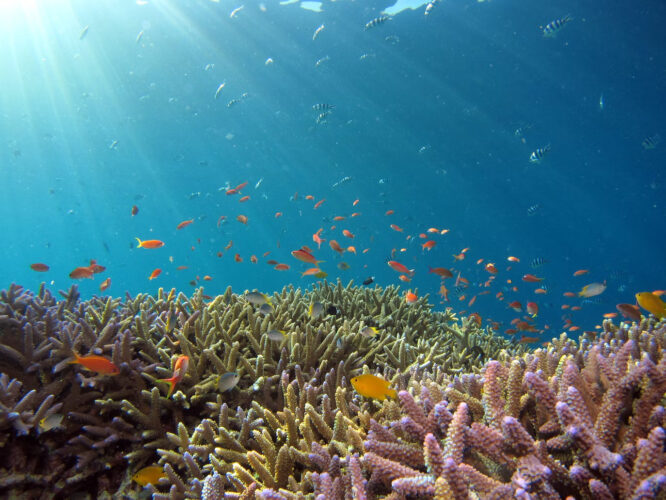
    Get ready! June 5, 2022 is World Environment Day! It is a day dedicated to spreading worldwide awareness and encouraging action to protect our environment. Environmental organizations and people all over the world will be celebrating the day by hosting events that address the environmental issues facing our planet.

    World Environment Day has been held every June 5th since 1974 and is sponsored by the United Nations Environment Programme (UNEP). The UNEP’s mission is to deliver transformational change for people and nature by focusing on three planetary crises: (1) climate change, (2) nature and biodiversity loss, and (3) pollution and waste. The goal of this event is to raise awareness and get people motivated to take action to help heal our environment.

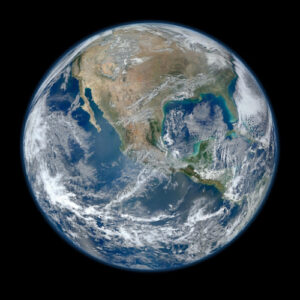
    Typically, World Environment Day has a new, unique theme each year that focuses on key environmental issues. The theme for 2022 is “Only One Earth,” which emphasizes living sustainably and working with nature instead of against it. The slogan “Only One Earth” was used in 1972 for the first United Nations Conference on the Human Environment, held in Stockholm Sweden. Fast-forward 50 years to today, Sweden will be hosting World Environment Day with the slogan “Only One Earth” again. The theme emphasizes the importance of swift action to save our planet. “Today as we look to a present and a future of heatwaves, droughts, floods, wildfires, pandemics, dirty air, and plastic-ridden oceans…action is more important than ever,” said UNEP Executive Director Inger Andersen. In honor of World Environment Day, here are some fun activities that you might like to try with your family or friends:

    • Create a family plan to heal the earth. Ask everyone who lives in your house to brainstorm ways to heal the environment. For example, save water by taking shorter showers; unplug appliances that are not being used; start using reusable shopping bags instead of plastic; make sure you are recycling all paper, plastic, aluminum, and glass responsibly; switch off lights when not needed.
    •  Participate in park or beach cleanups (or create your own!). You can participate in an organized cleanup in your area or make your own cleanup. Ensure you have bags or buckets to carry your trash and thick gloves for picking up any trash or cigarette butts that have not been discarded appropriately.
    •  Plant a tree! Why are trees so important to the environment? Trees absorb carbon dioxide and release oxygen back into the air; trees provide both homes and food for local wildlife, like birds, squirrels, and insects; trees filter dust from the air, which improves air quality; trees prevent flooding and soil erosion.
    • Consider clothing.  On average every year, over three million tons of used clothes are incinerated, and a staggering 10 million tons get sent to landfills. Get members of your household together and discuss ways you can limit clothing waste. For example, buying second-hand clothing rather than new; looking for new clothing made with “recycled” materials; donating your old clothing, or selling to a consignment store.


    Earth Numbers

    • 17.9 billion – the number of tons of CO2 emitted into the atmosphere globally this year
    • 311 billion – the number of tons of melted ice globally this year
    • 26.9 cm – the rise in sea levels in the world’s oceans since 1900
    • 6,306 ­­– the number of endangered species threatened with extinction in 2021
    • 28 – the percent of species in critical risk of extinction
    • 2.12 billion – the number of tons of waste dumped globally each year
    • 166 billion – the number of tons of hazardous waste produced globally this year

    Whether planting a tree or donating clothes, there are a number of ways to get involved in World Environment Day. And you don’t have to wait till the next World Environment Day to do your part in healing our planet. You can make choices everyday that lessen your environmental impact on our planet. Recycling, shopping locally, avoiding disposable plastics, etc. can help you lead a more sustainable life.

    Citations

    United Nations. (n.d.). Climate change – united nations sustainable development. United Nations. Retrieved June 2, 2022, from https://www.un.org/sustainabledevelopment/climate-change/

    Andersen, I. (n.d.). Inger Andersen’s message for World Environment Day 2022. UNEP. Retrieved June 2, 2022, from https://www.unep.org/news-and-stories/video/inger-andersens-message-world-environment-day-2022

    Five Decades in, World Environment Day continues to shape a global movement. UNEP. (n.d.). Retrieved June 2, 2022, from https://www.unep.org/news-and-stories/story/five-decades-world-environment-day-continues-shape-global-movement?fbclid=IwAR3Z93gRZ4H2wK1nvNz8FbCSxQs1ERG56yesRNbGp7KXcz3aS4B4fZBZAPQ

    World Environment Day activities for Kids. Persil. (n.d.). Retrieved June 2, 2022, from https://www.persil.com/uk/sustainability/sustainability-for-kids/world-environment-day-activities-for-kids.html

    More trees please; the importance of planting trees. Host. (2020, June 5). Retrieved June 2, 2022, from https://host-students.com/the-importance-of-planting-trees/

    What really happens to unwanted clothes? Green America. (n.d.). Retrieved June 2, 2022, from https://www.greenamerica.org/unraveling-fashion-industry/what-really-happens-unwanted-clothes

    Climate Change. The world counts. (n.d.). Retrieved June 2, 2022, from https://www.theworldcounts.com/challenges/climate-change

    Craig Kasnoff. (n.d.). Promoting the plight of endangered species and the efforts to save them. Endangered Earth. Retrieved June 2, 2022, from https://www.endangeredearth.com/

    Extinction of Species. The world counts. (n.d.). Retrieved June 2, 2022, from https://www.theworldcounts.com/challenges/extinction

    Tons of Waste Dumped. The world counts. (n.d.). Retrieved June 2, 2022, from https://www.theworldcounts.com/challenges/planet-earth/state-of-the-planet/world-waste-facts/storyToxic Exposure . The world counts. (n.d.). Retrieved June 2, 2022, from https://www.theworldcounts.com/challenges/toxic-exposures

    Written by Ivy Schiro

    June 6, 2022

  • Deposit Return Schemes Can Benefit the Environment

    Image Credit

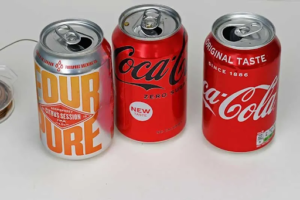
    Deposit return schemes: you buy your delicious beverage, drink it, and return the bottle to the store in exchange for some money! In addition to saving money and encouraging you to return to the store, these deposit return schemes can also help the environment.

    In many countries, deposit return schemes have been found to reduce litter rates and improve the quality of recycled materials. In Germany, they have a 98% return rate for drink containers. In Lithuania, their return rate rose from 34% to 92% two years after introducing a return scheme. So, why do some places still not have these schemes and how can we help implement them?

    The biggest obstacle is legislation. There are many steps to passing legislation for deposit return schemes. Along with lobbying and voting, officials need to make sure these programs will be effective and easy to use. There are four things to consider when implementing these schemes: performance, convenience, producer responsibility and system integrity.

    The EU is planning to implement deposit return systems in all countries by 2029. The UK, delayed by the pandemic, plans to launch their system in 2023.

    Deposit return schemes can benefit the economy and environment. Activists over the world are committed to using these systems to reduce plastic pollution and litter.

    Pictures:
    https://www.pillarboxblue.com/wp-content/uploads/2021/07/empty-tin-cans-wire-ht-s.jpg.webp

    Sources:
    Hailstone, J. (2022, May 18). Deposit return schemes are a win-win for the environment, so why isn’t everyone doing them? Forbes. Retrieved May 20, 2022, from https://www.forbes.com/sites/jamiehailstone/2022/05/16/deposit-return-schemes-are-a-win-win-for-the-environment-so-why-isnt-everyone-doing-them/?ss=sustainability&sh=807b8e76c4aa

    Written by: Vivien Chen

    May 21, 2022

  • Salamanders glide like skydivers

    Salamanders glide like skydivers

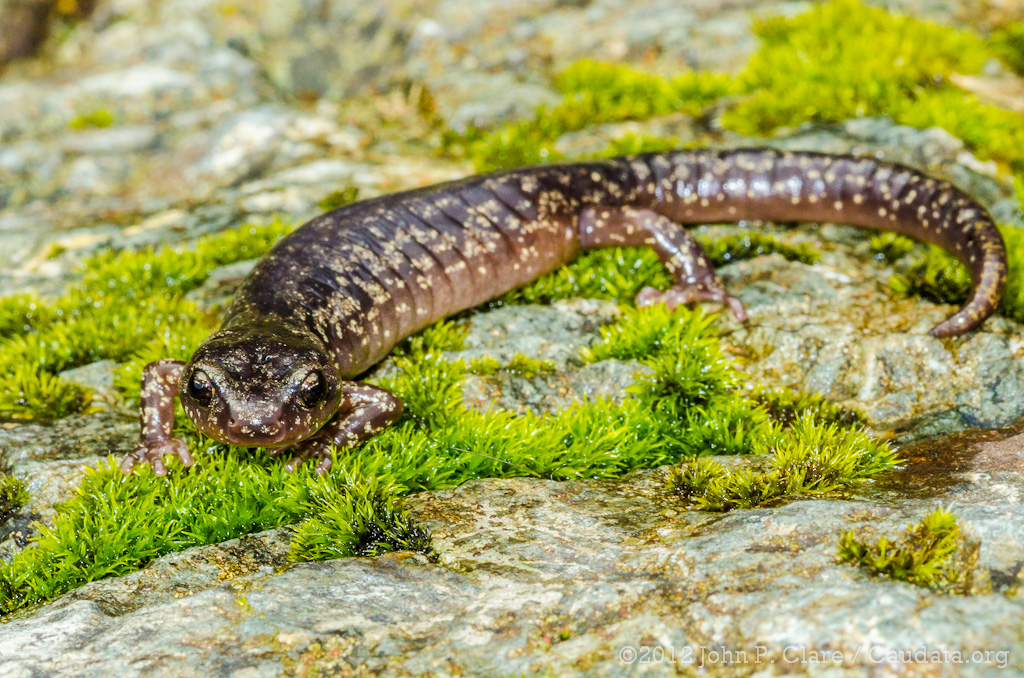
    In the forests of northwestern California, there lives a species of salamander called the “wandering” salamander. These tan, mottled salamanders have a special ability: they can control their falls by gliding like a skydiver. 

    These wandering salamanders climb up redwoods as high as 88 meters and live in the ferns that grow there. While most salamanders live in streams or bogs, wandering salamanders can spend their whole lives in the trees. They are able to leap out of the ferns and maintain the spread-out posture of a skydiver to glide and slow their fall. 

    This ability has many benefits in the wild. They can catch an accidental fall, save energy that would be used in climbing, escape predators, and easily find a new fern patch to live in. 

    Biologist Christian Brown and his colleagues recently published a research paper in May 2022 studying how these salamanders glide. Since they do not have wings or skin membranes for gliding, the salamanders stretch out their limbs and tail and constantly adjust their torso as they fall. They also jump from the trees at an angle, not straight down. This allows them to slow their descent speed by at least 10 percent, which is enough to avoid injury. 

    The gliding of wandering salamanders isn’t as conspicuous as other animals known for their gliding, such as flying snakes. This makes scientists wonder if there are other animals with similar gliding habits and how much more there is to uncover in the world of tree canopies.


    Sources: 

    Buehler, J. (2022, May 23). ‘Wandering’ salamanders glide like skydivers from the world’s tallest trees. Science News. Retrieved May 27, 2022, from https://www.sciencenews.org/article/wandering-salamanders-glide-trees 


    Wandering Salamander. California Herps. (n.d.). Retrieved May 27, 2022, from http://www.californiaherps.com/salamanders/pages/a.vagrans.html 


    Written by: Vivien Chen

    May 28, 2022

  • Astronomers find trove of massive black holes in dwarf galaxies

    Astronomers find trove of massive black holes in dwarf galaxies

           A team of researchers at the University of North Carolina at Chapel Hill discovered a hidden trove of massive black holes in dwarf galaxies. This trove of black holes had been previously overlooked, making this finding a key to our understanding of black holes in dwarf galaxies. 

           Black holes are typically detected when they are consuming gas and stardust, which makes them glow intensely. When they are not glowing, we are not able to detect them. 

           The problem is that black holes and newborn stars can emit a similar glow. Astronomers have a set of diagnostic tests that allows them to differentiate black holes and newborn stars. However, when the research team applied these tests to their data, they received mixed results. Two tests would indicate black holes, while the third test would indicate a star formation. 

           Research study coauthor Sheila Kannappan suspected that they might be undiscovered black holes in a dwarf galaxy. Coauthor Chris Richardson ran theoretical simulations with the mixed results and confirmed that the tests would match with a highly star-forming dwarf galaxy containing a growing massive black hole. 

    Source

           Mugdha Polimera, leading author of the study and Ph.D. student, set to work obtaining measurements, traditional and mixed message results, and surveys to test for black holes to confirm their work. She found that the new type of growing black holes were almost always in dwarf galaxies. 

           The researchers were elated with the results, which seemed almost too good. Their findings can lead to many new follow-up ideas and discoveries to help us understand black holes, including ones in our own Milky Way galaxy. 


    Sources:

           University of North Carolina at Chapel Hill. (2022, May 27). Astronomers discover hidden trove of massive black holes – “we all got nervous”. SciTechDaily. Retrieved May 30, 2022, from https://scitechdaily.com/astronomers-discover-hidden-trove-of-massive-black-holes-we-all-got-nervous/


    Written by: Vivien Chen
    May 30, 2022

  • Asian American and Pacific Islander Heritage Month

    Asian American and Pacific Islander Heritage Month

    The month of May is Asian American and Pacific Islander Heritage Month – a month for celebrating the history and contributions of the 22 million Asian Americans and 1.6 million Native Hawaiian and Pacific Islander Americans currently living in the United States. These groups are often overlooked and lack the visibility they deserve, especially when it comes to recognizing the achievements of those working in STEM fields. A study published in the Proceedings of the Royal Society B even found that less than three percent of scientists featured in the most commonly used biology textbooks were Asian, and none were Native Hawaiian or Pacific Islander (Royal Society). So this May, as we honor the contributions of Asian Americans, Native Hawaiians and Pacific Islanders, let’s take a look at some of the most influential scientists from these underrepresented groups.

    1. Min Chueh Chang

    Min Chueh Chang, a Chinese American biologist who specialized in reproductive biology, was known for his contributions to in vitro fertilization and the development of the first birth control pill. His work led him to receive numerous awards such as the Albert Lasker Basic Medical Research Award in 1954 and the Ortho Medal and Award in 1961. In 1990, he was elected to the National Academy of Sciences and passed away shortly after in 1991 (embryo.asu).

    Image Credits

    2. Kalpana Chawla

    The first Indian-born woman in space, Kalpana Chawla’s first flight into space occurred in 1997 aboard the Columbia Space Shuttle as a robotic arm operator, using her skills to deploy a satellite called SPARTAN 201, which was meant to study the outer layer of the sun. She passionately wanted young girls in India to have the opportunity of science education and, during her time at NASA, her secondary school participated in NASA’s Summer Space Experience Program, accepting two girls every year to study at the Foundation for International Space Education’s United Space School in Houston. She tragically lost her life in 2003 when the Columbia Space Shuttle disintegrated upon reentry into Earth’s atmosphere (space.com).

    3. Roseli Ocampo-Friedmann

    The work of Filipino-American microbiologist Roseli Ocampo-Friedmann led scientists to theorize that microorganisms could live in the extreme conditions of Mars. The theory stems from research she did in the 1970’s when she successfully grew samples of bacteria found within frozen rocks from Antarctica. In 1981, she received the National Science Foundation US Congressional Antarctic Service Medal (encyclopedia.com).

    4. Peter Tsai

    In 1991, a Taiwanese American material scientist named Peter Tsai created an electrocharged fiber that would end up saving countless lives. The fiber that Tsai created is used in the production of N95 face masks, which trap viruses and bacteria, and are used by medical professionals, first-responders, and people all across the world. During the COVID-19 pandemic, N95 masks became instrumental to stopping the spread of the virus (ge.usembassy).

    Image Credits

    5. Isabella Abbott

    Isabella Abbott, sometimes called “the First Lady of Limu,” was a Hawaiian marine botanist known for her research of edible seaweed, called “limu” in Hawaii. From 1960 to 1982, she worked at Stanford’s Hopkins Marine Station, quickly being promoted as a full professor in biology. Her work earned her the National Academy of Sciences’ Gilbert Morgan Smith medal in 1997, the highest award in marine botany.

    Recognizing the achievements and contributions of scientists from all different cultures and backgrounds is important to achieving equality and diversity in STEM fields. These examples of exceptional researchers and scientists are just a few in a much larger sea of Asian American, Native Hawaiian and Pacific Islander scientists who have left their mark on the world. So this month, take some time to discover more about the unsung heroes of scientific fields (news.stanford).

    Written by: Matthew Jenkins

    May 30, 2022