
Author: Eric Magers

  • Are Traditional Student Exams Obsolete?

    Are Traditional Student Exams Obsolete?

    Image Credit

    Most students are used to taking end-of-term exams. These exams are critical because they account for a large percentage of every student’s final course grade. However, end-of-term exams can be stressful for students because often, the students are trying to remember a year’s worth of learning. These exams usually have multiple-choice or written response questions with one correct answer. 

    For years, opponents of these tests have argued that end-of-term exams are not an accurate indicator of student knowledge; instead, they assess a student’s ability to memorize material for a short time. Also, opponents argue that some students do not test well because their nerves affect their ability to focus. Ultimately, the question is: are end-of-year exams fair? 

    What are Performance Tasks?

    In her blog, Replacing Exams with Performance Tests, Dr. Catlin Tucker suggests that performance tasks offer an exciting alternative to the traditional exam format. Unlike conventional exams, which ensure every student takes the same test, performance tasks allow students to choose a format they like. Performance tasks are a different assessment type that enables students to demonstrate their understanding and mastery of the material in a creative way.  

    Performance Task Examples 

    The following are performance task examples that teachers can use with students:

    • Presentations: Presentations can be executed individually or as a group. Students can present to their class using a whiteboard to write down key thoughts. Alternatively, presenters can use tools like PowerPoint, Google Slides, Prezi, Canva, etc., to add exciting visuals to their presentations.
    • Exhibits and Demos: Exhibits or demos are an exciting option for students. An exhibit enables the student to create a tactile display; alternatively, a demo will show how an item works. Exhibits and demos are incredibly cool for science and technology topics. In addition, exhibits and demos can be very interactive with the rest of the class.
    • Debates. A debate format allows students to present opposing views on a particular subject. A debate is an exciting format that also gives the students valuable experience in public speaking and forming arguments. 
    • Portfolios. A portfolio is a collection of the student’s best work. Portfolios are often a collection of artworks or writing samples. Students can present a portfolio of their best work from the school year. 
    • Audio Podcasts or Videos. Podcasts and videos can provide the students with a creative way to present their ideas in a limited-time format. Both podcasts and videos can be created individually or as a group. 
    • Websites. A website is a very flexible tool for students to present their work. A website is like a digital portfolio that would allow the student to post artwork, writing samples, or audio and videos.


    Performance tasks give all students the opportunity to succeed in school, not just the students that test well. These tasks let students incorporate the material they have learned throughout the year and apply it in a format that works best for them. Students often dread taking their end-of-year exams, but if students are allowed to be assessed on their knowledge in a way that is relevant to them, they may be more enthusiastic about it. 


    Citations 

    Hilliard, P. (2015, December 7). Performance-based assessment: Reviewing the basics. Edutopia. Retrieved June 17, 2022, from https://www.edutopia.org/blog/performance-based-assessment-reviewing-basics-patricia-hilliard

    Tucker, C. (2022, April 26). Replacing exams with performance tasks. Dr Catlin Tucker. Retrieved June 17, 2022, from https://catlintucker.com/2022/04/performance-tasks/

    Written by: Ivy Schiro 

    June 17, 2022
  • The World’s Fastest Computer

    The World’s Fastest Computer

    Image Credits

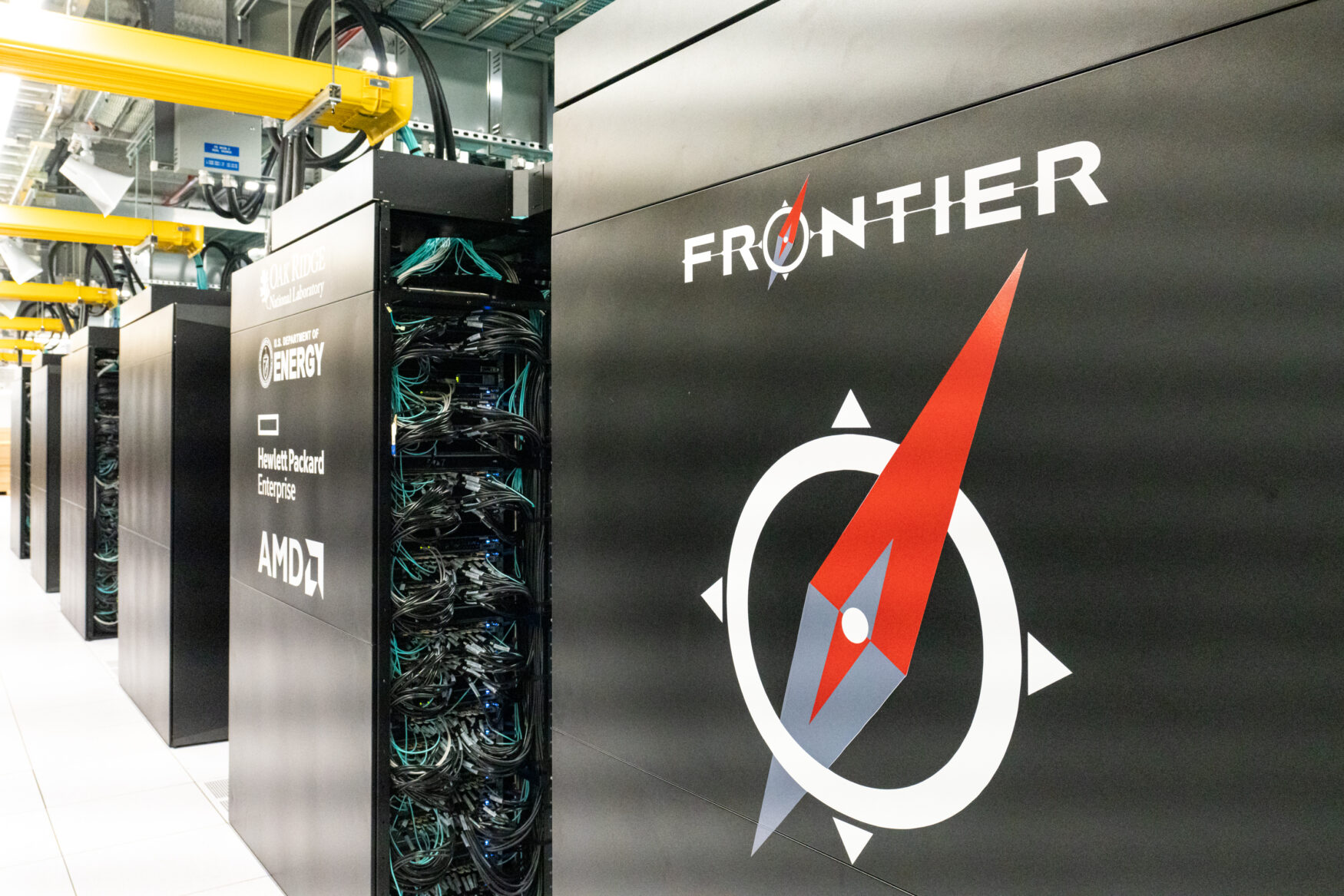
    The Frontier supercomputer located at the Department of Energy’s Oak Ridge National Laboratory has been named the world’s fastest supercomputer! This achievement was announced on May 30, 2022 by TOP500, a ranking of the world’s 500 fastest performing commercial computers.

    The Frontier supercomputer ranked number one breaking the exascale limit with 1.1 exaflops of performance or 1.1 quintillion calculations per second. Just how big is a quintillion? A quintillion is a million trillions or 1,000,000,000,000,000,000. By comparison, the iPhone 13 can perform 15.8 trillion operations per second.

    Exascale computing refers to computer systems capable of at least 1.0 exaflop per second or one quintillion calculations per second. Frontier is the first supercomputer to accomplish this astonishing feat. The previous highest record was held by the Fugaku supercomputer at the RIKEN Center for Computational Science in Kobe, Japan with 0.4 exaflops.

    One of the obstacles designers faced with the Frontier exascale supercomputer was that it required so much energy. After working with multiple vendors, developers were able to reduce the energy required.

    This record-breaking achievement opens the door to all sorts of scientific advancements. “Exascale systems will provide the next-generation of computing desperately needed for the massive number crunching required for climate change research and prediction, materials design for energy technologies and fusion reactors, a stronger and more adaptive power grid, the data-driven design of new COVID treatments, rapid data analysis for scientific facilities such as light sources, and many other challenges in energy, environment, and national security” according to the Department of Energy’s Office of Science. This is a big step and will be impactful for many different areas of technology, science, and research.

    Three years after its initial development the Frontier supercomputer’s next steps will include further testing and evaluation. After that, it is set to be available for early scientific research at the end of 2022 and open for full scientific research at the beginning of 2023.

    Here are some fun facts about supercomputers:

    What was the first supercomputer?
    The CDC 6600 from Data Corp. is recognized as the world’s first supercomputer. It was built in 1964 and designed by Seymour Cray. It ran at about 1 megaflop or 1 million operations per second.

    How much does it cost to build a supercomputer?
    It can cost anywhere from $100 million to $250 million to design and build a supercomputer. This is aside from the $6 to $7 million in annual energy costs to keep the supercomputer running.

    How big are supercomputers?
    The Frontier supercomputer occupies a space of more than 4,000 square feet.

    Written By: Ivy Schiro

    June 14, 2022

  • Stem Diversity in the U.S Navy

    Stem Diversity in the U.S Navy

    Image Credit

    Over the past few years, the US Navy has made it its mission to diversify their ranks. While they have been improving, their high STEM degree requirement poses an obstacle to this goal. 

    People from different genders, ethnicities, and backgrounds are generally underrepresented in the Navy. For example, in 2016, women only made up 18 percent of the Navy. While these numbers are slowly increasing, without policy changes, it won’t be enough to reach a fair representation. 

    Diversity is important for all fields. Having people from different backgrounds and walks of life promotes innovation, creativity, collaboration and new ideas. It also gives an opportunity to people from lower socioeconomic backgrounds.

    The Navy has addressed the problem of diversity with several solutions. They have some solutions targeting officer recruitment, and others focus on giving and promoting STEM education to minorities. However, one important factor that they are overlooking is the high STEM degree requirement.

    This requirement poses obstacles to talented and passionate individuals who want to join the Navy. There could be several outside influences that prevent them from obtaining a high STEM degree, even if they are fully capable. People from low socioeconomic backgrounds are sometimes unable to obtain a high degree of education, and girls and ethnic minorities are often turned away from STEM fields. 

    STEM degrees are coveted because they show intelligence, problem-solving, and strategic and technical expertise. But these skills can also be demonstrated in a variety of other ways. Instead of focusing on degree requirements, which can be difficult or impossible to obtain, the Navy should also consider other qualities that make for a great officer and leader. 

    In 2013, Google ran a project called Project Oxygen to find what traits their most successful managers and leaders had. What they found was that these managers:

    1. Are good coaches
    2. Empower teams and do not micromanage
    3. Create an inclusive team environment, showing concern for members’ success and well-being
    4. Are productive and results-oriented
    5. Are a good communicators who listen and share information
    6. Support career development and discuss performance
    7. Have a clear vision/strategy for their teams
    8. Have key technical skills to help advise their teams
    9. Collaborate across Google
    10. Are a strong decision-makers


    These traits are qualities that make a successful worker and leader. Along with intelligence and STEM abilities, it is important for the Navy to search for these qualities as well. 

    These are important ideas that the Navy is beginning to incorporate. By combining these ideas, hopefully the Navy will be one step closer to achieving its goal of fair representation and inclusion for everybody!

    Sources:

    McKinney, Dusty, and Patrick Rumsey. “The Navy’s STEM Diversity Problem.” U.S. Naval Institute, 31 May 2022, https://www.usni.org/magazines/proceedings/2022/june/navys-stem-diversity-problem. 

    Written by: Vivien Chen

    June 14, 2022

  • Virtual STEM Summer Camps 2022

    Virtual STEM camps are a great way for you to learn while having fun during the summer. These camps allow you to have valuable experiences that will help prepare you for the increasingly technology-driven world. If you have an interest in science, technology, engineering, or math consider enrolling in these virtual summer camps:

    1.  CodeMonkey
      Image Credit

      If you have an interest in learning coding, CodeMonkey is a great option. Coding is a valuable skill to learn in today’s technology-based world. CodeMonkey offers a variety of coding camps for grade levels ranging from Pre-K to 8th grade. Campers are provided with fully guided lesson plans and interesting videos that cover the topics. The camp is open to children of all skill levels. No previous coding experience is required.
      If you are interested in learning more about CodeMonkey go to: https://www.codemonkey.com/summer-camps/?irclickid=XyHwZ1XrnxyIREb1X8wYRw3kUkD2t81AKQHPws0&utm_campaign=cm_impact&utm_content=Online%20Tracking%20Link&irgwc=1&utm_partner=rebeccacharlotte&utm_source=impact

    2.  MakerKids
      Image Credit

      MakerKids offers a variety of STEM-based learning camps for kids. It is a great option for you to learn a variety of STEM topics. Camps are available for grade levels ranging from 1st to 8th grade. They offer different camps that focus on coding, robotics, Minecraft, and more.
      If you are interested in learning more about MakerKids go to: https://makerkids.com/virtual-stem-camps-for-kids/

    3. iD Tech
      Image Credit

      iD Tech is an excellent choice of STEM summer camps for older kids and teenagers. They offer online camps for campers ranging in ages from 7–9 years old, 10–12 years old, and 13–17 years old. iD Tech has a variety of engaging courses covering topics including Roblox, Minecraft, coding, game design, and more. Camps are taught by iD-certified STEM pros recruited from top universities such as Stanford, Caltech, and NYU. Certain programs allow students to earn certifications endorsed by iD Tech or one of their prestigious partners.
      If you are interested in learning more about iD Tech go to: https://www.idtech.com/virtual

    4. CalColor Academy
      Image Credit

      CalColor Academy is a professional art school located in Silicon Valley. They offer Digital art online summer courses to Kindergarten to 12th grade students. They offer multiple sessions allowing campers to create different digital art pieces such as family portraits, animals, and even designing your own fictional character! The camps are broken into 180-minute sessions for five days. The sessions are group classes with two to five students in each class.
      If you are interested in learning more about Cal Color Academy, go to: https://www.create-learn.us/partners/calcolor-academy?utm_source=Blog&utm_campaign=TSL_CNL

    5. Chess4Life
      Image Credit

      If you have an interest in chess, Chess4Life is a great way to develop your skills. Chess4Life offers week-long virtual chess camps for kids of all abilities. Campers meet daily via Zoom for 90-minute sessions. These sessions include lessons, fun activities, and tournaments guided by camp coaches. Campers can join beginner, intermediate, or advanced groups depending on what best fits their skill level. Checkmate!
      If you are interested in learning more about Chess4Life go to: https://chess4life.com

      Take advantage of your summer break and enroll in a STEM summer camp. You will get to have fun and meet new people, all while learning! In addition to these five camps, there are many other virtual STEM camps out there that may interest you, so make sure to check out more.

      Written by: Ivy Schiro

      June 10, 2022


      Citations

      #1 STEM summer camps. MakerKids. (2021, October 28). Retrieved June 10, 2022, from https://makerkids.com/virtual-stem-camps-for-kids/

      Calcolor Academy Virtual Classes for Kids. Virtual Classes for Kids – Create & Learn. (n.d.). Retrieved June 10, 2022, from https://www.create-learn.us/partners/calcolor-academy?utm_source=Blog&utm_campaign=TSL_CNL

      Chess Academy and club licensing. Chess4Life. (2022, June 6). Retrieved June 10, 2022, from https://chess4life.com/

      Coding activity for summer camp: Ready-to-use courses. CodeMonkey. (2022, March 7). Retrieved June 10, 2022, from https://www.codemonkey.com/summer-camps/?irclickid=XyHwZ1XrnxyIREb1X8wYRw3kUkD2t81AKQHPws0&utm_campaign=cm_impact&utm_content=Online+Tracking+Link&irgwc=1&utm_partner=rebeccacharlotte&utm_source=impact

      Krystal. (2021, December 7). Best stem camp for kids in 2022 – our top picks. STEM Education Guide. Retrieved June 10, 2022, from https://stemeducationguide.com/best-stem-camp-for-kids/

      Virtual summer camps & online tech programs: 2022: Kids & Teens. iD Tech. (n.d.). Retrieved June 10, 2022, from https://www.idtech.com/virtual

  • Pi Day

    Pi Day

    March 14th, or 3/14, marks Pi day, a day to celebrate everyone’s favorite irrational number! But there’s way more to this infinite string of digits than just calculating circumferences.Therefore, this March 14th, let’s all take a moment to recognize why this number has become so astronomically famous. Here are some fun facts about Pi that will hopefully inspire you to celebrate the number properly!

    Image Credit
    1. In 2005, Lu Chao from China made headlines when he memorized 67,890 digits of Pi. Believe it or not, the record has been steadily increasing since then. In fact in 2015 Rajveer Meena successfully recited 70,000 digits! Although this is the officially recognized world record, some others claim to have beaten it. They even claimed to have shattered this record. In 2006, Japanese memory master Akira Haraguchi succeeded in memorizing and reciting a total of 100,000 digits of Pi! It took him more than 16 hours to recite every digit. As of 2015, he has increased the number of digits memorized to 111,700 digits! Unfortunately, Haraguchi’s record is not officially recognized by Guinness as the world record, so the official number still stands at 70,000 (The Guardian)
    2. Pi is an irrational number, so it has an infinite number of digits arranged in no discernible pattern. But mathematicians have been able to calculate over 62.8 trillion digits (Popular Mechanics)! To put that into perspective, if you counted one number every second, it would take you more than two million years to count all 62.8 trillion digits!
    3. The first ever Pi day was celebrated in 1988 at a San Francisco science museum. Physicist Larry Shaw, who worked at the museum, chose the date March 14th because the day written numerically is 3/14, alluding to the first three digits of Pi. Pi day then became an official holiday. However, it was official in 2009 when the U.S. House of Representatives passed the necessary legislation to declare it a holiday (History).

      Image Credit
    4. In the late 1800’s, an amateur mathematician named Edward J. Goodwin almost had the numerical value for Pi changed to 3.2. He rounded Pi up in order to solve an ancient mathematical problem known as “squaring the circle.” To put it simply, mathematicians wanted to know if a square could be created with the same area as a circle. Goodwin used the value of 3.2 in place of Pi to create his solution to the problem. He then went on to get an Indiana State Representative to introduce a bill in congress which would solidify the value of Pi as 3.2. The bill only died after a math professor from Purdue University, Clarence Waldo, managed to get a glimpse at the bill and realize Goodwin’s mathematical error. And that is why we don’t celebrate Pi day on March 2nd (Reader’s Digest)
    5. Though the concept of Pi has been around for a millenia, it wasn’t until 1706 when the Greek symbol π was used to represent the value. The symbol was first used for this purpose by William Jones in 1706 and was popularized by Leonhard Euler in the 1730’s (Exploratorium).


    There’s more to Pi than meets the eye, so this Pi day, bake yourself a pie and celebrate in style!


    Image Credit

    Written by: Matthew Jenkins

    March 9, 2022

    Sources:

    https://www.exploratorium.edu/pi/history-of-pi

    https://www.history.com/news/where-did-pi-day-come-from

    https://www.popularmechanics.com/science/math/a37329769/supercomputer-calculated-pi-to-record-breaking-628-trillion-digits/

    https://www.theguardian.com/science/alexs-adventures-in-numberland/2015/mar/13/pi-day-2015-memory-memorisation-world-record-japanese-akira-haraguchi

    https://www.rd.com/article/pi-day-was-almost-changed-to-3-2/


  • World Ocean Day

    World Ocean Day

    Image Credit

    World Ocean Day is on June 8! On World Ocean Day, people all over the world come together to celebrate and protect the oceans of our planet.

    Because of human-caused climate change, oceans are facing big challenges. Pollution like plastic trash and oil spills contaminate the water and harm marine life. Animals can get entangled in trash or eat it thinking it is food. Global warming heats up the oceans which can lead to problems like coral bleaching and sea level rise.

    World Ocean Day is meant to raise awareness of these problems and take action through political advocacy, educating others, and working to reduce environmental pollution with beach cleanups and more.  

    History of World Ocean Day

    World Ocean Day began in 2003, with 25 events held in 15 countries. In 2008, it was recognized as an official day by the United Nations. By 2019, there were over 2000 events being held in over 140 countries!

     In 2016, the Youth Advisory Council and the Multi-year Conservation Action Focus was launched. The Youth Advisory Council allows youths to have a say in protecting our oceans and their futures. The Multi-year Conservation Action Focus works to prevent plastic pollution and was updated in 2020, aiming to protect 30% of our lands and oceans by 2030.

    Here are ways you can take action:

        1. Visit worldoceanday.org to explore events, get educated through resources and blogs, and be a part of the rising political movement to save our oceans. 
        2. Sign petitions and join movements to urge political leaders to pass legislation that will help our oceans be cleaner and safer. 
        3. Educate yourself with online resources or books.
        4. Organize an event with your community to educate others or do an activity like a beach clean up. 
        5. Check out and join the youth movements and Youth Advisory Council for World Ocean Day advocating for ocean protection here: worldoceanday.org/youth/

    Oceans are key to our Planet as they are a major source of food and medicine. It is essential that we all participate in World Ocean Day 2022 by educating ourselves on how to safeguard our ocean and work towards building climate change resiliency. Let’s unite around the world to manage the impact human actions have on our ocean!


    Sources

    United Nations. (n.d.). World Oceans Day. United Nations. Retrieved June 13, 2022, from https://www.un.org/en/observances/oceans-day

    World Ocean Day. (2021, September 10). Mission and history. World Ocean Day. Retrieved June 13, 2022, from https://worldoceanday.org/about/mission-and-history/


    Written by: Vivien Chen

    June 2, 2022