Author: Eric Magers

  • Switch Off Your Vacation Brain and Set it to School!

    Switch Off Your Vacation Brain and Set it to School!

    It’s no secret that students pick-up unhealthy habits over summer vacation. We get it! You start to stay up late, sleep in late, and focus on your social life. These aren’t unhealthy habits on their own, but with school just around the corner, they have the potential to turn into  them. 

    So, now, you’re left wondering, “What do I do?!” as you remember your obligation to start waking up early, completing homework assignments, and refocusing your priorities. Well, you don’t have to worry! We’re here to help. 

    At NSTEMTM, we prioritize student health — whether it be mental, emotional, or physical. In this article, we’ll supply you with the tips and resources you need to prepare yourself for the new school year. Your mission, if you choose to accept, is to utilize these resources for your own well-being. 

    Ease Back into a Routine

    Photo by Eliott Reyna

    This one is the hardest task to achieve, but it’s also the one with the most pay-off. Summer is a fantastic time to relax, take a break from routines, and to focus on fun. Unfortunately, this could mean altering your diet, sleep schedule, and overall mindset. 

    • Start centering sleep! Even if you don’t have to wake-up with the sunrise, it’s likely you’ve been going to bed and waking up much later than normal. So, make sure you prepare by adjusting your schedule a few days before. If it’s already too late, start going to bed earlier! Try to unwind with a book instead of some television. The blue light coming from your devices can actually keep you awake at night!
    • Embellish your eating! During the summer, you can eat whenever you feel hungry (or whenever you feel like it). But when you go back to school, your lunches will be scheduled into your day. Our #1 tip for this is make sure you eat breakfast! Even if you’re not hungry, eating a bagel can make you feel prepared for the day. If you can, we recommend packing some light snacks — just in case you get hungry before lunch!
    • Make mornings manageable! It’s very easy to have lazy mornings when you’re not in school. But once it picks up, you’ll be left completely without a routine! This could lead to late arrivals or missing classes altogether. Slowly get back into your routine by making yourself a checklist. Ideally, you would start this a few days before your classes, but if you can’t, start now!

    Gather Your Wits 
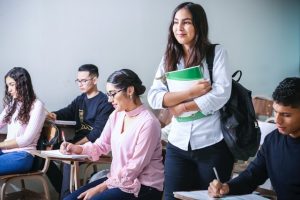
    Photo by Javier Trueba

    We know you don’t want summer to be over. Neither do we! Unfortunately, it’s time to get back to school. Help your school year start off right by preparing yourself for anything!

    • Study your schedule! Even if you’re familiar with your school, it’s easy to get lost if you don’t know where you’re going. This challenge becomes even more difficult if you don’t even know what classes you have! So, review your schedule, classrooms, and even look at a map if you need a visual refresher. You’ll feel much less stressed at the beginning of your first day!
    • Reel in your reading! Typically, you’ll receive a syllabus before your first day. You can utilize this in order to prepare yourself for the workload. You can simply look up the list of materials and subjects you’ll be covering. In doing this, you’ll feel more organized and in-charge of your workload. Nothing can surprise you!
    • Organize your obligations! It’s likely that school isn’t your only obligation. Maybe you have sports, clubs, work, or even religious and familial events in addition to your education. Figure out how you’ll balance these this year. This way, you still have the time for the things you enjoy most — which can provide a much-needed stress reliever.

    Stay Informed & Stay Safe

    While many schools are transitioning back to in-person classes, it’s no secret the Delta Variant is already wreaking havoc. It’s important to familiarize yourself with your school’s COVID-19 precautions for both your physical and mental health. 

    Furthermore, it’s important that you do your part in keeping yourself, your peers, and your campus safe. Pack extra masks, hand sanitizer, and social distance whenever possible. You can also check to see if your community is hosting any pop-up vaccination clinics, or schedule an appointment through your local pharmacy. 

    The National STEM Honor Society is with you every step of the way. You can always check out our website for more resources to help you through the school year. 

    Written by Emily Hyser

    August 20, 2021

    Your NSTEM Journey Begins Here!

  • Quick STEM Mini Lessons for Elementary School Students

    Quick STEM Mini Lessons for Elementary School Students

    Image Credits

    Powerful pulleys
    Length: 30 minutes
    This lesson students get to explore how pulleys work in the context of pyramid building. Using a pre lesson assessment to have students brainstorm what simple machines are and why are they important, along with a (KWL) chart to help students on a new topic. Subject areas included here are geometry, science, technology and engineering. Introducing simple machines intrigues students by showing how they were used to build the pyramids. The lesson includes a classroom demonstration with two brooms, approximately 6 meters of rope and three students. The associated activity uses common materials to demonstrate fixed and movable pulleys, with a video to aid in understanding. The post lesson assessment includes finishing the (KWL) chart. This mini lesson is a great STEM lesson on simple machines.

    The Sky and Dichotomous Key
    Length: 30 minutes- 1 hour
    This is a great lesson for students with their head in the clouds, with topics on earth science and engineering. This NASA lesson includes all materials needed to complete the lesson. Some vocabulary for this lesson includes cirrus, cirrostratus, stratus, and every type of cloud. This is a great opportunity for students to make observations and ask questions. This activity also gets students outside of the classroom to look at the clouds and identify them. On the GLOBE S’COOL website, you can input students’ data to create a whole class graph that can be recorded once or continued over time.

    Save our shore
    Length: 50- 120 minutes
    Greening STEM with this lesson teaches the importance of engineering in the protection of our environment. This lesson goes more depth with the role of policy in developing solutions. There are more materials needed for this lesson than most. There are five parts to this lesson; the Scenario, set up standardized wave tanks, develop your management plan, and communicate management plan. Students will learn how shoreline erosion works and the impacts that come with it. Then students come up with a management plan to solve the problem. This activity fosters problem solving and is a great project-based learning lesson.

    Move Your Muscles
    Length: 15 minutes
    Students get to learn about muscles in the human body with this biology focused lesson. Connect this lesson to engineering by introducing it with how astronauts stay healthy while in space, where they are more susceptible to losing muscle. Two activities in this lesson include students trying different exercises to learn more about their muscles, the other letting students investigate muscles and how they are used. Vocabulary included in this lesson includes many different muscles. This lesson gives space for class discussion that allows students to explore the new topic.

    Image Credits

    Ocean World
    Length: less than 30 minutes
    This lesson allows students to toss an inflatable globe and collect data on if there is more surface water or labs on planet earth. The NASA site gives all the materials needed and downloadable PDFs. Students will learn about the different types of surface water, different forms of water, and the oceans. Topics covered include data collection, earth science, and probability. This is a great mini lesson that is hands-on and is able to be extended if preferred by going more in depth on the topic with the provided extension links.

    Written By: Olivia Kirven

    September 4, 2021

    Your NSTEM Journey Begins Here!

  • COVID-19, Impacting the Lives of Students in Latin America!

    COVID-19, Impacting the Lives of Students in Latin America!

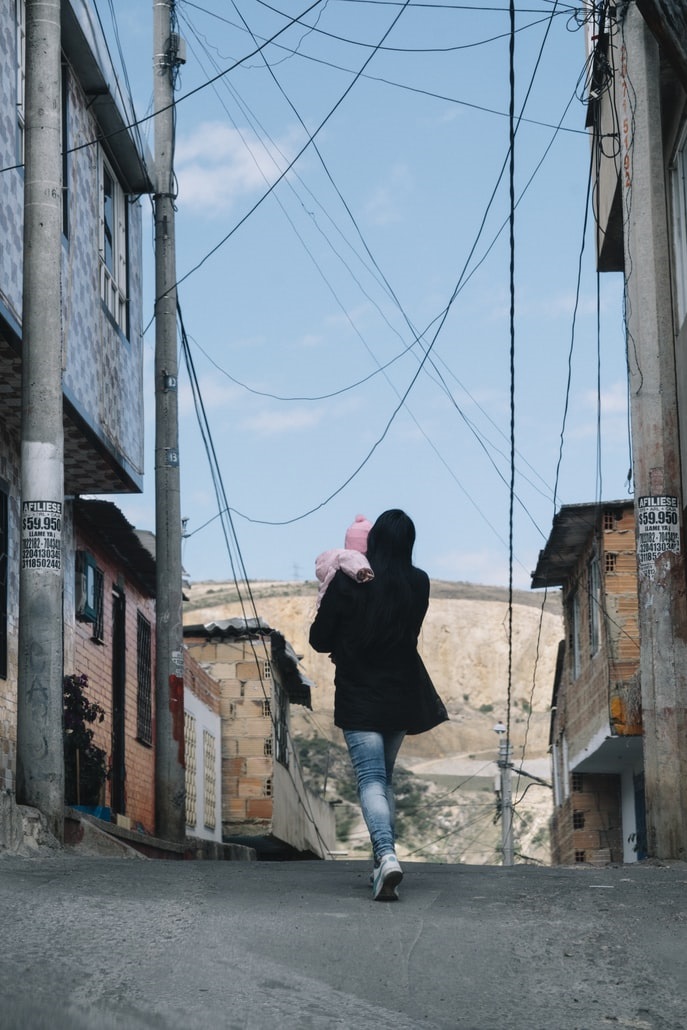
    When COVID-19 became a threat to the world, we all shut down and went home. For many, this meant working from home and getting everything delivered. For most students, this meant attending school from home through virtual meetings. But for the students across Latin America, school shut down completely. 

    Because of health concerns with Covid as well as economic issues, many students in Latin America were not registered for school in 2020. The World Bank estimates that about 120 million children missed out on education due to the pandemic, with a large portion of those students deciding to remain drop outs. 

    Apps on a Screen
    Photo by Iyus Sugiharto

    As the school year went on for most through virtual learning, students in Latin America remained out of schooling completely. This is because only 77 percent of 15-year-old students in Latin American and the Caribbean have access to the internet at home. As a result of dropping out, crime has risen in places such as Columbia, where schools have been closed the longest.

    The World Bank explains that this lack of education was a pre-existing issue in Latin America, and the pandemic only made things worse. Learning poverty, which is the percentage of 10-year-olds that cannot read and understand a simple text, in Latin America was 51 percent prior to the pandemic. As of September 2021, the World Bank estimates that number to go up by 20 percent.

    Still, it’s estimated by UNICEF that at least 86 million students all over Latin America remain out of school. On the other hand, there have been successful efforts that have brought 46 million children back into school. These efforts include social distancing, wearing masks, and provision of sanitary measures. UNICEF in particular is working with schools across the region to provide back-to-school strategies, deliver education and hygiene supplies, and provide psychosocial support to students and teachers

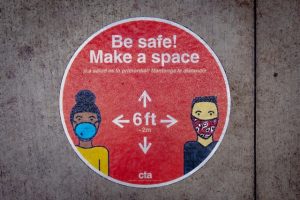
    6 Feet of Space Sign
    Photo by Elizabeth McDaniel

    Economically, this closure is causing upwards of $1.7 trillion in income. But with small efforts to help improve the educational impact for some students, a multi-country crisis team at the University of Hawaii at Mānoa was granted $900,000 to help ensure they get quality and inclusive education.

    cash pile
    Photo by Sharon McCutcheon

    With The World Bank and UNESCO, UNICEF is also calling for the government to work with schools to create impactful programs that will help students make a good transition back into school and catch up with the education they’ve lost. 

    Written by Kathryn Cottingham

    October 15, 2021

    Your NSTEM Journey Begins Here!