Author: Eric Magers

  • Black History Month

    Black History Month

    African Americans are extremely underrepresented in STEM careers. Jobs in STEM have increased by 79% since 1990, yet African Americans only make up 9% of the U.S. STEM workforce today. So, here are a few inspiring black inventors and innovators in STEM to celebrate during Black History Month!

    Alan Emtage

    You would not have Google search today without Alan Emtage. He invented the first ever Internet search engine called Archie. His work is the root of many techniques used by modern public search engines. 

    Image Credit

    Emtage gained his B.S. in Computer Science in 1987 and then his M.S. in Computer Science in 1991, both from McGill University in Montréal, Canada. While enrolled, he began working in the school’s information technology department as a systems administrator. His job was to manually combine various File Transfer Protocol servers for software to be used by students and staff. This process was very time-consuming, so Emtage came up with Archie to do the task automatically in the middle of the night when no one was using the link.

    Unfortunately, Archie was not patented. According to Emtage, while other creators of search engines might be “bazillionaires” now, he made no money off this invention since making money off the Internet at the time was unheard of. He does not seem to be fazed by this though, knowing that at the end of the day he was the first!


    Dr. Aprille Ericsson-Jackson

    Dr. Aprille Ericsson-Jackson was the first woman to earn a PhD in Mechanical Engineering from Howard University and the first African American woman to earn a PhD in Mechanical Engineering from NASA GSFC. 

    Image Credit

    Dr. Ericsson-Jackson stated that her interest in NASA and science began when she was in first grade when she watched the Apollo missions on TV. This led to her participating in science fairs, such as the one in eighth grade where she built her first science instrument, and then joining MIT’s UNITE science outreach program for minority students. She earned her B.S degree in Aeronautical/Astronautical Engineering followed by both her PhD’s.

    She has been with NASA for over 27 years. Working as an Instrument Project Manager, she has led many space missions and helped develop various instruments, such as the Lunar Orbiter Laser Altimeter. This instrument helps produce improved lunar gravity models and has been orbiting the moon ever since it launched in 2009.  

    Dr. Ericsson-Jackson has received numerous awards for her contributions. Some include the NASA Goddard Honor Award for Excellence in Outreach, The 2016 Washington Award, and a Science Trailblazers award from the Black Engineers of the Year Award Conference.


    Katherine Johnson  

    You might have heard of Katherine Johnson through the infamous film, Hidden Figures. Johnson was one of the “hidden figures” who aided in NASA’s mission of sending the first astronaut into space and sending men to the moon. 
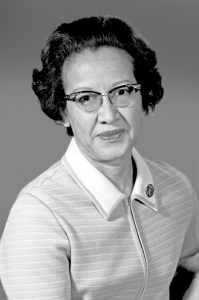
    Image Credit

    Johnson’s skills were obvious as a child and she started attending high school at only ten years old. She earned her bachelor’s degree in mathematics and became one of the first three African American students to enroll in a graduate program at West Virginia University. 

    She joined NACA’s West Area Computing unit before it became NASA and while it was still segregated in 1953. This unit was a group of African American women who were tasked to manually calculate complex mathematical equations. These computations were essential for placing a spacecraft into orbit. Johnson was the first woman in this unit to receive credit as an author of a research report.

    Johnson received multiple awards and honors for her work, including the Presidential Medal of Freedom in 2015 and she also has a NASA building named after her!


    Dr. Warren Washington

    Dr. Warren Washington is a renowned climate scientist whose research and computer models helped scientists understand climate change. 

    Dr. Washington’s parents were not supportive of his interest in science and astronomy, but he went against their wishes and pursued the fields in college. He earned his bachelor’s degree in physics and his master’s in meteorology, both at Oregon State College. He got his PhD in meteorology at Pennsylvania State University, being the second African American ever to receive a PhD in meteorology at the time. 

    He began working at the National Center for Atmospheric Research and stayed there for over 50 years. He then served a
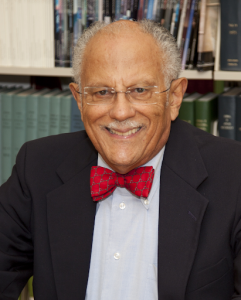
    Image Credit

    s a member of the National Science Board from 1994 to 2006 and as its chair from 2002 to 2006. He has over 150 publications, including a book used as a standard reference in climate research called “An Introduction to Three-Dimensional Climate Modeling.”

    Dr. Washington’s models, the Parallel Climate Model and the Community Earth System Model, were used in the 2007 Intergovernmental Panel on Climate Change assessment which received the 2007 Nobel Peace Prize. He also received the National Medal of Science in 2009 for his work.

    These are just some of the black leaders and innovators who have made a huge impact in STEM fields, inspiring others to become innovators as well for years to come. We hope that during this month we are able to recognize and celebrate more amazing black innovators and leaders!


    Citations

    Alan Emtage creator of Archie, the world’s first search engine. Alan Emtage Creator of ARCHIE, the World’s First Search Engine | Capitol Technology University. (n.d.). Retrieved February 24, 2022, from https://www.captechu.edu/blog/alan-emtage-creator-of-archie-worlds-first-search-engine

    Aprille Ericsson-Jackson: Aerospace engineer, and first African American woman to earn Phd’s from two renowned institutions. Capitol Technology University. (n.d.). Retrieved February 24, 2022, from https://www.captechu.edu/blog/aprille-ericsson-jackson-aerospace-engineer-and-first-african-american-woman-earn-phds-two

    Black innovators in STEM who changed the world. Orlando Science Center. (2021, May 14). Retrieved February 24, 2022, from https://www.osc.org/black-innovators-in-stem-who-changed-the-world/

    Encyclopædia Britannica, inc. (n.d.). Katherine Johnson. Encyclopædia Britannica. Retrieved February 24, 2022, from https://www.britannica.com/biography/Katherine-Johnson-mathematician

    Fox, M. (2020, February 24). Katherine Johnson dies at 101; mathematician broke barriers at NASA. The New York Times. Retrieved February 24, 2022, from https://www.nytimes.com/2020/02/24/science/katherine-johnson-dead.html

    iD Tech, iD Tech, Ryan, Virginia, Kendall, Pete, Moore, J. R., Brooke, Vince, & Alycia. (n.d.). 16 Black Stem Innovators & Famous Leaders: Engineer Role models. iD Tech. Retrieved February 24, 2022, from https://www.idtech.com/blog/black-stem-innovators-who-defined-modern-world

    Internet Hall of Fame. Alan Emtage | Internet Hall of Fame. (n.d.). Retrieved February 24, 2022, from https://www.internethalloffame.org/inductees/alan-emtage

    NASA. (n.d.). Aprille Joy Ericsson. NASA. Retrieved February 24, 2022, from https://sbir.nasa.gov/content/aprille-joy-ericsson

    National Science Foundation – Where Discoveries Begin. The National Medal of Science 50th Anniversary | National Science Foundation. (n.d.). Retrieved February 24, 2022, from https://www.nsf.gov/news/special_reports/medalofscience50/washington.jsp

    Warren Washington. CCR People – Dr. Warren Washington. (n.d.). Retrieved February 24, 2022, from https://www.cgd.ucar.edu/staff/wmw/ 


    Written by: Amanda Aber

    Date: February 23, 2022
  • Pluto Day

    Pluto Day

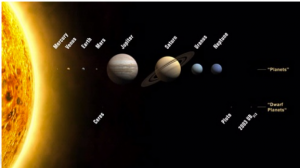
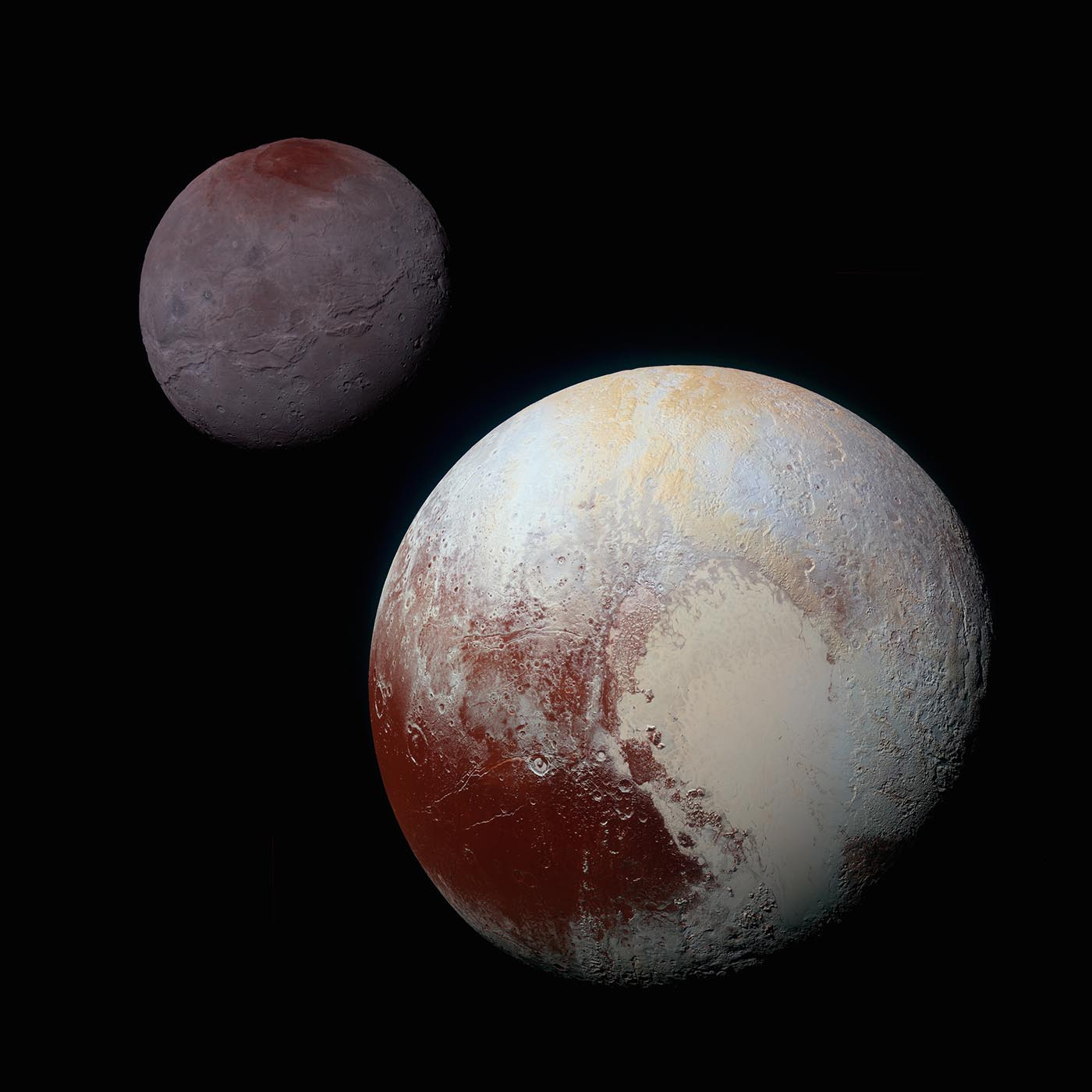
    Do you know what special day February 18th is? It’s Pluto Day! This national holiday celebrates the discovery of the legendary dwarf planet, Pluto.

    Image Credit

    Pluto’s Discovery

    Pluto was officially discovered on February 18th, 1930, by Clyde Tombaugh, an American astronomer, in the Lowell Observatory located in Arizona. However, Tombaugh was not the one to first introduce the idea of a planet located beyond Neptune.

    Percival Lowell believed there was an undiscovered ninth planet beyond Neptune because of Uranus and Neptune’s orbits. Lowell believed the wobbles in their orbits could be explained by the gravitational pull of this unknown ninth planet. Lowell died before he could discover this ninth planet, but his theories inspired Tombaugh’s search.

    Pluto’s discovery was officially announced on March 13, 1930. A boy named Venetis Burney, named Pluto after the Roman god of the underworld. Burney was only eleven years old at the time and proposed the name to her grandfather, who then forwarded the name to the Lowell Observatory. The name additionally honors Percival Lowell since his initials are P.L. which matches the first two letters in Pluto.

    About Pluto

    Pluto is a dwarf planet in the Kuiper Belt. The Kuiper Belt is a donut-shaped region of icy bodies that lays beyond the orbit of the eighth planet, Neptune. Pluto is around 3.6 million miles away from the Sun. Because of this far orbit around the Sun, one year on Pluto is equal to 248 Earth years. This makes it so that Pluto’s day is 153 hours or six Earth days.

    Pluto is very small; it is only 1,400 miles wide or ⅔ of Earth’s moon. Because of its location and small size, some argued that Pluto was just a ball of ice. This notion was debunked when NASA’s New Horizons spacecraft flew into Pluto’s orbit on July 14, 2015. The spacecraft, being the only spacecraft to ever enter Pluto’s orbit, was able to tell us more about Pluto’s surface and atmosphere.

    Pluto’s surface is very icy, similar to the Kuiper Belt. New Horizons estimated that the icy surface was six miles thick. Pluto is also covered in snow. This snow is different from the snow we have on Earth because it is red, not white. Pluto’s climate ranges from -378 to -396 degrees Fahrenheit, which makes the climate too cold to possibly sustain life. However, Pluto does have high mountains and blue skies similar to Earth.

    Pluto has many large glaciers. One glacier in particular is in the shape of a heart. This heart-shaped region is known as Tombaugh Regio, named after the astronomer who discovered Pluto. This region is smooth, unlike the rest of Pluto, which implies that it is a newly developed region that has no craters from meteorite impacts.

    Why is Pluto a Dwarf Planet?

    Pluto was originally thought to be a full planet upon discovery, but this idea was changed in 2006, when the International Astronomical Union decided to define what a planet was. To be considered a full-sized planet, the celestial body must orbit the sun, have sufficient mass to assume hydrostatic equilibrium, and clear the neighborhood around its orbit. Pluto did not meet the third criteria. Since Pluto’s orbit overlaps that of Neptune’s, Pluto was disqualified from being labeled as a full-sized planet. This makes Pluto one of five dwarf planets, the others being Ceres, Eris, Haumea, and Makemake.

    Image Credit

    Now you know all about Pluto for the next Pluto Day. To celebrate, you can try viewing Pluto through setting up your own telescope or visiting a planetarium where they hold special events for the day!

    Written by: Amanda Aber

    Date: 2/14/2022


    Citations
    A&E Television Networks. (2010, March 3). Pluto Discovered. History.com. Retrieved from https://www.history.com/this-day-in-history/pluto-discovered
    Choi, C. Q., & Dutfield, S. (2021, November 12). Dwarf planet pluto: Facts about the icy former planet. Space.com. Retrieved from https://www.space.com/43-pluto-the-ninth-planet-that-was-a-dwarf.html
    Cornelius, D. (2010, March 10). Happy Pluto Discovery Day. Wired. Retrieved from https://www.wired.com/2010/03/happy-pluto-discovery-day/
    NASA. (2021, August 5). Pluto. NASA. Retrieved from https://solarsystem.nasa.gov/planets/dwarf-planets/pluto/overview/#:~:text=Pluto%20is%20a%20dwarf%20planet%20that%20lies%20in%20the%20Kuiper,half%20the%20size%20of%20Pluto.&text=What’s%20more%2C%20its%20path%20is%20quite%20tilted%20compared%20to%20the%20planets
    National Day Calendar. (n.d.). Pluto Day – February 17. National Day Calendar. Retrieved from https://nationaldaycalendar.com/pluto-day-february-17/#:~:text=Every%20year%2C%20Pluto%20Day%20on,an%20American%20astronomer%2C%20discovered%20Pluto.


    3 Key Phrases:

    1. Do you know what special day February 18th is? It’s Pluto Day! This national holiday celebrates the discovery of the legendary dwarf planet, Pluto.

    2. Percival Lowell believed there was an undiscovered ninth planet beyond Neptune because of Uranus and Neptune’s orbits. Lowell believed the wobbles in their orbits could be explained by the gravitational pull of this unknown ninth planet. Lowell died before he could discover this ninth planet, but his theories led to Tombaugh’s search.

    3. Since Pluto’s orbit overlaps that of Neptune’s, Pluto was disqualified from being labeled as a full-sized planet. This makes Pluto one of five dwarf planets.

  • How Artistic Creativity Can Be Used in STEM!

    How Artistic Creativity Can Be Used in STEM!

    The arts are something that is becoming more accepted within the STEM Community, so much so that some organizations may refer to it as STEAM. As explained best by EDUTopia, STEM isn’t supposed to lock students into one category, it’s intended to blend all the subjects and create connections with them all to enforce critical skills. Something essential for any student looking to get involved with STEM is creativity! Whether it’s building 3D models or coding a website, creative minds produce amazing, revolutionary ideas. 

    The National Afterschool Association (NAA) writes that the similarities between the arts and STEM are more apparent than not, “There is something about having an artistic side that helps with having success in STEM fields. Expression through art encourages creativity, play and innovation.” In fact, one of the most famous artists, Leonardo Da Vinci, was inspired by the sciences and managed to express that through his art. Art Net explains, “Da Vinci believed that art, science, and nature were inextricably linked.” Through pieces such as Vitruvian Man and through his notebooks he is full proof of how important Art actually is within the sciences. Art Net also writes about Da Vinci, that his notebooks revealed “inventions that could not be realized in his lifetime, including the parachute, helicopter, and even the calculator.” 

    A main way that the Arts can be helpful within STEM is by incorporating it into lessons! In a study performed by John Hopkins University, Researchers found that students who were placed into Art classes would retain techniques and incorporate them within their courses, namely the science and math classes. Jaime Martinez, a STEAM specialist at the New York Institute of Technology in New York City, notes that, “researchers find that students in art-focused classes develop more creativity and learn to collaborate better.” This is connected directly to a staple at National STEM Honor Society, which is Project-Based Learning. PBL is a concept intended to better help students retain skills and knowledge in a subject by completing hands-on projects. PBL is related to the arts because of the ways previously explained, it involves creativity and outside-of-the-box thinking to create amazing projects or products. 

    Furthermore, consider involving some art activities within your classroom to help your students not only have a bit more fun, but also to better get engaged with their work. If you’re a student, reach out to one of your teachers and let them know your own ideas about getting the arts involved at your school.

    If you are interested in learning more about getting Project-Based Learning or NSTEM at your school, fill out the contact form on the NSTEM website

    If you enjoyed this blog, check out more at https://nstem.org/staging/blog/

    Written by: Kathryn Cottingham

  • Brain Boost

    Brain Boost

    About one in five U.S. adults have a mental illness according to the National Institute of Mental Health. This data, taken in 2019, translates to about 51.5 million U.S. adults that live with a mental illness. One university studies a method that displays a new approach to treating patients with different mental illnesses. 

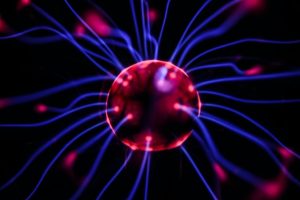
    Plasma cell
    Photo by: Josh Riemer

    A team from the University of Minnesota Medical School and Massachusetts General Hospital worked together to show that artificial intelligence and targeted electric brain stimulation could improve specific human brain functions involving self-control and mental ability. Alik Widge, MD, PhD, is an assistant professor of psychiatry and part of the Medical Discovery Team on Addiction at the University of Minnesota Medical School, and he is the senior author of the research. The main data used in the research is from a study by the Massachusetts General Hospital in Boston. The study involved twelve patients who were undergoing brain surgery for epilepsy. The surgery involves the placements of miniscule electrodes throughout the brain in order to record its activity and identify where the seizure derives. Widge also worked with Sydney Cash, MD, PhD, an expert in epilepsy research; and Darin Dougherty, MD, a specialist in clinical brain stimulation. This group of people found the internal capsule, a part of the brain, that when stimulated with a tiny surge of electrical energy, could help a patients’ mental function.

    Using AI, the team worked on algorithms that could track the patients’ cognitive control abilities. This method gave increases of stimulation when the patients were not doing as well with cognitive control.

    “This system can read brain activity, ‘decode’ from that when a patient is having difficulty, and apply a small burst of electrical stimulation to the brain to boost them past that difficulty,” Widge said. “The analogy I often use is an electric bike. When someone’s pedaling but having difficulty, the bike senses it and augments it. We’ve made the equivalent of that for human mental function.”

    Brain graphic art
    Photo by: Fakurian Design

    The study is special because it shows not only how a mental function connected to mental illness can be enhanced with electrical stimulation, but also how in the brain specific parts are most effective for the enhancement. Additionally, it shows how an artificial intelligence closed-loop algorithm is more reliable and successful than doing stimulation at random times. From the study, patients with the stimulation reported an improvement in anxiety. Widge says the method could be used to help people with severe and medication-resistant anxiety, depression, and other disorders. This new approach to mental research is paving a pathway for more research as the team is rapidly preparing for clinical trials. Brain stimulation is a relatively newly approved treatment as it was only in 2002 that deep brain stimulation to treat Parkinson’s disease was approved by the US Food and Drug Administration. The team hopes that this method can help treatment-resistant patients who need desperate help.

    Sources:


    Written by: Sudeepthi Ravipati

  • STEM in Film

    STEM in Film

    STEM is involved in so many aspects of our daily lives. In fact, it’s even present in the movies we watch! In this blog, I’ll be going over three films that offer a new perspective on what in STEM can achieve with their passion. These films are great to show to students in class, to watch at home, or even to briefly read about. 

    Hidden Figures (2017)

    Hidden figures movie cover
    Photo by Nino Munoz

    The first film is Hidden Figures. Hidden Figures is a film based on the real-life achievements of African American women at NASA in the 1950s and ’60s. At NASA, Mathematician Katherine Johnson, Dorothy Vaughan, and Mary Jackson calculated the math problems necessary to ensure a safe travel around Earth for the first time. These women, like every black American at the time, were continually obstructed from their work due to segregation and discrimination. Although films can dramatize situations in order to create a more interesting story, this film highlights exactly how racism thrived 60’s and it expresses the importance of representation in the workplace. As a result of the film’s release, conversation started about how to create a more diverse workplace, not only just for people of color, but women as well. In fact, according to the National Science Board, women remain largely underrepresented in the nation’s STEM workforce. We need more budding mathematicians to help us as technology advances and space travel becomes more regular!

    The Lego Movie (2013)

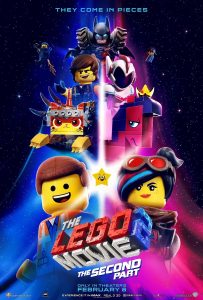
    the lego movie cover
    Photo by Artmachine

    This next film is a personal favorite of mine! The LEGO Movie is about an ordinary Lego guy, Emmet, who is mistaken as “The Master Builder”, an extraordinary person, and recruited to work to take down an evil leader in the Lego world. This plot, though, is just a fictional scenario created by a real-world character in the film, Finn. Finn’s father is intended to be the “evil leader” of the Lego world; he superglues his sets together to prevent Finn from mismatching the pieces. In the Lego world, this means that those super glued pieces are stuck forever. Engineering is expressed through the Legos themselves through their creations of weapons and a robot that helps combat the evil tyrant and save the Lego world. 

    While this movie is so fun and entertaining on the surface, when you investigate how exactly it was made, you can start to be inspired with how talented the engineers who worked in this movie are. This film shows the product of virtual engineering with its use of CGI. It reminds me of the Lego club in my intermediate school that allowed students to get involved in beginner engineering skills though building Lego creations!

    Back To The Future (1985)

    Back to future movie art
    Photo by Drew Struzan

    The final film to highlight is Back to The Future. While time travel isn’t exactly a reality yet, this film still shows the amazing work of Scientist Doc Brown and his hilarious yet nail-biting adventure of making sure to correct wrongs in his world through time travel without changing the path for everyone else. Within the film, it features so much futuristic technology created by Doc. For example, the DeLorean Doc used to travel in time was created from a train engine. Also, this isn’t addressed in the first film, but Doc used components of the hoverboard from 2015, which gave him access to technological inventions in the future. In real life, the DeLorean was also considered way ahead of its time! John DeLorean, owner of DeLorean Motor Company, created the car with the intention of it being an “ethical sports car that would be durable, fuel-efficient and safe”, according to Volocars. The current CEO of this company even considers the DeLorean car to be the “Tesla of the past.” Knowing this, it shows that even the most out-of-this-world inventions or ideas, can become a reality. Although it’s not a moral touched on within the film, looking at the technological concepts this film introduced, it shows that someone with the time and knowledge, could create new technology that some may overlook or judge, but later on they appreciate. This classic movie is way ahead of its time with its futuristic technology, and who knows, maybe someone reading this will become the first scientist to successfully achieve time travel?

    There you have it, three inspiring films that feature the amazing things possible in the world of STEM. If you enjoyed this blog, you can read more at: https://nstem.org/staging/blog/

    Written By: Kathryn Cottingham

    November 12, 2021


  • How Technology Has Impacted The Past Century!

    How Technology Has Impacted The Past Century!

    When you think about technology, what is the first thing you think of? That may be a tough question! When I think about technology, so many things come to mind! Reflecting on the past century, technology has really changed the way we exist and interact with others. In this blog, I’ll be going over some of the many technological advancements in the past 100 years starting with the invention of the radio and ending with the creation of cryptocurrency.

    Small radio on windowsill
    Photo by Alberto Bobbera

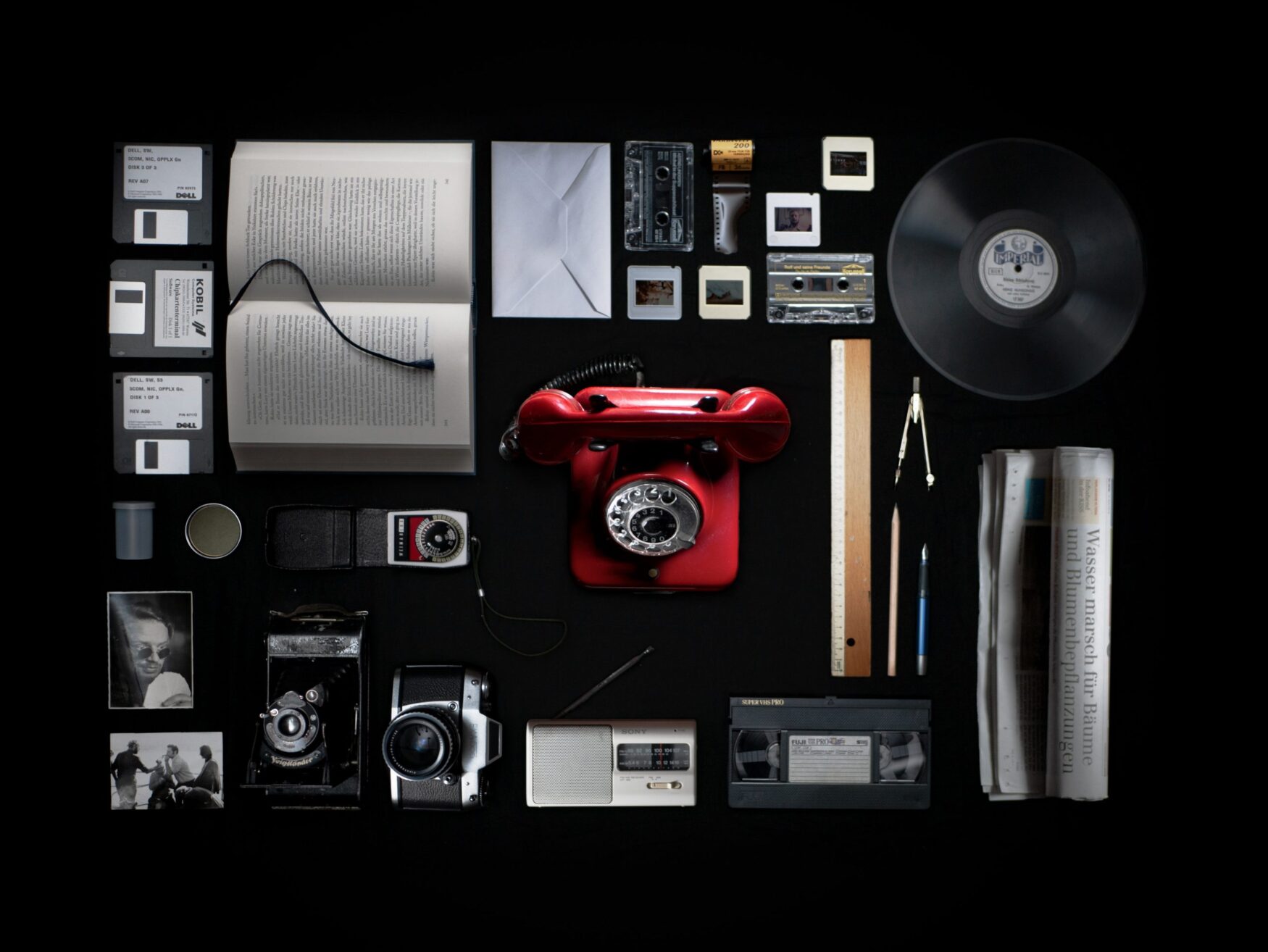
    Going back in time to the start of the 20th century, 1901, the radio was just barely transforming into what we know it as today. Radios were invented during the 1890s by many people around the world, but popularized particularly by Italian inventor, Guglielmo Marconi. But, the problem with the radio during this time was that it was only capable of sending and receiving Morse code.

    By 1914, Canadian inventor, Fessenden, developed the technology that allowed “consistent broadcast waves powerful enough to transmit voices and music over thousands of miles,” and made the first voice and music recording. During World War 1, radios were sometimes used for communication, but it wasn’t until World War II that it really became useful. In the 1920’s, radio boomed when people began using it to transmit news and entertainment to people. Radios were put into cars and planes, they were used by churches, and they were used the most by the military to communicate.

    Small electronics on desk
    Photo by Lorenzo Herrera

    During the 1940’s, the first ever computer was created, and it is nothing like how we know it today. In 1941, German engineer Konrad Zuse invented the Turing-complete computer which was able to perform general calculations and was even used to “solve wing flutter problems in German military aircraft.” However, this computer wasn’t able to hold any information! So, when IBM invented the IBM 350 Disk Storage Unit in 1956, it changed how businesses were able to use the computer.

    The TRS-80 was invented in 1977 and was considered the first personal computer with a keyboard and screen attached to it. Not to be cliché, but the rest really is history! Computers only got more advanced as the years went by, allowing users to access “dot com” websites by 1985, use graphics and music on PCs by 1993, and play video games by 1994! All of these abilities are so seamless today because of how quickly the technology has been advancing, now people are finding ways to turn computers into a money-making machine

    Bitcoin Trophy
    Photo by André François McKenzie

    Coming more into the present time, cryptocurrency is one of the latest technological advancements of the century. Cryptocurrency has technically been around since 1983 when David Chaum invented eCash, a cryptographic system. Later he invented “DigiCash” in 1995, then the term “cryptocurrency” was created in 1998. “That year, Wei Dai began to think about developing a new payment method that used a cryptographic system,” and he pioneered the unsuccessful yet impactful “B-Money.”

    When the stock market crashed in 2008, somebody under the pseudonym Satoshi Nakamoto created the first official cryptocurrency “Bitcoin” to “create a new way of payment that could be used internationally, decentralized, and without having any financial institution behind it.” In order to purchase with bitcoin, it runs on a “triple entry” system which means that “every time there’s a new transaction, the sender, receiver, and a third-party must confirm and agree on the transaction.” Using this system maintains anonymity and trust, but makes it incredibly hard to trace.

    Today, radios could be considered outdated to some, but they remain useful with “85 percent of the adult population listening to radio at least weekly” according to Deloitte in 2019. Computers have only gotten more useful as time has gone on and according to Statista, there were 4.66 billion active internet users worldwide as of January 2021. While it’s still new, cryptocurrency is currently booming. In March of 2021, the total value of bitcoin surpassed $1 trillion and less than a month later the cryptocurrency market surged over $2 trillion.

    Written By: Kathryn Cottingham

    November 12, 2021

    To read more blogs, check out https://nstem.org/staging/blog/