Author: Eric Magers

  • Sensor Imaging

    Sensor Imaging

    Image credit

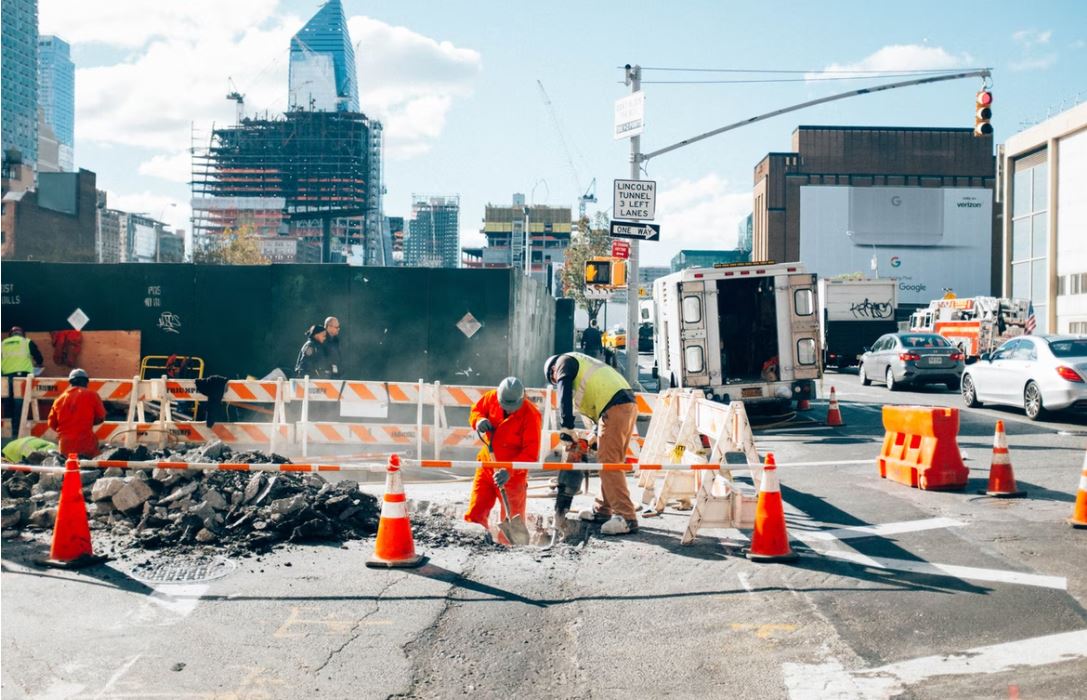
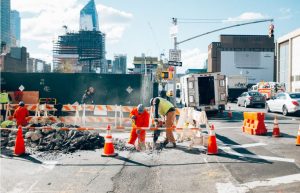
    Detecting objects underground using imaging and sensor technology has always presented a challenge to those seeking to look below the Earth’s surface. Many times, while digging underground, one must rely on poorly-kept records to search for subsurface objects rather than accurate detection technology. However, a recent experiment conducted by British scientists may be a sign of change (ScienceDaily).

    Researchers at the University of Birmingham have successfully used a quantum gravity sensor to detect a tunnel underground. This discovery is the first of its kind in the field of quantum sensors and has implications for many fields such as archaeology and national security. Physicist Kai Bongs from the University of Birmingham called the successful use of the device “an Edison moment,” noting the massive potential for such technology can change the landscape of many fields of study. If it is widely adopted, the sensor could help predict underground natural phenomena such as earthquakes, and find archaeological artifacts and structures buried below the ground (ScienceDaily). The device could also play a role in the construction industry by detecting underground tunnels and unstable ground. Detection of such anomalies would be an important tool to construction workers who want to know if it is safe to build a large structure in a particular area (ScienceAlert).

    Image credit

    The tool the scientists used in their experiment is called a quantum gravity gradiometer and is able to detect objects by analyzing variations in microgravity and the behavior of atoms. The device was developed under the Ministry of Defense and the Gravity Pioneer project (ScienceDaily). This sensor is more reliable than current gravity sensors, which can produce poor results when faced with environmental factors like vibrations and uneven terrain (Science Alert). Similar devices to the instrument used in the experiment have been in development for over two decades. The main goal for these devices has been to design them so that they may be used more practically in an outdoor setting (ScienceAlert).

    Image credit

    Though this discovery is being celebrated for its potential impact, the device may see improvements and further development in the coming years. The scientists who conducted the experiment say that there are currently limitations on the size and types of structures that can be identified underground. For instance, an object with a similar density to its surroundings will be harder to find with this technology. However, the scientists believe that the device’s sensitivity can be improved with further modifications and expect practical use of the technology to increase within 5-10 years (ScienceAlert).

    Written by: Matthew Jenkins

    Date: March 11, 2022

    Sources:

    https://www.sciencealert.com/quantum-gravity-sensor-enables-us-to-look-under-earth-s-surface-in-scientific-first

    https://www.sciencedaily.com/releases/2022/02/220223111238.htm
    https://www.sciencealert.com/quantum-gravity-sensor-enables-us-to-look-under-earth-s-surface-in-scientific-first


  • Geomagnetic Storm Destroys SpaceX Satellites

    Geomagnetic Storm Destroys SpaceX Satellites

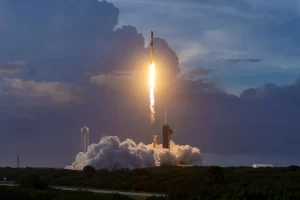
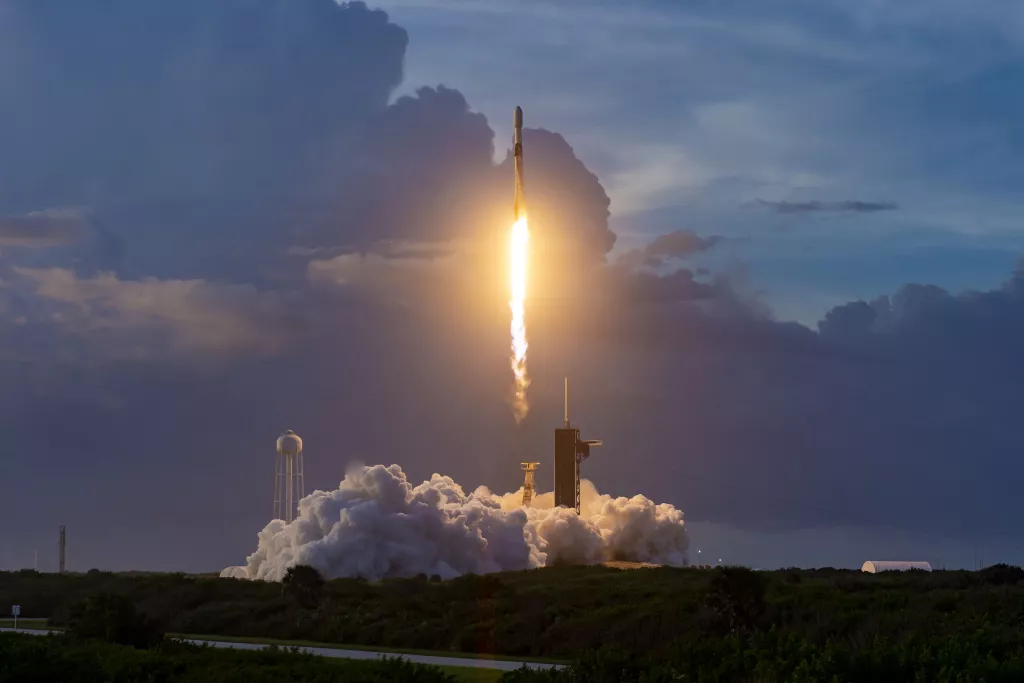
    In early February, an aerospace company going by the name “SpaceX” managed to launch 49 satellites into space. The satellites were part of a program called “Starlink”. The initial purpose of this program was to provide fast internet service for customers no matter where they were considering the satellites could provide it using their location. The Starlink program started back in 2019 and SpaceX has put about 2,000 satellites into Earth’s orbit. The goal of the company is to place as many as 42,000 satellites into an “Earth-orbiting mega constellation”.

    Image credit

    After SpaceX launched the satellites into space, just a day later, a huge geomagnetic storm swept through the area. A geomagnetic storm occurs when there is a surge in solar wind which causes charged particles from the sun to advance towards Earth’s magnetic field. The entire storm causes drag to increase significantly. Since the satellites were in low orbit of Earth, the drag caused them to fall back into Earth’s atmosphere. SpaceX purposely positioned the satellites at a low orbit level in case there was a need to dispose of them in the event of a post-launch failure. The GPS systems on the satellites showed that the storm caused atmospheric drag to increase by 50% higher than previous launches. The satellites were commanded to “take cover” by flying “edge on”. This meant their position was altered to a position that made them as thin as possible; to halt the rapid deceleration of the satellites. However, the drag from the geomagnetic storm was just too much, causing 40 of the 49 satellites plummeting back down to Earth.

    Magnetic lines of force surrounding Earth known as the magnetosphere against Sun s solar wind. Earth’s magnetic field, the flow of particles. Element of this image furnished by NASA.

    Image credit

    Although this seems like a great idea, it has accumulated criticism from space organizations. Their concern is that the ‘SpaceX’s’ satellites for the ‘Starlink’ program clog up orbital slots that could have been used by other companies or other countries. However, the Director General of the ESA stated that “[Elon] Musk was ‘making the rules’ in space, and he called for the European Union and other countries to coordinate so that SpaceX’s satellites did not prevent others from launching their own.”

    Falcon 9 rocket displayed on the left; SpaceX is a private American aerospace manufacturer

    Image credit

    Similarly, astronomers are also criticizing the program by saying that they increased light pollution. Astronomers are saying that the satellites often leave bright streaks in the night sky which ruins astronomical observations. In addition, a 2021 study showed that there were 9,300 tons of space junk, which had already increased the brightness of the night sky by 10%.

    Image credit

    In conclusion, the Starlink program will continue to be a controversial issue that will either provide great benefit in the space industry or result in a negative view from the public view. No matter the result, everyone can definitely learn from mistakes and try to improve satellites to withstand geomagnetic storms in the future.

    Written by: Abishek Kanthan

    Date: March 7, 2022

  • International Women’s Day

    International Women’s Day

    Image credit

    “Gender equality today for a sustainable tomorrow.” This is this year’s theme for the United Nations’ observance of International Women’s Day on March 8th.

    The United Nations first recognized March 8th as International Women’s Day in 1975. They began having annual themes for the day in 1996. This year’s theme stems from how women are more vulnerable to the impacts of climate change compared to men. A key reason for this trend is that women make up the majority of the world’s lower class and are more dependent on natural resources, which are threatened the most by climate change. 

    The UN wants to empower women to have a voice and be active in making decisions relating to climate change because a sustainable future is not possible without gender equality.


    How Did International Women’s Day Begin?

    The fight for women’s rights began in February 1908 in New York City. Women were becoming more vocal and active in going against gender inequality. There were 15,000 women who marched throughout New York City campaigning for shorter working hours, better pay, and equal voting rights.

    In 1909, the Socialist Party of America celebrated the first National Woman’s Day on February 28th. National Woman’s Day was celebrated on the last Sunday of February until 1913.

    In 1910, a leader of the Women’s Office for the Social Democratic Party in Germany named Clara Zetkin suggested the idea of an International Women’s Day where women every year in every country should advocate for women’s rights and share their demands. 

    The first International Women’s Day was held for the first time in Austria, Denmark, Germany, and Switzerland on March 19, 1911.

     Finally, in 1913, there was an agreement for International Women’s Day to officially take place on March 8th to be in line with Russian women who celebrated the day on the Gregorian calendar’s February 23rd. 

    Russia had one of the most notorious International Women’s Day despite it not being their first. On February 23 1917, the equivalent to our March 8th, Russian women held a protest that directly led to gaining the right to vote. Many other countries looked to Russia as an example of what women could change for themselves.


    #BreakTheBias

    In 2001, the International Women’s Day website was launched to help with organizing the day by creating annual themes, campaigns, and events. For 2022, the theme is #BreakTheBias. This theme calls for people to imagine a world without stereotypes and bias to create a diverse world where differences are valued and celebrated. This way, we can move forward towards women’s equality. 

    On social media, the hashtags being used are #BreakTheBias and #IWD2022. Alongside these hashtags are people posing by crossing their arms to symbolize an “x” in solidarity. 


    What To Do For International Women’s Day

    Bias makes it harder for women to move ahead and gain gender equality. So to follow the theme of this International Women’s Day, learn to address any deliberate or unconscious bias you have and actively call out gender bias, discrimination, and stereotyping when you see it to fuel gender equality.

    The International Women’s Day website also lists out events for all around the world that people can participate in such as the “Celebrating Arts & Women in Tech Live VR” in New York or the “Diversity-Equity-Inclusion” event in Hellerup, Denmark. 

    You can also wear the colors of International Women’s Day! Traditionally, purple is worn on this day. Green and white are also considered the colors of International Women’s Day due to the roots these colors have in the United Kingdom’s Women’s Social and Political Union. 

    Regardless of it being International Women’s Day, make sure to work on your gender biases and advocate for a sustainable future with gender equality!

    Image credit

    Citations:

    Haynes, S. (2021, April 29). Why international women’s day is March 8: A radical reason. Time. Retrieved March 7, 2022, from https://time.com/5187268/international-womens-day-history/

    History of international women’s day. International Women’s Day. (n.d.). Retrieved March 7, 2022, from https://www.internationalwomensday.com/Activity/15586/The-history-of-IWD#

    In Focus: International Women’s Day. UN Women – Headquarters. (2022, March 1). Retrieved March 7, 2022, from https://www.unwomen.org/en/news-stories/in-focus/2022/03/in-focus-international-womens-day

    IWD 2022 campaign theme: #BreakTheBias. International Women’s Day. (n.d.). Retrieved March 7, 2022, from https://www.internationalwomensday.com/Theme

    Mayorquin, O. (2022, March 7). #breakthebias: What to know about international women’s day and the theme for 2022. USA Today. Retrieved March 7, 2022, from https://www.usatoday.com/story/news/world/2022/03/07/international-womens-day-2022-theme/9413398002/

    United Nations. (n.d.). International Women’s Day. United Nations. Retrieved March 7, 2022, from https://www.un.org/en/observances/womens-day


    By: Amanda Aber

    Written On: March 7, 2022

  • March: Literacy Month

    March: Literacy Month

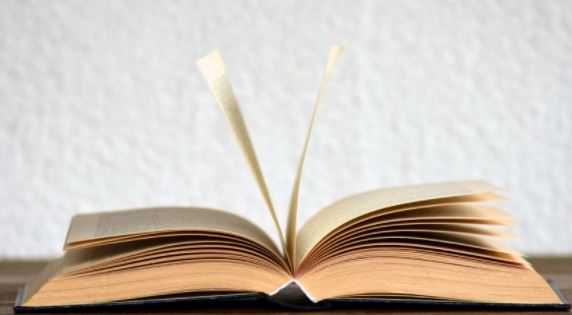
    I hope that everyone wished Dr. Seuss a happy birthday on March 2nd! In honor of the legendary children’s author, the National Education Association assigned March 2nd to be “Read Across America” Day. This special day kicks off Literacy Month which encourages Americans to read every day of March!

    Image credit

    Why Is Literacy Month Important?

    With the main goal being to inspire people of all ages to read every day of the month, Literacy Month can benefit everyone who participates in the near and distant future. 

    To begin with, reading has many health benefits. Reading requires thought and consideration which activates different parts of your brain. By reading, you can strengthen connections in your brain. Reading also strengthens memory and attention which are cognitive functions that are likely to be negatively affected as you get older. By reading more, you are protecting your cognitive function. 

    Furthermore, reading is also good for mental health. It can reduce stress by lowering your heart rate and blood pressure. Additionally, children will build more confidence in their ability to read which can help them in all areas of schooling since reading is prominent in all subjects. Increased literacy skills also means increased test-taking skills, so more reading can help students succeed in school. This helps students become less stressed due to their new ability that will hopefully help them pass!

    Also, books can provide people with a sense of identity or aspiration through the characters they can feel connected to. Those going through a tough time can also use books as a fantasy world to escape to, providing them with strength and encouragement. 

    Overall, Literacy Month is important in encouraging people to improve their mental health, confidence, and their aspirations. 

    Things To Do During Literacy Month

    Read Books

    Reading is not only essential for education and development, but it is also fun! Here are a list of books recommended by “Read Across America” to check out during March:

    • For an Elementary level, read Jump at the Sun: The True Life Tale of Unstoppable Storycatcher Zora Neale Hurston by Alicia Williams.
    • For Middle School level, read We Belong by Cookie Hiponia Everman.

    For the Young Adult level, read With a Star in My Hand: Ruben Dario, Poetry Hero by Margarita Engle.

    Photo by cottonbro from Pexels

    Donate To Charities 

    There are many charities that work to help children with their education by providing additional resources and opportunities. Here are some charities you can donate to during March:

    • Arlington Housing Corporation (AHC Inc.) is a non-profit developer of affordable housing for low-income families. They have a Resident Services program which provides children with After-School literacy activities, Teen Tutoring, College and Career Prep, and Summer Camp.
    • Reading Is Fundamental is dedicated to creating a literate America by providing children choice and access to books and engaging families in reading activities to motivate a lifelong passion for reading. 
    • The Sesame Street Yellow Feather Fund (Sesame Workshop) is the non-profit that created Sesame Street, the TV show made to teach children. Through their impact programs, the Yellow Feather Fund is active in over 150 countries and aims to help children become smarter, stronger, and kinder.

    Take some time during Literacy Month to do some reading, either alone or with family and try to improve your literacy skills. Or you could donate to charities to help children around the world improve their skills as well!

    Citations

    Celebrate National Reading Month This March. America’s Charities. (2022, March 1). Retrieved from https://www.charities.org/news/celebrate-national-reading-month-march#:~:text=In%20honor%20of%20Dr.,of%20education%20and%20professional%20development

    Celebrate National Reading Month…even if your child can’t read yet. LeapFrog. (n.d.). Retrieved from https://www.leapfrog.com/en-us/learning-path/articles/march-is-national-reading-month-even-if-you-dont-readyet

    The Importance of Reading Month. My Virtual Academy. (2021, July 14). Retrieved from https://www.myvirtualacademy.com/blog/books/importance-reading-month/

    National Education Association. (n.d.). Play With Stories. NEA. Retrieved from https://www.nea.org/professional-excellence/student-engagement/read-across-america/2021-2022-calendar/march-2022

    Tabackman, L., & Mannis, R. (2020, December 3). 5 ways reading benefits your health – and how to make reading a daily habit. Insider. Retrieved from https://www.insider.com/benefits-of-reading

    By: Amanda Aber

    Written On: 3/2/22

  • The World’s Methane Ultra-Emitters

    The World’s Methane Ultra-Emitters

    Image Credit

    Using satellites, a group of scientists from France and the United States has successfully identified a number of methane “ultra-emitters” which produce approximately 8-12% of the methane leaking into the Earth’s atmosphere. According to scientist Tom Lauvaux of the University of Paris-Saclay, stopping these leaks would be beneficial to the planet and would save billions of dollars (ScienceNews).

    Methane ultra-emitters are sources that leak at least 25 metric tons of methane per hour in irregular bursts. Most of these ultra-emitters are located in six countries, which include the United States, Russia, and Turkmenistan. Turkmenistan contained the most ultra-emitters of the six countries (ScienceNews). In total, the satellite data, which was collected over a period of two years, detected around 1,800 ultra-emitters. These ultra-emitters make up a small fraction of the sources that leak methane into the atmosphere, but account for a disproportionately large amount of the gas emissions (Eco-Business).

    Image Credit

    Methane is currently the second largest contributor to climate change, just under carbon dioxide. These two greenhouse gasses have different rates of degradation in the atmosphere. Methane usually degrades within ten to twenty years, so it doesn’t accumulate as much as carbon dioxide, which can take centuries to degrade. However, methane also has a much higher potential to warm the atmosphere (ScienceNews). Stopping the methane ultra-emitters from spewing gas into the atmosphere would put the world in a better position to fight global warming (The Economist).

    The scientists who made the discovery calculated that stopping the leaks from ultra-emitters would be the equivalent of removing 20 million vehicles from the road each year. This would also prevent around 1,600 annual deaths from heat exposure. Stopping the leaks could be as simple as fixing damaged pipelines, meaning that these improvements would come at very little cost to the countries that contain methane ultra-emitters (Washington Post).

    Image Credit

    Currently, the United States is already working on regulations which would cut back on methane emissions. The Environmental Protection Agency’s proposed regulations would reduce methane emissions by more than 40 million tons between 2023 and 2035 (NaturalGasIntel). These proposed regulations come after the COP 26 Climate Summit in Fall of 2021 where more than 100 countries, including the United States, signed a pledge to cut back on methane emissions by 30% by 2030. According to President Biden, the agreement will reduce asthma and respiratory illnesses while also increasing food supplies by cutting crop losses (Independent).

    Written by: Matthew Jenkins

    Date: 3/14/2022

    Sources:

    https://www.washingtonpost.com/climate-environment/2022/02/03/cracking-down-methane-ultra-emitters-is-quick-way-combat-climate-change-researchers-find/

    https://www.naturalgasintel.com/biden-administration-says-proposal-to-slash-u-s-oil-natural-gas-methane-emissions-to-cost-pennies-per-mcf/

    https://www.eco-business.com/news/low-cost-curbs-of-methane-leaks-from-ultra-emitters-could-save-billions-report/

    https://www.independent.co.uk/climate-change/news/cop26-methane-pledge-greenhouse-gas-b1949850.html

    https://www.sciencenews.org/article/satellites-locate-methane-ultra-emitters

    https://www.economist.com/science-and-technology/2022/02/05/targeting-methane-ultra-emitters-could-cheaply-slow-climate-change

  • The Importance of Music in Education

    The Importance of Music in Education

    Image Credit

    Overtime we have witnessed the elaboration and connection that links music and intelligence. Certain studies, typically conducted by universities, show the science that supports the fact that students who incorporate music into their education tend to perform better than their non-musical peers in subjects such as math, science, and language courses.

    According to a study of more than 100,000 students conducted by researchers at the University of British Columbia, students who were highly engaged in music were more likely to score higher across all subjects. In fact, students who started learning music early on and continued to do so in high school were shown to be one year ahead of their peers in terms of test scores. This trend was found to be especially true if the students were practicing instrumental music (APA).

    Image Credit

    One common counterargument to studies like this one is that the correlation between musical ability and academic achievement is not a direct relationship. Rather, some would argue that a variety of other factors are responsible for such findings and that music is not necessarily the link to higher scores or comprehension.

    Researchers at the University of Kansas conducted their own study to determine if the relationship between music and academic performance would still be found even if factors such as race and income were controlled. To the surprise of Martin J Bergee, who conducted the study, despite accounting for these variables they did not affect the outcome. Regardless of location, race, and income, students who played any instrument tended to perform better in education such as math comprehension than those who were not involved in any musical activity. (Science Daily).

    Image Credit

    The researchers at UBC hypothesized that the relationship between music and essential skills in the classroom may come from the teamwork, hand-eye coordination, and better listening skills learned from music classes where students must learn to read musical notation and keep in time with other musicians while also training their ears to recognize the relationships between various pitches (APA).

    But classroom benefits from music education are not exclusive to high school students only. One study published in 2014 in the journal Procedia – Social and Behavioral Sciences showed that musical education also enhances the development of children as young as three years old, specifically in the realm of language learning. The study determined that children who participated in music classes were better equipped for learning a second language (Procedia).

    Furthermore, based on research and skills developed we can determine that music may have a strong link between education and comprehension and is overall a beneficial subject for students in the classroom. It is beneficial to students of all academic fields, including STEM!

    Written by: Matthew Jenkins

    Date: 2/8/2022

    Sources:

    https://www.apa.org/news/press/releases/2019/06/music-students-score-better

    https://www.sciencedaily.com/releases/2020/11/201130150413.htm

    Influence of Music Training on Language Development. A Longitudinal Study – ScienceDirect