Author: Eric Magers

  • The Historical and Scientific Significance of the Winter Solstice!

    The Historical and Scientific Significance of the Winter Solstice!

    Every year, between December 20th and 23rd, a winter solstice occurs in the Northern Hemisphere and results in not only the shortest day and longest night of the year, but also the start of Winter! Dating back to the Neolithic period, the winter solstice is seen by many around the world as a time to celebrate culture, religion, and astronomy!

    So, how does this winter solstice occur? Because our Earth is tilted on its axis while it spins, the Northern and Southern hemispheres receive unequal amounts of sunlight. As a result, we experience seasons and solstices! When the northern hemisphere is at its maximum tilt, the hemisphere will then have an unusually short period of daylight and the longest period of nighttime. This extreme tilt lasts only a minute to us, but as a result of the solstice, each day will progressively get longer by the minute. This goes on until June in which the summer solstice occurs!  

    Around the world, the winter solstice is celebrated through traditions or feasts, as well as the gathering of communities and families. As explained, this scientific experience dates back to the Neolithic period and proof of that lies in the prehistoric monument, “Stonehenge,” which dates back to 2500 BC. Many have theorized the importance and reason for the Stonehenge’s existence, but evidence shows how the stones were set up in order to know when this solstice occurs to mark the end of the farming season. English Heritage explains that the stones are set up for the sun to shine directly through them on two days, the winter solstice and the summer solstice.

    Image Credit by Dyana Wing

    In Iran, Yalda is a Persian festival to celebrate the sun. The celebration lasts all night on the night of the solstice, so some families stay up eating food together to experience the sunrise. This celebration is considered a birthday for the sun and a victory of light over darkness. In China, this tradition is referred to as Dong Zhi, or the “arrival of winter.” Families will gather on this night to have great meals together while hoping for a warm spring in the future. 

    Image Credit by Sina HN Yazdi

    In Ancient Rome, Saturnalia was a time to honor the planet Saturn, which is connected with the Roman god of agriculture, and rebuild connections within the community. Most businesses and schools were closed, and wars were paused, but this resulted in crime rising because nobody was enforcing the law on this day. Eventually, the tradition overall faded, but many still celebrate it today.

    The winter solstice is one of the few things everybody on earth has in common, so it is sure to be something to be observed and enjoyed. Marking the end of the warm weather and fun in the sun, the winter solstice brings in winter chill and long-drawn-out days. Get your coats and hot chocolate ready to welcome the winter solstice!

    Written By: Kathryn Cottingham

    November 24, 2021

  • How to Explain the COVID Vaccine to Your Children

    How to Explain the COVID Vaccine to Your Children

    The Coronavirus pandemic has created many changes and new norms for our society. Although many people have been vaccinated in the past for a variety of diseases, the vaccines used to prevent COVID-19 have more buzz around them than has been seen in a long time. Discussions about different vaccination brands, getting one or two doses, and political conflicts around the vaccine have become a regular occurrence. With false information constantly being thrown around as facts, it is important to keep yourself and your family informed. Here are a few facts about the COVID vaccine to make sure your children know before they get confused by misinformation.

    Image credits

    How Vaccines Work 

    One of the biggest debates around the vaccine comes from a disagreement about if taking the vaccine is safe and effective or if it is useless and potentially dangerous. It is important for children to know that modern science has supported vaccinations for decades as preventative protection against disease that incorporates our understanding of both the human body’s defense system and viruses. According to the CDC, the basic biology behind these concepts is that viruses enter the body as germs that attack our cells and multiply. When this happens, our white blood cells are able to fight these germs in several ways, though it takes time for them to learn how to do so. Once these cells figure out how to fight the virus however, they never forget and are able to fight it off much more easily in the future. When explaining this concept to your children, it might be helpful to describe this as a story of good versus evil, with the big bad germs attacking our innocent cells. 

    A vaccination introduces a weakened variation of a virus (in this case COVID-19) into your bloodstream, allowing the white blood cells to familiarize themselves with it. The version of the virus that is exposed to your system is safe and has been carefully measured and studied. Although it will not be enough to actually make you fully sick, you may experience slight symptoms for a day or two as your body learns how to fight the germs. After your white blood cells know how to fight off the COVID-19 virus, they will remember and be able to respond quickly and effectively if the virus ever returns.

    Vaccine Brands

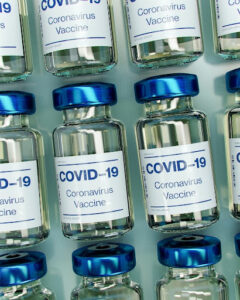
    Another major difference between the COVID-19 vaccine and previous vaccines is that the general public knows that several companies are making slightly different vaccines. In the United States, the most common brands are Pfizer, Moderna, and Johnson and Johnson (J&J). These names have become so well-known that it is likely your kids have already heard of them and know they are related to the coronavirus. Although all three of these companies’ vaccines are safe, effective, and FDA approved, there are some differences between them. 

    One of the most noticeable inconsistencies is that while the Pfizer and Moderna vaccines require two doses, the J&J vaccine only requires one. You can explain this to your children by simply telling them that the vaccines interact differently with the body and Pfizer and Moderna require more exposure to deliver full protection. According to Yale Medicine, another difference is that Pfizer and Moderna have been observed to be slightly more effective, with 95% and 94.1% efficacy respectively, as opposed to the J&J vaccine that has a protection effectiveness of 72%. Despite this, the J&J vaccine is the easiest to transport and store, while Pfizer is the most difficult to work with, showing that there are costs and benefits with each option. Additionally, Pfizer is the only vaccine that is recommended for those under the age of 18. This is an important point to take into account when deciding which brand is the best for your family.

    Image Credits

    Social Responsibility and Herd Immunity

    When discussing the COVID-19 vaccine to your children, it is important to acknowledge the social responsibility one bears to protect themselves and others from the virus. When getting vaccinated, an individual is not only benefiting themselves, but they are helping their family and friends to get through the pandemic. This can be understood through the context of herd immunity, a concept stating that when a large percentage of the population becomes immune to a disease or virus, the likelihood of that illness spreading and thriving decreases dramatically. Thus, when your children are getting vaccinated, they are helping protect themselves, their families, their schools, and the larger surrounding community as well.

    As the pandemic approaches its conclusion, it is important to be able to decipher between facts and fiction, and it is crucial that your children can do so too. Helping your kids understand that vaccines are helpful and effective and ensuring that they receive a vaccination themselves makes the world a safer place. Keep yourself informed so you can answer any questions your children may have, while keeping them and the rest of your family protected.

    Written By: Matt Beetham

    Your NSTEM Journey Begins Here!


  • Most recent biology breakthroughs

    Most recent biology breakthroughs

    Image Credits

    When skimming any biology textbook, one can notice many significant advances have occurred lately. Nevertheless, more meaningful and even rarer advances are breakthroughs. A breakthrough is more than just an advance. For something to be a breakthrough, it must have encountered resistance. It must have broken through something. Here are some of the most sudden, dramatic, and essential biology breakthroughs from the last 30 years.

    1. RNA interference discovered 

    In their first biology high school classes, students are taught the basics of how genes are expressed: DNA, the cell’s database, is copied into the messenger RNA, which transports the information to the ribosome, where proteins are assembled. 

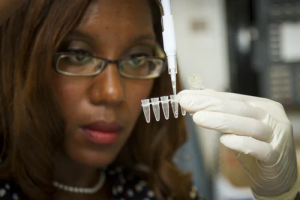
    But, not surprisingly, it is much more complicated than that. RNAi is short for “RNA interference,” and it refers to the phenomenon where small pieces from RNA can shut down protein translation by restricting the code that the RNA was transporting. In other words, the RNAi prevents the code from getting to the ribosome, so the protein is not assembled. 

    Why is this important? In addition to defending our bodies against viruses that try to insert themselves into DNA, it can potentially target malfunctioning proteins in various body cells, addressing a wide variety of health conditions that are otherwise difficult to treat. For example, it could be a crucial ally in the fight against cancer or autoimmune diseases. 

    American scientists Andrew Fire and Craig Mello discovered RNA interference after a series of experiments in 1998. This discovery was awarded a Nobel Prize in 2006, and it has led to significant health-related research, such as the investigation on “silence genes” that cause problems in our bodies.

     2. Human Genome Project

    Image Credits

    First articulated in 1998, the Human Genome Project was the international, collaborative research program whose goal was to complete mapping and understanding of all the genes of human beings. In 2003, they announced that they had completed the human DNA sequence up to 99.9! 

    This fascinating project will continue to provide vital information to allow other investigations to flourish and develop new tools and technologies. Moreover, it enables the possibility to find the genetic roots of disease and then create a treatment. 

    3. Stem cells created from mature skin cells

    Image Credits

    In 2007, Scientists at Oregon Health and Science University and the Oregon National Primate Research Center successfully reprogrammed human skin cells to become embryonic stem cells. Meaning these cells could transform into any cell in the body!

    It is believed that by stem cell therapies, doctors will replace cell damage through injury or disease. This therapy could mean a possible treatment for severe chronic illnesses such as Parkinson’s disease.

    4. Robotic limbs entirely controlled by the brain. 

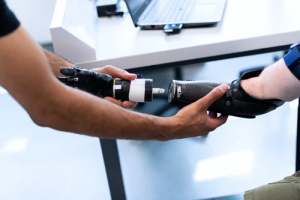
    In 2014, the U.S. The Food and Drug Administration approved the first prosthesis controlled by neural signals from the patient’s brain for the general public. 

    What is the difference with previous prosthetics? It can be controlled more precisely and efficiently, eliminates sores and pains, increases sensory feedback, allows for an easy attachment, and can be worn all day, every day! These improvements are possible because a titanium implant is inserted into the patient’s bone, serving as a metallic extension where the prosthetic is then fixed. This process is known as osseointegration (Osseo = bone)

    Image Credits

    5. The first animal cloned

    Dolly, the sheep, was the first mammal cloned from an adult cell. Cloned in 1996 by Keith Campbell, Ian Wilmut, and colleagues at the Roslin Institute, Dolly was known as “the world’s most famous sheep.” Cloned animals seem to escape from the science fiction world and, although they don’t, the scientific process behind their existence is fascinating. The production of a healthy clone proved that a cell taken from specific parts of the body of a grown mammal could recreate a whole individual. In the case of Dolly, the cell was taken from a mammary gland. Since Dolly, a large number of animals have been cloned. 

    Image Credits

    Aren’t you fascinated with the biology world? All these investigations have contributed significantly to making our lives and all the living system’s lives better. Yet, many breakthroughs are waiting to be accomplished. And, who knows? Maybe the next revolutionary investigation we will be talking about will have your name on it!

    Written by Guadalupe Lauro

    June 30th, 2021

    Your NSTEM Journey Begins Here!

  • I’m scared for my next test!  How do I deal with test anxiety?

    I’m scared for my next test! How do I deal with test anxiety?

    You spend all night studying for your big chemistry midterm, and you’re pretty confident about your knowledge. You memorize every concept, and you have taken all the practice tests your teacher had assigned. Except, half an hour before the test, you feel like you don’t remember anything! The moment your teacher sets the paper in front of you, you feel you’ve forgotten all you learned leading up to this moment and are extremely scared about the outcome.  

    Image Credit: Tim Gouw (Unsplash)

    If you feel this way, you are not alone. Test anxiety is a common type of performance anxiety that affects everyone ranging from kindergarteners to qualified professional candidates. Being nervous about a test isn’t bad. In fact, it can encourage one to prepare for a particular test in greater care and detail. However, test anxiety is a “combination of physical symptoms and emotional reactions that interfere with your ability to perform well on tests.”  Test anxiety can cause both physical and mental symptoms on a large range and can occur before or during the test. Physical symptoms can include excessive sweating, nausea, rapid heartbeat and shortness of breath, headaches, and feeling lightheaded or faint. In some cases, individuals who have severe test anxiety/other medical conditions might have symptoms that can lead to a panic attack. Test anxiety can also surface feelings of stress, self doubt, anger, loss of self-worth, self- loathing, fear and regret. There are a number of causes that can contribute to this: pressure or high stakes, fear of failing, perfectionism, being unprepared, or performing poorly on previous tests. Figuring out how to get in control of your test anxiety can tremendously boost your confidence and performance during a test, and this article highlights important tips and reminders to keep in mind during and before a test.


    Image Credit: Christian Erfurt (Unsplash)
    1. Prepare beforehand: A good way to be confident about your performance and not be anxious on the day of the test is to review the concepts well in advance multiple times. Cramming the night before the test may work sometimes, but that does not help you understand the concepts and have them stick in your head for further application. For example: you may know how to solve a problem using a formula, but not understand why we do it that particular way. Understanding the concept tested thoroughly before the test helps you tackle questions that you haven’t done before, by using application. Cramming before tests makes you feel less confident about your knowledge, and if you want to score well, studying early on is the way to go. There are many ways you can be motivated to start early, like tutors, study groups, or study buddies!
    2. Think positively: Self-deprecating talks can actually have a significant negative impact on your test performance. Saying things like “I’m going to fail the test.” or “I can’t do it, I barely studied!” will harm your performance. By saying these things to yourself, you are increasing your fear of failing, but also reassuring yourself that you won’t perform well, which is the exact opposite of what we want. Instead, understand that you can’t change how much you’ve prepared and try your best from what you know. While taking the test, instead of panicking about not understanding the question, stop and read the question again calmly. In some cases, you might even completely miss a question (even if you knew how to) because you told yourself you couldn’t do it. Visualize yourself taking the test with ease, and go at a steady pace when you sit down for your test.
    3. Get enough rest and eat well and prepare yourself physically: This tip can be crucial on your test day performance, as being hungry or sleepy diverts attention from the actual test. Even if it doesn’t, you will stay uncomfortable during the test, and it is best to stay well prepared before taking the test. Do not forget to use the bathroom if you need to before the test starts, as you will lose time if you go during the test. Additionally, if you know your classroom is hot/cold make sure you dress appropriately, so you aren’t uncomfortable while taking the test.
    4. It’s okay to be a bit scared: Remember, you are being quizzed on the material you have learned. Your grades will never define your self worth or how smart you are. It is okay if you don’t understand how to solve something, just skip the question and come back to it later. The goal is to learn, and if you miss something on the test, you have a chance to brush up on that skill later (so you can remember it easier!). It is normal for everyone to be a little nervous about the test, but if you can control this to work in your favor, your performance will benefit! And lastly, don’t memorize content for a grade, but learn to understand. That way you can apply the concept in any situation.
    5. Try relaxation methods/devices before the test: Maybe you like watching cute cat videos, meditating, playing with a stress ball, or even eating your favorite dessert. Self care is super important before a test, as it keeps you calm and in a peaceful state of mind. Being anxious only makes you more anxious (the snowball effect). Your mental health is more important than any test you ever take, and if possible, always prioritize yourself and your health first.

    After you submit your test, realize that it is over and be proud of yourself no matter what you scored. If you aren’t happy with your performance, take it as a chance to learn and better your skills for future tests. While taking a test, remember it is important to stay comfortable and go at a medium-steady pace. If you ever need further assistance, make sure you ask for help from your friends or teachers. Good luck on your next test, and keep learning!


    Image Credit: Javier Trueba (Unsplash)

    Written By: Nidhi Sakpal

    August 6, 2021

    Your NSTEM Journey Begins Here!

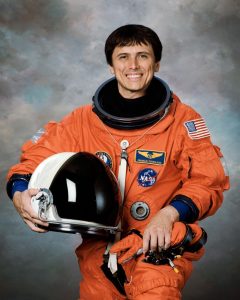
  • Franklin R. Chang-Diaz: The First Latino in Space

    Franklin R. Chang-Diaz: The First Latino in Space

    Image Credits

    What once was a place that only the imagination could reach, space has taken on a much more concrete reality for Americans. The Space Age is underway, and there is much work to be done in the STEM fields to bring space closer to home. As time goes on, more challenges are discovered, and as varied as those challenges are, so too are the people that take on those challenges. People from all places and backgrounds come together in the United States to overcome obstacles and open new possibilities to future generations. 

    The United States is not the only country to have a well developed space program but many people from other countries come to the United States to gain access to the technologies only available here. It is this openness to accepting potential from anywhere in the world that separates the United States from anywhere else. In reverence to the “melting pot” that makes up our society, Hispanic Heritage month makes a point to celebrate those who have Hispanic heritage and what they have contributed, large or small. 

    Space is hostile and requires the ultimate fortitude, intelligence, discipline, and strength in a person in order to withstand the difficulties. It is a privilege and an honor to be taken into space. The dangerous environment of space is obvious but the importance of the work that astronauts do is even more significant. Without such brave souls, conducting  research in the most remote environments, we would know very little about ourselves, where we are in the universe, and where we are going. During Hispanic Heritage month, we recognize one such person: Franklin R. Chang-Diaz. 

    Image Credits

    Dr. Franklin R. Chang-Diaz is a remarkable individual yet his story seems so ordinary. He was born in Costa Rica in 1950 where he would spend the first 17 years of his life. He then left his home country of Costa Rica in his pursuit of his American Dream to be an astronaut. Dr. Chang-Diaz recalls in an interview his fascination with space and science as a child. He makes an unexpected note about his time on the space shuttle Columbia as he compares it to the feeling he remembers as a kid, pretending that his decorated cardboard box was a spacecraft. He says that the feeling of being on the shuttle and being in the box was the same feeling. In essence, then, Dr. Chang-Diaz has always been an astronaut, even as a child. It was his love for exploration and science that drove him to mature from that little cardboard box into the space shuttle Columbia. 

    Of course, Dr. Chang-Diaz had to make some adjustments when he moved from Costa Rica to the United States. As he describes in a brief interview, “I had to learn the language. I didn’t speak English. Usually, there is not enough money… dealing with discrimination, some level of it”. However he did not let any of that stop him from achieving his dream. Dr. Chang-Diaz got educated in the STEM fields by earning a Bachelor of Science degree in mechanical engineering from the University of Connecticut in 1973 and a Doctorate in Applied Plasma Physics from the Massachusetts Institute of Technology (MIT) in 1977. After having proved himself by doing great work (like creating new plasma engines), NASA recruited him to become an astronaut in 1980. Dr. Chang-Diaz would go on to be a part of no less than 7 different missions to space, performing various tasks like deploying the Galileo spacecraft, conducting astrophysics experiments, and various repairs to the International Space Station. Today, Dr. Chang-Diaz is the CEO of Ad Astra which leads in plasma engine technology and design. 

    Image Credits

    It is not easy to be an astronaut. That is why we only send the very best and brightest people into space. Dr. Franklin R. Chang-Diaz is one of the very few Latinos ever to be put into space. A very humble man, he continues to work in the STEM fields, no longer as an astronaut, but instead an entrepreneur and leader for future engineers and physicists. He is a prime example that talent and genius can be found anywhere in the world. Let him be a beacon of inspiration for any Latinos/Latinas that have dreams to be an astronaut or engineer. If a small boy from Costa Rica can make his dreams come true, then so can you.

    Written By: Alexander Jones

    Your NSTEM Journey Begins Here!

  • STEM education: the Latest and Greatest Resources

    STEM education: the Latest and Greatest Resources

    Getting Started with STEM 

    Image credits

    NSTEM

    NSTEM is an amazing STEM resource for parents, students, and educators. These school- based chapters provide an extensive library of STEM resources; including curriculum, scholarships, grants, events and much more. NSTEM wants to create a lifelong passion for STEM with project- based learning.  Some benefits of joining NSTEM include building a community and culture focused on STEM, an easy to use web- based collection of tools, and motivating students to do their best in STEM subjects and awards and scholarships. 

    STEM rising

    The U.S. Department of Energy’s STEM rising resource inspires, educates, and sparks success in STEM. Resources and events from the National Labs, National Nuclear Security Administration, and program offices, promoting STEM at a governmental level. There are resources for everyone from k-12 students, university and continued learning individuals, teachers, and those in the STEM workforce. The U.S. Department of energy has an array of other STEM resources that are useful in STEM education. 

    Virtual Learning 

    Greenbank Observatory

    This website is a great science resource and can easily be used at home for students. With a wide variety of “try it at home” activities for a wide range from Easy-for-all to challenging. The Greenbank Observatory also provides downloadable family science labs that include printable materials and instructions. In response to Covid-19 they offer virtual tours of the Radio Astronomy and Greenbank Telescopes, and at a variety of time lengths. 

    Code.org

    Take a code break! This site has dozens of episodes lead by Founder Hadi Partovi, with guests such as Mark Cuban and Ashton Kutcher, mini- lessons on computer science concepts, and weekly challenges that cater to everyone. To keep the fun going with online learning, they provide projects and activities that can be done at home. Full courses for students from k-12 as well as beyond teaches computer science at home. Hour of Code is hour long tutorials designed for all ages if full courses are too long. 

    Encouraging Girls in STEM

    Image credits

    Carnegie STEM Girls

    This website is a great resource encouraging girls to pursue STEM. There are many resources showcasing women who have careers in STEM and more STEM careers. They provide a program called “Tour Your Future”, which provides opportunities for middle and high school girls to explore STEM careers with immersive , hands-on experience and site tours with female STEM professionals. There is so much more to explore on this site.

    SciGirls

    This resource has the goal of changing how girls look at STEM. Included in this website is a collection of videos and other documents, also included are resources in Spanish. The videos show the process of middle school girls who design their own investigations on a variety of topics. SciGirls created a set of strategies to engage girls in STEM and all the activities on the site incorporate these strategies. 

    Written by Olivia Kirven

    March 22, 2021

    Your NSTEM Journey Begins Here!