Author: Eric Magers

  • 22nd Annual World Space Week, “Women In Space”

    Starting October 4th, World Space Week Association (WSWA) is hosting its 22nd annual Space Week celebration. This internationally-held event is an observance of accomplishments within space science and technology and it will last through the week to October 10th. 

    The World Space Week Association formed in 1980 as “Spaceweek.” to celebrate the first Moon landing. According to World Space Weeks official website, “Spaceweek had spread to over 15 nations.” by 1999.  The United Nations then declared “World Space Week” to be celebrated annually around the globe. In 2000, the association held its first official celebration. 

    For the years following, themes have been picked with The United Nations to “increase the impact of World Space Week on all humanity further, by using a uniform theme globally.” This year’s theme, “Women in Space,” is to specifically showcase the contributions women have brought to space science and technology. The overall mission of this association, according to the United Nations, is to inspire students, demonstrate support for the space program, educate the public, and promote international interaction in space education. 

    Today, the event is considered to be the largest event on Earth “with over 8,000 events reported in 2019 and held in 96 countries,” as reported on WSWA’s website. According to World Space Weeks’ official website, 702 events have been scheduled so far. The association has partnered with the Space Foundation, to host their own virtual and in-person events. The Virtual panel, “Space Is Better Together,” and Space4U Podcast interview with former NASA astronaut, Dr. Kathryn Thornton are two events highlighted in a press release put out by Space Foundation. 

    To learn more about World Space Week, visit https://www.worldspaceweek.org

    Written by: Kathryn Cottingham

    October 6, 2021

    Resources


    Your NSTEM Journey Begins Here!

  • Telescopes That Have Mapped the Stars!

    Telescopes That Have Mapped the Stars!

    Image credits

    There is so much you can learn about space and where we are in the universe without ever having to leave Earth. With the help of telescopes, people have gotten a much closer look at all those little dots in the sky. It turns out that they are not little holes in a big blanket covering Earth, but actually stars, planets, and galaxies.

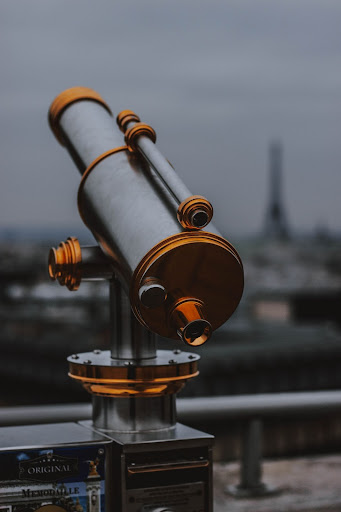
    Telescopes come in all sizes, from small and personal to absolutely gigantic. Different telescopes can detect visible light, radio, and even x-rays. There is a telescope for every job and there is a lot of work to do so let’s get going! 

    Optical Telescopes

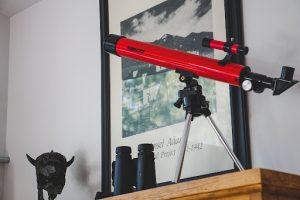
    The most common type of telescopes are optical telescopes. This means that they collect visible light to create a large, detailed image. There are two types of optical telescopes: refracting and reflecting. The less common of the two, refracting telescopes, use a lens to focus the light that passes through it in a very similar way to glasses you wear. So in a way, you have two low power telescopes right on your face! The more common optical telescopes use mirrors to bounce and focus light. While refracting telescopes tend to be small due to how much heavier lenses are to mirrors, reflecting telescopes can be small or very, very big. 

    Image credits

    Telescopes are measured by how large the collection surface is. The largest optical reflecting telescope in the world is the Gran Telescopio Canarias in the Canary Islands with a colossal area of 10.4-meters or 34 feet. There’s no way you could fit that in your living room! That is not to say that you couldn’t find yourself a decent telescope and make your own discoveries with an optical telescope. 

    Here is a guide to help get your stargazing started. 

    Radio Telescopes

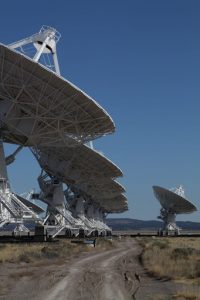
    If you thought optical telescopes were big, then you aren’t ready for radio telescopes! Radio telescopes work similarly to optical telescopes. They collect and focus radio waves that can then be studied to tell us information we could never see with our eyes. 

    The difference between these telescopes and optical telescopes is mostly size and materials. Radio waves are much longer than light waves which means that in order to catch them, you’re going to need a bigger net! Mirrors and lenses are not used on radio telescopes because radio waves do not need a smooth, reflective surface to be captured the same way light is captured.

    The largest single radio telescope in the world, the Arecibo Observatory, is located in Puerto Rico and has a diameter over 300 meters. This telescope is actually built right into the ground and only moves with the rotation of the Earth. 

    Image credits

    Other Types of Telescopes

    While the size of a telescope plays a key role in their ability to collect information, size is not everything. Sometimes it matters much more where your telescope is rather than how big it is. The Hubble Space Telescope floats over 360 miles over the Earth! This telescope is special in that it can collect visible, infrared, and ultraviolet light. 

    There are many advantages to being located above the atmosphere. Most obviously, telescopes in space do not have to wait until night time to collect data and are not affected by bad weather. Infrared and ultraviolet light are blocked by the atmosphere and thus can only be collected in space. Also, the atmosphere distorts visible light as well so a clearer picture can be made from space. 

    Telescopes are an astronomers best friend. An essential tool of the trade, every aspiring astronomer needs their own telescope. Every telescope is different so take some time to get to know yours and who knows, you might just make a discovery that changes the way we look at the night sky. 

    Telescopes That Have Mapped the Stars!

    Written by Alexander Jones

    October 16th, 2021

    Your NSTEM Journey Begins Here!

  • NSTEM President Featured at Student Kick-Off Event

    Ken Hecht will represent the National STEM Honors Society at the upcoming Thurgood Marshall Center Trust event. This upcoming event is entitled “Student Transformations,” and panelists will be discussing STEM-partnership models, college preparation, and academic policy. 

    According to the TMCT website, their mission is to educate and empower their community to chase equality, equity, and justice. They believe in the power of collaboration and relationship cultivation with professional, local, and faith-based partners alike. As a part of their mission, TCMT implements educational programs to help students overcome obstacles and celebrate their diversity. 

    “I am so very honored to have been asked to participate in the Thurgood Marshall Center Trust Annual Meeting as a panelist and speaker,” says NSTEM™ President Ken Hecht. “It speaks to how important the top leadership at the TMCT believe in the importance of STEM for the underserved populations that they are committed to serve!”

    Dr. Rick Lee, Vice Chair of TCMT, is a part of the NSTEM Advisory Council and personally invited Hecht to the event. He plans to emphasize that STEM education can start as early as kindergarten, but even more importantly, that it can transcend career and “last a lifetime!” Hecht’s speech will compare athletics to academics. Many parents encourage sports as early as kindergarten, and he doesn’t believe STEM should be any different. 

    Ken Hecht remembers discovering his passion for STEM in his college career. He was completely unaware of the educational opportunities available to him at the time. In his opinion, he was lucky to have made this discovery at all, but this isn’t what he envisions for the future. Hecht, and NSTEM , believe no student should have to be lucky in order to discover their passion for STEM subjects. 

    “A number of decades ago, there was no girls soccer in the U.S.,” he says. “And now, to think that first grade soccer is not available to girls? Preposterous! That is exactly what we are going to do for STEM Education.”

    Due to COVID-19 concerns, the Student Transformation event was rescheduled. It was originally planned for September 10th from 4pm-6pm. Currently, the new date is undecided, but we are excitedly waiting for its announcement!

    Written by: Emily Hyser

    September 14, 2021

    References:

    • Thurgood Marshall Center Trust Official Website: tmcsh.org 
    • Ken Hecht, Virtual Interview

    Your NSTEM Journey Begins Here!

  • Not All Great Minds Think Alike!

    Not All Great Minds Think Alike!

    There’s a common misconception that you have to be the right “fit” for STEM. From a young age, people craft a perception of where they fit into the world. Often, this perception is very black-and-white which allows little room for the proverbial grey area. 

    This can lead to a lack of exploration in multiple interests and natural skills. In short, it’s the generalization that limits curiosity. 

    At NSTEM™, we value creative minds, unique perspectives, and the pursuit of all passions even outside of STEM subjects. Simply put, because you paint doesn’t mean you’re barred from dabbling in chemistry or coding. Additionally, just because you code doesn’t mean you’ll never learn how to dance.

    To prove our point, we have compiled a list of people who are both influential individuals in STEM as well as in the arts. 

    Samuel Morse

    Image Credits

    “Before Morse was an inventor, he was an artist.” After he graduated from Yale, he became an apprentice to Washington Alliston, an acclaimed painter. From there, he pursued his passion for art at the Royal Academy of Arts in London. 

    While he primarily painted historical masterpieces, his most intricate painting is Gallery of the Louvre. 

    It was long after he gained notoriety from his rather large history paintings that he made a significant scientific discovery. In fact, Samuel Morse is more well-known for inventing the Morse Code than for his collection of artworks. 

    Fortunately, even after his remarkable invention and long-lived painting career, his passion soared. He founded the National Academy of Design and devoted his time to educating up-and-coming artists.

    Anna Atkins

    It’s impossible to study the world around you without noticing its beauty, too. 

    Image Credits

    Anna Atkins was a botanist who enjoyed taking pictures of her specimens. She began “motivated by her belief that the visual appearance of plants possessed both botanical importance and aesthetic interest.” Initially, her goal was to create Photographs of British Algae to accompany the Manual of British Algae

    After achieving this, she experimented with other subjects and photographic techniques which enabled her to grow as an artist. Unfortunately, her identity was removed from her work for a lengthy period. But now, she can be appreciated alongside her photographs for eternity. 

    Lisa Kudrow

    There are more recent examples of artistically inclined STEM figures. (Or, in this case, STEM-inclined artistic figures!) Kudrow is most popularly known as Phoebe Buffay from the ever-popular TV show Friends, but earlier in her life, she was a research biologist. 

    Before pursuing a career in acting, Lisa Kudrow received a Bachelors of Science in biology from Vassar College in New York. Afterward, she returned home to work with her father at his pediatric practice and to start her research projects. 

    With some encouragement, she started auditioning, but she didn’t give up her research right away. She earned a few small roles before being cast in her breakout role in Friends

    Strive to be Uniquely Passionate

    People are complex, unique, and capable of incredible talent and influence. Nobody will ever fit neatly into just one box, identity, or passion. At NSTEM, we believe creative talents can transfer to creative problem solving, fresh perspectives, and overall excellence in STEM fields. Don’t be afraid to step out of your comfort zone and try something different. Expand your mind, your interests, and your curiosity.

    You never know where it may lead you.

    Written By: Emily Hyser

    July 16th, 2021

    Your NSTEM Journey Begins Here!

  • Low Income Students: FAFSA and Other Resources

    Low Income Students: FAFSA and Other Resources

    A Pirate’s Guide to FAFSA and Other Resources

    Welcome Aboard, Matey!

    As a low-income, first-generation college student, I am familiar with the confusion and frustration of filling out FAFSA application forms and the guilt that comes with ever-increasing student debt. However, to think of us, underprivileged students, as bewildered seems unfitting, almost insulting. Furthermore, discussing matters as complex as FAFSA often confuses those who have never applied before. Instead, let’s change our perspective and imagine ourselves as pirates navigating unexplored territories with the promise of treasure. 

    Alas, college application season is upon us. Ahoy, my fellow low-income students and parents, a call for action beckon both! The dreaded FAFSA application looms in the dark, uncharted waters known as the college application process. I know facing this beast head-on seems like a daunting task that only an elite few may tackle with ease, but fear not, I am here to act as a guide. 

    Avast Ye!

    Image Credits

    Batten down the hatches, and let’s get your sea legs adjusted. The first step in completing your FAFSA application is understanding what FAFSA is. The Free Application for Federal Student Aid (FAFSA) is the form you need to fill out to get any financial aid from the federal government to help pay for college. Submitting the FAFSA is the most important thing you can do if you want financial assistance. You automatically qualify for a low-interest federal loan when you submit FAFSA. These loans are less expensive to pay back than many private student loans. Each year, over 13 million students who file the FAFSA receive more than $120 billion in grants, work-study, and low-interest loans from the U.S. Department of Education. The FAFSA asks for information about you and your family finances, including tax returns, so you may need a parent’s help completing it or help your student complete it.

    Savvy? Now, weigh anchor and hoist the mizzen. It’s time to set sail! There are three ways to fill out FAFSA: online at ed.gov, with the myStudentAid app, or printing and filling out a FAFSA form, then mailing it to the address on the form. NSTEM recommends filling out the FAFSA online or through the app. Both options offer tips to help you understand the questions, making them a lot easier to fill out and submit. The National Association of Student Financial Aid and Administrators and the Office of the U.S. Department of Education also have insightful tips on increasing eligibility for necessary financial assistance. You can file as early as October 1 for the following academic year. It’s a good idea to apply as soon as possible because financial aid is often given out on a first-come, first-served basis. There are also three types of FAFSA deadlines: college, state, and federal. The federal is June 30, the last day you can apply for federal aid for the following academic year.

    No Prey, No Pay! 

    Image Credits

    No prey, no pay!  Don’t hang a jib, lass! Perhaps you didn’t receive as much financial aid as you anticipated. Fear not, for there are plenty of other resources low-income students can utilize if need be. Many organizations have dedicated themselves to supporting the financial needs of low-income youth who wish to attend college. These organizations work to ensure that those with low-income backgrounds won’t be looked over or treated unfairly when it comes to education by working with students to create plans, finding scholarship opportunities, rewarding good grades, and advocating for equal opportunity. College Raptor has compiled a comprehensive list of a few organizations that have had notable success in providing students with the necessary funds to pursue their dreams. EduMed takes this even further by providing separate categories designated to an aspect of life a student may need financial aid. For example, resources for books and study material, food and family services, and even student housing. Blimey!

    X Marks the Spot 

    Land ho! I hope an old seadog like myself succeeded in steering ye in the right direction to the promised treasure of FAFSA. Perhaps you took advantage of other resources as well and added to your mountain of treasure. A word of advice to you scallywags: treat the college application process as if you were a pirate searching for gold (well, of course, I mean you are in a way!). As someone who has recently undergone the same process, I know it can be confusing at times, and the jargon might parallel the treacherous seas obstructing your path from the gold, but there are plenty of resources and organizations willing to help you navigate them. Now get going before I make ye walk the plank!

     Written by: Alexandra Sugatan

    Date: September 6, 2021

    Your NSTEM Journey Begins Here!

  • 5 Methods to Get Your College Students Focused

    5 Methods to Get Your College Students Focused

    One of the biggest reasons that college students tend to stay up late, neglect their health, and have lower GPAs is their lack of focus. While this doesn’t just apply to those in college, it certainly has a larger impact as they tend to be more independent and choose what to do with their time. Inability to focus can actually be a huge obstacle for college students who want to make the most out of their education so listed below are five tips to get focused to save time and not get sidetracked.

    Stay Refreshed 

    The first and most important thing to do is drink water. Researchers have deduced that it can significantly improve someone’s ability to focus, as well as being able to retain and recall more information. If possible, try exercising before studying. Even just 15 to 20 minutes of aerobic exercise can provide an immediate boost in energy and executive function, helping students avoid distractions and focus on work. Make sure to also work at a time of day when you naturally have more energy, whether that be in the morning, afternoon, or evening. This will make it much easier to sit down and focus on a task. 

    Get Rid of External Distractions

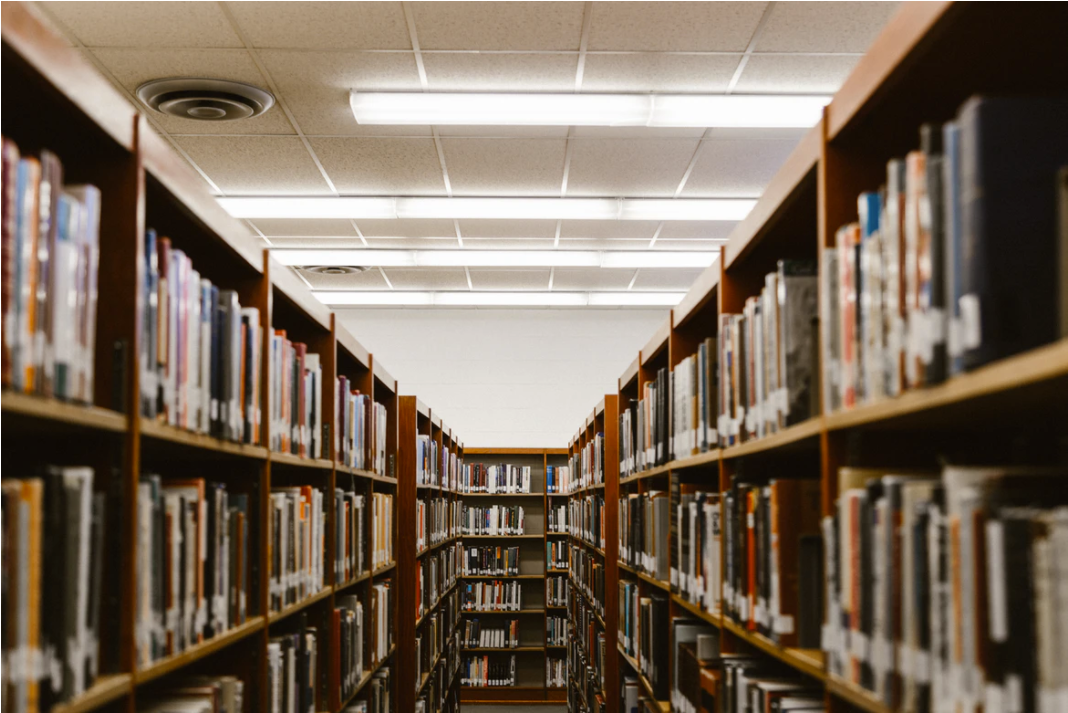
    Turn off or silence all electronic devices and if you can’t turn them off, put them on silent to avoid getting distracted by notifications. Try working in a different area than you normally do, preferably somewhere with fewer potential distractions. For example, a college student could try working in a coffee shop or a library instead of their dorm. If you want to work somewhere quiet but can’t work in complete silence, try listening to ambient sounds or classical music which promote focus and concentration.

    Image Credits

    Clear Your Mind

    It’s incredibly hard to focus if you’re thinking of a million different things so the best method to temporarily clear your head so you can focus on the task at hand is to write everything down so you don’t forget it and can come back to it later. If you have something in particular that you’re worried about, make a commitment to deal with it later. Set an alarm for a time in the future so your brain can trust you enough to let go, knowing that you’ll get to it later. Remind yourself to not work on anything but what you planned to do.

    Image Credits

    Break Down Tasks

    One of the most helpful things you can do when working on a task is to start by concentrating on the very next step that needs to be taken in order to make progress. For example, if you need to write an essay, instead of thinking about working on the entire essay, focus on writing the first paragraph. Commit to working on a small piece of the overall assignment so that you’re 100% confident in your ability to do it successfully. This will not only make it easier for you to actually get started because there’s less pressure to actually complete the task, but it will also allow you to take necessary breaks.

    Reduce Time 

    Overall, one of the worst parts of not being able to focus is wasting time that you could’ve spent working or doing other important things. To remedy this, create constraints that require you to finish your work at a particular time. One example of this is to tell a friend that you will call them at 8pm, then set a goal of finishing your work before that so you have the incentive to work faster. Another method is using short intervals and giving yourself a deadline for an individual task rather than all of your work in general.

    Written by: Anumita Basani

    August 30, 2021

    Your NSTEM Journey Begins Here!