Author: Eric Magers

  • Urban Heat Island Effect

    Urban Heat Island Effect

    The “urban heat island effect” is a phenomenon that affects cities all around the world. It refers to the way cities trap heat, making their temperatures warmer than the surrounding areas. The city then becomes an “urban heat island.” The Environmental Protection Agency estimates that, compared to its surroundings, a city of 1 million people could be anywhere from 1.8-5.4 degrees Fahrenheit (1-3 degrees Celsius) warmer due to this effect (National Geographic).

    Image source

    Urban heat islands generally have higher energy costs for things like air conditioning as people try to combat the rising temperatures. With climate change, the effects of urban heat islands could increase drastically over the course of the century, especially for lower-income communities (EPA).

    The causes for urban heat islands can be traced back to a few key factors. The materials used to build cities, such as concrete and asphalt, contribute to urban heat islands the most since they trap heat better than vegetation does. Therefore, an environment with more of these materials is naturally going to be warmer as it traps the heat from the sun (EPA).

    Image source

    Another cause for urban heat islands is “waste heat;” a term that refers to the heat generated by energy from various sources. Cars burn off energy while in use, as do factories, tools, etc (National Geographic).

    Climate scientists from NASA’s Goddard Institute for Space Studies (GISS) are now considering several options for combatting the urban heat island effect. One suggestion is the implementation of “green roofs” across cities. Green roofs are roofs covered in soil and living vegetation (ScienceDaily). These roofs are not only able to reduce heat in an urban setting, but they also absorb pollutants in the air, thereby improving air quality. Several cities even provide financial incentives in the form of tax credits to businesses who install green roofs on their buildings (EPA).

    In several tests, GISS was able to demonstrate the effectiveness of green roofs by implementing them at various sites in Chicago. In experiments where green roofs were installed on top of existing buildings, they were able to measure a substantial decrease in temperature in comparison to the change in temperature at a control site (ScienceDaily).

    Image source

    In addition to green roofs, other solutions include increased vegetation on the ground. Planting trees and bushes around a city will generate greater cooling effects for the population (EPA).

    With the implementation of green roofs combined with greater levels of vegetation in urban areas, scientists hope to combat the effects of rising temperatures in cities which will create a healthier environment for those living there.

    Written by: Matthew Jenkins

    Date: May 7th, 2022

    https://www.epa.gov/green-infrastructure/reduce-urban-heat-island-effect

    https://www.sciencedaily.com/releases/2022/03/220321150421.htm

    https://www.nationalgeographic.org/encyclopedia/urban-heat-island/

  • Former Football Player Strives to Increase Diversity in STEM

    Former Football Player Strives to Increase Diversity in STEM

    The number of students of color in STEM fields has been surprisingly low for a quite a while now. According to recent federal data, only 7 percent of people who earn STEM degrees are Black. This number didn’t change much from 2008 to 2018, but it did rise by 5 percent for Hispanic college graduates. In the workforce, the amount of Black people working in STEM fields is even lower than those who earn STEM degrees.

    Image Credit


    John Urschel is a Black former professional football player (Baltimore Ravens) and the author of Mind and Matter: A Life in Math and Football. Urschel is determined to get more students of color interested in STEM fields, especially math. In an interview, Urschel reflected on the time his 1st grade teacher wanted to hold him back a grade because she saw him as a typical minority student. After his mom insisted on testing him, his scores were well above his peers. Urschel went on to talk about how he still sees similar biased assumptions regarding race and skin color still happening in recent days.

    Image Credit

    One question that was asked to Urschel during the same interview was “How can educators help kids learn to embrace hard work in areas like STEM?” Urschel responded by saying the biggest thing for educators to focus on is making a slight shift in focus on what the goal is and what is important. He also says that getting the right answer isn’t always the most important thing, but rather to learn something from the experience. Urschel concluded the interview by suggesting that “educators should make sure that parents have proper access to educational materials that show them what their child is learning, what they’re covering, and how these things work.”

    Image Credit

    John Urschel has dedicated his time to helping younger generations gain interest in STEM fields. His efforts to help others can make a positive impact on many lives and help more students become engaged with STEM and its various fields. In conclusion, increasing diversity in STEM has always been a challenge. Fortunately, with role models like John, more students can gain interest and start joining STEM related fields. 

    Written by: Abishek Kanthan

    Date: May 1, 2022

    Sources:

    Article – Bushweller, K. (2021, June 29). How to get more students of color into STEM: Tackle bias, expand resources. Education Week. Retrieved May 5, 2022, from https://www.edweek.org/technology/how-to-get-more-students-of-color-into-stem-tackle-bias-expand-resources/2021/03  

  • Ozone

    Ozone

    According to new findings published in Nature Climate Change, the ozone layer, which absorbs harmful UVB rays from the sun, may be responsible for a significant portion of the warming of ocean waters surrounding Antarctica in the latter half of the 1900’s. Specifically, a rise in ozone levels in the lower atmosphere may be to blame for the increase in temperature. (ScienceDaily)

    The findings were part of a study conducted by a team of scientists from around the world and led by the University of California Riverside. Using simulations to estimate changes in ozone levels between the years 1955 and 2000, the team found that a decrease in upper-atmosphere ozone coupled with an increase in lower-atmosphere levels caused 60 percent of all ozone-induced warming during the time period. This is a much higher percentage than scientists previously thought (ScienceDaily).

    Image Credit

    The Southern Ocean, where the ozone increases were found, is known for absorbing excess heat generated by warming climates. However, according to researchers behind the study, the changes in ozone levels are hindering the region’s ability to soak up this heat, which could prove disastrous for the environment over time (ScienceDaily).

    Ozone in the lower atmosphere is a pollutant, as it is one of the major components of harmful smog (ScienceDaily). In regions such as forests where species diversity is integral to the natural ecosystem, unhealthy levels of ozone in the lower atmosphere can jeopardize an ecosystem (EPA, Ecosystem effects of Ozone Pollution). Previously, changes in ozone levels were mainly associated with these negative effects on more northern parts of the world, which is why the new findings are eye-opening to scientists (ScienceDaily).

    Previously, ozone came to the forefront of the public eye for a different reason: the hole in the ozone layer of the atmosphere. In the 1970’s, scientists noticed that certain substances were causing ozone depletion in the atmosphere, resulting in a “hole” that formed over Antarctica. Substances such as chlorofluorocarbons (CFCs), hydrochlorofluorocarbons (HCFCs), carbon tetrachloride, and methyl chloroform were all deemed responsible for the ozone depletion, and several countries banned the use of chlorofluorocarbons as aerosol propellants. Global production of ozone-depleting substances continued to rise, however (EPA, Basic Ozone Layer Science).

    Image Credit

    The depletion in the ozone layer is not a phenomenon specific to the South Pole. Research has demonstrated that ozone depletion is present in all parts of the world, including in the Northern Hemisphere (EPA, Basic Ozone Layer Science).

    Written By:  Matthew Jenkins

    Date: May 3, 2022

    Sources:

  • Scientific Questions Which Were Once Believed to be “Unsolvable:”

    Scientific Questions Which Were Once Believed to be “Unsolvable:”

    Today, it might seem silly for someone to say that a question will never be solved by science. Think of all the progress that has been made over the last couple of centuries! Do you think anyone from 1950 could’ve imagined we’d all carry tiny computers in our pockets? Or would someone from 1800 ever dream that humans could live in a space station orbiting the Earth?

    Scientific imagination is a tricky thing, and oftentimes, when a scientist believes a question to be unsolvable, or a theory unprovable, he or she will ultimately be proven wrong by future generations. Here are some examples of scientific questions and theories which were once thought to be “unprovable.”

    Image Credit

    1. The Existence of Gravitational Waves

    You may remember gravitational waves appearing in the news a few years ago. Originally theorized in the 1800’s by James Clerk Maxwell, the concept of gravity inducing waves in a gravitational field became one of the building blocks of Einstein’s General Theory of Relativity. However, not all scientists were optimistic about our ability to prove the existence of such waves. In particular, a German physicist by the name of Gustav Mie said that such waves would be so weak that detecting them would be “unthinkable ever to detect by any means whatsoever.” (ScienceNews)

    In 2015, gravitational waves were directly observed and measured for the first time using an extremely sensitive instrument called LIGO (Laser Interferometer Gravitational-Wave Observitory). LIGO was able to detect gravitational waves created by the collision of two black holes 1.3 billion years ago, ultimately vindicating Einstein and Maxwell’s theory and proving Mie wrong! (NASA)

    2. Neuroscience

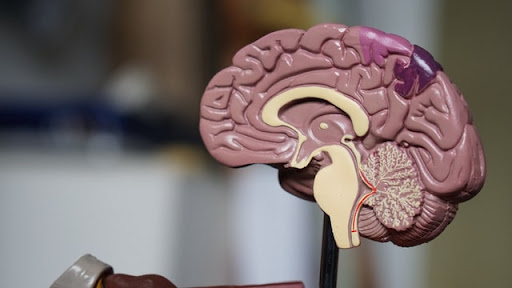
    In the 1900’s an entire field of science, the field of neuroscience, was almost completely ruled out as a possibility by B.F. Skinner, who believed that the human brain was beyond study. Generations of psychologists would be convinced by Skinner’s rhetoric that it would be impossible to study the inner workings of the brain. The good news is that some physicists disagreed with Skinner and believed that we would eventually have the technology to observe how the human brain works, and in the 1970’s, the first brain-scanning technology would be invented. PET (positron emission tomography), developed by Michael Ter-Pogossian and his colleagues, was successful in monitoring brain activity, proving Skinner and hundreds of psychologists wrong.

    Image Credit

    3. The Observability of Atoms

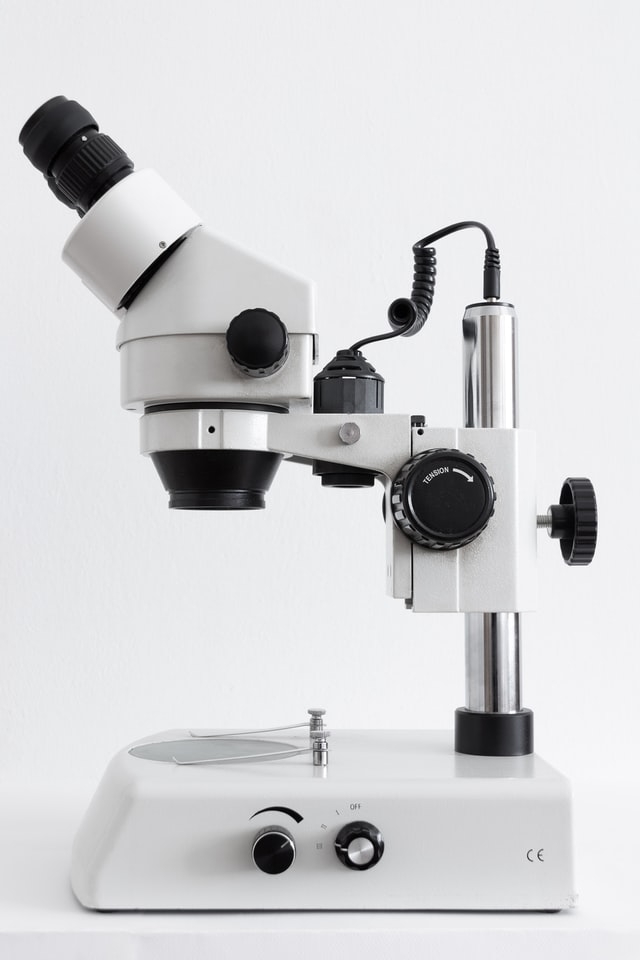
    Atoms are an ancient concept but observing them proved difficult due to their extremely small size. By the middle of the 1800’s, the majority of scientists had reached a consensus that atoms were real, but some scientists remained unconvinced. Quite famously, Ernst Mach, whom the speed of sound is named after, disputed the claim that atoms were the building blocks of matter. He, along with other scientists, believed that atoms could not exist because they were unobservable. According to Mach, chemists only believed in atoms because it was a convenient explanation for explaining certain chemical reactions. He stubbornly held this belief even after Einstein indirectly proved the existence of atoms in 1905. Today, we have powerful microscope technology that allows us to see atoms directly.

    It’s easy to take for granted some of the scientific facts we know today, but every theory we commonly accept was once the subject of scrutiny and skepticism. It’s in the nature of science to examine claims closely, and sometimes not all scientists can agree on one conclusion. So the next time you hear about atoms or neuroscience, remember to appreciate the many scientists like Einstein who were ahead of their time and weren’t afraid to theorize and let their scientific imaginations run wild.

    Written by: Matthew Jenkins

    Date: May 3, 2022

    Sources:

  • Efficient DNA Testing

    Efficient DNA Testing

    For many years, DNA testing has been a hassle for those with genetic disorders. To most people, DNA testing is figuring out more about your ancestry. However, ancestry is just a small portion of DNA testing; for others it can help them better access a treatment or their disorder.

    Image Credit

    The current problem with genetic testing is that it takes a really long time to get results. Even when the results are available, those results aren’t accurate most of the time.  Dr. Kishore Kumar from the Concord Hospital states that expansion disorders can be “[a] hit or miss”. Part of the complication with prior DNA testing was that there were more than 50 genetic expansions that the patient might have. Doctors would test specific genes based on the patient’s family history and their symptoms. If the test came back as negative, the patient was left without answers. 

    One patient named John, noticed that he had unusual trouble with balancing while taking his skiing lessons. Over the years, his symptoms began to increase in severity. In the course of just a few years, he went from being fully mobile, to being unable to walk without support. After nearly a decade of testing, he was finally diagnosed with a rare genetic disease called CANVAS, which affects the brain.

    Image Credit

    Fortunately, researchers at the Garvan Institute have found a solution to drastically reduce the amount of time it takes to get accurate results. Dr. Kumar from Concord Hospital explains that the new test will “completely revolutionize how we diagnose these diseases,” because it will help “[the] patients avoid unnecessary muscle and nerve biopsies for diseases they don’t have.”

    In addition to helping reduce the amount of time it takes to conduct a DNA test, this new form of testing can also be used to scan for known and novel diseases more efficiently. By using a single DNA sample, the test works by scanning a patient’s genome using a technology called Nanopore sequencing. “In just one test, we can search for every known disease-causing repeat expansion sequence, [thus] potentially discovering novel-sequences likely to be involved in diseases that have not yet been described,” says Dr. Ira Deveson, head of Genomic Technologies at the Garvan Institute.

    Image Credit

    In conclusion, DNA testing has certainly evolved for the betterment. Instead of going through a “diagnostic odyssey”, patients can now get accurate and reliable results much faster than before. This technology is still new and a few patients might still be skeptical to use it, so it will be interesting to see if this new testing will stay as a simple option for the patient to use, or if it will become a norm in hospitals.

    Written by: Abishek Kanthan

    Date: March 12,2022

    Sources:

  • Eavesdropping Fabric

    Eavesdropping Fabric

    Since the beginning of mankind, clothing has been a way to cover our bodies of course. As the years progressed, clothing became much more than that. It turned into ways people could express their feelings. Although fashion continues to live on, a new technology advancement has found a way for clothing to “listen” to heartbeats.

    Image Credit

    “Acoustic fabrics have existed for perhaps hundreds of years, but they’re used to dampen sound,” says Wei Yan, a scientist at Nanyang Technological University in Singapore. Yan also adds on by saying, “fabric as a microphone is a totally different concept.”

    Yan says he and his team got the idea from the way a human’s eardrums function. The acoustic clothing converts vibrations into electrical signals, similar to how the eardrum works. “It turns out that the eardrum’s inner layer is made out of fibers,” says Yoel Fink, a material scientist working with Wei Yan. Taking this trait from the Eardrums, Yan and his team were able to figure out that this phenomenon could be implemented into clothing. 

    Image Credit

    The way it works in clothing is that a special material called Twaron is woven together with the cotton fibers. In between the materials, is a thin strand of piezoelectric material which produces voltage whenever it is pressed or bent. The buckling and bending of this fiber can create electrical signals which are sent through a tiny circuit board that comprehends and reports the voltage. The special fabric used is sensitive to a variety of noise levels. However, it continues to investigate what signal processing is required to untangle the targeted sounds from background noise. In addition, the unique fabric continues to work as a microphone even after it has been washed 10 times. Yan also adds, “the sound-sensing fabric feels like regular fabric,” implying that it will still feel comfortable to wear. 

    The team incorporated the technology into a t-shirt. It was able to hear its wearer’s heartbeat just like a stethoscope would. When used this way, it “[can] be able to provide information similar to an ultrasound of the heart,” and it “proves effective as [any other] monitoring and diagnostic tool,” says Vijay Thakur, a material scientist at Scotland’s Rural College. 

    Image Credit

    In conclusion, this new technology has so many benefits that are readily available. For years, fabrics have been a way to provide beauty and warmth, but fabrics might be able to help us medically and technologically improve as well. With this new invention, doctors and scientists can help determine patients’ problems in a fast and easy manner.

    Written by: Abishek Kanthan

    Date: May 23, 2022

    Sources:

    Article – https://www.sciencenews.org/article/fabric-hear-heartbeat-fiber-vibration-voltage-sound-material