In the past, classrooms have centered on lectures, note-taking and textbook exercises. While these traditional methods can provide valuable foundational knowledge, they do not always give learners the opportunity to apply concepts meaningfully. As science, technology, engineering and mathematics (STEM) continue to shape modern careers and everyday life, educators are increasingly recognizing the value of moving beyond passive instruction.
Understanding Active Learning
Active learning has emerged as one of the most effective approaches for improving student engagement and academic success. Students become involved participants in the educational process rather than passive recipients of information. Research shows that these experiences improve understanding and also help students develop essential skills that extend well beyond the classroom.
The Difference Between Passive and Active STEM Learning
Traditional STEM instruction relies on lectures, demonstrations and memorization. In these settings, students primarily listen, observe and complete assignments based on information presented by the instructor. While lectures can efficiently introduce new concepts, they may not always encourage deeper understanding or long-term retention. In fact, research has shown that students often fail to retain and apply knowledge learned from traditional instruction, even when it initially appears successful.
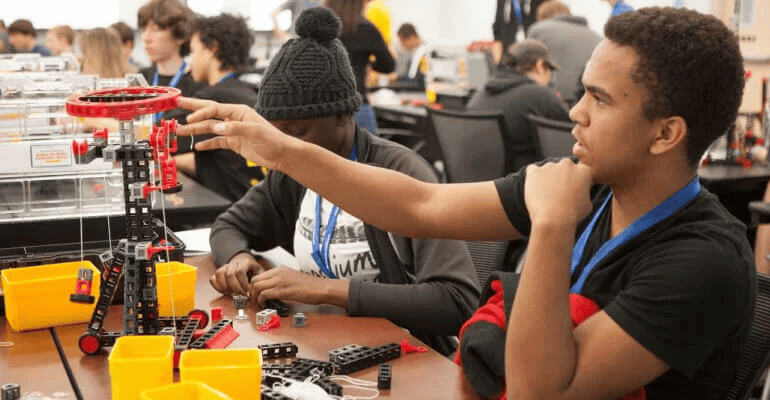
In contrast, active learning places students at the center of the learning experience. Instead of simply hearing about scientific principles or mathematical theories, students investigate questions, conduct experiments, build models, analyze data and collaborate to solve authentic problems.
Examples of active STEM learning include:
- Conducting laboratory experiments
- Designing engineering prototypes
- Solving real-world challenges in teams
- Exploring environmental science through outdoor investigations
These activities encourage students to think critically, ask questions and learn by doing.
Active Learning Approaches in STEM Education
Passive instruction can sometimes make STEM subjects feel intimidating or disconnected from everyday life. However, when learners become active participants, they often develop greater interest, motivation and confidence.
Hands-on Learning
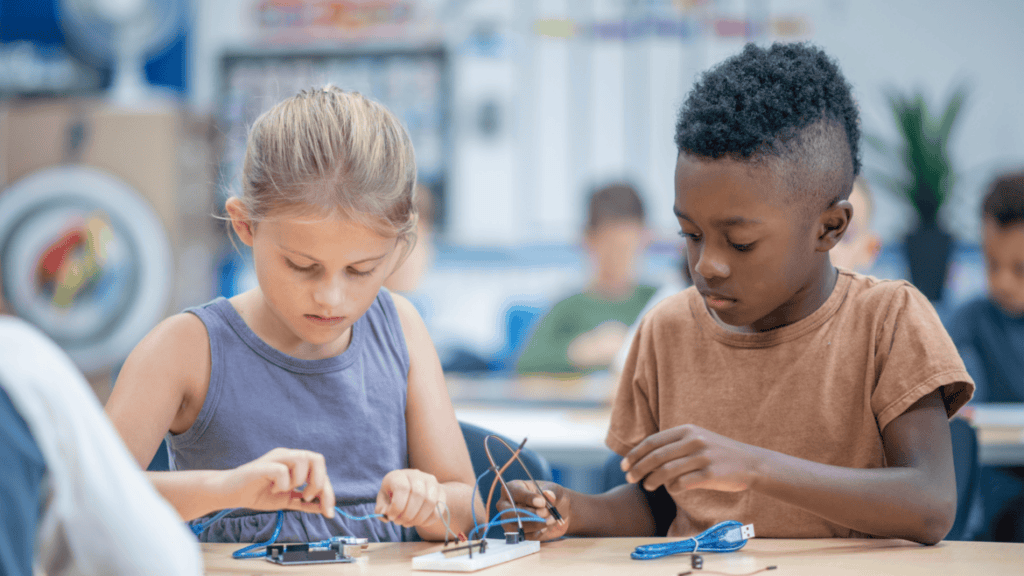
Hands-on experiments allow students to directly interact with scientific concepts. Instead of simply reading about theories, learners test ideas in controlled environments, observe outcomes and analyze results. These experiences strengthen scientific thinking and make abstract principles more concrete. Students learn more effectively through hands-on activities than through passive listening.
Project-Based Learning
Students will investigate authentic problems and produce meaningful outputs through sustained inquiry. They’ll actively explore concepts, collaborate with peers and apply knowledge to real-world situations. Projects promote critical thinking, communication, creativity and problem-solving while fostering independence and self-directed learning. Students also develop essential life skills such as teamwork, organization and decision-making as they work toward shared goals.
Collaborative Problem-Solving
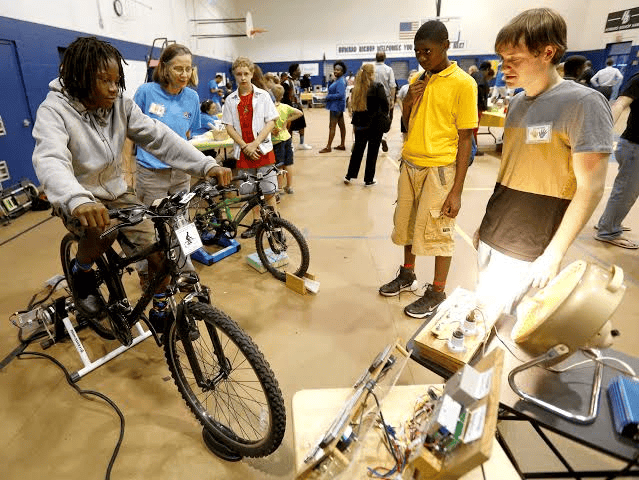
Collaboration promotes deeper understanding by enabling students to co-construct knowledge through meaningful interactions with peers rather than simply receiving information. Group work encourages peer tutoring and modeling, allowing students to learn from one another’s strengths and gain alternative explanations of concepts.
Explaining ideas to teammates reinforces the explainer’s own knowledge by making thinking visible and strengthening comprehension. Additionally, collaborative activities develop essential social skills, including communication, teamwork and individual accountability, preparing students for future success.
Outdoor Exploration
Outdoor exploration connects classroom learning to real-world environments. Whether studying ecosystems, weather patterns, or geological formations, students gain firsthand experience observing natural systems.
This approach enhances engagement and helps learners see how STEM concepts operate beyond textbooks and labs. Playing outdoors also helps learners develop social skills because there’s typically more freedom and less structure in outdoor spaces than in the classroom or at home.
Practical Ways Educators Can Promote Active STEM Learning
Small changes can make a meaningful difference when transitioning toward more active instruction. Educators can begin by incorporating brief inquiry activities into existing lessons. Instead of immediately explaining a concept, teachers can encourage students to make predictions, conduct simple investigations and discuss observations before introducing formal explanations.
Project-based learning can connect STEM concepts to community issues or current events. Students might investigate local water quality or analyze weather patterns using real data.
Technology also supports hands-on learning through digital simulations, data collection tools and interactive laboratory equipment. These resources allow students to explore complex concepts while gathering and analyzing authentic information. Most importantly, educators encourage curiosity, questioning and experimentation.
How Families Can Support STEM Learning at Home
Active STEM learning is not limited to classrooms. Families can create valuable learning experiences using everyday materials and ordinary situations.
Simple activities such as cooking, gardening, building with recycled materials or observing wildlife all introduce STEM concepts naturally. Measuring ingredients teaches mathematics, while baking demonstrates chemistry. Gardening introduces biology and environmental science, and building household projects encourages engineering thinking.
These home activities can lead to better STEM learning because students interact directly with materials and environments, learn through trial and error and apply classroom knowledge to real situations.
Families can also encourage children to ask questions, investigate answers together and explore museums or parks. These experiences reinforce classroom learning while showing that STEM exists everywhere.
Students Can Take an Active Role in Their Own Learning
Students themselves can embrace active learning by becoming more involved in their education. Rather than simply reviewing notes, they can build models, conduct safe experiments, participate in STEM clubs or enter science fairs.
Students can work with classmates to solve problems, explain concepts to peers and seek opportunities to apply classroom knowledge to strengthen understanding. This active participation helps them build a better understanding of STEM subjects.
A More Engaging Future for STEM Education
As STEM education continues to evolve, the shift from passive instruction to active learning offers significant benefits for learners of all ages. Whether through classroom experiments, outdoor investigations or everyday activities at home, active learning helps students connect STEM concepts to the real world. These meaningful experiences prepare learners for future careers and for thoughtful participation in an increasingly technological society.