Author: NSTEM Media

  • The Top 3 Stimulating STEM Guest Speakers You Must Incorporate in Your Classroom Today

    The Top 3 Stimulating STEM Guest Speakers You Must Incorporate in Your Classroom Today


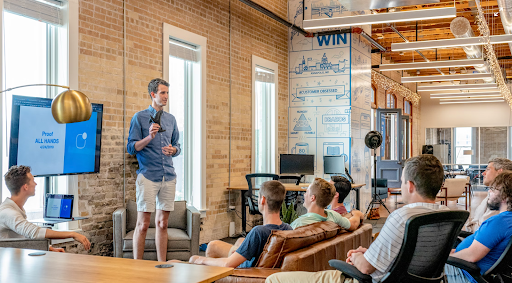
    Presentation being given to students
    Image by Unspalsh

    As an high school, incorporating STEM guest speakers into your classroom can be a great way to inspire your students and give them a better understanding of the diverse careers available in the field. There are many different types of STEM guest speakers you can invite to speak to your class, each with their own unique perspective and experience. Here are three examples of STEM guest speakers you should consider incorporating into your classroom today:

       1. Neurosurgeon

    Inviting a neurosurgeon to speak to your class can give your students a deeper understanding of the brain and how it works. This can be particularly valuable for students interested in pursuing careers in the medical field. The neurosurgeon can discuss their daily routine and what it takes to become a neurosurgeon. They can also talk about some of the most exciting and challenging cases they have worked on, and what it is like to work in a surgery theater. This can give your students a better understanding of the importance of critical thinking and problem solving in the medical field. Here is an NSTEM resources to find guest speakers! 

       2. Software Engineer

    Having a software engineer speak to your class can be a great way to introduce students to the world of coding and programming. The software engineer can talk about what they do on a daily basis, and how they use different programming languages and tools to create software applications. They can also discuss the different steps involved in developing a software product, including design, development, and testing. This can give your students a better understanding of the process of creating software and the importance of teamwork and collaboration. Here is an NSTEM resources to find guest speakers! 

       3. Architect

    Inviting an architect to speak to your class can be a great way to introduce students to the field of architecture. The architect can discuss their daily routine and what it takes to become an architect. They can also talk about some of the most exciting and challenging projects they have worked on, such as designing skyscrapers, bridges, and even schools. This can give your students a better understanding of the importance of creativity and innovation in the field of architecture. Here is an NSTEM resources to find guest speakers! 

    Overall, these three guest speakers are great matches for high school classrooms as they can give students a deeper understanding of the importance of critical thinking and problem solving in the fields of medicine, software development, and architecture. And, by incorporating these guest speakers, you can inspire your students to pursue their own STEM interests and learn more about the wide range of career opportunities available in STEM fields.

    by Lakshya Jain


    Do you want more resources on the topic of guest speakers for high school students? NSTEM’s vast resources database provides thousands of STEM resources that are searchable by category, school level and state. This comprehensive library includes info on enrichment activities, curricula, internships, scholarships and more. Check out a free sampling here. Or get an NSTEM membership today to unlock the complete list.

    Project-based learning enrichment provides high school students with college and career readiness. It gives them real world relevance, transforming students into collaborators and imaginative problem solvers. They will gain the upper hand in a global landscape, stemming from enhanced confidence and grit. NSTEM provides these young STEM enthusiasts with a close community of like-minded fellow students and educators.  To start your 9-12 Chapter of the National STEM Honor Society, click here.

     

  • The Top 3 Technology Educators You Should Know as a High School Student

    The Top 3 Technology Educators You Should Know as a High School Student

     Are you looking for resources to help students be inspired by technology? Here are 3 podcasts, with 4 guests in total who have insight about tech in high schools! 

    Student looking at a laptop in a computer lab
    Photo courtesy of Do

     1. The EdSurge Podcast

    This is run by Jeffrey Young, an editor and reporter for EdSurge.com, which is a newsroom that focuses on teaching and learning (Jeffrey R. Young, nd; EdSurge, n.d). On the podcast episode “How High School Should Change for an Era of AI and Robots,” Young interviewed Jim Tracy, a former college president and former employee at K-12 schools, and Greg Toppo, who’s an education journalist (Young, 2022). Tracy and Toppo speak about the fictional book they’ve authored, called Running with Robots. Some of it discusses highschool students collecting literary great Ernest Hemmingway’s writings and making a holograph-like version of him comprised of those writings; and they interact with the holograph. The authors believe that in reality, humans and tech advancements could transform classrooms in innovative ways, and even students themselves could make these tech advancements. (Young, 2022).

    2. Easy EdTech Podcast 

    This is run by Dr. Monica Burns, who is a “curriculum and edtech consultant, author, and founder of ClassTechTips.com.” (Monica Burns, n.d). On episode 168 of the Easy EdTech Podcast, she talks with sociology professor and author of Redefining Geek, Dr. Cassidy Puckett about how to help teens be tech savvy (Burns, 2022). Puckett stated five tips, some of which included keeping frustration and boredom controlled, and determining if the technology a student learns is applicable to what they want to gain from it (Burns, 2022). 

    3. The Love of EdTech

    This podcast is hosted by Kara Hutchinson, an elementary school teacher with tech experience, and Caryn Kelley, a former middle school teacher, with tech experience. Both have gained tech knowledge through working in school libraries (About the Podcast, n.d). They interviewed Jennifer Moorman, a highschool art teacher who spoke about how she instructs her students to use google maps to create a presentation about an artist’s life, using geography. This project helped her realize that students are more invested in class with this project. Students can even see a depiction of a particular place from decades ago. According to her students, she’s learned that they enjoy looking at aspects of the world geographically through this project. (Kelley and Hutchinson, 2022)


    These podcasts each contained good insight! Listening to them in full could provide high school students and educators with interesting perspectives on tech!

    by Destini Watson


    Do you want more resources on the topic of technology for High Schoolers?  NSTEM’s vast resources database provides thousands of STEM resources that are searchable by category, school level and state. This comprehensive library includes info on enrichment activities, curricula, internships, scholarships and more. Check out a free sampling here. Or get an NSTEM membership today to unlock the complete list.

    Project-based learning enrichment provides high school students with college and career readiness. It gives them real world relevance, transforming students into collaborators and imaginative problem solvers. They will gain the upper hand in a global landscape, stemming from enhanced confidence and grit. NSTEM provides these young STEM enthusiasts with a close community of like-minded fellow students and educators.  To start your 9-12 Chapter of the National STEM Honor Society, click here.

    These resources are from the National STEM Honor Society Resources section of our website for members.  

    View the High School National STEM Honor Society experience here: https://nstem.org/staging/high-school/


  • Explore the Benefits of Wind Power with These 3 Creative Wind Power Projects for Your K-2 Classroom

    Explore the Benefits of Wind Power with These 3 Creative Wind Power Projects for Your K-2 Classroom

    In the new era of renewable energy, wind power has become one of the primary power sources we have. To best help your students or children understand the importance of wind power, here are three innovative wind power projects for your early elementary students.

    Blue sky and Windmill
    Credit by Bruce Allinson

    1. Making a Wind Vane 

    Are you interested in helping your students have a fun and intriguing hands-on experience? With students in early elementary school, the best project is to design something that reflects their own childhood experiences and has educational meaning behind it. For instance, building a wind vane would not only help students to understand the direction of the wind, but it would also improve students’ practical skills in real life. This project only requires a pencil with an eraser on top, straw, card cut into the shapes below and a pin. Definitely introduce this project to your students if they are looking for a simple and fun way to understand basic Wind Power. 

    2. Making a Model Pine Wheel Wind Turbine 

    One of the fundamental energies we have is coming from the wind turbine. Helping kids to complete a project on wind turbines is the best way to understand the principle of it. This project would seem challenging for elementary students at first with its complicated procedure, however, the mechanism behind it is quite simple. Students can easily make their own pinwheel with a piece of cardstock and a few pins. All you do is connect the generator with alligator clips on the pin wheel. Then attach a lightbulb where students can easily discover the process using mechanical force (the spinning of the wheel) to generate electricity. Check out the turbine tools kit to find multiple ways of applying wind turbines in real life and inspire your students to find their own ways of learning. 

    3. Homemade Wind Chime 

    Are your students interested in crafting? Do you wish to apply more practical teaching in your classroom? Check out this wind chime that is low-stress and easy to make with students without complex instructions. Students can gather materials such as paper plates, aluminum foil, tapes and thread. This project can be implemented as a take-home assignment where students can critically improve their own independent learning as well as grow their understanding of wind power. After students complete their own wind chime, you can introduce the concept of renewable energy and recycled materials to help students become aware of the importance of environmental protection and green energy we should advocate. 

    Letting your students build creative wind power projects would help them develop a better understanding of science and allow students to explore their own potential in STEM and find their own academic interests along the way.  AT NSTEM, we inspire young students to embrace STEM experiences and to open their eyes and minds. We offer project-based enrichment activities that encourage students to be naturally inquisitive about their world through hands-on experiences that engage the five senses, growing curiosity and triggering the joy of learning. NSTEM from the Start. 

    by Tom Yuan 

    K-2 is where it all starts with STEM education. The National STEM Honor Society focuses on “From K to Career, NSTEM from the Start!” To start your K-2 Chapter of the National STEM Honor Society, click here.
    View the K-2 National STEM Honor Society experience here 


  • Want to Compost at Your Middle School? Here are the Top 3 Tips to Start Today.

    Want to Compost at Your Middle School? Here are the Top 3 Tips to Start Today.

    Sustainability and environmental protection are heated topics nowadays. Knowing where/when to recycle and reuse the compost is a valuable lesson you can advocate to your students and school as a whole. Here are the top three tips to start today. These resources are inspired by the NSTEM resource library.

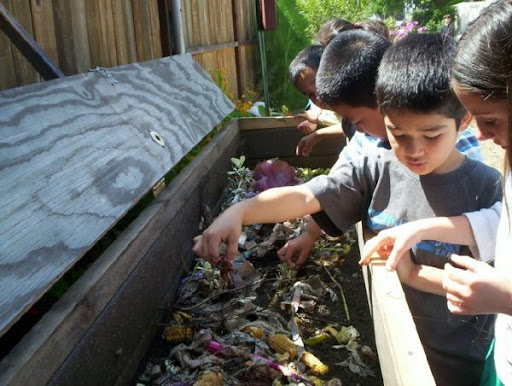
    kids looking inside a dirt-pit
    Photo courtesy of Clean River

       1. Composting in a Cup!

    Are you looking for the best way to help your students understand the concept and benefit behind composting? Here is a good way you can help your middle schoolers understand the principle behind composting by giving them some hands-on experience. This experiment is simple and easy; you need only ask your students to collect leaves and tree branches around the school or their home and bring them to the classroom. Then, you introduce how composting works by adding water, dirt, and organic materials into a cup and sealing a plastic cover on the top. This way, students will gain a concrete understanding of composting and receive practice on how to do scientific experiments as well. Introduce your students to the “cup” experiment and show them simple ways to protect the planet!

    http://www.sciencemadefunkids.net/experiments.cfm?Exp=2

       2. Building a Multiple Bin System

    As we talk about composting in school, a multi-bin system is crucial for successful and long-lasting compost. Here is the complete guide on how to build your own compost bin system from scratch. Having more bins will allow composting to progress through the movement of materials from bin to the bin as they mature. First, you would need to choose the material for the bins; we usually recommend using wood to ensure good airflow and composting quality. Then, you would need to gather materials for them to enter: lids, sides, and dividers. In the building process, you could set up a workshop for students where you could introduce the purpose of the bin system and help the school finish the final product in no time!

       3. Categorize Your Compost Starting Today

    Do you need help to best facilitate your student’s understanding of what can be composted and what should be avoided? Here are tips and information you need for Composting 101! For instance, compost can be divided into “brown” and “green” categories. Items for “green” are things like vegetable and fruit scraps, tea leaves/bags, garden waste, etc. Brown items can be dry leaves, straw, dry hay, sawdust, woodchips from untreated wood, etc. There is so much more you can learn from this exercise, such as the layout, ingredient, and air/oxygen composition.  Following the guidelines for composting based on scientific research will not only help your school have a healthy and suitable environment but also help your students understand the scientific value of composting.

    Composting is one of the natural ways to help us protect our environment and restore natural order. Following those tips would help you and your students understand the science behind the process and help them explore their own path of learning.

    by Tom Yuan

    Do you want more resources on the topic of composting at your Middle School? NSTEM’s vast resources database provides thousands of STEM resources that are searchable by category, school level and state. This comprehensive library includes info on enrichment activities, curricula, internships, scholarships and more. Check out a free sampling here. Or get an NSTEM membership today to unlock the complete list. 

    Middle School is where students are transformed, entering as children and emerging as young adults. Project-based learning enrichment helps students connect the dots between STEM and real life, making math and science relevant for them, keeping them engaged and interested. With a meaningful middle school experience, students are far more likely to focus on STEM disciplines in high school and beyond.  To start your 6-8, middle school chapter of the National STEM Honor Society, click here.
     

  • 5 Great Coding Resources for Middle Schoolers

    5 Great Coding Resources for Middle Schoolers

    When was the last time you wrote an essay with paper and pen? What used to be the default for students across the world is now seen as increasingly obsolete. Why tire out your hand so much, and waste so much paper, doing something that is much easier on a writing software such as Microsoft Word or Google Docs? This is just one instance of the increasing prevalence of computers. As our society becomes more and more dependent on these devices, learning how to speak their language is not a bad idea. It’s why coding resources have exploded in popularity. Many students want to take their first steps into this exciting world, but the question is how? With these five coding tools, students as early as Middle School can begin to learn the lingo of the future.

       1.LightBot ($2.99, with a free demo)

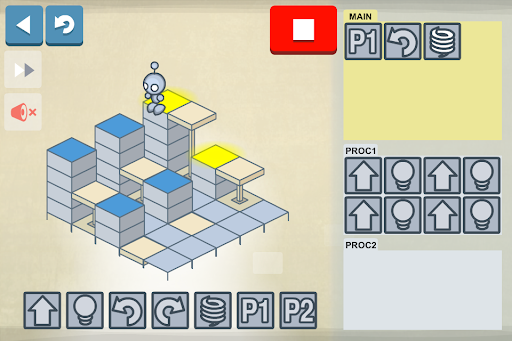
    Made specifically for beginners, LightBot uses a game to teach the basics of coding, so that the skills learned there can then be translated to more complex programs. It’s a great introduction to sequencing (how to put instructions together to create an algorithm), overloading, recursive loops, and more! It’s relatively cheap, only 2.99 to download, but there’s a free demo if you want to try it out first. By all means, do so!

       2. Google CS First (free)

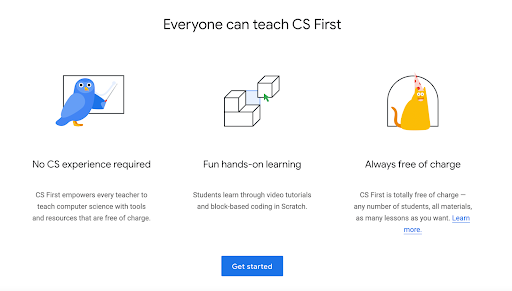
    Straight from Google itself, this Computer Science program divides itself into themes, including game design and animation. A student can choose to study whichever they’re most interested in, and learn how to use code in that specific field. Even without prior knowledge, it’s a fun and engaging experience. However, students who quickly tire of watching instructional videos might want to sit this one out: there’s a lot of that. It’s no doubt important information, but there may be more stimulating ways to learn it.

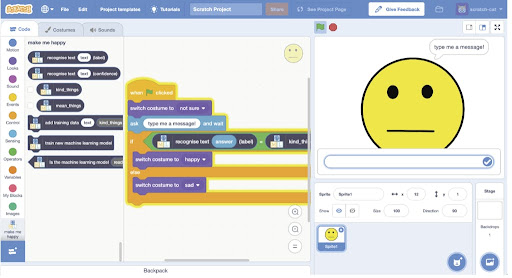
       3. IBM’s Machine Learning for Kids (free)

    AI is all the rage nowadays, and IBMs Machine Learning for Kids is a great way to dip your toes into this complex (and growing) field. What’s special about this free software is its ability to show how coding is used in the real world, while still remaining accessible for beginners. You’ll need to create an IBM account, but once you’ve done that, you can participate in a variety of exciting coding projects. Machine Learning for Kids is a perfect fit for any classroom and any inquisitive student.

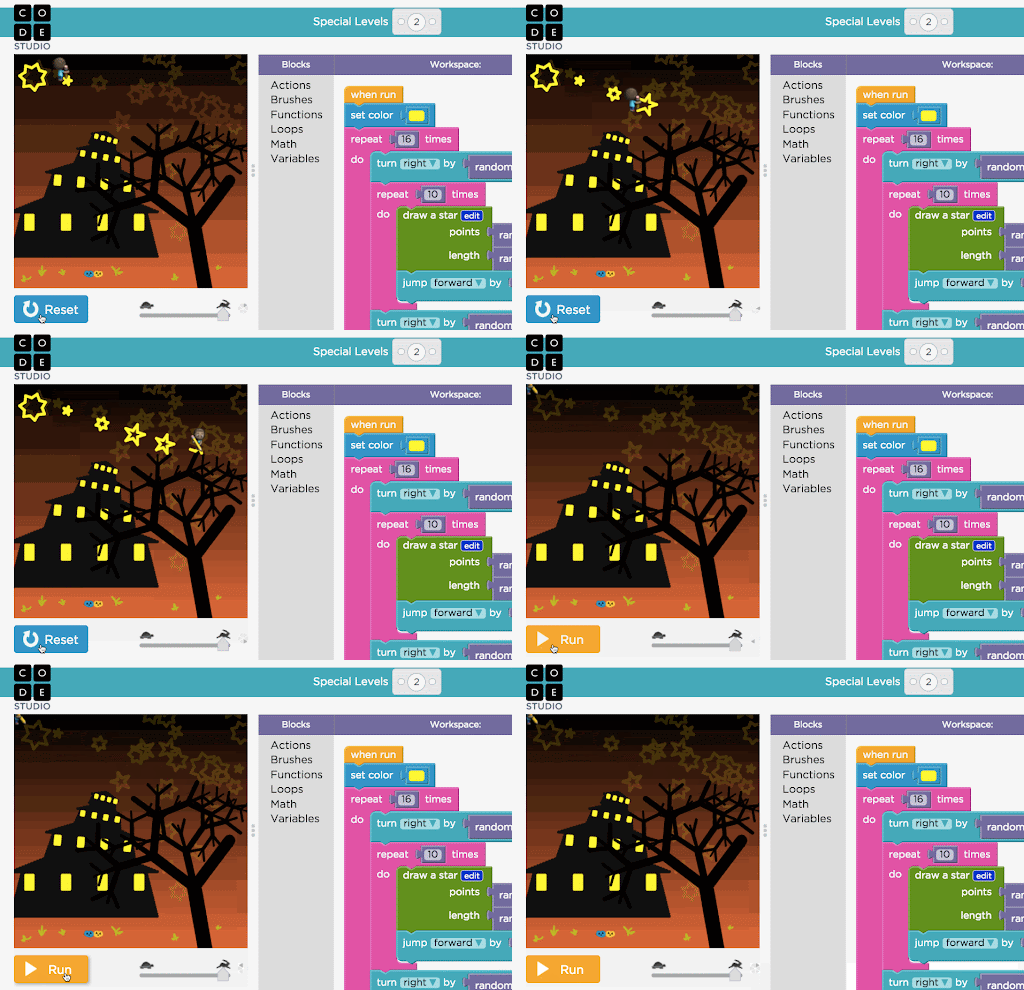
       4. Code.org (free)

    Code.org (free)

    As one of the most well known coding softwares, code.org has quite the track record. This completely free resource has two curriculums fit for middle schoolers: the Computer Science Discoveries program and the Computer Science Fundamentals Express. Computer Science discoveries is a  nine-week coding course, designed to be used in a classroom setting over the course of a semester. In this program you’ll have the opportunity to create various kinds of apps, websites, and even games. There’s also a unit on programming AI. The second curriculum, the Computer Science Fundamentals Express, is simply an abridged version of the main course, fit for educators who don’t want to spend a whole semester on coding, but want to give their students a taste of it. 

       5. Hour of Code (free)

    Another very famous coding resource, and by the makers of code.org, the Hour of Code is a unique experience that comes once a year (during Computer Science Education Week in December) and serves as a good foundation to build coding skills. As the name implies it’s an hour long course, however their website has all sorts of different resources year round.

    If you’re interested in coding and computer science and want to be more involved in this field, you’re not alone. Working with like-minded students is a worthwhile endeavor, making it easier to build skills and connections, so you can always learn from each other. The National STEM Honor Society is a rapidly growing and fun group that you might be interested in, and we’re always open to bright and curious students of all ages. If you’re interested, starting a chapter at your school is a great way to form a vivid community with people who love the same things you do, and a great opportunity to show initiative and leadership. Happy coding!  

    by Caleb Taran

    Do you want more resources on great Coding Resources for Middle Schoolers? NSTEM’s vast resources database provides thousands of STEM resources that are searchable by category, school level and state. This comprehensive library includes info on enrichment activities, curricula, internships, scholarships and more. Check out a free sampling here. Or get an NSTEM membership today to unlock the complete list. 

    Middle School is where students are transformed, entering as children and emerging as young adults. Project-based learning enrichment helps students connect the dots between STEM and real life, making math and science relevant for them, keeping them engaged and interested. With a meaningful middle school experience, students are far more likely to focus on STEM disciplines in high school and beyond.  To start your 6-8, middle school chapter of the National STEM Honor Society, click here.
  •  3 Family Activities to Boost Your Child’s STEM Experience 

     3 Family Activities to Boost Your Child’s STEM Experience 

    Family is one of the most important ways for children to gain more knowledge and develop their own interests, especially in the STEM field. In early elementary age, individuals are inspired by many interactions with their partners and siblings. To best promote your children’s potential in STEM, here are three activities that boost your children’s STEM experience. These activities are inspired by NSTEM library resource.

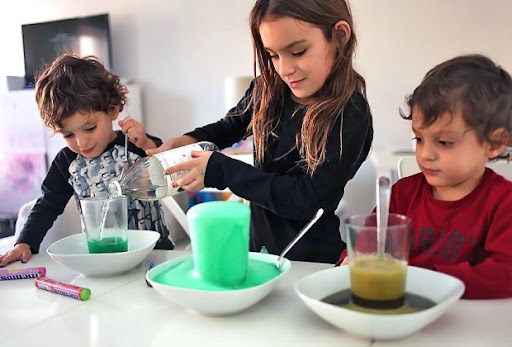
    Kids doing a science experiment
    Photo courtesy of mommy poppin

       1. Experience Astronomy Elementary

    Are you kids interested in exploring the solar systems or understanding the myth of the universe? Are you struggling to find fun activities and assignments that you can offer to your students that are fun and educational?  Experience Astronomy has amazing online activities and videos that engage children to explore more about outer space and planets around the solar system.  You will also engage with your kids by completing an online assignment–activities that help the family have a bonding experience and provide excellent educational results. Definitely check out the packages and start an amazing space journey with your children.   

       2. Learning Coding with a Lego Maze 

    Since your children’s youth, they probably have some experience toying with Legos. Have you thought about starting to teach code through their favorite toys? Let your children experiment with different lines of coding through building a Lego. For example, children can assist a Lego character in finding solutions, getting out of a maze, while learning a valuable lesson of perspective taking. If your child wishes to challenge themselves, they could go up a level by designing their own solution for different openings for the maze–just like coding a program. Let your children try different levels of this amazing maze and learn a valuable lesson about how coding works. 

       3. Building a Solar Oven

    I bet a lot of parents are looking forward to teaching their children lifelong skills and applying educational concepts where you can also have good bonding time. Try this solar oven that is simple and makes some delicious snacks for you and the family. All you need is some cardboard, scissors and aluminum foil. You would not only help your children understand the fundamental principle of solar power but apply theoretical knowledge they’ve learned school. Definitely try this one out.

    These types of activities are great for bonding with your children or simply to help them expand their perspective in the field of STEM. At NSTEM, we aim to improve students learning experience in early age by providing hands on activities and interactive learning method to ensure your children will always benefit from each lesson they’ve been taught.

    by Tom Yuan 

    Do you want more resources on the topic of family activities that boost your child’s STEM experience? NSTEM’s vast resources database provides thousands of STEM resources that are searchable by category, school level and state. This comprehensive library includes info on enrichment activities, curricula, internships, scholarships and more. Check out a free sampling here. Or get an NSTEM membership today to unlock the complete list. 

    K-2 is where it all starts with STEM education. The National STEM Honor Society focuses on “From K to Career, NSTEM from the Start!” To start your K-2 Chapter of the National STEM Honor Society, click here.