Author: NSTEM Media

  • Coding Quest: Top 5 Resources for High School Coders

    Coding Quest: Top 5 Resources for High School Coders


    Photo courtesy of Pixabay

    1. Khan Academy

    Link: https://www.khanacademy.org/computing

    Level: Beginner

    Price: Free

    Khan Academy is a fun, visually engaging website for those who may not know much about the language of computers! The focus of this website isn’t just on the how-to program but also on the what and the why. Students have the opportunity to delve into JavaScript, Python, data protection, and even some of Pixar’s tools for animated films.

    2. SoloLearn

    Link: https://www.sololearn.com/en/

    Level: Beginner

    Price: Free with Premium options

    SoloLearn is an app similar to Duolingo, with the language of choice in this regard being a programming one instead. C Python, C++, and Java are just a few of the many choices available in this simple yet comprehensive course trainer! It also features a more proactive stance on computer learning with a specialized lesson set for generative AI. With both a phone and a computer format, it’s an easy homework assignment for anyone wanting to get in just a bit more practice after the end of the school day. Just be aware that it is a Freemium service, so ads and limited progression are sure to follow.

    3. MDN Curriculum

    Link: https://developer.mozilla.org/en-US/curriculum/

    Level: Intermediate

    Price: Free

    While Khan Academy and SoloLearn provide more general knowledge of the coding world at large, Mozilla disregards this approach for a more in-depth view of web development. Rather than a shallow lake, this website provides a deep well of education in the fundamentals of HTML, CSS, design theory, and JavaScript, as well as how best to employ all those languages in a tasteful manner to present a smoothly functional website. While this choice of quality over quantity allows students a deeper connection with the material they’re learning, it also means that there is less freedom to try out alternative languages (though knowing the ins and outs of website creation is never a bad skill to have).

    4. MIT OpenCourseWare

    Link: https://ocw.mit.edu/collections/introductory-programming/

    Level: Professional

    Price: Free

    “MIT” and “General Introductions to Programming” seem like almost a juxtaposition, but don’t worry! While this school of prestige could likely flood a dam with its sea of programming expertise, these courses are designed with the ambitious prospective programmer at heart! They fixate on Python for their main classes, but if MATLAB, Java, or C++ are more compelling, they have that too. Remember, these are the materials and documents for classes more than prebaked, set-it-and-forget-it lesson plans, so prep time will be needed. Another thing of note is that while these courses are made for beginner-level programmers, they are also designed for MIT undergraduates. Keep that in mind when evaluating skill sets for your class.

    5. LeetCode

    Link: https://leetcode.com/

    Level: Professional

    Price: Free, with Premium options

    LeetCode isn’t the typical learning suite when it comes to programming. It’s not there to teach you directly how to code or make a “hello world” project. LeetCode is supposed to prepare the student for their future computer sciences career. It gives out questions and problems you’d find in a job interview, which is why it’s the last entry on the list. Rather than learning about languages, the student will learn about companies: What type of things is Apple looking for? How would I solve this algorithm question for Google?

    These inquiries are rated in difficulty level and separated by topic (i.e., Math, Dynamic Programming, Sorting, etc.). The site even features a discussion board for real-world experience exchange and forum-based assistance. However, something to remember is that, as a Freemium option, the solutions and explanations will be limited.


    Finding websites and course plans that allow for a secure and friendly learning environment can be difficult. Fortunately, with these five tools of the trade, students can feel much more prepared to understand the world of computer science and mold it themselves with hard work, dedication, and, most importantly, a love of learning! 

    By Noah Moster


    Do you want more resources on the topic of computer science resources? NSTEM’s vast resources database provides thousands of STEM resources that are searchable by category, school level, and state. This comprehensive library includes info on enrichment activities, curricula, internships, scholarships, and more. Check out a free sampling here. Or get an NSTEM membership today to unlock the complete list. 

    Project-based learning enrichment provides high school students with college and career readiness. It gives them real-world relevance, transforming students into collaborators and imaginative problem solvers. They will gain the upper hand in a global landscape, stemming from enhanced confidence and grit. NSTEM provides these young STEM enthusiasts with a close community of like-minded fellow students and educators.  To start your 9-12 Chapter of the National STEM Honor Society, click here.

  • From Seed to Sprout: Middle School Botanists Investigate Plant Science!

    From Seed to Sprout: Middle School Botanists Investigate Plant Science!

    Photo courtesy of Pixabay

    Middle school is one of the best times for students to understand the natural world better. Plant science, in particular, offers an excellent way for students to explore and connect with the fascinating world of growth, adaptation, and ecological interactions. Today, we will explore three exciting environmental activities related to plant science for middle schoolers. With these activities, students will spark curiosity, hands-on learning, and lifelong appreciation for the botanical environment around us.

    1. Bending Plant Roots

    In this activity, middle schoolers explore the growth of plant roots in a controlled environment. First, students will place seeds in a paper towel within a Ziploc bag. Then, they will zip the bags mostly shut to allow the seeds to grow. The bags will be rotated to test the direction in which the roots grow. Then, they will analyze the bags to discover how the plant roots bend. This experiment showcases the changing nature of root growth based on the direction of gravity.

    Activity link: Bending Roots – Sciencebuddies.org

    Materials needed: plant seeds, a growing plant, Ziploc bags, permanent markers, paper towels, water, strong tape, and a large cardboard box.


    2. Plant Seed Design

    This activity allows middle schoolers to create their very own plant seed optimized for growth in the wild. Using various craft supplies, they will try to make a burr-like plant seed that will attach to animals–simulated using a wool glove. They will attempt to carry their seed on the wool glove through a tricky obstacle course to test its effectiveness. This experiment showcases the unique adaptations seeds use to grow plant species.

    Activity link: Seed Design – Sciencebuddies.org

    Materials needed: Styrofoam balls, wool gloves, scissors, tape, glue, a measuring tape, a stopwatch, and craft materials.


    3. Bubbling Plants

    In this activity, middle schoolers will explore the concept of photosynthesis in plant life. First, they will arrange plants in beakers full of water. Then, they will watch as the plants create oxygen bubbles through photosynthesis. Afterward, they will analyze this data and form conclusions about plant photosynthesis. This experiment is crucial for teaching students how plants produce oxygen.

    Activity link: Bubbling Plants – Sciencebuddies.org

    Materials needed: tap water, Elodea plants, string, small rocks, beakers, baking soda, timers, and desk lamps.

    Engaging middle school students in plant science activities fosters a deeper understanding of nature and a sense of curiosity and appreciation for it. With hands-on experiments like seed germination investigations and photosynthesis analyses, students can explore plant life in ways they have never done before. With these three activities, teachers will inspire the next generation of botanists, scientists, and environmentalists!

    By Tyler King


    Do you want more resources on the topic of environmental activities? NSTEM’s vast resources database provides thousands of searchable STEM resources by category, school level, and state. This comprehensive library includes info on enrichment activities, curricula, internships, scholarships, and more. Check out a free sampling here. Or get an NSTEM membership today to unlock the complete list. 

    Middle School is where students are transformed, entering as children and emerging as young adults. Project-based learning enrichment helps students “connect the dots” between STEM and real life, making math and science relevant for them and keeping them engaged and interested. With a meaningful middle school experience, students are far more likely to focus on STEM disciplines in high school and beyond. To start your 6-8 middle school chapter of the National STEM Honor Society, click here.

  • Sunny Adventures: 3 Solar Activities for Grades 3-5 Innovators

    Sunny Adventures: 3 Solar Activities for Grades 3-5 Innovators

    Photo Courtesy of Pixabay

    The world is shifting increasingly toward renewable energy sources to tackle climate change, so future generations must learn about sustainability. Engaging elementary kids in practical tasks related to solar energy not only enhances their comprehension but also fosters critical thinking abilities. This blog will explore three fun solar activities for grades 3-5 students!

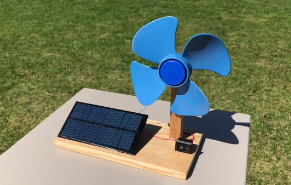
    1. Solar-Powered Fan

    Photo Courtesy of Google Images

    To build a sun-powered fan, students will need a tiny DC motor, a solar panel (about 3-6 volts), fan blades (which can be made of lightweight materials like cardboard or plastic), cables, and a support structure. This exercise aims to show how solar energy may be converted into mechanical energy. When students expose the solar panel to sunlight, it produces electricity. Then, this electricity drives the motor, which turns on the fan blades, creating airflow. Students can learn about energy conversion concepts, circuit basics, and sustainable energy sources through practical experimenting. They can also investigate ideas like how the angle and strength of the sun affect the fan’s speed, offering a valuable comprehension of the uses of solar power. Solar power is a sustainable and clean energy option for conventional battery-powered gadgets and promotes environmental awareness.


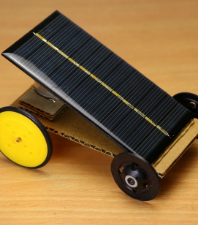
    2. Solar-Powered Toy Cars

    Photo Courtesy of Google Images

    Students construct little toy cars using supplies like cardboard, straws, wheels, and solar panels. When the vehicle is in direct sunlight, a solar panel mounted on it collects sunlight and powers a little engine that moves the car forward. This exercise demonstrates how solar energy can be transformed into mechanical motion and how transportation can use it. Through practical construction, students gain knowledge of renewable energy technologies and the significance of sustainable solutions. Building solar-powered toy automobiles strengthens students’ problem-solving abilities and provides real-world insight into renewable energy applications. This exercise stimulates interest in solar energy and its potential to spur innovation across various industries.


    3. Sun Print Photography

    Photo Courtesy of Google Images

    Students use cyanotype paper, which is sun-sensitive, to make photographic prints by adhering miniature toys, flowers, or leaves to the paper and then exposing it to sunlight. The UV light-blocking characteristics of the items create silhouette images. The images are revealed when students rinse the paper with water after exposing it to sunlight. Students learn about the science of light and chemical reactions through sun print photography. They learn about the use of solar energy in science and art by comprehending how sunlight interacts with materials to generate images. Through sun print photography’s creative and scientific fusion, this activity inspires students to learn more about solar energy and investigate the natural world. This exercise fosters interdisciplinary learning and understanding of the connections between science and art.

    Incorporating these solar activities into the elementary school curriculum produces a generation of environmentally conscious thinkers and innovators while enhancing kids’ understanding of solar energy and sustainability! Teachers can motivate students to advocate for renewable energy sources and environmental stewards by offering experiential learning and critical thinking opportunities.

    By Gayathri Narayanan


    Do you want more resources on the topic of solar activities? NSTEM’s vast resources database provides thousands of searchable STEM resources by category, school level, and state. This comprehensive library includes info on enrichment activities, curricula, internships, scholarships, and more. Check out a free sampling here. Or get an NSTEM membership today to unlock the complete list. 

    Grades 3-5 continue the STEM education journey, where students are interested in the natural world and in how things work, responding to stories told by teachers that give purpose and meaning to STEM disciplines, which molds them into thinkers, problem solvers, and creators. The National STEM Honor Society sees grades 3-5 as a critical point in the NSTEM journey. To start your grade 3-5 chapter of the National STEM Honor Society, click here.

  • 3 Fun Outdoor STEM Activities for Middle Schoolers

    3 Fun Outdoor STEM Activities for Middle Schoolers

    Photo Courtesy of Envato

    We’ve all been in that summer mood before, staring out the window of the chilly classroom, daydreaming about what we could do in the great summer beyond if only that darn bell would ring to let us home. What better way to wake students and teachers from that stupor than to host an engaging outdoor activity to mix nature and education collaboratively for the students? Here are three activities perfect for a summer STEM trip away from the classroom from three websites that encourage a slew of other options, should your students need more than just these ideas to pique their curiosity!


    1. We Are Teachers 

    Link to the Website: https://www.weareteachers.com/outdoor-science/

    Bubbles are not the weirdest fascination humans have ever had, but they’re certainly one of the coolest. These asymmetrical oil-slick-looking globs are a phenomenal visual aid for demonstrating the cool inventions mankind has managed to obtain, and best yet, they’re so easy that a middle schooler can make one.

    On the We Are Teachers website, this is one of the projects they cover (specifically #4 on the entry list, if you’re curious), and it’s by no means the only choice when considering potential assignments for a nice warm day outside. What makes the Bubble experiment stand out is the recipe’s simplicity: students only need dish soap, sugar, water, and a bubble wand for the floating spheres to transition from blueprint to reality.

    2. Science Demo Guy

    Link to the Website: https://sciencedemoguy.com/10-awesome-stem-projects-perfect-for-middle-school/

    Meanwhile, on the Science Demo Guy website, the focus shifts from a chemical approach to an engineering fixation. Magnetic soda can races and levitating ping pong balls display prominence. Still, my favorite is the Marshmallow Catapult shown, composed in all its multicolored glory. The ingenuity here is in the lack of an inhibitor most types of projects in this vein cannot overcome, and that is the friendly fire potential. Most inventions that launch projectiles advise strongly against firing said ammunition against living organics, as fighting is something only grown-ups are supposed to mess up the world with. Still, this contraption shines where those like it have failed: Why not shoot them at each other? See if you can catch the marshmallow in your mouth.

    A disclaimer for this one: some of the resources aren’t free. However, the cost is relatively low. (the catapult one was $3 for a PDF, instructions, and an example video)

    3. Science Buddies 

    Link to the Website: https://www.sciencebuddies.org/stem-activities/subjects/middle-school

    Finally, we come to the Science Buddies website. This one has been shown before in a previous blog, but it’s such a good resource that it deserves a mention again. There is no bias, partly because it contains a “Make Ice Cream in a Bag” project.

    Of course not.

    Seriously though, this website contains a lot of fun construction- and formula-based activities alike that would entertain many a middle-school populace, from your typical paper rockets to crafting an alka-seltzer power lava lamp to making a solar oven to cook various light meals. While those ideas are edutaining to explore, the Ice Cream project marries the learning process with a satisfying snack ideal for the summer heat. Few alternatives can beat that seasonally perfect combination.

    By Noah Moster


    Summer is an excellent time to explore nature at the peak of its flourish. It also, of course, signals the near the end of the average school year and thus gains the connotation of the “fun” season, where one rests from their educational burdens and treats their body instead of their mind in sports, beach days, camping trips, and other enjoyable balmy-day activities. It deserves that connotation; it can be fun, but “fun” and “education” don’t necessarily have to exist independently. And more than anything else, it’s this lesson that the students need to pick up through all the bubbles, catapults, ice cream, and science: learning can be fun. As long as they know that, they’ll become the best teachers in the world. Because nobody teaches you as well as you teach yourself.

    Do you want more resources on the topic of Outdoor STEM Activities? NSTEM’s vast resources database provides thousands of searchable STEM resources by category, school level, and state. This comprehensive library includes info on enrichment activities, curricula, internships, scholarships, and more. Check out a free sampling here. Or get an NSTEM membership today to unlock the complete list. 

    Middle School is where students are transformed, entering as children and emerging as young adults. Project-based learning enrichment helps students connect the dots between STEM and real life, making math and science relevant for them, and keeping them engaged and interested. With a meaningful middle school experience, students are far more likely to focus on STEM disciplines in high school and beyond.  To start your 6-8 middle school chapter of the National STEM Honor Society, click here.

  • Top 3 STEM Summer Programs for High Schoolers

    Top 3 STEM Summer Programs for High Schoolers


    Photo Courtesy of Envato

    Sometimes, school isn’t enough. Learning is a fulfilling process, and while the educational system tries its best to provide all the knowledge that one may want, the fact is that resources are limited. However, limited resources should never stop a student’s pursuit of enlightenment, and for this reason, many universities often offer pre-college courses by which to take during the summer. This provides a benefit to all parties involved: the high school gets a path by which to give the students looking for a more involved approach to their potential career, the college gets to promote itself to a potential client, and the student gets to interact with their chosen interest and collaborate with like-minded individuals.

    Summer is well on the way, but this is the perfect time for lowerclassmen to begin searching for a feasible program that piques their curiosity in a given field so they may be prepared to apply come January or February of next year. Here are the three best programs for a fun STEM summer course! 


    1. SUMaC 

    Link to Website: https://spcs.stanford.edu/programs/stanford-university-mathematics-camp-sumac

    Stanford. What is there more to say?

    Of course, this wouldn’t be a very satisfying entry if that were all there was to it, would it now? For those who may not be well-acquainted with the educational sphere, Stanford is known across the board as a top-performing university of notable repute. As it would follow, their pre-colligate studies would be of high quality for any aspiring sciences student. Fortunately, this conclusion has led to the SUMaC program – Stanford University Mathematics Camp. Some topics it teaches are abstract algebra, number theory, real-life application of such principles, and more.

    Now, there’s a reason this one is the first bullet point on the list: it’s by far the most expensive option of the three, with little alternative for payment. The tuition (because now even summer courses need that) is $8,250 for in-house, with the online course being $3,550. In addition, high-school sophomores or juniors can apply for the summer course until the 29th of March, but make sure your academic standing is grounded – they only have 40 in-house seats and 64 online slots. Additionally, they will check your records, require a $65 application fee, and need a recommendation form from a math teacher. However, the benefits are undoubtedly substantial if you prevail financially and academically.

    2. National Geographic Student Travel

    Link to Website: https://natgeostudenttravel.org/programs/mitcampus-robotics-technology/

    Educational programs don’t have to be school-based to give high schoolers connections to the world of science, as showcased in the National Geographic Student Travel program. This particular curriculum is honed in on the MIT Campus, allowing students to envelop their minds in engineering and robotics. This course is much more physical than the prior one, with a more hands-on approach to the craft – students will be actively using and creating their own machines, gaining first-hand experience.

    This 8-day course comes at a $6,790 price tag (not calculating for airfare), but fortunately, it also has a scholarship application option, allowing students a more financially friendly option. This isn’t a trip you’d want to miss out on come next year!

    3. NASA STEM Engagement 

    Link to Website: https://www.nasa.gov/learning-resources/stem-engagement/

    Growth isn’t a process that necessarily requires a mentor (other than one’s self). For those who may want to take their learning into their own hands, the NASA STEM Engagement page marks the X on the metaphorical treasure map, scholarly riches to come. Countless projects reside on this website for the ones who roll up their sleeves and get their hands dirty, teaching themselves instead of hiring someone to do it for them. Coding a Mars landing? It’s there. Building a Relay modeled after NASA’s own communication structure? Right on page 1. Crafting a Corsi-Rosenthal Filter, whatever that is? Just a search away!

    This course doesn’t have instructors personally guiding the potential student through all the steps and functions; that much is clear. But it’s also not the cost of a used car, so there is that to consider as well. Learning is learning, and it’s up to the learner to use the resources at their disposal, not vice versa.


    Knowledge should be available to everyone. That’s a statement nobody can contest, but the fact is, life doesn’t always allow for such commodities to be available. Science is expensive, and it makes little sense for those in charge of many programs to operate at a loss. As sad as this is, it is doubly tragic for the students eager to know more about the realm they interact with. Fortunately, there are always options one can take to educate themselves. Hopefully, these entries have been a sufficient stepping-stone into the foray of erudition and an inch in the mile of progress to come!

    By Noah Moster


    Do you want more resources on the topic of STEM summer courses? NSTEM’s vast resources database provides thousands of searchable STEM resources by category, school level, and state. This comprehensive library includes info on enrichment activities, curricula, internships, scholarships, and more. Check out a free sampling here. Or get an NSTEM membership today to unlock the complete list.

    Project-based learning enrichment provides high school students with college and career readiness. It gives them real-world relevance, transforming students into collaborators and imaginative problem solvers. They will gain the upper hand in a global landscape, stemming from enhanced confidence and grit. NSTEM provides these young STEM enthusiasts with a close community of like-minded fellow students and educators.  To start your 9-12 Chapter of the National STEM Honor Society, click here.

  • Science Sphere: 4 Essential Websites for College Students

    Science Sphere: 4 Essential Websites for College Students

    Photo Courtesy of Pixabay

    College is the first step into adulthood many young people take in their lives, and it’s full of new experiences and decisions. “Where do I live?”, “What do I do?” and “How do I learn about my career?” are just a couple of the choices that occupy the average university apprentice’s mind daily. To lighten that mental load, here are four friendly websites that can offer a helping hand in the academic field of majors and midnight studies.


    1. PhET Interactive Simulations

    Link: https://phet.colorado.edu/

    At first glance, PhET’s simulations tab at the University of Colorado Boulder may give off a more juvenile appearance, but don’t be fooled. These visual demonstrations are perfect explanations for those struggling with learning their fundamentals in the STEM field or for those considering a change in their career. While many college juniors and seniors may find this knowledge an excellent refresher, PhET simulations help ensure you have the basics of Kepler’s laws or molecule polarity if you’re just starting your major.

    2. OpenStax

    Link: https://openstax.org/subjects

    Textbooks are expensive. There’s no getting around it: dumping a hundred dollars (if you’re lucky) on a book that’ll get you through to the next semester isn’t a fun experience. That’s where OpenStax comes in. OpenStax provides an online education repertoire on various subjects, such as business, mathematics, social sciences, and even nursing, so money isn’t a limit in searching for knowledge.

    3. Desmos Graphing Calculator 

    Link: https://www.desmos.com/calculator

    First free textbooks, and now, there are free calculators? What’s this world coming to? The Desmos graphing calculator is a surprising powerhouse, considering the lack of a price tag. With multiple fields of entry for comparing different equations, the ability to save and load previous graphs, and even a compatibility option for Braille in the settings, one has to wonder why a TI-84 costs around $95 on Amazon. Best of all, an account isn’t even needed to use this “device.” Going to the website on your phone can provide you with an on-the-spot graphing calculator anytime! Convenient.

    4. Wolfram Alpha 

    Link: https://www.wolframalpha.com/

    A foundational rule of logic is that things of great benefit often come with or can be used to great detriment. Such is the case with fire, the wheel, the plane, and, of course, recently, with AI.

    Wolfram Alpha is akin to ChatGPT but is considerably tuned into the world of education. If you want to compute the properties of a polyhedron, it’s got you. Having issues understanding what a moiré pattern is? It has the answer. As if being a goliath of the STEM field wasn’t enough, it can even assist with hypotheticals, such as how many baseballs can fit into a Boeing 747 or the number of watermelons it would require to touch the sun from Earth. Or perhaps you want to find the top ten most famous people named Spencer. Of course, Wolfram Alpha can provide.

    This is a fantastic resource for checking one’s work or seeking a greater understanding of a tenuous concept that wasn’t explained adequately in the classroom. This shouldn’t be a substitute for the act of learning itself. So think twice before using this to scrape through algebra because if you use this to cheat through your work, you’ll only hurt yourself and your potential in the process.

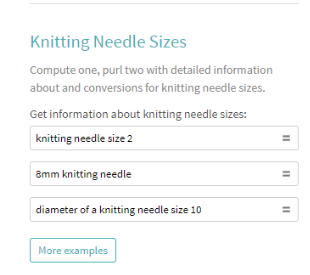
    Photo Courtesy of Wolfram Alpha

    Oh, and it can answer questions about knitting needles, too. Isn’t that cool?

    By Noah Moster


    As stated beforehand, college is full of new experiences and decisions, which can feel paralyzing. However, it’s also the opening of the world, an understanding that you can do anything and be anyone, so long as you learn and grow in the field you feel passionate about. These are four tools to help with that goal, and hopefully, if used correctly, they can further your knowledge in the STEM sphere (or any educational sphere, for that matter)!

    Do you want more resources on the topic of science college/university websites? NSTEM’s vast resources database provides thousands of searchable STEM resources by category, school level, and state. This comprehensive library includes info on enrichment activities, curricula, internships, scholarships, and more. Check out a free sampling here. Or get an NSTEM membership today to unlock the complete list. 

    When a college/university student achieves membership in the National STEM Honor Society, the recognition, like many colleges, is in a Greek letter format.  For the National STEM Honor Society, Epsilon Theta Mu is the designated recognition for members at the college/university level. Students are distinguished and stand out as a result of this recognition, increasing appealing employment and educational opportunities, click here.