Author: NSTEM Media

  • 4 Ways to use LEGO Projects in your Students’ STEM Learning

    4 Ways to use LEGO Projects in your Students’ STEM Learning

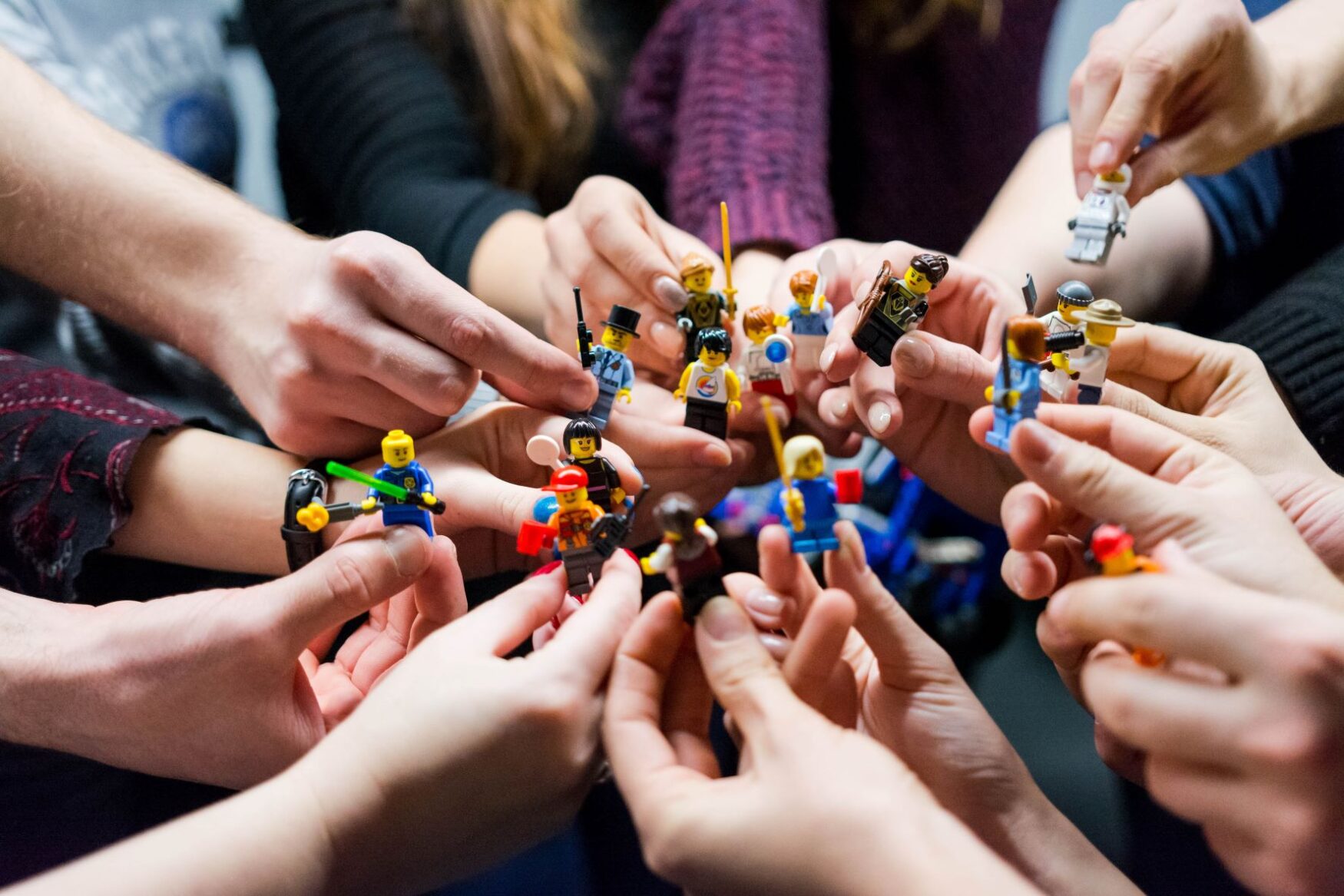
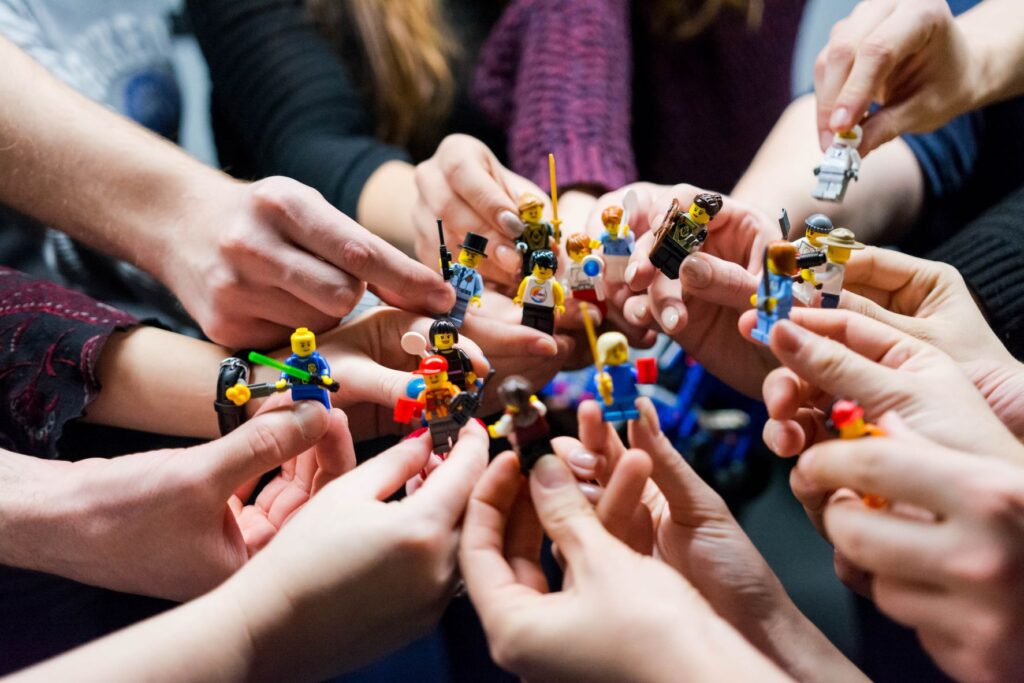
    Lego projects for STEM students
    Image courtesy of Unsplash

    LEGO projects are a fun and engaging way to incorporate STEM (science, technology, engineering, and math) learning into the classroom. Not only do they allow students to think creatively and problem solve, but they also provide hands-on learning opportunities that can make the material more relatable and memorable. Here are four smart ways to utilize LEGO projects in your students’ STEM learning for grades 3-5.

    1. Use LEGOs to teach mathematical concepts. LEGOs can be used to teach a wide range of mathematical concepts, from basic counting and measurement to more advanced concepts like geometry and fractions. For example, students can use LEGOs to build geometric shapes and explore their properties or use LEGOs to create a scale model of a building or structure and learn about measurement and proportion. Here is an NSTEM resource to get you started!
    2. Use LEGOs to teach engineering concepts. LEGOs are a great tool for teaching engineering concepts. Students can use LEGOs to design and build structures, machines and vehicles, learning about concepts like strength and stability, gears and pulleys, and simple machines. They can also learn about the design process and how to iterate and improve their designs. Here is an NSTEM resource to get you started!
    3. Use LEGOs to teach coding and computer programming. LEGOs can be used to teach coding and computer programming, as well. There are many different LEGO kits and software that allow students to create programs and code that control their LEGO creations. This is a great way to introduce students to the basics of coding and programming and how it can be used to control and manipulate real-world objects. Here is an NSTEM resource to get you started!
    4. Use LEGOs to teach scientific concepts. LEGOs can be used to teach a wide range of scientific concepts, from simple machines and forces to more advanced concepts like energy and motion. For example, students can use LEGOs to build simple machines and learn about how they work and how energy is transferred. They can also use LEGOs to build models of chemical reactions or physical phenomena, helping to bring abstract concepts to life. Here is an NSTEM resource to get you started!

    LEGO projects are a fun and engaging way to incorporate STEM learning into the classroom. They allow students to think creatively, problem solve and provide hands-on learning opportunities that can make the material more relatable and memorable. By using these four suggestions, you can help your students learn and grow in a fun and interactive way.

    By Lakshya Jain

    Do you want more resources on the topic of STEM projects? NSTEM’s vast resources database provides thousands of STEM resources that are searchable by category, school level and state. This comprehensive library includes info on enrichment activities, curricula, internships, scholarships and more. Check out a free sampling here. Or get an NSTEM membership today to unlock the complete list. 

    Grades 3-5 continue the STEM education journey, where students are interested in the natural world, in how things work, responding to stories told by teachers that give purpose and meaning to STEM disciplines, which molds them into thinkers, problem solvers and creators. The National STEM Honor Society sees grades 3-5 as a critical point in the NSTEM journey. To start your grade 3-5 chapter of the National STEM Honor Society, click here. 

  • 3 Robotics Resources to Implement in your Middle School Classroom Today

    3 Robotics Resources to Implement in your Middle School Classroom Today

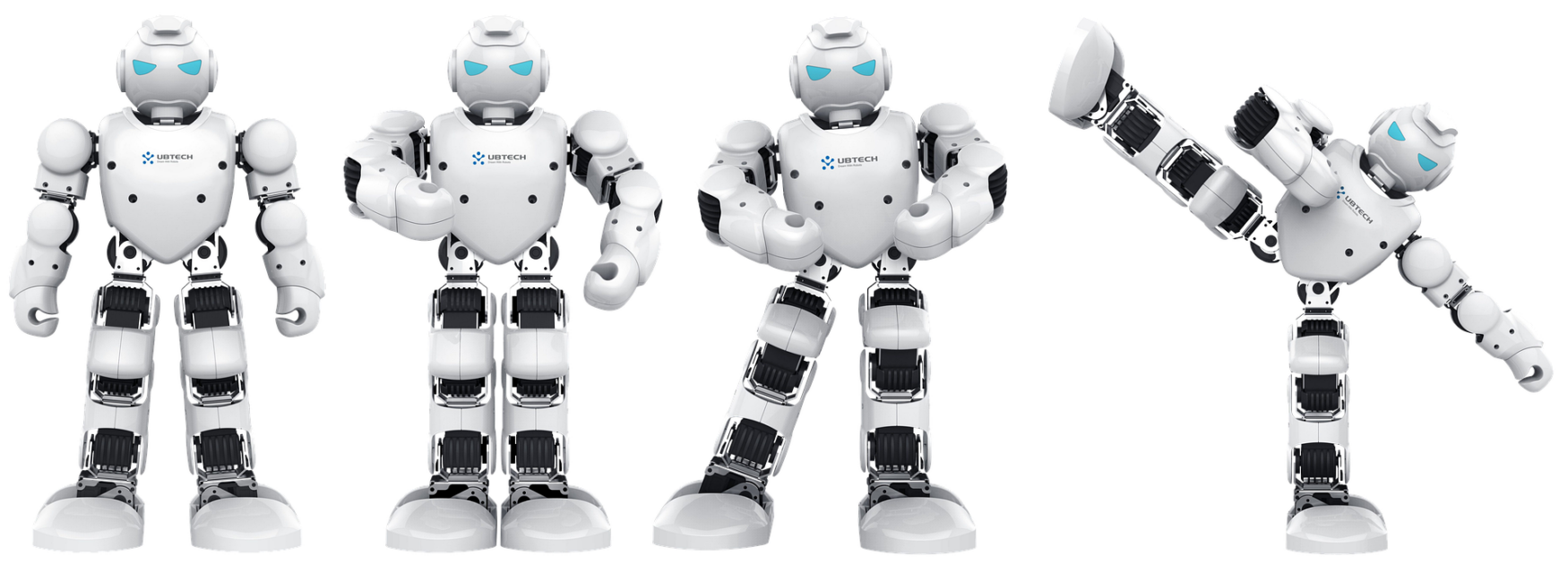
    robotics resources for middle-school students

    Photo courtesy of PixabayDo your students ever discuss how fun it was to play with robots when they were growing up? Now that they’re a bit older, are they interested in building robotics from scratch? Here are a few good suggestions of robotics resources you can easily incorporate into your classroom. The resources are inspired by the NSTEM resource library. 

    1.   Spirit Robotics – SPIRIT Robotics

    Are your students interested in building robots but don’t know where to start? Don’t worry. The Silicon Prairie Initiative for Robotics in IT (“SPIRIT”) is a comprehensive robotic learning project targeted specifically to middle school students. The program includes various activities that help middle-school students understand the principles of wireless, video and signal processing, sensors, video displays, electronics, control systems, embedded systems, digital logic and introductory programming. This is a great program you can refer to your students, so they can join and explore their own ways of learning robotics.

    2.  Robot Lab – https://www.robotlab.com/store/engagek12

    This is your ultimate resource for your middle-school students. Robot Lab contains hundreds of courses — from basic to advanced levels that help your students explore their own suitable ways of learning robotics and programming. It allows teachers to design a better lesson plan that is fun and educational, based on a “browser-based learning ecosystem.” For instance, you can simply find a free course to teach your students basic programming, such as randomization, where you would use the Random Int box in Choregraphe, which introduces the use of random numbers in programming. There is so much more for teachers and students to explore with this resource, so definitely check it out!

     3.  Lego Robotics Kits – Lego Robotics Kits 

    Are you looking for a fun way to teach robotics? Are your middle-school students interested in some hands-on opportunities to design their own robotics? Lego kits will help your student have a fun experience to learn robotics and give an introduction to programming. There are various levels of Lego robotics kits you can choose for your class, depending on the interests and grade of the middle schoolers. For example, Lego’s “booster creative toolbox” contains the material to build up to five robots from Lego pieces.

    This kit includes 847 LEGO pieces to build five multifunctional robots. It includes color, tilt, and distance sensors. Students can make “Vernie the Robot” that dances, the Guitar 4,000, “Frankie the Cat,” Autobuilder, and a multi-tooled Rover 4. It comes with an instruction app that can be downloaded to a phone. Here’s a resource for additional robotics kits for kids: https://moonpreneur.com/blog/robotics-kits-for-kids/

    By Zhe “Tom” Yuan 

    Do you want more resources on the topic of robotics? NSTEM’s vast resources database provides thousands of STEM resources that are searchable by category, school level and state. This comprehensive library includes info on enrichment activities, curricula, internships, scholarships and more. Check out a free sampling here. Or get an NSTEM membership today to unlock the complete list.

    Middle School is where students are transformed, entering as children and emerging as young adults. Project-based learning enrichment helps students connect the dots between STEM and real life, making math and science relevant for them, keeping them engaged and interested. With a meaningful middle-school experience, students are far more likely to focus on STEM disciplines in high school and beyond.  To start your 6-8, middle school chapter of the National STEM Honor Society, click here.


  • Best Field Trip Locations for K-2 Students

    Best Field Trip Locations for K-2 Students


    Kindergarteners on field trip
    Photo courtesy of Unsplash

    Do you want to give your K-2 students the best field trip experience? Giving young kids new experiences and opportunities is very important in all classrooms. If you want to know the best field trip locations for your students, worry no more. Here are some of the best field trip locations for K-2 students.

    1.  Scientific Exploration at the Science Museum 

    Going to a science museum is a great way to engage your students with science in a very hands-on way. Your kids are able to see many new exhibits, and they can do interactive activities with professionals and try new experiments. It is such a great way to give your students a break away from the classroom and allow them to learn something new. 

    By going to the museum, your students can access a lot of new educational materials that they would usually not be able to. You could also be giving some of your students a new idea for a career path they would want to pursue. When looking for a field trip, you can’t go wrong by going to a science museum. 

    2.  Hands-On Learning at the Aquarium

    An aquarium can provide your students with a fun-filled and leisurely experience. With entertainment and interactive experiences, they can learn more about underwater environments and ecosystems. They can also learn more about the underwater world from real professionals and become more interested in the science pathway. 

    Aquariums are fascinating and educational at the same time. It will encourage scientific discovery and exploration in these young minds, which can lead them into science pathways as they grow up. It will also appeal to many of the students’ learning needs through interactive lessons, visual learning and listening to lectures and facts about these animals. 

    3.  Astronomical Discovery at the Planetarium 

    The planetarium is a very underrated field trip that will incorporate science into your young students’ minds. It is a very relaxing activity where your kids will be able to learn more about space and our galaxy through visual and audio activities. It will educate the students about stars, planets and constellations. 

    Space is one of the most interesting and unknown fields throughout science. By opening your students’ minds about this domain at such a young age, it can inspire their young minds to explore many new fields of study when they get older. It is also a great way to stimulate brain development through creativity and imagination. 

    With all of these great options and opportunities for your students, field trips will inspire their minds and encourage them to pursue any science dreams they may have. 

    By Francesca Lisbino

    Do you want more resources on the topic of field trips? NSTEM’s vast resources database provides thousands of STEM resources that are searchable by category, school level and state. This comprehensive library includes info on enrichment activities, curricula, internships, scholarships and more. Check out a free sampling here. Or get an NSTEM membership today to unlock the complete list. 

    K-2 is where it all starts with STEM education. The National STEM Honor Society focuses on “From K to Career, NSTEM from the Start!” To start your K-2 Chapter of the National STEM Honor Society, click here.

  • 10 Exciting Math Competitions for Grades 3-5; Unleashing the Potential of Young Mathematicians

    10 Exciting Math Competitions for Grades 3-5; Unleashing the Potential of Young Mathematicians

    Young girl in grade 3-5 doing addition math on a whiteboard, preparing for a math competition.
    Photo courtesy of ParentMap

    Is your mathematics student already showing a competitive spark at 8, 9, 10 years old? A math competition might be just the outlet they need to put their talents on display. Competitions are not just for middle and high schoolers—a good number of math challenges exist for the elementary-school crowd. These matches are a good way for this age group to begin building skills like collaboration, confidence and critical thinking. Below, we have compiled a list of competitions available to students in grades 3-5.

    1. Perennial Math National Championship – https://perennialmath.com/

    Perennial Math hosts online competitions, live on-site tournaments and virtual tournaments for students in grades 3-12. Rules vary by each tournament, so check out the link above to learn more. There are two seasons for the online tournaments (Nov–Feb and Jan–Apr). The in-person tournaments take place throughout the year. All winners of on-site tournaments are invited to the National Championship, typically held in May. Team membership is available for $100.

    2. Art of Problem Solving (AoPS) – https://artofproblemsolving.com/online

    AoPS creates interactive educational opportunities for avid students of mathematics, including lots of activity in the competition arena. Check out the link above for a detailed compilation of contests—upcoming and past competitions, as well as results and practice problems.

    3. Mathematical Olympiads for Elementary and Middle School – https://moems.org/

    The MOEMS International Math Olympiad offers monthly math competitions for elementary school students in teams of up to 35. Schools, organizations and homeschool networks can register for these events and complete competitions in person or online. Participants in the Math Olympiad can win trophies and medals and connect with like-minded students around the globe.

    4. North South Foundation Math Bee –  http://northsouth.org/public/home

    Organized by the North South Foundation (NSF), NSF Math Bee is a national competition for children of the Indian American community. Launched in 2004, its goal is to better prepare children to take standardized tests such as PLUS, PSAT, SAT I, SAT II, and ACT. The competition is open to U.S. students from grades 1 to 8.

    5. Continental Mathematics League –  https://www.cmleague.com/product-category/cml/

    CML hosts contests for students in grades 2 through 12. CML helps students improve their problem-solving skills. Schools can enter their students in the meets and contests as part of larger teams. Students in grades 2 and 3 can enter three meets in a year. Students will be participating with other students on the same grade level from schools all over the U.S.

    6. Noetic Learning Math Contest –  https://noetic-learning.com/mathcontest/index.jsp

    Students have the chance to sharpen their problem-solving skills in a 20-question, 45-minute math extravaganza. The Noetic Learning Math Contest is offered both online and on site in schools. Participants compete for medals, honor roll recognition and bragging rights.

    Young girl smiling and pointing at a chalkboard filled with mathematical equations.
    Photo courtesy of Getty Images


    7. Math Kangaroo – https://mathkangaroo.org/mks/


    Mathematical Kangaroo is an international mathematical competition with over 50 participating countries. It is the largest competition for school students in the world, with over 5 million participants from 47 countries. There are 24 questions for students up to 4th grade, and 30 questions for students of the remaining grades. 

    8. RSM Foundation – https://www.rsmfoundation.org/programs

    The RSM Foundation’s International Math Contest (IMC) is a 30-minute online challenge based on leading math curricula from across the world. Participation in the challenge is free. You can opt in to receive a performance report, which provides your student’s score, placement, percentile, knowledge strengths, gaps as well as insight into their grasp of mathematical concepts mastered by their international peers.

    9. The Math League  https://www.mathleague.org/esevents.php

    Math League is a math competition for elementary school students in the U.S, Canada and around the globe. It offers students the opportunity to participate in an academically oriented activity and gain recognition for mathematical achievements. For fourth and fifth grade students, registrations are open until January 31, 2023 with the competition slated to take place in April.

    10. K-12 Game-a-thon

     https://www.mindresearch.org/gameathon

    The national K-12 Game-a-thon encourages students from pre-kindergarten to grade 12 to think critically and creatively to design a game that, in turn, solves a mathematical problem. One or more students, along with a teacher or parent as a coordinator, can invent card games, board games, apps or outdoor games.

    by Maureen Ryan Thorpe

    Do you want more resources on similar topics? NSTEM’s vast resources database provides thousands of STEM resources that are searchable by category, school level and state. This comprehensive library includes info on enrichment activities, curricula, internships, scholarships and more. Check out a free sampling here. Or get an NSTEM membership today to unlock the complete list. 

    Grades 3-5 continue the STEM education journey, where students are interested in the natural world, in how things work, responding to stories told by teachers that give purpose and meaning to STEM disciplines, molding them into thinkers, problem solvers and creators. The National STEM Honor Society sees grades 3-5 as a critical point in the NSTEM journey. To start your grade 3-5 chapter of the National STEM Honor Society, click here.
  • The 6 Best Coding Resources for High School Students

    The 6 Best Coding Resources for High School Students


    Black screen with HTML code in various colors.
    Photo courtesy of Pixabay

    Are you looking to learn how to code? Here are 5 top coding resources that will help you learn how to code like a pro. These resources are from the National STEM Honor Society Resources section of our website for members. 

    1. Scratch

    Scratch is a visual programming language and website aimed primarily at individuals as an educational tool for programming. Users on the site, called “Scratchers,” can create projects on the website using a block-like interface. 

    2. Penn Boot Camps

    Penn Boot Camps prepares students with the in-demand skills necessary for the fields of coding, cybersecurity, data analysis and fintech. Their programs combine an interactive environment with dynamic curricula taught by experienced instructors. Through this program, you will be able to build a wide-ranging portfolio of projects in their coding or data programs, or learn a variety of skills applicable to certifications in the cybersecurity program.

    3. Coding Boot Camps with Computerscience.org

    Coding boot camps teach practical, career-related skills quickly. An online boot camp provides extra versatility for learners with limited local options. Distance learning also offers an ideal setting for tech education.

    4. Dyf

    These easy-to-follow, step-by-step projects introduce young minds to standard coding and design concepts. It’s a great way to encourage creative thinking, self-expression and problem-solving. Students will learn how to integrate custom graphics into their coding projects. They can build a portfolio of games, designs, animations and a variety of digital media.

    5. Microsoft MakeCode Arcade

    Make Code is a platform provided by Microsoft that offers free coding lessons tailored to young people and their interests. You may discover guides to develop old arcade games as well as free coding seminars for high school students interested in creating their own Minecraft modifications.

    6. Kode with Klossy

    Kode with Klossy provides learning opportunities and experiences for young women and gender-diverse youth. The organization hosts free, two-week summer coding camps across the country for young women ages 13 to 18 to teach the fundamentals of programming and web development—applications are now open.

    By Aisha Makama 


    Do you want more resources on the topic of coding? NSTEM’s vast resources database provides thousands of STEM resources that are searchable by category, school level and state. This comprehensive library includes info on enrichment activities, curricula, internships, scholarships and more. Check out a free sampling here. Or get an NSTEM membership today to unlock the complete list. 

    When a college/university student achieves membership in the National STEM Honor Society, the recognition, like many colleges, is in a Greek letter format.  For the National STEM Honor Society, Epsilon Theta Mu is the designated recognition for members at the college/university level. Students are distinguished and stand out as a result of this recognition, increasing appealing employment and educational opportunities. To start your NSTEM, go to New Chapter Registration – National STEM™ Honor Society.

  • 3 Engaging Wind Power Projects for Middle-School Students

    3 Engaging Wind Power Projects for Middle-School Students

    A field of sunflowers with a windmill under blue skies, showing wind power.

    Photo courtesy of Pixabay

    Looking for ways to introduce lessons on renewable energy to your middle-school students? Bringing kids into the conversation early shows them how important renewables are and how they can get involved right now. Below you’ll find NSTEM resources that help get middle schoolers thinking creatively about ways to generate clean energy.  

    1.      Build a simple turbine and discover wind energy

    A windmill showing wind power underneath the blue sky.
    Photo courtesy of Pixabay

    By having middle-school students build small wind turbines, they’ll discover how wind energy can easily transform into electrical energy. They’ll learn that wind power is a renewable and economical alternative to conventional plant-produced fuel. Watch this video to learn how your class can create wind turbines with very few supplies. The only item you may need to purchase is a voltmeter—which can be purchased inexpensively online. Watch this demonstration from NSTEM resource, Teach Engineering, to see how all the fun begins. Wind Power – Informal Learning Activity – TeachEngineering

    2.      Build a puff mobile and watch it go

    Photo courtesy of Getty Images

    In this renewable energy activity, participants build a wind-powered car using straws, Lifesavers candies, paper and paper clips, then try to get their car to the finish line using as few “puffs” of air as possible. During this fun experiment, students will discover that we can use wind power in the world of transportation (as demonstrated with sail cars or even sailboats).  Check out our NSTEM resource, DiscoverE.org for everything you need to know about Puff Mobiles.

     3.      Create a MacGyver windmill and convert moving air into mechanical energy

    Several kids in orange shirts working on wind power projects in a classroom
    Photo courtesy of YouTube

    A “MacGyver” windmill is a perfect project for students in middle school. Students are tasked with constructing a simple windmill to lift weights using basic materials. This lesson will help students understand how a windmill captures the energy of the wind and converts it into usable mechanical energy—the basis for understanding modern wind turbines. Students will use an engineering design process and scientific method to design, build, test and improve their models. KidWind and their affiliate, REcharge Labs, have developed a set of lessons and kits that offer instructional videos, as well as printable instructions and detailed steps. NSTEM resource, REcharge Labs, can be found here.

    by Maureen Ryan Thorpe

    Do you want more resources on the topic of wind power? NSTEM’s vast resources database provides thousands of STEM resources that are searchable by category, school level and state. This comprehensive library includes info on enrichment activities, curricula, internships, scholarships and more. Check out a free sampling here. Or get an NSTEM membership today to unlock the complete list.

    Middle School is where students are transformed, entering as children, and emerging as young adults. Project-based learning enrichment helps students connect the dots between STEM and real life, making math and science relevant for them, keeping them engaged and interested. With a meaningful middle-school experience, students are far more likely to focus on STEM disciplines in high school and beyond. To start your grade 6-8, middle-school chapter of the National STEM Honor Society, click here.