Author: NSTEM Media

  • 3 Stimulating STEM Guest Speakers to Incorporate in Your Elementary School Classroom Today

    3 Stimulating STEM Guest Speakers to Incorporate in Your Elementary School Classroom Today

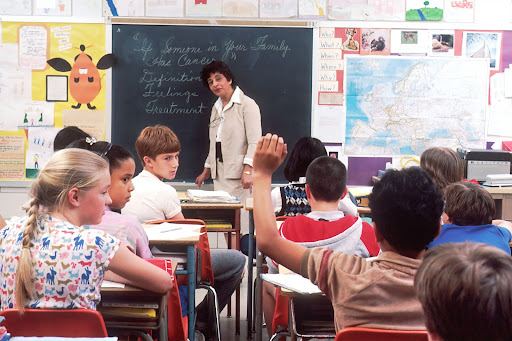
    Teacher in front a classroom
    Photo courtesy of Unsplash

    Have you wanted to bring STEM guest speakers to your kid’s elementary classroom? Introducing different professionals to your kids can help encourage them to find a career to pursue. Helping your kids find their passion at a young age will help set them up for success. Here are 3 stimulating STEM guest speakers you can incorporate into your elementary school classroom. 

       1. Ecologist 

    Kids who are interested in the environment and animals will greatly enjoy being visited by an ecologist. Ecologists spend their time researching the interactions between animals, plants, and the environment. Meeting an ecologist can help teach kids about the relationships between predators and prey, or how invasive species disrupt the environment. Ecologists can be found working at zoos, museums, or aquariums. Another important aspect of speaking with an ecologist is how ecologists can educate children on protecting the environment. The state of the environment is a pressing issue, and introducing the idea of helping the environment will be beneficial for our future. Ecologists constantly work to solve environmental issues. Having an ecologist as a guest speaker will help teach your kids about the importance of using scientific methods to solve problems. 

       2. Video Game Designer

    Another career that features the use of STEM is video game designers. Video game designers use science, technology, and math to help create unique gameplay experiences. If your kids are interested in playing video games, they will have an enjoyable experience of learning about how video games are created. Video game designers can discuss how they plan their games, the process of coding the games, and how they finish polishing their creations. Speaking to a video game designer can encourage your kids to try creating their own games. It can even teach them about the importance of trial and error when designing and making new things. Video games require STEM skills, creativity, and perseverance in order to be created. If your child wants to become a game designer, this is a good first step to help them get on that path.       

       3. Agricultural Scientist

    Agricultural scientists are in charge of discovering ways to increase food production and raising farm animals. These scientists study a variety of topics, such as farm animals, plants, soils, and processed food. Many of the conveniences surrounding the food we consume have been created from the efforts of agricultural scientists. Meeting with an agricultural scientist is a great way to introduce your kids to agriculture. It can also provide your kids perspective on the important role agricultural scientists play in our society. The field of agriculture relies on STEM, since many of the innovations of food production relies on using engineering, math, and technology. Agricultural scientists create experiments that help discover new ways to streamline the process of growing fruits of vegetables. Agriculture may be a great career field if your child is interested in gardening or taking care of animals. 

    If you would like to get in contact with guest speakers, check out this NSTEM resource. Although this resource is specific to Kansas, speakers are attainable for all schools. You can find guest speakers in STEM fields by reaching out to local universities, research institutions, companies and professional organizations. You can also use online platforms like LinkedIn to identify and connect with professionals in the desired field. Networking events, workshops and conferences related to STEM can also be great opportunities to meet potential guest speakers. 

    By Nathan Li

    Do you want more resources on the topic of STEM guest speakers? NSTEM’s vast resources database provides thousands of STEM resources that are searchable by category, school level and state. This comprehensive library includes info on enrichment activities, curricula, internships, scholarships and more. Check out a free sampling here. Or get an NSTEM membership today to unlock the complete list. 

    Grades 3-5 continue the STEM education journey, where students are interested in the natural world, in how things work, responding to stories told by teachers that give purpose and meaning to STEM disciplines, which molds them into thinkers, problem solvers and creators. The National STEM Honor Society sees grades 3-5 as a critical point in the NSTEM journey. To start your grade 3-5 chapter of the National STEM Honor Society, click here.


  • The 3 Most Exciting High School Science Educators and What They Have to Say!

    The 3 Most Exciting High School Science Educators and What They Have to Say!


    Photo by Pixabay

    Do you want to find the most interesting science from real highschool educators? Look no further with these awesome speeches that’ll really make you want to do more with science. With these amazing speeches and resources by NSTEM you will be able to have fun and share it with your friends!

       1. Science Talk: A Tool for Learning Science and Developing Language:

    Science talk is amazing because it exposes learners to many new ideas. Also, this has professional educators talking about all different ranges of science from just talking about it to just teaching it. It also provides written information and videos with this. To learn more, you should check it out here!

       2. Wiley Online Library:

    This is an online library that is completely free for everyone to use. It is a great platform for highschool students to find scholarly journals, lectures, and teachings in all different fields of science. This is heavily used and recommended for college students, however high school students use it as well. To find out more about this library you should check out this website!

    Photo published by Unsplash

       3. Teched Gov Files:

    This is not a singular website but actually multiple different pdf/files for whatever science topic you would like to learn more about. This is a very good tool when you want to find out specific information and topics for a science field. This is so great because you can just search for the specific topic you want to learn about and then follow it by tech.ed.gov and you will be able to see many different files about your science topic. 

    by Francesca Lisbino


    Project-based learning enrichment provides high school students with college and career readiness. It gives them real world relevance, transforming students into collaborators and imaginative problem solvers. They will gain the upper hand in a global landscape, stemming from enhanced confidence and grit. NSTEM provides these young STEM enthusiasts with a close community of like-minded fellow students and educators.  To start your 9-12 Chapter of the National STEM Honor Society, click here.

  • Learn How to Code in High School with these Five Coding Tips

    Learn How to Code in High School with these Five Coding Tips


    Do you want to become a whiz at coding? Here are 5 Tips for high schoolers to ACE learning how to code!

    girl coding on a desktop
    (Morillo, 2018)

       1. Have a group of friends interested in coding? Why not learn together! Learning how to code with some friends helps, especially when you can depend on each other for any challenges you face (Computer Science in High School)!

       2. Also, block-based coding is great if you’re starting to learn how to code. Blockly (developers.google.com/blockly) is a website that you can use to get to know coding languages better in fun ways, including Java and Python (Blockly, Maya Bello, 2021)!

       3. Next, see if your school has an AP computer science class you can take to learn about coding, or consider doing an introductory coding course at a community college in your area (Maya Bello, 2021)!

       4. Additionally, high schoolers could seek mentors to provide guidance, knowledge, and help them create a professional network in coding (Hazzard, 2021)!

       5. Finally, websites for learning skills, such as Udemy and Cousera, have tons of coding classes to choose from, and they can be done online (Maya Bello, 2021)!

    So for those of you who want to go far in the coding world, whether you’re starting out or you want to develop your existing skills, following these tips are a good head start for now, and for your future!

    Project-based learning enrichment provides high school students with college and career readiness. It gives them real world relevance, transforming students into collaborators and imaginative problem solvers. They will gain the upper hand in a global landscape, stemming from enhanced confidence and grit. NSTEM provides these young STEM enthusiasts with a close community of like-minded fellow students and educators.  To start your 9-12 Chapter of the National STEM Honor Society, please visit this link https://nstem.org/staging/start-a-chapter

    by Destini Watson


    The following are resources from the National STEM Honors Society Resources section of our website for members. This comprehensive library includes info on enrichment activities, curricula, internships, scholarships, and more. Check out a free sampling here. Or get an NSTEM membership today to unlock the complete list.


    View the High School National STEM Honor Society experience here! https://nstem.org/staging/high-school


  • 3 Top Secrets to Crushing the Math SAT

    3 Top Secrets to Crushing the Math SAT


    Calculator on a math review book
    Photo courtesy of Pexels

    Are you ready to take on the Math SAT? Being prepared for the Math SAT will make your SAT experience much easier. There are strategies, resources, and tricks that will help you earn a high score on the exam. Here are the three top secrets you need to know to crush the Math SAT. 

       1.Research the Math SAT

    Getting information about the Math SAT will help you prepare yourself for the exam. Having information about the exam material, conditions of the exam, and the resources available to you will increase your chances of getting the score you want. The official SAT website contains information that details what you need to know for the test. The three primary types of math tested in the exam include the Heart of Algebra, Problem Solving and Data Analysis as well as some additional topics in math. There is 25 minutes available to complete the no-calculator section, while there is 55 minutes available for the calculator portion. With this information, you can familiarize yourself with the exam to feel less nervous while taking the test. Knowledge is power and having the right information will help you find success.

       2. Practice, Practice, Practice

    In order to achieve the score you want, you need to practice what you learned since knowing is only half the battle. It is important to practice taking the exam with the same conditions as the real test. Remember to use a timer to give you the same time limits as the exam. Make sure to have a calculator and reference sheet ready for your practice tests. Getting used to taking the SAT will help you feel less nervous while testing as well as help prevent mistakes from happening. Another benefit from practice tests is how they allow you to know your strengths and weaknesses based on the answers you got correct or wrong. Most practice tests have an answer key that helps with grading your own test. After taking a practice test, make sure to review the questions you got wrong. You can find official downloadable practice tests at CollegeBoard’s website.     

       3. Use Khan Academy’s Resources

    Khan Academy is one of the best available free resources to prepare for the SAT. Students can watch videos, practice math questions, and read strategies on the website. Khan Academy has custom study plans based on your strengths and weaknesses in different math topics. If you are struggling with a specific question, you can find videos that break down how to solve the question. You can even find other questions that are similar to the one you struggle with for extra practice. The best part is that Khan Academy uses official SAT practice materials to help drastically improve your scores. The website’s design allows you to stay engaged with studying for the SAT since it allows you to create your own study schedule. You can choose to break up your studying between each day or focus on studying for longer sessions for fewer days. The amount of flexibility and ease of use found within Khan Academy allows for more customizable study plans. Visit Khan Academy’s website if you want to start improving right away. 

    by Nathan Li 


    Do you want more resources on the topic of  SAT preparation? NSTEM’s vast resources database provides thousands of STEM resources that are searchable by category, school level and state. This comprehensive library includes info on enrichment activities, curricula, internships, scholarships and more. Check out a free sampling here. Or get an NSTEM membership today to unlock the complete list.

    Project-based learning enrichment provides high school students with college and career readiness. It gives them real world relevance, transforming students into collaborators and imaginative problem solvers. They will gain the upper hand in a global landscape, stemming from enhanced confidence and grit. NSTEM provides these young STEM enthusiasts with a close community of like-minded fellow students and educators.  To start your 9-12 Chapter of the National STEM Honor Society, click here.

  • Reuse Reduce Recycle! The 3 Most Stimulating Activities to Engage Students in Recycling

    Reuse Reduce Recycle! The 3 Most Stimulating Activities to Engage Students in Recycling


    Kid recycling with bottles in hand
    Photo courtesy of Pixabay

    Have you ever wanted to get your kids involved with reusing, reducing, and recycling? Practicing recycling is important for protecting the environment. Teaching your kids recycling at a young age can help them develop beneficial lifelong recycling habits. Here are three stimulating activities to encourage your kids to recycle. 

       1. Make Recycling a Game

    Turning recycling into a game is a great way to introduce your kids to recycling. Games can be a useful way to teach your kids what types of materials can be recycled. One game you can use to teach the fundamentals of recycling is a recycling organization game. In order to win the game, the players must sort through a random assortment of items in a set amount of time. The items must be sorted as either recyclable items or non recyclable items. Whoever sorts through all of the items first under the time limit will win the game. This game also has the ability to be customized to your liking. If you want to increase the difficulty, you can have your kids sort items based on the types of materials such as organizing between papers and plastics. This simple game can help introduce recycling while also helping to build positive recycling habits.  

       2. Create Recycled Arts and Crafts

    Cardboard, paper, and plastic containers are great materials you can use for building arts and crafts. Recycled materials are quite durable, which makes them excellent for shaping into different objects. Making recycled arts and crafts will encourage your kids to become more creative as well as teach them how to be resourceful with the materials around them. To make a car, you can use a plastic bottle as the base and use four bottle caps as the tires. Another fun craft you can make with recycled items is a flower pot. Items such as glass jars, plastic buckets, and milk jumps are common recyclable objects you can use. Customizing your recycled creations is another layer of fun that can be added to making arts and crafts. Using paint and construction paper are unique ways to add color to your crafts. Making these arts and crafts are also cost effective since they can help you save money from buying other materials. 

    For more recycled arts and crafts ideas, check out this NSTEM resource about recycled crafts.

    1. Reuse and Design your own Recycling Bins

    If you need extra space to place your recyclables, you can build your own recycling bins out of recyclable materials. Storing some recyclables can help provide your kids with materials for arts and crafts. Cardboard boxes or reused crates are two useful objects that can be reused as recycling bins. Those objects come in different sizes, which makes them useful for being containers for a variety of  materials. Larger boxes can hold items such as cans, detergent bottles, and cartons. Smaller boxes may be used for holding newspapers, magazines, or even small packaging. Children will enjoy the designing aspect of this activity. Kids can draw pictures on their recycling bins, paint to give their bins color, and add symbols to them. The sky’s the limit when it comes to designing these recycling bins. 

    by Nathan Li

    Do you want more resources on the topic of recycling? NSTEM’s vast resources database provides thousands of STEM resources that are searchable by category, school level and state. This comprehensive library includes info on enrichment activities, curricula, internships, scholarships and more. Check out a free sampling here. Or get an NSTEM membership today to unlock the complete list. 

    K-2 is where it all starts with STEM education. The National STEM Honor Society focuses on “From K to Career, NSTEM from the Start!” To start your K-2 Chapter of the National STEM Honor Society, click here.

  • Incorporating Robotics in Your Student’s Learning? Get a Head Start with these 3 Mind Blowing Resources

    Incorporating Robotics in Your Student’s Learning? Get a Head Start with these 3 Mind Blowing Resources

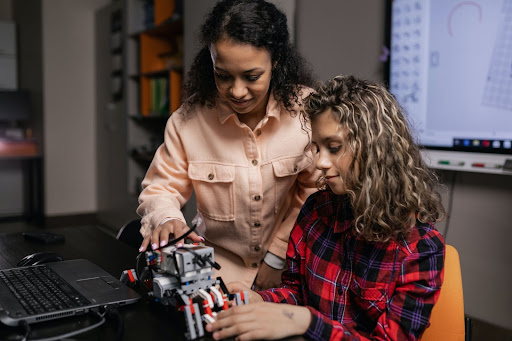
    Parent and child playing with a robot
    (Darmel, 2021)

    Are you looking to introduce your students to the exciting world of robotics? Here are three resources that will give them a head start in that direction!

       1.Code Advantage

    Code Advantage is a platform that offers online robotics classes. To participate, students will need a computer and the Lego WeDo 2.0 kit (which costs $215.00). They have various courses available for 3rd to 5th graders, including:

      • Pokebots: Inspired by the popular show Pokemon, this course allows students to create different creatures using Lego Robotics. They will learn coding to determine how these creatures move. The course covers concepts like gravity, friction, torque, and angular velocity.
      • Jedi Robotics: In this course, students will build droids and learn how to program them. They’ll also explore principles such as the center of mass, energy, and gear ratios.
      • Anibots: Students will use Legos to construct animal robots and gain an understanding of how animals’ bodies function in real life. They will also learn about principles such as torque, traction, and angular velocity.
      • Earthbots: Using Legos, students will explore different parts of the planet and develop programs to tackle challenges like volcanic heat, ocean pressure, and snowy mountains.

       2. iD Tech 

    iD tech is another online platform that offers robotics courses. They have listings available for 3rd to 4th graders, including:

      • Coding with Scratch and VEX Virtual Robotics: In this course, students will learn programming using the coding blocks of Scratch and VEXcode VR. They will work on creating variables, if-else statements, using arithmetic operators, designing and animating sprites, and conducting experiments. The course costs $399 for 2-hour sessions during weekdays, or $449 for 8 private lessons at a time that suits the student. Classes are available between June 5th and August 18th.
      • Roblox Avatar Shop Creation: This course focuses on creating logos for t-shirts in Roblox using image-editing software. Students can then use their designs as clothing for their Roblox avatar in their games. They will learn about making clothing for Roblox avatars and monetizing items. Similar to the previous course, it costs $399 for 2-hour sessions during weekdays, or $449 for 8 private lessons at a flexible schedule. Classes are available between June 5th and August 18th.

    3. Teacher Vision

    Teacher Vision offers valuable resources on robotics, including:

      • Science, Technology, and Society: Robots in Space: This worksheet, created by Scott Foresman, provides 3rd graders with information on how robots are essential for space exploration, as well as the differences between robots and humans.
      • Comparing Humans and Robots: This lesson plan from the Science Teacher Education Partnership Program (STEPP) consists of five activities covering robotics, engineering, and science.
      • Human and Robot Circuits: Another STEPP resource, this worksheet is ideal for 5th graders. It helps students understand the similarities between the circuit structures in humans and robots.

    Overall, there’s no better time than now to teach kids about robotics! These resources can enhance their knowledge and perhaps inspire them to become STEM professionals in the future.

    By Destini Watson

    Do you need information curated to STEM students’ needs? NSTEM’s vast resources database provides thousands of STEM resources that are searchable by category, school level and state. This comprehensive library includes info on enrichment activities, curricula, internships, scholarships and more. These resources are from the National STEM Honor Society Resources section of our website for members. Check out a free sampling here. Or get an NSTEM membership today to unlock the complete list. 

    Grades 3-5 continue the STEM education journey, where students are interested in the natural world, in how things work, responding to stories told by teachers that give purpose and meaning to STEM disciplines, molding them into thinkers, problem solvers and creators. The National STEM Honor Society sees grades 3-5 as a critical point in the NSTEM journey. To start your grade 3-5 chapter of the National STEM Honor Society, click here.

    View the 3-5th grade National STEM Honor Society experience here.