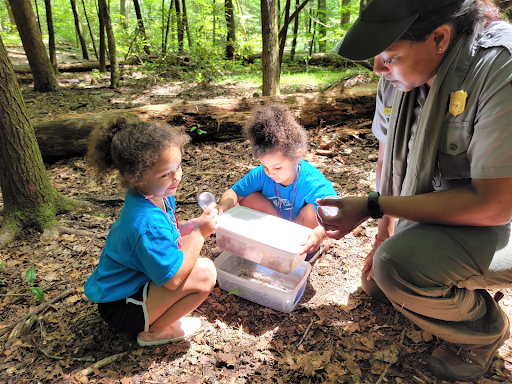
Author: NSTEM Media

  • 6 Ultimate Tips To Be Involved In Your Middle Schooler’s STEM Learning

    6 Ultimate Tips To Be Involved In Your Middle Schooler’s STEM Learning

    Photo courtesy of Unsplash

    It’s summer, you have a middle schooler at home, and you want them to have a fun and enriching summer break, but you don’t know where to start. STEM is the answer to your problem. Children are curious, highly energetic, and love experimenting and trying new things. Creating STEM projects and activities is a great way to utilize your child’s high energy, inquisitiveness, and natural learning ability. Children observe the world, connect ideas, and form hypotheses from their experiences. They build models and break them down. They put together puzzles and mix paint colors. Motivating your child towards STEM doesn’t just enhance their ability to connect ideas and think critically, it puts them on a path toward being a part of the next generation of STEM leaders. Read further to discover six ultimate tips to be involved in your middle schooler’s STEM learning.

     A parent’s influence on their children’s STEM aspirations also dramatically increases their child’s academic success. According to the National School Boards Association, the Program for International Student Assessment (PISA) 2015 report shows that family involvement resulted in higher achievement in math and science for children whose parents were interested in their school activities. U.S. kids who strongly agreed with the following statement: “My parents are interested in my school activities” had a PISA score of 508 in science and 480 in math. This is compared to a score of 466 in science and 444 in math for kids who strongly disagree with the statement.

    Here are six tips to help you get involved in your middle schooler’s STEM learning:

    • First, encourage your middle schooler to identify with STEM

      Look for opportunities to talk with your child about STEM-related topics. For example, you could speak about gravity when your child tosses a ball in the air, chemistry when making pizza at home, or fractions when cutting the pizza. Encourage your middle schooler’s curiosity and questioning. Instead of answering your child’s question or providing them with a solution to their problem, encourage them to research online, develop their possible solutions, and test them out. You can also use this to teach them about the scientific method and how to use it. Watch science, technology, and math-based TV shows with your child and discuss the tv program with them afterward.


    • Create positive learning experiences with STEM

      You want to create opportunities for your child to feel independent and accomplished. Also, vary the topics to cater to your child’s unique interests and learning style. Children need activities that engage their curiosity and kinetic energy. They need to be challenged, but within the confines of their comfort zone so they are not discouraged and are excited and having fun. Middle schoolers that are challenged to the point of being overwhelmed will withdraw and give up. Always provide positive reinforcement and encouragement while motivating your child to participate in STEM activities. Also, remember patience is very conducive to adequate teaching and motivation.


    • Create real-life scenarios

      Using real-world scenarios makes it easier for your child to see the importance of their learning and feel motivated to learn STEM. For example, while playing football with your child, you can teach how the density of a football affects its trajectory when thrown.


    • Find STEM-related toys

      STEM toys can be great tools to help your child stay engaged in STEM at home. They also are an excellent vehicle for project-based learning. A chemistry kit can lead to a hobby of science projects and experiments. Or a rocket-building kit can lead to learning about space and rocket launches.


    • Go on STEM-related recreational trips

      Taking your children to places like the local science museum or Luray Caverns is an excellent opportunity for them to learn about the natural sciences. You can also take them to robotics competitions or the Discovery Cube and encourage them to participate.


    • Look for at-home lesson plans

      When you’re struggling to develop your ideas on how to guide and instruct your child’s learning, you can use many resources online to keep your child busy and learning about STEM. The National STEM Honor Society (NSTEM) cuts out a lot of the online search for you on our website. Below are additional articles from NSTEM that can include tips to support your middle schooler’s STEM learning journey. Also, while browsing our website, consider learning about our NSTEM chapters and how you can get your child to be a member of our chapters.


    By Jacqueline Dua

    Do you want more resources on the topic of tips to be involved in your middle schooler’s STEM learning? NSTEM’s vast resources database provides thousands of searchable STEM resources by category, school level, and state. This comprehensive library includes info on enrichment activities, curricula, internships, scholarships, and more. Check out a free sampling here. Or get an NSTEM membership today to unlock the complete list. 

    Middle School is where students are transformed, entering as children and emerging as young adults. Project-based learning enrichment helps students connect the dots between STEM and real life, making math and science relevant for them, keeping them engaged and interested. With a meaningful middle school experience, students are far more likely to focus on STEM disciplines in high school and beyond.  To start your 6-8, middle school chapter of the National STEM Honor Society, click here
  • The Ultimate Guide for Gaining Comfort and Experience in STEM Teaching for Grades 3-5

    The Ultimate Guide for Gaining Comfort and Experience in STEM Teaching for Grades 3-5

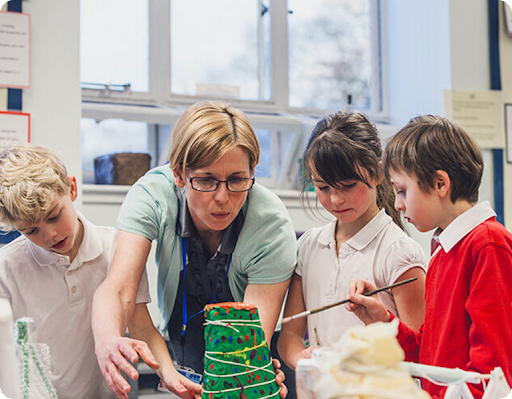
    Students and a teacher creating a volcano
    (Photo Courtesy of 3P Learning)


    Are you looking to enhance your STEM teaching experience? Here are four valuable resources to help you develop your skills and knowledge in STEM education!

      1. Understanding Science 

    A project created by Berkeley University, “Understanding Science” is a comprehensive database designed to assist teachers in STEM education. This resource database includes a wide array of resources: including numerous lesson plans, hands-on activities, assessment tools, tutorials, and teachings. Using this database, teachers can deepen their STEM understanding, enhance their teaching skills, and create an enriching learning environment among young learners.

       2.  PBS NOVA 

    For those looking to provide better education for children in grades 3-5, PBS Nova Education is the ideal teaching resource you need. A comprehensive toolkit encompassing various interactive videos, lesson plans, and classroom activities suitable for all learners promotes a wholesome learning experience that would undoubtedly foster a grand understanding of STEM. The integration of these versatile tools allows both educators and learners alike the opportunity towards cognitive excellence suffused with authentic scientific knowledge, thereby encouraging curiosity while strengthening critical thinking abilities among pupils.

       3.  Endeavor STEM Certificate Teaching Project 

    Aimed directly at instructors of grades 3-5 and their personal growth as effective facilitators of STEM, The Endeavor STEM Certificate Teaching program is both transformational and one-of-a-kind. It is based on an emphasis on student proficiency along with teacher self-confidence as it provides professional development opportunities via educational workshops, coaching, and an extensive network of experienced educators that encourages the successful integration of topical materials into a thematic curriculum. 

      4.  Feel-Good Teaching 

    Feel-Good Teaching is a website focused on creating and sharing educational experiences with teachers that not only capture students’ interest but also widen their knowledge across STEM. This website includes lesson plans, curriculum, and trainings.  

    In conclusion, these four resources provide valuable support and guidance for educators seeking to gain comfort and experience in teaching STEM. Delve into the thorough database of “Understanding Science,” utilize the interactive tools available at PBS NOVA Education, discover transformative opportunities with the Endeavor STEM Certificate Teaching Project, or explore Feel-Good Teaching’s engaging resources – all aimed at deepening your understanding of STEM subjects and fostering critical thinking in students. With an assortment of lesson plans/training options at your fingertips- bolster your knowledge in this field to create a wonderful classroom atmosphere that enriches student learning!

    By Elizabeth Antenucci


    These resources are from the National STEM Honor Society Resources section of our website for members. Make sure to join to gain access to even more invaluable resources!


    Do you want more resources on the topic of teaching STEM for grades 3-5? NSTEM’s vast resources database provides thousands of STEM resources that are searchable by category, school level and state. This comprehensive library includes info on enrichment activities, curricula, internships, scholarships and more. Check out a free sampling here. Or get an NSTEM membership today to unlock the complete list. 

    Grades 3-5 continue the STEM education journey, where students are interested in the natural world, in how things work, responding to stories told by teachers that give purpose and meaning to STEM disciplines, which molds them into thinkers, problem solvers and creators. The National STEM Honor Society sees grades 3-5 as a critical point in the NSTEM journey. To start your grade 3-5 chapter of the National STEM Honor Society, click here.

  • Top 4 Cutting-Edge Outside STEM Activities to Implement in Your K-2 Classroom Today

    Top 4 Cutting-Edge Outside STEM Activities to Implement in Your K-2 Classroom Today


    Photo courtesy of  National Science Teaching Association

    Are you looking for immersive outside STEM activities to implement in your K-2 classroom? Look no further! Here are four amazing activities to incorporate into your teaching today.

       1. What Causes Pressure?

    Experience the captivating concept of pressure through the immersive “Molecules in a Box” activity. By acting as gas molecules confined within an area, students actively participate in grasping this concept. With a long rope and an outdoor area, they engage in walking, colliding, and generating forces that emulate pressure. This interactive demonstration shows students how molecule quantity, temperature, and container size affect pressure. This activity effortlessly caters to individuals with varying levels of comprehension, nurturing a deep understanding of pressure without complex equations and is relatively short (duration depending on the number of times the activity is done). This resource is from the National STEM Honor Society Resources section of our website for members. Make sure to join to gain access to even more invaluable resources. 

       2. DIY Sundial 

    Experience the fascinating tradition of timekeeping by creating your own DIY sundial. This simple yet engaging STEM project is perfect for K-2 students and only calls for a paper plate, pencil, and a sunny day. In just 15 to 30 minutes you can set up the sundial and discover how to tell time by observing the shadows cast by the sun. As our planet rotates, the suns’ movement causes these shadows to change; they match up with hour markings on the sundial. By following clear instructions given in the website and using just two materials, this stimulating activity is accessible to everyone and makes outdoor learning more interesting.

       3. Roly Poly Adventures 

    Capture the attention of your K-2 students by conducting simple science experiments with roly poly pill bugs! Use a transparent plastic container to gather the bugs and create various scenarios in order to study their behavior. Take note of whether they tend to go towards light or dark places, observe how they maneuver around soft barriers, such as lint from a dryer, and see whether they prefer apples and carrots. These interactive experiments are effortless to set up and offer chances for making predictions and recording observations. 

       4. Leaf Matching Game 

    Indulge in the beauty of the outdoors and take a nice stroll to gather various leaves. With a basket, locate two leaves that are similar in both size and color for each leaf type you come across. Once in the classroom, use contact paper or a laminator to preserve these leaves, crafting an entertaining matching game that will undoubtedly enhance your K-2 students’ observation and critical thinking skills. You can also integrate mathematical concepts into the activity by measuring and comparing the leaves.

    Utilize these four outstanding outdoor STEM activities in your K-2 classroom today. Students can easily explore the concept of pressure through the interactive “Molecules in a Box” activity or engage in hands-on timekeeping by constructing their own sundials. Furthermore, they can learn from the fascinating little insects, roly poly bugs, with simple science experiments or collect leaves and enjoy a matching game.  These exciting activities will not only spark curiosity and a yearning to learn more STEM for your students, but also will allow them to develop their observation, mathematical, and critical thinking skills. 

    By Elizabeth Antenucci 

    Do you want more resources on the topic of K-2 outside STEM activities? NSTEM’s vast resources database provides thousands of STEM resources that are searchable by category, school level and state. This comprehensive library includes info on enrichment activities, curricula, internships, scholarships and more. Check out a free sampling here. Or get an NSTEM membership today to unlock the complete list. 

    K-2 is where it all starts with STEM education. The National STEM Honor Society focuses on “From K to Career, NSTEM from the Start!” To start your K-2 Chapter of the National STEM Honor Society, click here.

  • 3 Exciting Learning Experiences for Kindergarten Students

    3 Exciting Learning Experiences for Kindergarten Students


    Photo courtesy of Pixabay


    Have you ever wanted to introduce new learning experiences to your kindergarten students? Introducing new learning experiences to your students will help them gain a broader perspective of the world around them. Here are three exciting learning experiences for your kindergarten students. 

       1. Visit your Local National Park

    Taking a trip to a national park is a great way to teach your students how to appreciate nature. Your students will enjoy walking through a lush forest with plenty of wildlife all around them. Walking through a national park is also a useful way to refresh your students if they want to take a break from learning in the classroom. Students will learn how to make observations about the environment around them as well as the characteristics of the animals living there. A fun way for your students to record their observations is to give them small notepads. Ask your students to write down any fun observations they made or their favorite parts of the trip. You can even have your students share their observations with each other. 

       2. Use Online Learning Programs

    Teaching your students how to operate a computer is incredibly beneficial during this time and age. Everyday we interact with technology in order to gain more information or to learn new skills. Introducing technology to your students will help them learn this useful habit. One of the best learning programs for young students is Khan Academy. Khan Academy is a free website available for students. Students can learn basic arithmetic such as counting, addition, and geometry.. Khan Academy Kids is another engaging tool to encourage learning within your students. It is a free app developed by Khan Academy to teach math and literacy skills to young children. Teaching your students how to use Khan Academy will help them get ahead during their STEM studies

       3. Perform Science Experiments

    An interactive method to help your students become interested in STEM is to perform science experiments with them. There are a variety of experiments that can help teach your students scientific concepts such as gravity, density, or energy. One of the most important things a student can learn from science experiments is trial and error. Having your student learn about trial and error will encourage them to have a growth mindset. Making mistakes and learning how to improve while performing an experiment will help them for the future. A simple experiment you can introduce to your students is an observation experiment. Give your students different items and ask them to write down observations about them. You can ask them questions or make comments to help stimulate your students’ thought processes. Experiments are a fun way to teach your students something new.   

    by Nathan Li

    If you would like to see some more science experiment ideas, check out this NSTEM resource

    Do you want more resources on the topic of  learning experiences? NSTEM’s vast resources database provides thousands of STEM resources that are searchable by category, school level and state. This comprehensive library includes info on enrichment activities, curricula, internships, scholarships and more. Check out a free sampling here. Or get an NSTEM membership today to unlock the complete list. 

    K-2 is where it all starts with STEM education. The National STEM Honor Society focuses on “From K to Career, NSTEM from the Start!” To start your K-2 Chapter of the National STEM Honor Society, click here.

  • 12 Hot STEM Careers Right Now

    12 Hot STEM Careers Right Now


    Photo courtesy of Unsplash

    So, you’re an accomplished STEM student with lots of awards and coursework to prove it. Now what? Whether you’re a college student deciding upon your major or a recent college graduate, it’s a bit overwhelming to select the discipline that’s best for you. The good news is that the STEM field offers a wide range of exciting and lucrative opportunities. Here, we explore 12 of the hottest STEM careers in high demand right now. 

    Technology 

    1. Cyber Security or Information Security Analyst

    Cybersecurity Analysts protect computer networks and systems from cyber threats, develop security measures, and conduct risk assessments to ensure data privacy and prevent cyber attacks.
    Education requirements: Bachelor’s degree or higher in a technology-related field, such as computer science.
    Examples of jobs: Chief Information Security Officer (CISO), Network Security Engineer, Penetration Tester, Incident Response Analyst.

    2. UX/UI Design 

    UI UX Designers create the user interface for an app, website or other interactive media. Their work includes collaborating with product managers and engineers to gather requirements from users before designing ideas that can be communicated using storyboards. They also develop user flow and sitemaps.
    Education requirements: Bachelor’s degree and graphic design, fine arts or computer applications. Familiarity with coding, including HTML and CSS.
    Examples of jobs: User Researcher, Wireframe Expert, Content Strategist, Information Architect (UX designer), Usability Tester.

    3. Augmented Reality/Virtual Reality (AR/VR) Developer

    AR/VR Developers create immersive digital experiences by blending virtual elements with the real world. They design and develop applications for gaming, education, training, and simulations, pushing the boundaries of interactive technology.
    Education Requirements: Bachelor’s degree in computer science or a related field and advantageous if you have a digital portfolio. Familiarity with programming languages: C#, Java, Python, and JavaScript and a basic understanding of Extended Reality, also called XR.
    Examples of jobs: AR/VR Content Developer, Content Strategist, User Experience Designer, Animator or Sound Artist.

    Engineering

    4. Software Engineer or Software Developer

    A Software Engineer or Software Development Engineer is responsible for developing software programs or systems that align with user needs. Their duties include meeting with clients or business professionals to strategize ideas for beneficial software, coordinating with other IT professionals to design software and running tests to catch coding errors. More about software engineers.
    Education requirements: Bachelor’s degree or equivalent experience in software engineering, computer science, information technology or a related field. Familiarity with programming languages such as Java, Swift, or C#.
    Examples of jobs: Software Engineer, Mid-Level Software Engineer, Senior Software Engineer. 

    5. Biomedical Engineer

    Biomedical Engineers combine engineering principles with medical sciences to design and develop innovative healthcare solutions. They work on developing medical devices, prosthetics, and imaging systems, as well as researching and improving healthcare technologies. More about biomedical engineering jobs.  
    Educational requirements: Biomedical engineering programs help you gain specialized knowledge in the area, but general engineering majors with biology coursework are suitable.
    Examples of jobs: Software Developer, Hardware Engineer, Medical Scientist, Genetic Engineer, Rehabilitation Engineer.

    6. Renewable Energy Engineer

    Renewable Energy Engineers design, develop and optimize renewable energy systems such as solar, wind, and geothermal, aiming to reduce reliance on fossil fuels and combat climate change. Careers in renewable energy include those in solar, wind, hydroelectric, biomass, geothermal, and tidal power generation.
    Educational requirements: Bachelor’s degree in engineering, preferably in renewable energy or a related field.
    Examples of jobs: Solar Project Manager, Renewable Energy Projects and Operations, Solar Energy Systems Engineer, Renewable Energy Consultant, Biochemist, Wind Technician.

    For more information about the various engineering (and career) fields, read NSTEM’s blog article: https://nstem.org/staging/2021/10/8-stem-majors-for-students-interested-in-engineering/.

    Mathematics

    Photo courtesy of The Muse

    7. Data Analyst 

    Data scientists extract insights from large and complex datasets. They use statistical techniques, data analysis and machine learning algorithms to identify patterns, make predictions, and drive data-informed decision-making for businesses in a variety of industries–including technology, healthcare and manufacturing. Here are 8 types of data professionals in high demand.
    Educational requirements: Entry-level analysts often have a bachelor’s degree, while senior analysts may have a master’s degree or higher in their respective fields. Senior analysts are often competent in different programming languages, such as R and Python. They often have experience with Tableau and SQL.
    Examples of jobs: Data Analyst, Data Scientist, Machine Learning Engineer, Business Intelligence Analyst, Logistics Analyst, Data Architect, Business Systems Analyst, Marketing Analyst. 

    8. Artificial Intelligence (AI)

    AI Engineers develop algorithms, create intelligent systems and design AI models for various applications like robotics, natural language processing and computer vision. Mathematical topics like vectors, matrixes, functions, gradients, and information theory are all topics that help you develop AI programs.
    Educational requirements: Bachelor’s degree with an emphasis on statistical and analytical skills, such as math or computer science.
    Examples of jobs: Data Analyst, Data Scientist, Machine Learning Engineer, Robotics Engineer, Marketing Analyst, Business Intelligence Analyst, Logistics Analyst, Business Systems Analyst. 

    9. Actuary

    Actuaries investigate and interpret the financial costs of risk and uncertainty for businesses. They use tools from mathematics, statistics and financial theory to help companies to assess specific risks and help them develop strategies to alleviate that risk. Some work in healthcare to help insurance companies and medical facilities identify costs related to risk and investments.
    Education requirements: Bachelor’s degree in mathematics, actuarial science, statistics or another analytical field.
    Examples of jobs: Actuary, Business Analyst, Risk Analyst, Chief Risk Officer (CRO).

    Sciences

    Photo courtesy of Pixabay

    10. Microbiologist

    A microbiologist is a scientist who studies microorganisms, such as viruses, algae, fungi, bacteria and parasites. Through their experiments and research, microbiologists attempt to understand how microorganisms behave and interact with their environment and how they cause disease. They work in pharmaceutical, agriculture, food production and environmental-science vertical markets.
    Education requirements: Bachelor’s degree in microbiology, while more advanced work and independent study require a Ph.D.
    Examples of jobs: Biotechnologist, Clinical Lab Scientist, Immunologist, Mycologist, Cosmetic Scientist, Food Scientist, Pharmaceutical Scientist, Marine Biologist. 

    11. Epidemiologist

    Epidemiologists study and plan for the spread of infectious diseases that can become epidemics. They conduct studies by observing people, interviewing them or collecting bodily samples, analyzing data to predict and plan for epidemic events, and discussing their findings in reports to policymakers and the public.
    Education requirements: It’s common for epidemiologists to have a master’s degree in public health.
    Examples of jobs: Clinical Lab Scientist, Public Health Nurse, Infection Preventionist, Data Analyst.

    12. Physician Assistant (PA)

    Physician Assistants perform medical duties under the supervision of a physician. They are responsible for conducting patient exams, diagnosing and treating illnesses, ordering tests, interpreting test results, assisting in surgeries and prescribing medications.
    Education requirements: Bachelor’s degree in science or health care and a master’s degree from a graduate-level physician assistant program.
    Examples of jobs: PA in a hospital, physician’s office or outpatient clinic. 

    TIP:  Our friends at PBS and Nova Labs offer an amazing database of career descriptions and resources for further exploration of the STEM disciplines. Check it out here: https://www.pbs.org/wgbh/nova/labs/opportunities/resources/

    NSTEM also has a wonderful database! Its vast resources provide thousands of STEM resources that are searchable by category, school level and state. This comprehensive library includes info on enrichment activities, curricula, internships, scholarships and more. Check out a free sample here. Or get an NSTEM membership today to unlock the complete list. 

    By Maureen Ryan Thorpe


    When a college/university student achieves membership in the National STEM Honor Society, the recognition, like many colleges, is in a Greek letter format. For the National STEM Honor Society, Epsilon Theta Mu is the designated recognition for members at the college/university level. Students are distinguished and stand out as a result of this recognition, increasing appealing employment and educational opportunities.

  • Diversify Your Students’ STEM Experience With These 3 Enlightening Field Trips Destinations for Middle School Students!

    Diversify Your Students’ STEM Experience With These 3 Enlightening Field Trips Destinations for Middle School Students!

    person walking in the woods
    Photo Courtesy of Unsplash

    Do you want to take your middle school students on exciting field trips? Field trips are a great way to provide new experiences to your students. These trips also help students learn STEM concepts from a hands-on perspective. Here are three enlightening field trip destinations for middle schoolers. 

       1. Visit A Zoo

    Taking a trip to your local zoo is a great way to teach your kids different types of animals. Zoos have animals of different species such as crocodiles, lions, and emus. Visiting a zoo gives your kids the opportunity to see animals up close and personal. Zoos teach your kids about various animal behaviors as well as the type of habitats they live in. If your kids have any questions, there are zookeepers available to help answer those questions. Another important concept zoos teach is the necessity of conservation. Animals are constantly at risk due to pollution, poaching, and deforestation. Bringing your kids to a zoo will introduce these concepts to them and educate them on the importance of protecting endangered animals. The zoo is a fun place to interact with animals and to learn more about them.     

       2. Embark on a Nature Walk

    Bringing your kids to a local or national park is an engaging way to interact with nature. Nature parks have tons of activities to do such as kayaking, hiking, or birdwatching. These activities are great for getting your kids active and excited to exercise. Depending on the ecosystem in the park, there may be many animals available to be observed. Observing animals is a fun way to develop STEM skills such as recording information, examining a subject, and using critical thinking. Nature parks are useful for giving your students some time to unwind from the traditional school setting. Having your students learn in a different environment will help them feel more engaged with learning new concepts. If nature and exercise interest your students, there is nothing better than visiting a nature park. 

    If you want to learn more about nature parks, check out this NSTEM resource

       3. Explore a Science Museum

    Science Museums are a fun place to learn more about different scientific concepts. The topics covered by science museums range from physics, biology, or astronomy. There are exciting exhibits available at science museums. Kids can interact with the exhibits and have fun with all of them. Science museums are a great way to see if your child has an interest in a certain scientific field. Museum attendants can provide information about each exhibit as well as help to foster an interest in science. Another fun benefit of museums is the programs available. Museum programs are a fun way to get your kids involved with learning STEM concepts. Visiting a science museum will be an engaging and enriching experience for your kids.   

    by Nathan Li


    For more information about science museums, check out this NSTEM resource

    Do you want more resources on the topic of field trips? NSTEM’s vast resources database provides thousands of STEM resources that are searchable by category, school level and state. This comprehensive library includes info on enrichment activities, curricula, internships, scholarships and more. Check out a free sampling here. Or get an NSTEM membership today to unlock the complete list. 


    Middle School is where students are transformed, entering as children and emerging as young adults. Project-based learning enrichment helps students connect the dots between STEM and real life, making math and science relevant for them, keeping them engaged and interested. With a meaningful middle school experience, students are far more likely to focus on STEM disciplines in high school and beyond.  To start your 6-8, middle school chapter of the National STEM Honor Society, click here.