
Author: NSTEM Media

  • 4 Ultimate Tips to Stay Involved in Your Child’s STEM Learning Today

    4 Ultimate Tips to Stay Involved in Your Child’s STEM Learning Today

    Photo courtesy of Flickr

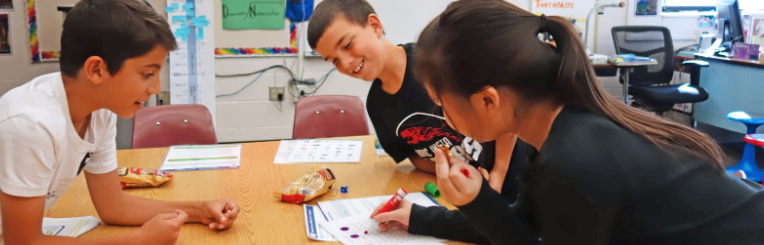
    As a parent, seeing your child’s passion and excitement about learning is one of your greatest joys. Many students today are interested in and seemingly dedicated to science, technology, engineering, and math. As a parent who understands the value of education, their love for STEM is something to encourage. But concurrently, it can be challenging to keep up with it. Something your child might know, like the back of their hand, might be difficult for you to understand. You want to stay involved in your child’s STEM learning and help them, but how? 

    The good news is you do not have to be an expert in STEM to stay current in your child’s STEM learning. Here are five ultimate tips to stay involved in your child’s STEM learning today.


    Help with Homework/Inquire about it.

    Even if your child’s schoolwork only requires a little hands-on assistance, setting aside time to ask them if they need help will go a long way. You can also ask questions about the work, such as what it’s about, the purpose of the assignment, and their thoughts. In the future, when they need help, they’ll feel more comfortable reaching out to you. This communication and relationship will allow you to learn about your child’s academic status and the content of their education. This kind of collaboration could make them more open to asking for assistance and questions and sharing information about their educational lives.

    Stay in touch with educators.

    Having a clear avenue of communication with your kids’ teachers is essential. Students might be unwilling or unable to explain what is happening in the classroom adequately. While this applies to any subject, it is crucial in STEM, with its high expectations and opportunities. Find out the email addresses of all your child’s STEM-related teachers and ask them for their thoughts, advice on your child’s progress, and how they could improve.

    Read up on STEM yourself.

    If your child truly has an interest in STEM, and you want to stay on top of what they are learning, one of the best things you can do is learn about STEM yourself! It isn’t easy initially, but you can discuss it with your child if you need help understanding something. It will mean a lot to them that you are expressing an interest in one of their passions; if done right, it won’t seem intrusive or heavy-handed. This involvement will also make helping them and communicating with their teachers smoother and easier.

    Give your child space.

    Above all else, it’s important not to hover over your child regarding their STEM education. They will appreciate having the time and space to solve problems and learn independently, and it’s healthier, too. Both you and your child will have lots of work to do throughout their young life and education. But, you do not always have to do it together. Use your judgment to determine the right time and place to get involved.


    The National STEM Honor Society is a group that aims to inspire a lifelong love of science, technology, engineering, and math for students of all ages. Not only is starting a chapter an excellent way to have colleges notice one’s commitment and resourcefulness, but it’s also a perfect way to forge connections with like-minded individuals who can help you throughout your career. In today’s world, STEM educators and parents should foster interest in science, and this is a perfect opportunity to do so. Consider starting an NSTEM chapter at your school.

    By Caleb Taran

    Do you want more resources on the topic of tips to stay involved in your child’s STEM learning? NSTEM’s vast resources database provides thousands of searchable STEM resources by category, school level, and state. This comprehensive library includes info on enrichment activities, curricula, internships, scholarships, and more. Check out a free sampling here. Or get an NSTEM membership today to unlock the complete list. 

    In middle school, students are transformed, entering as children and emerging as young adults. Project-based learning enrichment helps students connect the dots between STEM and real life, making math and science relevant for them and keeping them engaged and interested. With a meaningful middle school experience, students are far more likely to focus on STEM disciplines in high school and beyond. To start your 6-8 middle school chapter of the National STEM Honor Society, click here.

  • Top 5 Mathematics Competitions for High-Schoolers

    Top 5 Mathematics Competitions for High-Schoolers

    By Caleb Taran

    As a high schooler, you carry many responsibilities on your plate. Managing your academic commitments, maintaining your social life, and pondering your future all take your attention. Balancing these can be tricky, but it’s essential. As your high school career goes on, you want to collect experiences and skills, especially if they enhance your college application. If one of your interests is math, consider participating in a mathematics competition. Math competitions are an excellent way to show off your intelligence and devotion to the field; colleges will undoubtedly be interested. Here are 5 top mathematics competitions for high-schoolers.

    1. American Regions Mathematics League 

    Image courtesy of ARML

    Located on three different campuses across the US (Penn State University of Nevada at Las Vegas, the University of Iowa, and the University of Alabama in Huntsville), the American Regions Mathematics League (ARML) is an annual competition with teams of up to fifteen students and two coaches. It encompasses various aspects of mathematics (notably excluding calculus), and gift card prizes are awarded. This event is highly competitive and features brilliant students from throughout the world. The 2022 contest alone included participants from the United States, China, Canada, South Korea, Columbia, Thailand, and Iran.

    2. Harvard/MIT Mathematics Tournament

    A group of students participating in the competition, image courtesy of TLUPS

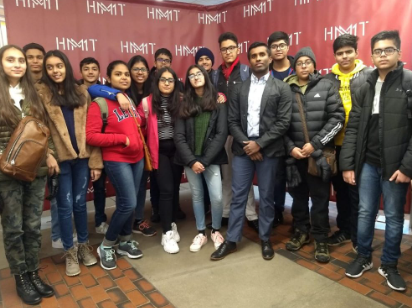
    As the name Harvard/MIT Mathematics Tournament implies, this annual tournament is one of the most prestigious math competitions in the US, organized by Harvard and MIT. Technically, there are two! The Harvard Mathematics Tournament is in November, and the MIT Mathematics Tournament is in February. Similar to ARML, this is a team-based competition with multiple rounds of challenging questions, tests, and problems. You must apply to register, and due to the large volume of applicants, acceptance to the tournament is decided via a lottery system.

    3. Trig-Star

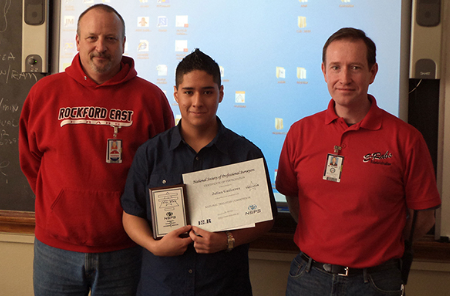
    Julian Gutierrez, the 2013 Trig-Star at his high school, and teachers Mr. Zubar and Mr. Enright; image courtesy of Trig-Star

    Focusing primarily on trigonometry, the Trig-Star contest has multiple levels, beginning with local competitions. From there, the winners will continue to rise, and the best will qualify for the national competition. To participate in a regional competition, your school will need to act as coordinator. So, see if any school official could get your school involved (if it still needs to be added). What might make this competition more intriguing than others is that it focuses more on the practical applications of trigonometry. Instead of vague problems, you will have to tackle complex and challenging issues. However, there is a reward for this hard work: aside from being a great look for your resume, the winners receive cash prizes ranging from $500 to $2,000.

    4. TEAMS

    Image courtesy of ITEEA


    Another team-based competition, TEAMS, tasks middle and high school students with using their STEM skills to take a multiple-choice exam, write an essay, and creatively solve a hands-on engineering problem over a day. If the final part sounds interesting to you, definitely consider it. It’s very empirical, creative, and fast-paced. Therefore, it will take a lot of inventiveness to participate in this one. As a final note, the TSA (Technology Student Association) administers TEAMS. While it isn’t required to belong to TSA to be a part of the TEAMS contest, belonging to a TSA-affiliated chapter will grant you a 30% discount.

    5. Caribou Mathematics Competition

    Image courtesy of Caribou Contests

    The Caribou Mathematics Competition may take place entirely online, but don’t let that fool you: it is still just as competitive and challenging as any other competition on this list. Their worldwide exams are held six times per school year (usually in October, November, January, February, April, and May). Students who participate in all are eligible for consideration in the Caribou Cup. Their “Caribou Contacts” program makes it easier for students to hear about and join this competition, giving teachers and librarians the ability to become facilitators. However, the Caribou website still includes many activities, tools, and lessons that are accessible throughout the year. They’re perfect for classrooms, homeschooling, and even virtual learning environments.

    If any of these mathematics competitions for high-schoolers sound interesting to you, and you’re looking for even more experiences to put forth on a college application, then consider starting an NSTEM chapter at your school. The National STEM Honor Society is a group that aims to inspire a lifelong love of science, technology, engineering, and math for students of all ages. Not only is starting a chapter a fantastic way to have colleges notice your commitment and resourcefulness, but it will also connect you with like-minded individuals who can help you throughout your career. In today’s world, interest in science should be fostered by STEM educators, and this is a perfect opportunity to do so.


    Do you want more resources on the topic of mathematics competitions for high-schoolers ? NSTEM’s vast resources database provides thousands of STEM resources that are searchable by category, school level and state. This comprehensive library includes info on enrichment activities, curricula, internships, scholarships and more. Check out a free sampling here. Or get an NSTEM membership today to unlock the complete list.

    Project-based learning enrichment provides high school students with college and career readiness. It gives them real world relevance, transforming students into collaborators and imaginative problem solvers. They will gain the upper hand in a global landscape, stemming from enhanced confidence and grit. NSTEM provides these young STEM enthusiasts with a close community of like-minded fellow students and educators.  To start your 9-12 Chapter of the National STEM Honor Society, click here.
     

  • 3 Smart Ways to Fund Your High School Project-Based Learning

    3 Smart Ways to Fund Your High School Project-Based Learning


    Photo courtesy of Unsplash


    If you want to start a project based on something you are passionate about but don’t have enough money, grants are a helpful resource. Read on to discover some of the most popular grants for all high school students. Here are three ways to fund your high school project-based learning.

    Impact on Education

    There are multiple opportunities to get investments from Impact on Education. Depending on your project, they can provide you with money for innovations, for example, literacy or music education. Also, you can apply for different scholarships for your projects and just for yourself. More information about current relevant grants and funds can be viewed on the Impact on Education’s website: https://www.impactoneducation.org/what-we-do/grants/.

    Travel Grants

    The Arizona-Nevada Academy goes above and beyond to promote students and stimulate science education achievement. The academy offers several awards and grants each year. Travel grants can reimburse all their traveling expenses if your project needs money. More specific information on grants for different age groups and applications can be found in the following link from the Arizona-Nevada Academy’s website: https://aznvas.org/grants/.


    Photo courtesy of Unsplash


    STEMGrants

    STEMgrants.com provides a free guide to 100+ STEM grants, listing available appointments and courses to help your organization write winning grant proposals. There are many different types of assistance available depending on what your project is based on. The STEMGrants website features a plethora of resources such as courses, grants for different grades, a list of STEM conferences and events, and many forms of resources (podcasts and websites, to name a few). The following link will bring you to their website: https://stemgrants.com/.


    You and your organization can get involved in these opportunities to get funding for your high school project-based learning. To have even more funding resources under your belt, consider starting an NSTEM Chapter to unlock all of our resources, including a vast source of STEM scholarships and grants.

    By Francesca Lisbino


    Do you want more resources on the topic of ways to fund your high school project-based learning? NSTEM’s vast resources database provides thousands of searchable STEM resources by category, school level, and state. This comprehensive library includes info on enrichment activities, curricula, internships, scholarships, and more. Check out a free sampling here. Or get an NSTEM membership today to unlock the complete list.

    Project-based learning enrichment provides high school students with college and career readiness. It gives them real-world relevance, transforming students into collaborators and imaginative problem solvers. They will gain the upper hand in a global landscape, stemming from enhanced confidence and grit. NSTEM provides these young STEM enthusiasts with a close community of like-minded fellow students and educators.  To start your 9-12 Chapter of the National STEM Honor Society, click here.
  • Seeking Sustainable Projects for Your Community? Well Look No Further!

    Seeking Sustainable Projects for Your Community? Well Look No Further!


    Image courtesy of Pixabay


    Would you like to find the best easy and sustainable projects you can do together as a group? Look no further; with these awesome sustainable projects, you can do something new and help your community. With these fantastic activities and resources by NSTEM, you can have fun and your community will get something out of it. Check out these three sustainable projects for your community.

    Create a Club

    If you want to help out your community and have complete control over the projects that you can do, you can create an environmental club. It is a great way to get more people interested in saving the planet and have more significant group projects with more people to help. You can create year-long projects or small, weekly projects; you can have complete control by creating a club. To find out more environmental clubs, check out Scientific American’s website. 

    School Gardening Project

    With school garden projects, you can have many benefits, such as creating a group/team you can rely on, healthy food you can share with your school and a much “cleaner” lifestyle by going greener. It increases their knowledge of science and is a direct education method. If this sounds interesting, learn more about school gardening projects here.

    Art Contest

    If you want to create a sustainable project for your community, you can start a competition at your school, giving everyone a chance to make their sustainable project.  Encouraging competition and creativity at your school will educate them about sustainability and stimulate their minds, which will help them later. You can make 50% of the artwork using recycled materials so they can learn the benefits of reusing things. For more information on these types of art projects, check out this site. 

    By Francesca Lisbino


    Do you want more resources on sustainable projects for your community? NSTEM’s vast resources database provides thousands of searchable STEM resources by category, school level, and state. This comprehensive library includes info on enrichment activities, curricula, internships, scholarships, and more. Check out a free sampling here. Or get an NSTEM membership today to unlock the complete list.

    Project-based learning enrichment provides high school students with college and career readiness. It gives them real-world relevance, transforming students into collaborators and imaginative problem solvers. They will gain the upper hand in a global landscape, stemming from enhanced confidence and grit. NSTEM provides these young STEM enthusiasts with a close community of like-minded fellow students and educators.  To start your 9-12 Chapter of the National STEM Honor Society, click here.
     

  • 3 Incredible Wind Power Projects for Middle Schoolers

    3 Incredible Wind Power Projects for Middle Schoolers

    Photo courtesy of Pinterest

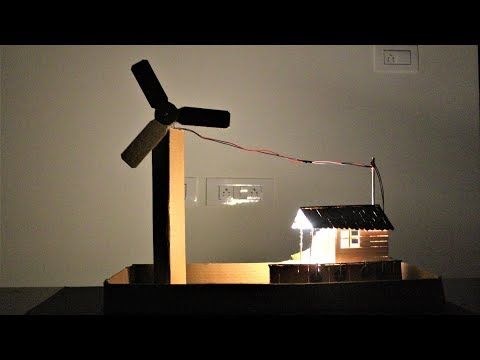
    Wind energy projects can benefit students’ exposure to the functionality and modern applications of natural factors like wind. Wind energy projects utilize standard air to produce a functioning machine. Check out these three easy wind power projects for middle schoolers.

    1.  Ski Boat Air Jet

    One unique wind power project that exploits the power of the air would be ski boat air jets, which can be completed with a parent. The materials required for this project incorporate a wooden base made of popsicle sticks or another block-shaped object, such as a sponge, a wooden skewer, and paper sales. With adult supervision, the student can insert the skewer on the base and then attach the sales by cutting paper triangles on the skewer with tape. Technology can also enhance this project or be designed effectively using additional materials. 

    2. Anemometer

    An anemometer can be a suitable activity for a middle-school science experience, requiring four plastic cups, a thumbtack, tape, a pencil, and two straws. The teacher demonstrates the project by constructing it. The four cups should be cut on both sides and then attached to either straw, completing the top part of the anemometer. Next, the two straws should be arranged in a perpendicular order where they are taped together and thumbtacked for additional security. Furthermore, the thumbtack should be attached to the pencil to make a holder. The anemometer will assist in discovering the air speed of its location.

    3. Enhanced Pinwheel

    Although pinwheels are essential for middle-school students, they can be attached to additional materials to enhance the functionality of pinwheels. This activity should be conducted using adult supervision or in a science class where the adult can use alligator clips to attach the pinwheel to a lightbulb after making a simple pinwheel. After enough static energy has been charged using air power, the light bulb should gain control to light up.

    By Aaryav Walter

    Do you want more resources on the topic of wind power projects for middle schoolers? NSTEM’s vast resources database provides thousands of searchable STEM resources by category, school level, and state. This comprehensive library includes info on enrichment activities, curricula, internships, scholarships, and more. Check out a free sampling here. Or get an NSTEM membership today to unlock the complete list. 

    In middle school, students are transformed, entering as children and emerging as young adults. Project-based learning enrichment helps students connect the dots between STEM and real life, making math and science relevant for them and keeping them engaged and interested. With a meaningful middle school experience, students are far more likely to focus on STEM disciplines in high school and beyond.  Click here to start your 6-8 middle school chapter of the National STEM Honor Society.

  • Top 5 STEM Mentorship Programs for High School Students

    Top 5 STEM Mentorship Programs for High School Students


    Photo Courtesy of Flickr

    As a high school student interested in STEM, there are many ways to get involved in this growing and exciting field. Mathematics competitions, coding programs, extracurricular activities, you name it. But despite your logic-loving brain, knowing where to start, where to go, and how to navigate the big world of science, technology, engineering, and math can be very confusing. That’s why investing time into a mentorship program is essential. Made up of people who know the field and can help you understand it, the top five STEM mentorship programs for high school students are here. 


    Photo courtesy of NYCSRM Consortium
    1. NYC Science Research and Mentorship Consortium

    This impressively wide-ranged NYC Science Research and Mentoring Consortium program, covered on the BBC and other major news outlets, is a partnership between various math and science-related institutions dedicated to giving high school students interested in STEM various unforgettable educational opportunities. Many teachers and students from New York City are involved. If you live around that area, this may be an opportunity you’d like to pursue. Interested students who contact the program can be connected with alums to learn more.


    Photo courtesy of Sea Research Foundation

    2. Sea Research Group- STEM Mentoring

    Organized by the Sea Research Foundation (a nonprofit dedicated to environmental conservation and youth education), this STEM mentorship experience aims to develop academic and social development in students from grade 6 to grade 10. Students will take part in hands-on activities and weekly group mentoring sessions. The mentorship program is available in over twenty states (plus Puerto Rico) to be available to as many inquisitive young minds as possible. Check the map on their website to see if they’re near you.


    Photo courtesy of HOPP

    3. HOPP

    HOPP (Human Oncology and Pathogenesis Program) is a summer program for high schoolers interested in the study of tumors and the practical applications of such studies. HOPP is a chance to gain direct experience in laboratory work, go on tours of the labs, and build valuable knowledge about the medical field. While applications for the summer 2023 session are now closed, there are always future summers to look forward to. At the end of the program, students will get something valuable to add to their resume and a financial stipend.


    Photo courtesy of MIT Women’s Technology Program

    4. MIT Women’s Technology Program

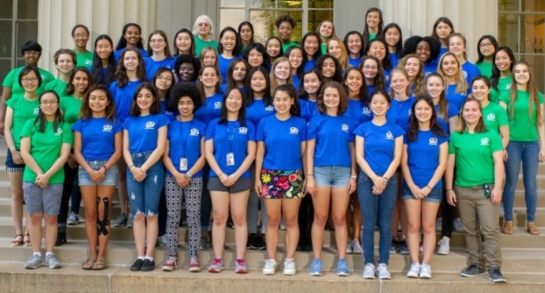
    Set at the prestigious Massachusetts Institute of Technology, this program is specifically for women entering their senior year of high school. It is described as perfect for students who excel at math and science but have yet to gain experience in engineering. While it’s free to apply and attend, it is exclusively in person at MIT, so you must be nearby. This is a great way to get your foot in the door to the world of mechanical engineering, and it will look great on college applications the following year. 


    Photo courtesy of SIMR

    5. SIMR

    The Stanford Institutes of Medicine Summer Research Program (SIMR for short) is an exciting summer internship for rising juniors and seniors at Stanford University. Throughout the summer, students will come into contact with, work alongside, and learn from postdoctoral fellows and Stanford University faculty. Together you will gain exposure to the practices of academia and the field of biomedical sciences. At the end of the session, small teams of students will present their research findings on a poster board, fostering the social ties necessary for scientific growth.


    Another way to find top STEM mentorship programs for high school students is by looking into the National STEM Honor Society, an organization dedicated to fostering a lifelong love of science, technology, engineering, and math in students of all ages. Through NSTEM, you can discover even more mentorship programs and opportunities that will help you in your educational journey. Consider joining or starting an NSTEM chapter at your school if one already doesn’t exist.

    By Caleb Taran


    Do you want more resources on the topic of STEM mentorship programs for high school students? NSTEM’s vast resources database provides thousands of searchable STEM resources by category, school level, and state. This comprehensive library includes info on enrichment activities, curricula, internships, scholarships, and more. Check out a free sampling here. Or get an NSTEM membership today to unlock the complete list.

    Project-based learning enrichment provides high school students with college and career readiness. It gives them real-world relevance, transforming students into collaborators and imaginative problem solvers. They will gain the upper hand in a global landscape, stemming from enhanced confidence and grit. NSTEM provides these young STEM enthusiasts with a close community of like-minded fellow students and educators.  To start your 9-12 Chapter of the National STEM Honor Society, click here.