Author: NSTEM Media

  • The Top Three Science Fair Project Ideas for your K-2 Student

    The Top Three Science Fair Project Ideas for your K-2 Student


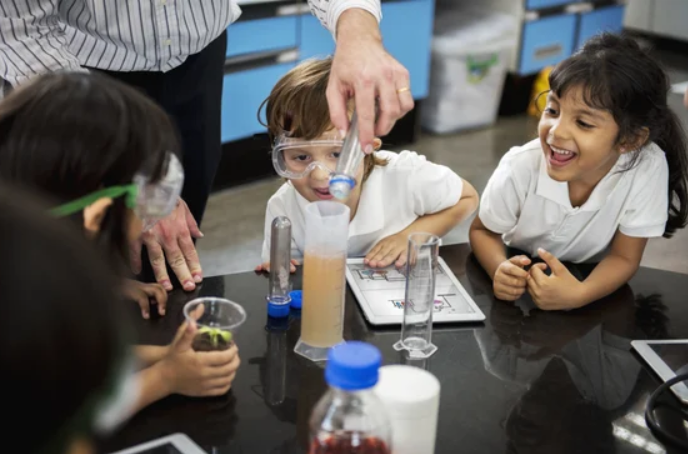
    Photo Courtesy of Hero Images

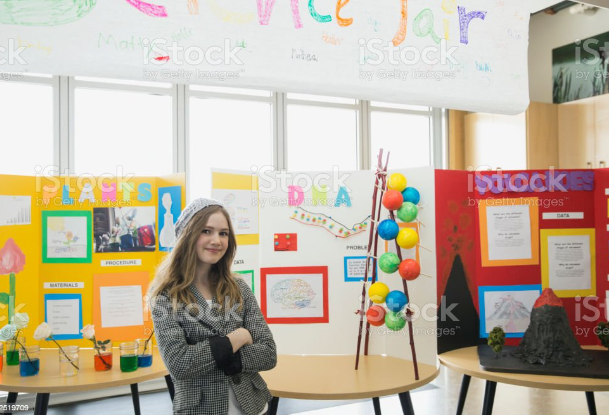
    Are you looking for the proper science fair project for your K-2 student? Many students eagerly await their annual science fair as the school year rolls around. As parents and teachers, ensuring your K-2 student has the perfect science fair project for them is an honor. However, finding a unique and original science fair idea that works well within your budget and parameters can take time and effort.  But these three science fair project ideas will not only excite your child to have a new, vested interest in all things STEM but also impress judges and other contestants. Here are the top three science fair project ideas for your K-2 student.

    #1: A Simple Electric Circuit

    For any students primarily interested in the technological aspects of science, making a simple electric circuit board can be an excellent idea for a science fair project. This project aims to help students understand how electric currents move through the path of conductive materials from one power source to another. Your child will learn the basics of electricity and how it can power anything. You can make an electric circuit board with household items like light bulbs, batteries, wooden boards, and small screws. You may need to buy some items like connection wires and simple switches. Luckily, those items are relatively easy to find at your local hardware store and can easily fit into any budget. This project takes little time, around an hour or two. However, please keep in mind that because electricity is used and other sharp materials are used to cut the wires, you will need to supervise your child or student to make sure everything is done safely.

    #2: Regrowing Vegetable Scraps

    This idea may be the perfect project for students more inclined to nature and its connection to science. If done right, vegetables can regrow from food scraps. Not only will your student or child learn more about the process of decomposing, but they will also learn the value of food. Food loss and waste account for a tremendous amount of greenhouse gas emissions. This project teaches your child or student the science behind it and how to minimize food waste within their homes to push for a better future. Materials for this project are relatively easy to obtain. The list of materials includes the end portion of Romaine lettuce, celery or green onion stalk (vegetable scraps should be approximately 5-8 cm high), a shallow dish or glass jar, water, a measuring unit of choice, and most importantly, a warm, sunny, indoor spot to grow your food. Unlike most science fair projects, this one can take a few weeks to see growth and to record progress. However, the valuable skills and lessons that can be learned make it a project to consider.

    #3: Magnetic Slime

    Does your student or child love science and slime? Magnetic slime is a project that will wow others at a science fair and amaze your student or child. They will learn about magnetic fields, one of the few natural forces we can see. They can better understand and appreciate magnetic fields using the slime. This is a relatively quick project that can be completed in around thirty minutes or an hour at most. The list of materials is long: washable school glue, water, baking soda, contact lens solution that contains both boric acid and sodium borate, iron filings, measuring spoons, measuring cup, mixing bowl, spatula, paper towels, and neodymium magnet. Fortunately, most of these are household items that can be found at home. Those outside your household can be found at your local pharmacy on a budget basis. This easy and quick project can teach your student or kid about magnetic fields while keeping them engaged through slime.

    By Rameen Naviwala

    There are no wrong projects for a science fair, but these three are three top science fair ideas for your K-2 student to do while staying within budget and engaging your students. They are informative, easy to learn, and can spark a lifetime interest in STEM. NSTEM is an organization that aims to encourage just that with all its students. Check at your school for a local chapter; if there isn’t, you can start one yourself without any hassle.

    Do you want more resources on the topic of science fair project ideas for your K-2 students? NSTEM’s vast resources database provides thousands of searchable STEM resources by category, school level, and state. This comprehensive library includes info on enrichment activities, curricula, internships, scholarships, and more. Check out a free sampling here. Or get an NSTEM membership today to unlock the complete list. 

    K-2 is where it all starts with STEM education. The National STEM Honor Society focuses on “From K to Career, NSTEM from the Start!” To start your K-2 Chapter of the National STEM Honor Society, click here.
  • Top 6 Simple Ways to Reduce Your Carbon Footprint as a High School Student

    Top 6 Simple Ways to Reduce Your Carbon Footprint as a High School Student


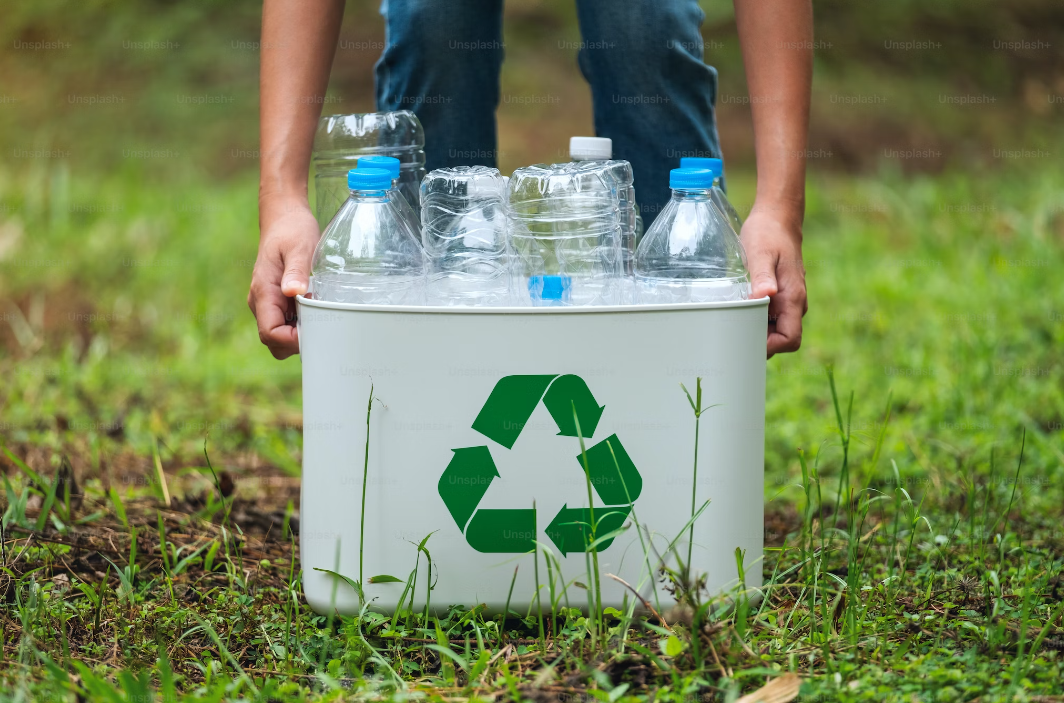
    Photo courtesy of Unsplash

    In this time of global warming, high school students often wonder how to help the environment during a time when they don’t have much to offer. Are you a high-school student that wonders about simple ways to reduce your carbon footprint? Is it your goal to help better the environment and the earth’s future in any way you can, big or small? Here are six simple ways to reduce your carbon footprint as a high school student.

    1: Recycle, Recycle, Recycle!

    Since kindergarten, you probably have heard a slogan: recycle, recycle, recycle! Properly disposing of waste can make a difference, whether plastic, paper, or electronic. Making sure that you recycle and reuse helps the environment eliminate unlawful destruction. We all can do recycling, which you can achieve as a high school student. You can even take it a step further by creating recycling initiatives at your school and local community centers, raising awareness amongst your peers. 

    2: Sustainable Fashion Is Now In

    In the age of fast fashion, it is tempting to buy cheap, easily worn-down clothes that can allow you to keep up with current trends while remaining within your budget. But none of these clothes are long-lasting and quickly fall apart, adding unnecessary waste. Consider buying more sustainable clothes instead that are built to last. You can find many excellent options at local thrift stores that sell clothes for not too much and contain clothes that can survive a lifetime. 

    3: One Small Step for Man, One Giant Leap for the Earth

    Once you get your driver’s license, taking your car out for a spin everywhere can be tempting. But that can lead to a rising carbon footprint that affects air pollution. Fuel consumption from private cars causes heavy emissions, but there are ways to avoid that or minimize the impact. Instead of taking your car everywhere, consider walking to school or the store. Take public transportation, take a bus or the metro to places further away, and help keep your carbon footprint low. Either way, doing these rather than taking a private car can seriously improve your carbon footprint and help fight against the heavy emissions in the air overall.

    4: Don’t Use Perishable Items

    Consider a different option instead of taking plastic forks and spoons with your lunch and drinking from a plastic water bottle. Buy a reusable water bottle and containers to put your food in and take reusable utensils for all your meals instead of using disposable items. Following this tip can save waste and help reduce your carbon footprint. Also, it’s cheaper in the long run to buy something a little more costly just once instead of repeatedly buying the cheaper item again and again.

    5: Rage Against the Plastic Straws

    When you go out to get an iced coffee from Starbucks or a refreshing lemonade from Dunkin’, you often take a plastic straw to drink. It’s time to forgo plastic straws in favor of something more sustainable for the environment, such as paper or metal straws. While this may seem small, its impact can be significant. You can even take it further and campaign for local coffee shops and restaurants to use reusable straws instead of plastic straws. Taking even small steps can help better the environment.

    6: Start Unplugging

    So many devices are often left plugged in and use copious amounts of energy even when not in use. This is true of any charger, television, printer, etc. So, when your devices aren’t in use, unplug them. You can even get a power strip to make plugging and unplugging your devices more accessible. That goes the same when it comes to minimizing your plug load. Share your refrigeration with the other people in your household instead of holding onto multiple.

    There are so many ways you can help the environment by reducing your carbon footprint, even as a high school student. The six above are great starting points and easy ways to reduce your carbon footprint.

    By Rameen Naviwala


    Do you want more resources on the topic of ways to reduce your carbon footprint as a high school student? NSTEM’s vast resources database provides thousands of searchable STEM resources by category, school level, and state. This comprehensive library includes info on enrichment activities, curricula, internships, scholarships, and more. Check out a free sampling here. Or get an NSTEM membership today to unlock the complete list. 

    Project-based learning enrichment provides high school students with college and career readiness. It gives them real-world relevance, transforming students into collaborators and imaginative problem solvers. They will gain the upper hand from enhanced confidence and grit in a global landscape. NSTEM provides these young STEM enthusiasts with a close community of like-minded fellow students and educators.  To start your 9-12 Chapter of the National STEM Honor Society, click here.

  • Taking the ACT? Get Your Best Score Ever with These Top ACT resources!

    Taking the ACT? Get Your Best Score Ever with These Top ACT resources!


    Image courtesy of Unsplash

    Preparing for college takes time and effort. You have to think about where you want to go and what you want to get out of it, and on top of all that, you have to worry about finishing high school! So, it would be no surprise if you weren’t too focused on the ACT. Like the SAT, the ACT is a standardized test that gives colleges a general idea of their applicant’s abilities. While some schools emphasize these tests’ importance less, taking the ACT might still be worthwhile. If you receive a good score, it could make you stand out among other college applicants. Many different programs and resources over the years have sprung up to help students get the best score they can on the ACT. Here are 3 top ACT resources.

    This may be the most apparent resource on the list, but you should take advantage of it. Coming straight from the makers of the ACT, this website has practice tests and writing prompts reminiscent of what you will see on actual ACT exams. They come with detailed feedback to tell you precisely what you did wrong and how to improve. You can retake the practice test as often as you want and buy the official ACT Test Prep and Subject books directly on this website. These books greatly benefit an already rigorous practice program, with a choice to get the entire set of individual books on each subject (English, Mathematics, Reading, and Science). Everything on the site is entirely free. 

    Founded in 1981, The Princeton Review has a long history of providing students with valuable help in college admissions, test-taking, and education. Their website has many free online practice courses and a full-length practice test. After taking it, you’ll receive highly detailed feedback on your score. 

    If you’re unsure about the ACT, the site hosts webinars on the differences between the ACT and the SAT, so you can decide which one to take (or neither, or both!) There’s also an experimental AI essay-feedback program, supposedly helpful in improving the exam’s writing section. The Princeton Review’s website is far too expansive to cover in one area of one article. It’s extensive; chances are, if you’re looking for something, it’s there.

    While the website might look like little, Erik the Red is a highly comprehensive and enlightening guide on mastering the math section of the ACT. This is an area that many students struggle in, so it’s essential to get the best score you can here. Erik the Red includes lessons and quizzes to help you learn the material and guides on various topics to “game the system” on the ACT and SAT. No, this isn’t cheating, but rather noticing commonalities on the tests and deploying effective strategies to counter them.

    The entire site is run by one man, a teacher and math tutor in New Jersey named Erik Jacobsen. Jacobsen specializes in ACT preparation in physics, precalculus, and math.


    These topics fit in at the National STEM Honor Society, an organization dedicated to fostering a lifelong love of science, technology, engineering, and math in students of all ages. Through NSTEM, you can discover even more mentorship programs and opportunities that will help you in your educational journey. Consider joining or starting an NSTEM chapter at your school if one doesn’t already exist.

    By Caleb Taran


    Do you want more resources on the topic of top ACT resources? NSTEM’s vast resources database provides thousands of searchable STEM resources by category, school level, and state. This comprehensive library includes info on enrichment activities, curricula, internships, scholarships, and more. Check out a free sampling here. Or get an NSTEM membership today to unlock the complete list.

    Project-based learning enrichment provides high school students with college and career readiness. It gives them real-world relevance, transforming students into collaborators and imaginative problem solvers. They will gain the upper hand from enhanced confidence and grit in a global landscape. NSTEM provides these young STEM enthusiasts with a close community of like-minded fellow students and educators.  To start your 9-12 Chapter of the National STEM Honor Society, click here.

  • 4 tips for Empowering STEM in Your K-2 Classroom

    4 tips for Empowering STEM in Your K-2 Classroom


    Photo courtesy of Unsplash

    Are you a K-2 teacher considering introducing STEM in your classroom plan? Teaching STEM to children as young as K-2 is an excellent way for your students to create a STEM identity and prepare them early for intense STEM subjects in their later years. Their comprehension and retention will become far more advanced for their age. Also, they’ll be more likely to want to learn and pursue STEM. The first-time experience of learning STEM can also create a positive association with STEM learning and build student confidence and familiarity with complex STEM concepts in later years. Here are four tips on empowering your K-2 students to love STEM.


         1. Understanding the three things that students need to be successful in STEM.

    • A STEM identity

    This means that students see themselves as capable and successful in learning STEM subjects and have an interest and aspiration in STEM fields. 

    • STEM mentors

    It’s not necessary to be an expert in STEM to teach STEM. Your role in trying to inspire your students towards STEM is to be a mentor. You don’t have to have all the correct answers. Instead, you must provide your students with opportunities for STEM exposure and explore and deepen their understanding. 

    You can also introduce your students to successful STEM role models. Through students being able to see successful STEM individuals who vary in race and gender, they will better be able to identify with STEM and imagine themselves participating in STEM. Furthermore, you can provide your students with STEM mentors through a mentorship program with students of a higher grade who participate in STEM. This way, your students can have guidance in their STEM learning journey that they can more easily relate to.

    • Technology fluency

    When students have fluency in technology, they will have the confidence and skills to creatively solve real-world problems with technology. Technology fluency can also boost a student’s proficiency in STEM. This fluency is developed through hands-on experiences with STEM.

         2. Create a comprehensive STEM curriculum.

    When implementing STEM into your lesson plan, it is essential to make sure that the STEM curriculum you create is comprehensive, systematic, and consistent. Having your students sporadically participate in STEM activities will not help your students’ recollection, understanding, and application of the subject matter. By tasking your students with practicing STEM subjects daily, they will be better prepared for rigorous STEM academics and develop a strong STEM identity. They must be taught STEM subjects incrementally and in a manner unique to each student’s needs to master the content. Step-by-step instruction is vital for teaching STEM. This is called convergent learning.

    Convergent learning is teaching all students the same material, using the same instructive models so that they can arrive at the same conclusion. Convergent learning ensures that students gain foundational knowledge. Once students have a basic understanding of the subject matter, they can be taught with divergent learning. Divergent learning involves creating opportunities for students to apply what they have learned. Starting with convergent learning and progressing to divergent learning helps ensure students gain competency in STEM concepts. Students will learn how to use their knowledge to build problem-solving and critical-thinking skills.

    Other types of teaching methods are-

    • Project-Based Learning: This teaching method uses real-world scenarios and hands-on projects to engage students in STEM and make the STEM lessons more meaningful and applicable to the students. It can get students personally invested in the subject matter and excited about learning the content. It also can give students a deeper understanding of what they’re learning.
    • Inquiry-Based Learning: With this method, students are taught to make connections between the world and what they have learned through utilizing real-world examples. Students are encouraged to ask questions and think critically. They also learn about the importance of the connections that they discover.
    • Problem-Based Learning: This approach teaches students how to apply what they have learned by working to solve open-ended questions. 
    • Indoor vs. outdoor learning: Using physical activity to teach subject matter is excellent for performance and retention for STEM. Children need activities that engage their curiosity and kinetic energy.


         3. Creative positing learning experiences with STEM.

    Always provide positive reinforcement and encouragement while motivating students to participate in STEM activities. Show students that failing is okay and trying again is encouraged. Remember, patience is very conducive to adequate teaching and motivation. Students need to be challenged but within the confines of their comfort zone so they are not discouraged, are excited, and have fun. Students who are challenged to be overwhelmed will withdraw and give up. You want to create opportunities for students to feel independent and accomplished. Also, vary the topics to cater to each child’s unique interests and learning style. You can promote clubs and groups that students can join to get them interacting with students with a positive mindset for STEM and who have a strong STEM identity.

        4. Utilize teamwork to motivate interest, engagement, and initiative for STEM.

    Teaching students STEM by working with others can provide them with positive STEM learning experiences and leadership, collaboration, critical thinking, and problem-solving skills. They will learn how to solve problems and design within a team dynamic. While learning to apply the subject matter they’ve learned, the whole group will brainstorm, plan, design, and evaluate to solve a problem. This will lead to tremendous and informative group discussions of STEM content. These are skills that will be very beneficial for your students once they start their careers.

    By Jacqueline Dua

    Need help to come up with creative ideas to teach STEM? Browse nstem.org for some creative inspiration.

    When you’re struggling to come up with ideas on how to teach STEM or empower your K-2 students to love STEM, the National STEM Honor Society (NSTEM) is a resource that can guide you. We have many resources within our resource library and informative blogs like the ones below. Also, while you browse our website, consider learning about our NSTEM chapters and how you can get your school to have their chapter with NSTEM.

     3 exciting Learning Experiences for Kindergarten Students

     Explore the Benefits of Wind Power with These 3 Creative Wind Power Projects for Your K-2 Classroom

     The Top 3 Virtual Science Experiments for Your K-2 STEM Classroom  

     3 Fascinating Solar Projects for Your K-2 Students 


    Do you want more resources on the topic of tips on empowering your K-2 students to love STEM? NSTEM’s vast resources database provides thousands of searchable STEM resources by category, school level, and state. This comprehensive library includes info on enrichment activities, curricula, internships, scholarships, and more. Check out a free sampling here. Or get an NSTEM membership today to unlock the complete list. 

    K-2 is where it all starts with STEM education. The National STEM Honor Society focuses on “From K to Career, NSTEM from the Start!” To start your K-2 Chapter of the National STEM Honor Society, click here.

  • From Classroom to STEM Adventures: Top 3 Experiments and Labs for Middle-Schoolers

    From Classroom to STEM Adventures: Top 3 Experiments and Labs for Middle-Schoolers

    Photo courtesy of Pexels

    Middle-school science experiments serve the budding catalysts for curious young minds. They kickstart critical thinking abilities, instill a sense of wonder, and lay the foundation for a lifelong love of learning. Essentially, they are the secret ingredient that transforms mere students into eager learners and budding scientists. With this in mind, let’s plunge into a more comprehensive exploration of three significant science-based experiments thoughtfully tailored for middle schoolers.


    Photo courtesy of In the Loop

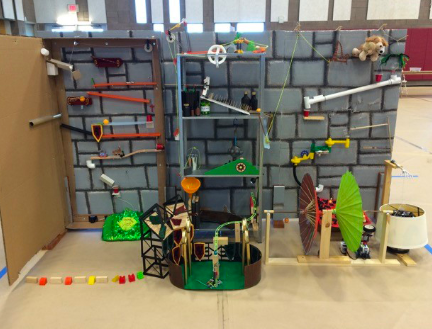
         1. Constructing a Rube Goldberg Machine 

    The Rube Goldberg machine experiment offers middle-schoolers an immersive experience in engineering creativity. Participants can undertake this experiment individually or in pairs. The materials needed are everyday household items like marbles, plastic race car tracks, levers (such as binder clips and rulers), and dominos. The time duration may vary based on the complexity of the machine, typically taking a few hours to assemble. The experiment involves designing a sequence of chain reactions where each component triggers the next in a playful yet complex manner. The purpose is to enhance critical thinking, problem-solving skills, and understanding of cause-and-effect relationships, all while nurturing creativity. This engaging hands-on activity introduces students to engineering concepts and the joy of practical problem-solving, making it an essential tool for fostering a deeper appreciation for STEM fields. If you would like more information, visit https://www.rubegoldberg.com/education/


    Photo courtesy of Pocket Lab

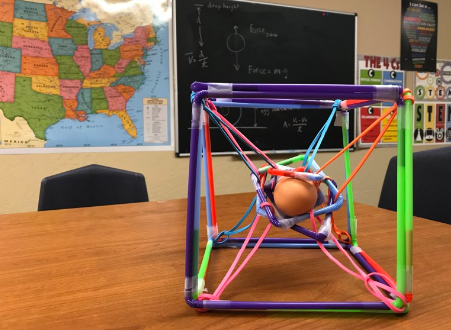
         2. Egg Drop Challenge

    The Egg Drop experiment presents an engaging opportunity for hands-on exploration. Designed to enhance understanding of forces and motion, the activity challenges students to create a protective container for an egg, minimizing its chances of cracking upon impact. The experiment can be conducted individually or in groups of 2–3 students. It requires basic materials such as an extra-large egg, a bag of materials (including cardboard cups, string, tape, balloons, and straws), and two sheets of scrap paper with pencils. Participants brainstorm, sketch mockups, and construct their egg protectors in approximately 45 minutes (including a 20-minute drop period). Subsequently, the eggs are dropped from a consistent height onto a protected surface, followed by an assessment for damage. The goal is to encourage curiosity, creativity, and problem-solving skills while immersing students in a practical learning experience that delves into engineering and design principles.


    Photo courtesy of Pinterest

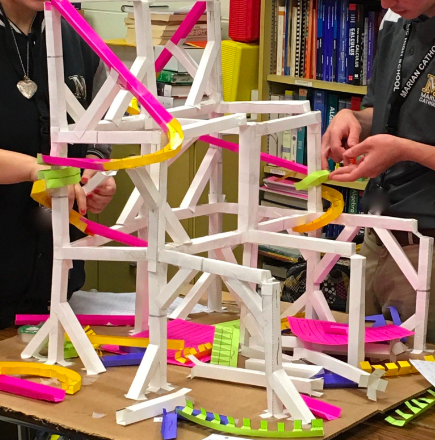
         3. Building a Roller Coaster

    Building a roller coaster is an exciting 2-hour hands-on lab that can be conducted in groups of four. In this activity, students create their own model roller coasters using pipe insulation and marbles. Students construct roller coasters driven solely by gravity by applying physics concepts like kinetic and potential energy, gravity, and friction. The lab emphasizes the engineering design process as students brainstorm, design, and build their roller coasters, testing and iterating their designs for optimal performance. The purpose of the lab is to engage students in the practical application of physics principles while fostering teamwork, creativity, and problem-solving skills. The activity encourages students to think like engineers and analyze the constraints and challenges of designing functional and exciting roller coasters.

    By Ratchana Ramesh Pandi


    Do you want more resources on the topic of STEM science experiments for middle schoolers? NSTEM’s vast resources database provides thousands of searchable STEM resources by category, school level, and state. This comprehensive library includes info on enrichment activities, curricula, internships, scholarships, and more. Check out a free sampling here. Or get an NSTEM membership today to unlock the complete list. 

    Middle School is where students are transformed, entering as children and emerging as young adults. Project-based learning enrichment helps students connect the dots between STEM and real life, making math and science relevant for them and keeping them engaged and interested. With a meaningful middle school experience, students are far more likely to focus on STEM disciplines in high school and beyond.  To start your 6-8, middle school chapter of the National STEM Honor Society, click here.

  • Empowering Early Learners: 3 Ways to Inspire Creativity and Critical Thinking in K-2 STEM Education

    Empowering Early Learners: 3 Ways to Inspire Creativity and Critical Thinking in K-2 STEM Education


    Photo Courtesy of Accelerate Learning


    To fully unleash students’ capabilities in K-2 STEM education, we must go beyond conventional teaching approaches and focus on nurturing their creativity and fostering critical thinking skills. Engage your students with the following three ways to inspire creativity and critical thinking in K-2 STEM education!

    The Center for Innovation in Engineering and Science Education (CISE) drives creativity and encourages critical thinking in K-2 STEM education. It achieves this by developing and supporting a range of engaging interdisciplinary curricula. These activities and lessons aim to promote problem-solving, collaboration, the development of higher-order thinking skills, and the ability to critically analyze information while seamlessly incorporating STEM concepts. This easily accessible and extensive website features engaging and thought-provoking lessons and activities in science (life, earth, physical, & environmental), technology (real-time data, online collaboration, primary sources, & robotics), engineering (systems, civil, mechanical, electrical, & general) and mathematics (numbers and operations, algebra, & data analysis). Once you have clicked on a specific section of one of the subjects, you can swiftly discover creative activities and lessons that encourage critical thinking for K-2 students.

    This resource is from the National STEM Honor Society Resources section of our website for members.

    The Magnet Schools Assistance Program (MSAP) offers a range of resources aimed at promoting STEM education for students in grades K-2. These resources include activities, experiments, and project-based learning modules designed to engage young learners. They cover STEM topics such as robotics, coding, environmental science, and mathematics. The program’s lesson plans are highly engaging and encourage creativity, critical thinking, and student collaboration. Moreover, MSAP also provides development opportunities for educators to ensure they can effectively implement these innovative teaching methods. Navigating the website is quick and effortless as you can select and search for various subjects such as STEM, STEAM, and mathematics, different K-2 resources like games or lessons, and diverse target audiences, including students and educators.

     The Summer STEAM Activity Calendar is a schedule packed with over 30 fun and educational activities for K-2 students that can be done either at home or in the classroom. It’s designed to spark creativity and critical thinking to keep minds engaged. This resource offers a variety of hands-on experiences and projects that encourage children to explore the worlds of science, technology, engineering, arts, and mathematics. It aims to ignite their imaginations and foster a love for learning in these areas. With these activities, K-2 students can embark on a journey of discovery: building essential skills and cultivating a passion for STEAM subjects while having fun.

    This resource is from the National STEM Honor Society Resources section of our website for members.

    In conclusion, inspiring creativity and critical thinking in K-2 STEM education is vital. This approach can open up a world of possibilities for young learners. By utilizing the following resources: the Center for Innovation in Engineering and Science Education (CISE), the Magnet Schools Assistance Program’s STEM Resources (MSAP), and the Summer STEAM Calendar of Activities, teachers can unlock their students’ full potential. These resources provide interdisciplinary lessons, engaging projects and activities, games, and hands-on experiences integrating problem-solving, collaboration, and advanced cognitive skills with STEM concepts. Embracing these strategies empowers our young learners to become imaginative thinkers, innovative problem solvers, and lifelong learners. This approach and resources lay a foundation for their success in the evolving fields of STEM. 

    By Elizabeth Antenucci

    Do you want more resources on the topic of inspiring creativity and critical thinking in K-2 STEM education? NSTEM’s vast resources database provides thousands of searchable STEM resources by category, school level, and state. This comprehensive library includes info on enrichment activities, curricula, internships, scholarships, and more. Check out a free sampling here. Or get an NSTEM membership today to unlock the complete list. 

    K-2 is where it all starts with STEM education. The National STEM Honor Society focuses on “From K to Career, NSTEM from the Start!” To begin your K-2 Chapter of the National STEM Honor Society, click here.