
Author: NSTEM Media

  • Decoding STEM Majors and Careers for High-Schoolers

    Decoding STEM Majors and Careers for High-Schoolers


    Photo courtesy of Pixabay

    Are you getting close to graduating high school and looking for possible majors to pursue in STEM? Fortunately, STEM offers numerous career opportunities which can aid in developing a beneficial career. Before promptly beginning this journey, we must observe the operations, skills required, and environments of popular STEM majors and careers.

         1. Computer Science

    As technology advances and computers become more complicated, those who major in computer science have become in high demand. The complexities of artificial intelligence, robotics, and video game programming are a few of the various opportunities in this industry. With this major, you can gain successful careers incorporating directorships and project management leads. Technology has become a significant part of daily life as the world evolves, from phones to workplace instruments. Thus, if advancement in technology interests you, why not look into computer science?

         2. Geology

    By its definition, geology is the science that deals with the Earth’s physical structure and substance, its history, and the processes that act on it. If the Earth interests you, this is a major you should consider. You can eventually become an environmental field technician, forester, environmental protection specialist, hydrographic surveyor, archaeologist, or sustainability engineer. There are plenty of options to choose from that allow you to explore your interests within the field of geology. With endless possibilities, plenty of successful careers come from majoring in geology.

         3. Engineering (Variety)

    The engineering and manufacturing industry provides diverse career options, from aerospace engineering to mechanical engineering. Mechanical engineering deals with physical reality, such as energy transfer, movement, and velocity, and can be integrated with technology to sustain robots, aeronautics, automotive, and biomechanics. While studying, you can take complex courses such as mechanical systems, thermal science, differential and integral calculus, and experimental physics. It is a satisfying challenge that teaches you much about engineering and can lead to a very complex and exciting career.

         4. Biology

    Biology is the study of all living things, a great subject to major in if you are interested in living organisms and their morphology, physiology, anatomy, behavior, origin, and distribution. Majoring in biology can lead to careers in health management, genetic engineering, environmental sustainability, and disease control and prevention. Biology graduates significantly influence medicine and how we deal with illnesses, as this study helps advance medical science, biotechnology, and pharmaceuticals. So, if you are curious about how things function and their impact, majoring in biology might be right for you.

    These are only a few of the STEM majors you can consider. Learning about all the STEM majors and careers that come with them can help you decide what to study during your college years and lead to a fulfilling and successful career with a topic that interests you.

    By Rameen Naviwala


    Do you want more resources on the topic of STEM majors and careers? NSTEM’s vast resources database provides thousands of searchable STEM resources by category, school level, and state. This comprehensive library includes info on enrichment activities, curricula, internships, scholarships, and more. Check out a free sampling here. Or get an NSTEM membership today to unlock the complete list.

    Project-based learning enrichment provides high school students with college and career readiness. It gives them real-world relevance, transforming students into collaborators and imaginative problem solvers. They will gain the upper hand in a global landscape, stemming from enhanced confidence and grit. NSTEM provides these young STEM enthusiasts with a close community of like-minded fellow students and educators.  To start your 9-12 Chapter of the National STEM Honor Society, click here.

  • Add Coding To Your Collegiate Skillset With These Cutting-Edge Resources

    Add Coding To Your Collegiate Skillset With These Cutting-Edge Resources

    By Ratchana Pandi

    Photo courtesy of Pixabay

    Are you looking to turbocharge your college journey with coding expertise? Discover three game-changing coding resources designed exclusively for college/university students!

         1. CodeAcademy Pro

    CodeAcademy Pro is an outstanding coding platform well-suited for college students seeking structure and interactive learning experiences. This resource offers a wide variety of programming language and computer science courses, thus ensuring you discover precisely what you need to excel in your major. CodeAcademy Pro’s monthly subscription comes at an affordable price, making it accessible to students on a budget. The courses are designed to be fast-paced, allowing you to grasp coding concepts efficiently and offer hands-on projects that help to reinforce your skills. Moreover, the platform provides a unique feature enabling you to work on real-world coding projects to build your portfolio—a valuable asset for your future career.

         2. Coursera 

    Coursera is an educational treasure trove, offering a vast selection of coding courses from top universities and institutions worldwide. Coursera’s flexible pricing model sets it apart. Numerous professional development courses are free of charge. However, students can purchase Coursera Plus, which grants access to additional classes for a fixed monthly fee. This resource is perfect for college students who want to explore coding as part of their major or as an extra skill set.

         3. LeetCode

    LeetCode is a coding resource that caters specifically to college students aspiring to excel in technical interviews and competitive programming. What sets LeetCode apart is its focus on coding challenges and algorithms, hence making it an invaluable resource for computer science majors and aspiring software engineers. While LeetCode offers a free plan, the premium subscription provides access to a vast question bank, detailed solutions, and mock interviews with technology industry professionals. It is a resource that gives students a competitive edge in landing internships and job opportunities.


    Do you want more resources on the topic of coding resources for college/university students? NSTEM’s vast resources database provides thousands of STEM resources that are searchable by category, school level and state. This comprehensive library includes info on enrichment activities, curricula, internships, scholarships and more. Check out a free sampling here. Or get an NSTEM membership today to unlock the complete list. 

    When a college/university student achieves membership in the National STEM Honor Society, the recognition, like many colleges, is in a Greek letter format.  For the National STEM Honor Society, Epsilon Theta Mu is the designated recognition for members at the college/university level. Students are distinguished and stand out as a result of this recognition, increasing appealing employment and educational opportunities, click here.


  • The Top 4 Cutting-Edge Drone Projects for Grades 3-5

    The Top 4 Cutting-Edge Drone Projects for Grades 3-5

    Photo Courtesy of ScienceBuddies.org

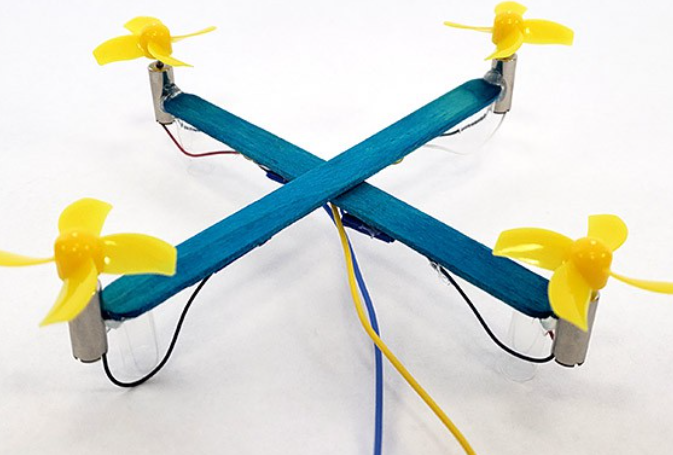
    Science fairs provide various advantages for both students and the broader public. These exercises allow students to demonstrate their scientific ingenuity and knowledge, fostering a greater understanding of science and its practical applications. It can assist students in improving their critical thinking skills, creativity, research abilities, and overall interest in STEM. Here are four cutting-edge drone projects and experiments (and questions) that students in grades 3-5 can conduct and answer!


         1. Wildlife Observation (Easy)

    Numerous questions can be asked and answered through nature exploration. Students can go on field trips to nearby parks, green spaces, or their backyards. Students can track a squirrel back to their nut stockpile, investigate which flowers attract bees and butterflies, and discover a sparrow’s nest. The use of a drone for exploration is highly beneficial in their research. A drone allows the student to observe while keeping a safe distance from the organism without feeling bothered or anxious. Second, for younger children participating in science fairs, utilizing a drone to collect information on a topic that fascinates them but may be difficult to execute is safer and more accessible. While testing, remember to respect other people’s privacy and places and drive carefully! This experiment can help students explore the natural world around them and pique their interest in such topics while also learning the importance of privacy in the natural world. 


         2. How Strong is the Drone? (Medium)

    Can your drone carry a toy car, masking tape, or a box? Drones, in regards to materials, structure, flight control, and overall power, are all made differently. Experiment with various household items using your drone, looking for different shapes, sizes, weights, and heights. Can the drone carry heavy objects? Small objects? Circular? Rectangular? If the drone can’t carry any of these objects, are there any additional items you could use to help? In other words, if an item couldn’t be held on the drone, is there perhaps another way you can approach the situation?  When conducting this experiment, be mindful of the platform and ground you work on, especially if you experiment with delicate or heavy objects. Ensure the ground is stable or soft if you are testing items that can shatter, such as a mug. This project can help students practice the durability of specific objects.


         3. The Best Design (Hard)

    If you have multiple drones that you are borrowing from friends or family, this project is for you! As discussed before, all drones are structured differently with different mechanics. Using all your drones, what could be experimented on is the effectiveness and quality of each drone. Go exploring with each drone and analyze any differences between them. Did it scare off animals with its noise or perhaps shape? Was there a particular drone that was hard to squeeze in between trees or houses? List any benefits and limitations of each design. After you explore the different drones, propose your design and interpretation. What makes the most effective drone based on your experiment? Pictures, such as a blueprint, can be created along with a description of the drone’s characteristics and purpose. This creative design project can help students embrace creativity and develop critical thinking skills.


         4. Hide and Seek (Easy)

    Rescue teams, helicopters, and other departments are sent out when a disaster occurs. Drones may be just as effective! Have a friend or family member place random objects around your neighborhood, some in a larger area while others are more compact. Drive your drone around the site and spot as many objects as possible. Was it challenging? Will looking for specific things or even people and pets be effective during a disaster? If not, think about ways to make drones more effective in this field of work. This experiment will help students practice staying attentive and recognize setbacks to their approach.  


    Science fairs play a vital role in promoting STEM education and the development of critical skills. Even with a challenging device like a drone, there are enjoyable cutting-edge drone projects. Students can gain hands-on experience with the scientific method and explore their interests. With the popularity of drones rising, students have opportunities to explore this complex technology and develop better versions of drones. Have fun exploring!


    By Janet Yang

    Do you want more resources on the topic of cutting-edge drone projects for grades 3-5? NSTEM’s vast resources database provides thousands of searchable STEM resources by category, school level, and state. This comprehensive library includes info on enrichment activities, curricula, internships, scholarships, and more. Check out a free sampling here. Or get an NSTEM membership today to unlock the complete list. 

    Grades 3-5 continue the STEM education journey, where students are interested in the natural world and how things work, responding to stories told by teachers that give purpose and meaning to STEM disciplines, which molds them into thinkers, problem solvers, and creators. The National STEM Honor Society sees grades 3-5 as a critical point in the NSTEM journey. To start your grade 3-5 chapter of the National STEM Honor Society, click here.
  • Jumpstart Your STEM K-2 Classroom With These Exciting Four Guest Presentations

    Jumpstart Your STEM K-2 Classroom With These Exciting Four Guest Presentations


    Photo Courtesy of United States Bureau of Labor Statistics

    Do you want professional guest lectures to diversify your classroom and catalyze the futures of your students? Various guest speakers from many professions will benefit your educational facility. Here are four guest presentations that you can use to jumpstart your STEM K-2 classroom.

         1. Doctors (Medical Staff)

    The modern healthcare industry supports a variety of careers, from nurses to specialized doctors such as dermatologists. This enticing industry can be introduced to young children simply through contact with local hospitals or clinics or by scheduling a career week where parents can be inquired about their professions.

         2. Engineers

    A significant component of STEM incorporates the engineering industry, which covers a variety of career choices, each of which demands workplace readiness skills and selective qualities based on daily tasks or operations. Engineers can be contacted through their companies, educational institutions, personal networks, or local firms related to engineering or design.

         3. Educational Professionals

    Professors and educators can be significantly beneficial for young children. Such professionals can have varying levels of teaching experience, educational knowledge, and teaching styles, which can assist students in understanding which careers they are best suited for or a profession that appeals to them. Also, this can incorporate students’ teachers, allowing them to communicate with their students more effectively.

         4. Lawyers

    The law industry, incorporating lawyers, attorneys, and other professionals, is also an appealing yet comprehensive professional field to which students can be exposed from a young age.

    Most professions are suitable for children, and several types of these people can visit your educational facility to share their experiences work style, and explain the importance of their career. The careers listed above are only some of the hundreds of available professionals. These careers can be reached through educational or personal networks, local businesses, firms, STEAM week, or other events. A professional skill set is taught in students who participate in NSTEM chapters, a primary reason to catalyze the creation of a chapter at your school today!

    By Aaryav Walter

    Do you want more resources on the topic of guest presentations? NSTEM’s vast resources database provides thousands of searchable STEM resources by category, school level, and state. This comprehensive library includes info on enrichment activities, curricula, internships, scholarships, and more. Check out a free sampling here. Or get an NSTEM membership today to unlock the complete list. 

    K-2 is where it all starts with STEM education. The National STEM Honor Society focuses on “From K to Career, NSTEM from the Start!” To begin your K-2 Chapter of the National STEM Honor Society, click here.

  • Make STEM Education Simple and Fun for Your K-2 Classroom With These Five Tips!

    Make STEM Education Simple and Fun for Your K-2 Classroom With These Five Tips!


    Photo Courtesy of Waterford.org

    In today’s evolving world, nurturing young minds with the right skills and knowledge is paramount. One of the most effective ways to prepare our children for the future is through STEM education, a holistic approach focusing on science, technology, engineering, and mathematics. It equips young learners with critical problem-solving skills and fosters innovation, qualities that are beneficial in the 21st century. However, what if we could take this commitment to STEM education further? 

    That is where the National STEM Honor Society (NSTEM) comes into play. NSTEM is a dynamic initiative that aims to revolutionize STEM education, making it accessible, exciting, and transformative for students of all ages. Here are five tips on making STEM education simple and fun for your K-2 classroom.


    Tip 1: Embrace Hands-on Learning

    Hands-on learning is a powerful educational tool, especially for young children. They immerse themselves in the learning process when they actively engage in hands-on activities. Building a tower with marshmallows and toothpicks is a perfect example of this approach. This hands-on STEM activity captures children’s imagination and fosters problem-solving skills, critical thinking, and better knowledge retention. As they experiment with different combinations of marshmallows and toothpicks, they are not merely constructing a tower but exploring fundamental structural concepts such as balance and stability. It is a fun and tactile experience that makes learning about these concepts enjoyable for K-2 students.

    Tip 2: Use Everyday Objects in STEM Education

    Everyday objects have a growing ability to bridge the gap between abstract concepts and real-life experiences, making STEM education more relatable and accessible to young learners. When children use a simple magnifying glass to explore the leaves and bugs in their school garden, they embark on a fascinating journey of discovery. This hands-on activity sparks their curiosity and helps them see the direct application of STEM in their immediate surroundings. Through close observation, they can witness the intricate details of nature, gaining insights into biology, ecology, and the wonders of the natural world. It is a new way to encourage a lifelong love for science and show children that STEM is all around them, waiting to be explored.

    Tip 3: Encourage Questions/Curiosity

    Encouraging questions is equivalent to providing fuel for the fire of a child’s natural curiosity. It is a simple yet powerful way to nurture their curious minds and promote inquiry-based learning. One activity is the Mystery Object Exploration activity. Students are allowed to channel their curiosity into a hands-on experience. By investigating an unfamiliar object, they seek to uncover its properties and functions. This activity sharpens their observation skills and encourages collaborative learning as students work together to solve the mystery. As they pose questions and seek answers, they develop critical thinking abilities and a sense of wonder. Thus laying the foundation for a lifelong love of learning and exploration.

    Tip 4: Collaboration and Collaborative Projects

    Collaborative projects are invaluable for young learners as they go beyond academic knowledge to impart essential life skills. When students engage in activities like building a mini-robot from recycled materials in a group setting, they not only grasp engineering concepts but also develop teamwork and communication skills. Each participant brings a unique perspective and ideas, fostering a rich environment for creative problem-solving. Collaborative projects empower students to share their thoughts, listen to others, and work harmoniously towards a common goal. They learn the art of compromise, negotiation, and the power of collective intelligence. Moreover, in projects involving recycled materials, students gain an awareness of environmental sustainability, making such projects educationally beneficial and socially impactful.

    Tip 5: Storytelling

    Storytelling is a bridge that connects the imaginative world of creativity with the structured realm of STEM subjects. It is a powerful tool that engages STEM and fosters young learners’ creativity and communication skills. The STEM-Themed Story Writing and Illustration activity invites children to embark on a dual journey of discovery. They get to craft narratives that incorporate scientific concepts, breathing life into otherwise abstract ideas. Through storytelling, students can relate to STEM subjects personally, making them more accessible and relevant. Writing and illustrating these stories enhances their communication skills and encourages them to express complex ideas compellingly and understandably. This blend of creativity and science sparks a love for STEM and equips children with valuable skills that extend far beyond the classroom.

    The importance of making STEM education enjoyable for our youngest learners must be considered. We ignite their curiosity, critical thinking, and problem-solving skills by embracing hands-on, inquiry-based, and collaborative approaches and making STEM education simple and fun. These early experiences lay the groundwork for a lifelong passion for STEM and empower them to thrive in an increasingly complex world. 

    We encourage you to consider starting an NSTEM chapter at your school. NSTEM, with its commitment to innovative STEM education, can provide invaluable resources and support. By joining hands with NSTEM, you can help create a brighter future for our children. To get started, explore these NSTEM resources to access a wealth of materials and guidance, enriching STEM education in K-2 classrooms and beyond. 

    By Srihitha Sunkara

    Do you want more resources on the topic of making STEM education simple and fun? NSTEM’s vast resources database provides thousands of searchable STEM resources by category, school level, and state. This comprehensive library includes info on enrichment activities, curricula, internships, scholarships, and more. Check out a free sampling here. Or get an NSTEM membership today to unlock the complete list. 

    K-2 is where it all starts with STEM education. The National STEM Honor Society focuses on “From K to Career, NSTEM from the Start!” To begin your K-2 Chapter of the National STEM Honor Society, click here.

  • Join our NSTEM Facebook Group for Chapters!

    Join our NSTEM Facebook Group for Chapters!

    By Elizabeth Antenucci

    We want to invite you to our Facebook group for our Chapters. This platform encourages you to interact with other NSTEM™ Chapters and share STEM-related content, successes, challenges, projects, etc.

    Only Chapter leadership is invited to the Facebook Group. This includes your Chapter’s Advisors, Co-Advisors, Directors, Teachers, and Advisory Council Members. Upon request submission, you will be asked to verify which Chapter you represent. This group serves as a new leadership committee and will expand when more Chapters are added.

    Joining our NSTEM Facebook group is an excellent opportunity to foster a driven community dedicated to advancing STEM education. You can interact in a modern workplace that focuses on the necessity, complexity, and innovation of STEM. Facebook efficiently promotes collaboration, unity, and relationship development among NSTEM™ leadership. Therefore, by joining our leadership group, you can gain an invaluable network to exchange STEM insights while contributing to the joint effort of enhancing the NSTEM Chapter community.