By Kirsten Best
Why Black History Month Matters
Black History Month was first conceptualized in 1915 by Dr. Carter G. Woodson when founding the Association for the Study of Negro Life and History. He later established the nation’s first-ever Negro History Week in February of 1926. Congress officially passed a law designating February as National Black History Month in 1986.
Black History Month is a time of remembrance, recognition, and celebration of the struggles, contributions, and achievements of Black Americans for hundreds of years. It is a time of learning, growth, and humanity. It is a time to set the stage for Black voices that may have fallen silent and stories that may have been overlooked, amid the busyness of American society.
The celebrations may only last for 28 days, but the lessons gained from them can last a lifetime.
This discussion highlights five notable, yet less-prominent black scientists and inventors who have made immense contributions not only to the world of STEM, but to society as a whole.
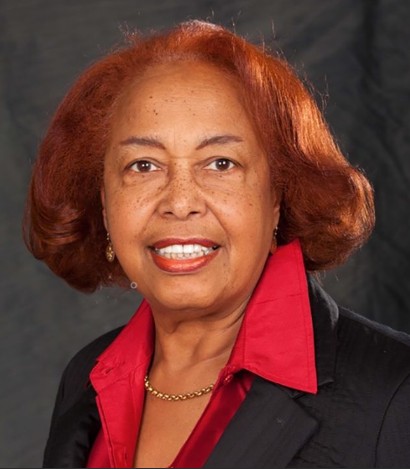
Dr. Patricia Bath: Ophthalmologist, Inventor, Humanitarian, and Researcher
Dr. Patricia Bath was the first Black American to earn a residency in ophthalmology at New York University, after receiving her medical degree at Howard’s University of Medicine in 1968.
She discovered a significant disparity in healthcare access between black and white patients. To address this gap, she soon established community ophthalmology, which allowed untreated populations to gain access to treatment for eye conditions. Bath’s tenacity, research, and humanitarian efforts focused on American patients as well as people in other countries. She taught at universities, and founded organizations, such as the American Institute for the Prevention of Blindness to aid those with eye conditions. Bath invented the laserphaco probe, a device that dissolves cataracts using a small laser, which has been in use since 1981!
Dr. Patricia Bath dedicated her life to fighting eye disease and blindness, and has been included in the National Inventor’s Hall of Fame.
Dr. George Robert Carruthers: Astrophysicist, Inventor and Engineer
Dr. George Robert Carruthers began building his own telescopes at age 10, and received his doctorate in aeronautical and astronautical engineering in 1964.
Carruthers worked as an astrophysicist at the Naval Research Laboratory in the Space and Science Division. He invented the far ultraviolet camera, which was utilized on the Apollo 16 mission. The camera detected UV radiation, enabling scientists to study the Earth’s atmospheric composition and structure, as well as capturing images of the solar system unseen by the naked eye.
Carruthers earned the National Medal of Technology and Innovation in 2011 and mentored aspiring STEM students until his passing in 2020.
Dr. Marie Maynard Daly: Biochemist, Researcher, and Teacher
Dr. Marie Maynard Daly received her Ph.D. in chemistry in 1947, one of the first Black women to do so. Her fields of study included cardiovascular health, protein synthesis, the chemistry of histones, relationships between cholesterol and hypertension, and creatine uptake by muscle cells. She also was one of the pioneers in the study of how smoking affects the lungs and hypertension in the body and continued her research, leading to further advancements and treatment in these fields.
She was named one of the top 50 women in Science, Engineering, and Technology by the National Technical Association in 1999.
Frederick McKinley Jones: Inventor, Engineer, and Businessman
Frederick McKinley Jones earned his engineering license at 20, setting the stage for future accomplishments in the field. He served in World War I as a sergeant, working and teaching as an electrician. Later, he served as an electrical engineer for an audio company, an unheard of opportunity for Black people
His most notable invention was the refrigerator truck, which completely revolutionized how perishables could be transported, and made them available to a larger portion of consumers across the country. Additionally, these trucks were used to transport critical supplies to soldiers during World War II.
Jones earned more than 60 patents over the course of his life, and was the first Black American to earn the National Medal of Technology.
Dr. Valerie Thomas: Physicist, Inventor, and Data Scientist
Dr. Valerie Thomas served as a data analyst for NASA in 1964 and later received her doctorate in educational leadership in 2004.
Following a visit to a science exhibition in 1964, she was inspired to invent the illusion transmitter, a device that utilizes special mirrors and cameras to project 3D images and make them appear to float. This new technology was used by NASA in a few of their satellites, as well as applications in 3D movies and television, as well as medical imaging.
Today, Thomas continues to inspire other scientists and students, educating them about the importance of STEM, and STEM education.
These five scientists and inventors are among the many Black Americans who have made an impact on the STEM community. Despite racism and misogyny, these pioneers have greatly contributed to the world of science and innovation. Let us find inspiration in their achievements and ensure that their names and their legacies become more widely known.