
Tag: Elementary School – 3rd through 5th Grade

  • Circuit Claus: Lighting Up the Holidays with 3 Technology Activities

    Circuit Claus: Lighting Up the Holidays with 3 Technology Activities

    Photo courtesy of Pixabay

    Sparkling lights and circuitry are bringing a technological twist to this holiday season for elementary schoolers! As the holiday season approaches, students can engage in holiday cheer while meeting the thrill of hands-on learning with technology. You might wonder what we mean, so we will simplify it. Here are three festive circuit activities for teachers to captivate students this season.

    1. Holiday Lights Circuitry

    In this activity, students create a circuit to light up multiple cuttings of holiday light strings atop a sheet of cardstock. A battery powers the circuit, and aluminum foil and brass fasteners connect the electricity to the holiday lights’ wires. This project teaches students about the flow of electricity and the multiple aspects of a circuit, including the power source, connectors, and load. You can also use this activity in lessons regarding closed and open circuits. You can alter this project to teach students about various circuits, both simple and complex.

    Activity link: https://ashevillescience.org/wp-content/uploads/2020/03/Holiday-Light-Circuitry.pdf

    Materials needed: cardstock, aluminum foil, tape, Christmas lights, a 9v battery, and scissors.


    2. Holiday Card Circuits

    In this activity, students make a holiday card with an LED light-up feature on the cover. A flat battery connects to aluminum foil on the inside of the card to power a small LED sticking out of the front cover. To make this activity festive, your students can place the outer light in a holiday drawing, such as Rudolph’s nose or a light-up star atop a Christmas tree. This project teaches students about electric currents and how a power source can be connected to a load with something as simple as aluminum foil.

    Activity link: https://www.kiwico.com/diy/holiday-events/winter-break/holiday-card-circuits

    Materials needed: cardstock, 3v coin cell batteries, aluminum foil, LEDs, tape, glue, and markers.


    3. Christmas Lime Battery

    In this activity, students create a Christmas tree-shaped project with a light-up star at the top. Copper wire is connected to limes with nails to use the electricity found in the citrus fruit. Using the power from the limes, the LED bulb lights up. Students can also decorate the structure with pipe cleaners or other materials. This project teaches students about the conductive properties of ions found in acids and, therefore, acidic fruits. It also teaches students how to connect a circuit and use a power source to light an LED.

    Important: Although the following activity guide link suggests using this activity for young children, we recommend it for students in grades 3-5.

    Activity link: https://www.preschoolplayandlearn.com/christmas-lime-battery-electricity-experiment-for-preschoolers/

    Materials needed: six limes, six nails, heavy copper wire, wire cutters, LEDs, and electrical tape.


    With these three activities, you can engage your students in holiday activities to introduce them to electrical circuitry. Implement them in your lessons or daily activities, and students will indeed have something new to learn and enjoy!

    By Tyler King

    Do you want more resources on the topic of festive circuit activities? NSTEM’s vast resources database provides thousands of searchable STEM resources by category, school level, and state. This comprehensive library includes info on enrichment activities, curricula, internships, scholarships, and more. Check out a free sampling here. Or get an NSTEM membership today to unlock the complete list. 

    Grades 3-5 continue the STEM education journey, where students are interested in the natural world and how things work, responding to stories told by teachers that give purpose and meaning to STEM disciplines, which molds them into thinkers, problem solvers, and creators. The National STEM Honor Society sees grades 3-5 as a critical point in the NSTEM journey. To start your grade 3-5 chapter of the National STEM Honor Society, click here.

  • Math Mysteries Unveiled: 4 Fun and Interactive Math Games for Elementary Grades

    Math Mysteries Unveiled: 4 Fun and Interactive Math Games for Elementary Grades

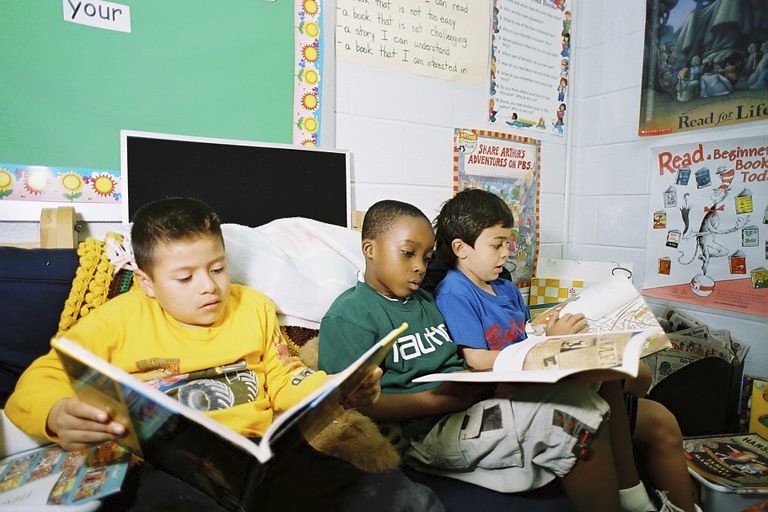
    Photo Courtesy of www.the74million.org

    Are you on the lookout for engaging math games to captivate your elementary school students? Fortunately, many math games promise enjoyment for your students and convey valuable math lessons. With these games, you can capture your students’ attention while delivering essential mathematical concepts. Here are four fun and interactive math games for elementary grades.

    1. Addition and Subtraction Bingo

    Begin by preparing bingo cards and jotting down answers to simple addition and subtraction problems. Distribute these cards to your students. When you call out a number during the game, read the corresponding math equation. For example, if you say “14 – 5,” whoever circles “9” on their bingo card earns a point. Continue until someone achieves bingo and wins the game. This game promotes quick thinking and enhances addition and subtraction skills.


    2. Math Twister

    Create a Twister mat and label each color with a number instead. Call out equations while your students locate the solution on the mat. For instance, instead of saying “right hand on the green,” you would say “left foot on 9 x 5,” and students would find the number 45. This game introduces the world of multiplication and division in a high-tension, enjoyable setting, challenging students to apply their skills.


    3. Hot Potato

    Take a plastic ball (or an actual potato) and tape various math questions onto it. Form a circle with your students and pass the “hot potato” while music plays. The student holding the ball must answer a question when the music stops. Correct answers keep them in the game, while incorrect answers result in elimination. This game encourages quick thinking and adds an element of fun to math challenges.


    4. Math Jeopardy

    Bring the classic game show “Jeopardy” into your classroom by creating your own Jeopardy board with categories and point values. Use diverse categories like multiplication, fractions, graphing, long division, and basic geometry. Split your class into two teams, allowing them to pick cards and earn or lose points based on their answers. This adaptation of a familiar game show makes learning math an engaging and competitive experience.


    These are a few examples of the interactive math games your elementary school students can enjoy. These games enhance their mathematical skills and make learning a dynamic and enjoyable experience. For additional resources on fun and interactive math games for elementary students, explore NSTEM’s vast database, which provides thousands of STEM resources searchable by category, school level, and state.

    By Rameen Naviwala

    Do you want more resources on the topic of math games for elementary students? NSTEM’s vast resources database provides thousands of searchable STEM resources by category, school level, and state. This comprehensive library includes info on enrichment activities, curricula, internships, scholarships, and more. Check out a free sampling here. Or get an NSTEM membership today to unlock the complete list. 

    Grades 3-5 continue the STEM education journey, where students are interested in the natural world and in how things work, responding to stories told by teachers that give purpose and meaning to STEM disciplines, which molds them into thinkers, problem solvers, and creators. The National STEM Honor Society sees grades 3-5 as a critical point in the NSTEM journey. To start your grade 3-5 chapter of the National STEM Honor Society, click here.
  • STEM Storytime: 5 Engaging Books to Inspire Elementary School Students

    STEM Storytime: 5 Engaging Books to Inspire Elementary School Students

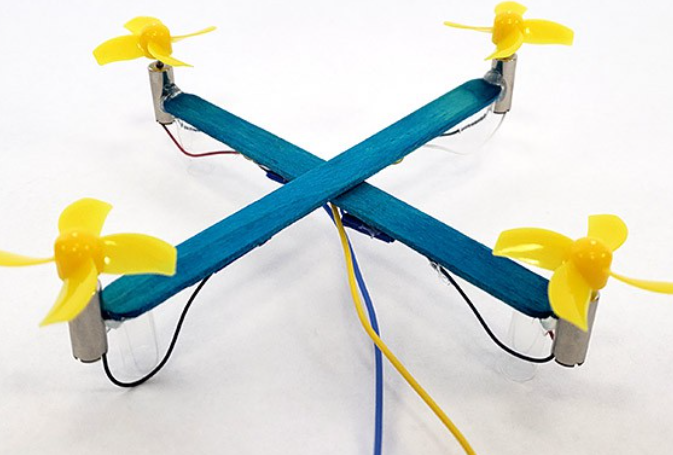
    Photo Courtesy of Flickr

    Are you looking for STEM books to engage young readers and foster critical thinking skills? We’ve curated a list of five captivating books that do just that. These books are informative and enjoyable, making them perfect for students in grades 3-5. Plus, they can be found in your local library, bookstore, or online retailer. Here are five engaging STEM books to inspire elementary school students.

    1. “Rosie Revere, Engineer” by Andrea Beaty

    Rosie is a young engineer who loves to build gadgets and gizmos. When her great-great-aunt Rose inspires her, Rosie embarks on a mission to create something unique. This book is a picture book suitable for grades 3-5. You can find “Rosie Revere, Engineer” at your local library, bookstore, or online retailers like IndieBound. This book encourages children to embrace curiosity, creativity, and resilience when solving problems, essential skills in STEM fields. It empowers young minds to believe in their abilities to engineer solutions.

    2. “The Most Magnificent Thing” by Ashley Spires

    This picture book tells the story of a young girl who sets out to create the “most magnificent thing.” Along the way, she faces challenges and learns the importance of perseverance and problem-solving. This picture book is suitable for all ages, especially for grades 3-5. You can find “The Most Magnificent Thing” at your local library, bookstore, or online retailers like Amazon. This book teaches the engineering design process and the importance of trial and error in problem-solving. It encourages creative thinking and resilience when faced with challenges.

    3. “The Girl Who Thought in Pictures: The Story of Dr. Temple Grandin” by Julia Finley Mosca

    This book follows Temple Grandin’s life, showcasing her unique way of thinking and her incredible contributions to animal science. Despite facing challenges associated with autism, she pursued her passion and revolutionized the livestock industry with her humane livestock handling designs. The book is about 40 pages, suitable for grades 3-5. It is available at local bookstores, Barnes & Noble, or your local library. This STEM book encourages critical thinking by illustrating Temple Grandin’s unique thought process and the importance of embracing diverse perspectives. It emphasizes perseverance, passion, and utilizing one’s special abilities to succeed in STEM.

    4. “The Water Princess” by Susan Verde

    Princess Gie Gie dreams of bringing clean, fresh water to her African village. This story captures her dreams, determination, and the daily challenges of securing this basic necessity. It’s a tale of hope and resilience in the face of adversity. The book is approximately 40 pages, best for grades 3-5. It is available at local bookstores, Amazon, or your local library. This book prompts critical thinking by addressing the global issue of clean water access. It encourages empathy, problem-solving, and discussions about essential global challenges.

    5. “The Watcher” by Jeanette Winter

    This picture book tells the story of Dr. Jane Goodall and her groundbreaking work studying chimpanzees in Tanzania. It highlights her observations and the importance of patience and dedication in scientific research. This picture book is suitable for grades 3-5. You can find “The Watcher” at your local library, bookstore, or online retailers like Bookshop. Dr. Goodall’s story demonstrates how careful observations and critical thinking can lead to groundbreaking discoveries in zoology. It inspires young readers to appreciate the wonders of the natural world.

    These five grades 3-5 STEM books are fascinating and perfect for nurturing critical thinking skills. They encourage young readers to explore, question, and solve problems—essential qualities for future STEM leaders. As you immerse yourself in these stories, consider taking your passion for STEM to the next level by starting an NSTEM chapter at your school. Join a community of STEM enthusiasts and embark on exciting STEM adventures!

    By Srihitha Sunkara

    Do you want more resources on the topic of STEM books? NSTEM’s vast resources database provides thousands of searchable STEM resources by category, school level, and state. This comprehensive library includes info on enrichment activities, curricula, internships, scholarships, and more. Check out a free sampling here. Or get an NSTEM membership today to unlock the complete list. 

    Grades 3-5 continue the STEM education journey, where students are interested in the natural world and how things work, responding to stories told by teachers that give purpose and meaning to STEM disciplines molding them into thinkers, problem solvers, and creators. The National STEM Honor Society sees grades 3-5 as a critical point in the NSTEM journey. To start your grade 3-5 chapter of the National STEM Honor Society, click here.
  • The Top 4 Cutting-Edge Drone Projects for Grades 3-5

    The Top 4 Cutting-Edge Drone Projects for Grades 3-5

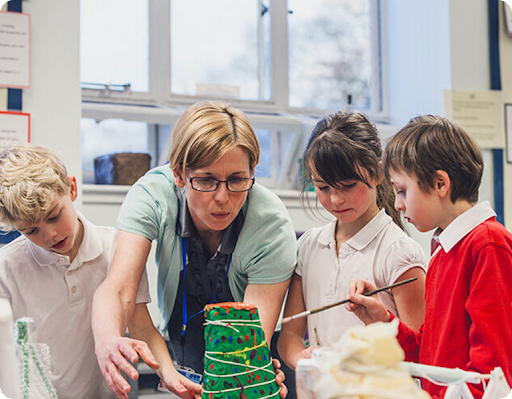
    Photo Courtesy of ScienceBuddies.org

    Science fairs provide various advantages for both students and the broader public. These exercises allow students to demonstrate their scientific ingenuity and knowledge, fostering a greater understanding of science and its practical applications. It can assist students in improving their critical thinking skills, creativity, research abilities, and overall interest in STEM. Here are four cutting-edge drone projects and experiments (and questions) that students in grades 3-5 can conduct and answer!


         1. Wildlife Observation (Easy)

    Numerous questions can be asked and answered through nature exploration. Students can go on field trips to nearby parks, green spaces, or their backyards. Students can track a squirrel back to their nut stockpile, investigate which flowers attract bees and butterflies, and discover a sparrow’s nest. The use of a drone for exploration is highly beneficial in their research. A drone allows the student to observe while keeping a safe distance from the organism without feeling bothered or anxious. Second, for younger children participating in science fairs, utilizing a drone to collect information on a topic that fascinates them but may be difficult to execute is safer and more accessible. While testing, remember to respect other people’s privacy and places and drive carefully! This experiment can help students explore the natural world around them and pique their interest in such topics while also learning the importance of privacy in the natural world. 


         2. How Strong is the Drone? (Medium)

    Can your drone carry a toy car, masking tape, or a box? Drones, in regards to materials, structure, flight control, and overall power, are all made differently. Experiment with various household items using your drone, looking for different shapes, sizes, weights, and heights. Can the drone carry heavy objects? Small objects? Circular? Rectangular? If the drone can’t carry any of these objects, are there any additional items you could use to help? In other words, if an item couldn’t be held on the drone, is there perhaps another way you can approach the situation?  When conducting this experiment, be mindful of the platform and ground you work on, especially if you experiment with delicate or heavy objects. Ensure the ground is stable or soft if you are testing items that can shatter, such as a mug. This project can help students practice the durability of specific objects.


         3. The Best Design (Hard)

    If you have multiple drones that you are borrowing from friends or family, this project is for you! As discussed before, all drones are structured differently with different mechanics. Using all your drones, what could be experimented on is the effectiveness and quality of each drone. Go exploring with each drone and analyze any differences between them. Did it scare off animals with its noise or perhaps shape? Was there a particular drone that was hard to squeeze in between trees or houses? List any benefits and limitations of each design. After you explore the different drones, propose your design and interpretation. What makes the most effective drone based on your experiment? Pictures, such as a blueprint, can be created along with a description of the drone’s characteristics and purpose. This creative design project can help students embrace creativity and develop critical thinking skills.


         4. Hide and Seek (Easy)

    Rescue teams, helicopters, and other departments are sent out when a disaster occurs. Drones may be just as effective! Have a friend or family member place random objects around your neighborhood, some in a larger area while others are more compact. Drive your drone around the site and spot as many objects as possible. Was it challenging? Will looking for specific things or even people and pets be effective during a disaster? If not, think about ways to make drones more effective in this field of work. This experiment will help students practice staying attentive and recognize setbacks to their approach.  


    Science fairs play a vital role in promoting STEM education and the development of critical skills. Even with a challenging device like a drone, there are enjoyable cutting-edge drone projects. Students can gain hands-on experience with the scientific method and explore their interests. With the popularity of drones rising, students have opportunities to explore this complex technology and develop better versions of drones. Have fun exploring!


    By Janet Yang

    Do you want more resources on the topic of cutting-edge drone projects for grades 3-5? NSTEM’s vast resources database provides thousands of searchable STEM resources by category, school level, and state. This comprehensive library includes info on enrichment activities, curricula, internships, scholarships, and more. Check out a free sampling here. Or get an NSTEM membership today to unlock the complete list. 

    Grades 3-5 continue the STEM education journey, where students are interested in the natural world and how things work, responding to stories told by teachers that give purpose and meaning to STEM disciplines, which molds them into thinkers, problem solvers, and creators. The National STEM Honor Society sees grades 3-5 as a critical point in the NSTEM journey. To start your grade 3-5 chapter of the National STEM Honor Society, click here.
  • The Ultimate Guide for Gaining Comfort and Experience in STEM Teaching for Grades 3-5

    The Ultimate Guide for Gaining Comfort and Experience in STEM Teaching for Grades 3-5

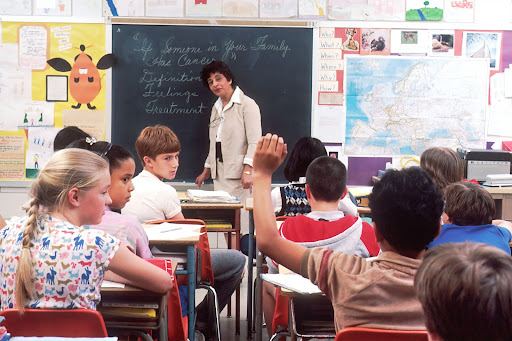
    Students and a teacher creating a volcano
    (Photo Courtesy of 3P Learning)


    Are you looking to enhance your STEM teaching experience? Here are four valuable resources to help you develop your skills and knowledge in STEM education!

      1. Understanding Science 

    A project created by Berkeley University, “Understanding Science” is a comprehensive database designed to assist teachers in STEM education. This resource database includes a wide array of resources: including numerous lesson plans, hands-on activities, assessment tools, tutorials, and teachings. Using this database, teachers can deepen their STEM understanding, enhance their teaching skills, and create an enriching learning environment among young learners.

       2.  PBS NOVA 

    For those looking to provide better education for children in grades 3-5, PBS Nova Education is the ideal teaching resource you need. A comprehensive toolkit encompassing various interactive videos, lesson plans, and classroom activities suitable for all learners promotes a wholesome learning experience that would undoubtedly foster a grand understanding of STEM. The integration of these versatile tools allows both educators and learners alike the opportunity towards cognitive excellence suffused with authentic scientific knowledge, thereby encouraging curiosity while strengthening critical thinking abilities among pupils.

       3.  Endeavor STEM Certificate Teaching Project 

    Aimed directly at instructors of grades 3-5 and their personal growth as effective facilitators of STEM, The Endeavor STEM Certificate Teaching program is both transformational and one-of-a-kind. It is based on an emphasis on student proficiency along with teacher self-confidence as it provides professional development opportunities via educational workshops, coaching, and an extensive network of experienced educators that encourages the successful integration of topical materials into a thematic curriculum. 

      4.  Feel-Good Teaching 

    Feel-Good Teaching is a website focused on creating and sharing educational experiences with teachers that not only capture students’ interest but also widen their knowledge across STEM. This website includes lesson plans, curriculum, and trainings.  

    In conclusion, these four resources provide valuable support and guidance for educators seeking to gain comfort and experience in teaching STEM. Delve into the thorough database of “Understanding Science,” utilize the interactive tools available at PBS NOVA Education, discover transformative opportunities with the Endeavor STEM Certificate Teaching Project, or explore Feel-Good Teaching’s engaging resources – all aimed at deepening your understanding of STEM subjects and fostering critical thinking in students. With an assortment of lesson plans/training options at your fingertips- bolster your knowledge in this field to create a wonderful classroom atmosphere that enriches student learning!

    By Elizabeth Antenucci


    These resources are from the National STEM Honor Society Resources section of our website for members. Make sure to join to gain access to even more invaluable resources!


    Do you want more resources on the topic of teaching STEM for grades 3-5? NSTEM’s vast resources database provides thousands of STEM resources that are searchable by category, school level and state. This comprehensive library includes info on enrichment activities, curricula, internships, scholarships and more. Check out a free sampling here. Or get an NSTEM membership today to unlock the complete list. 

    Grades 3-5 continue the STEM education journey, where students are interested in the natural world, in how things work, responding to stories told by teachers that give purpose and meaning to STEM disciplines, which molds them into thinkers, problem solvers and creators. The National STEM Honor Society sees grades 3-5 as a critical point in the NSTEM journey. To start your grade 3-5 chapter of the National STEM Honor Society, click here.

  • 3 Stimulating STEM Guest Speakers to Incorporate in Your Elementary School Classroom Today

    3 Stimulating STEM Guest Speakers to Incorporate in Your Elementary School Classroom Today

    Teacher in front a classroom
    Photo courtesy of Unsplash

    Have you wanted to bring STEM guest speakers to your kid’s elementary classroom? Introducing different professionals to your kids can help encourage them to find a career to pursue. Helping your kids find their passion at a young age will help set them up for success. Here are 3 stimulating STEM guest speakers you can incorporate into your elementary school classroom. 

       1. Ecologist 

    Kids who are interested in the environment and animals will greatly enjoy being visited by an ecologist. Ecologists spend their time researching the interactions between animals, plants, and the environment. Meeting an ecologist can help teach kids about the relationships between predators and prey, or how invasive species disrupt the environment. Ecologists can be found working at zoos, museums, or aquariums. Another important aspect of speaking with an ecologist is how ecologists can educate children on protecting the environment. The state of the environment is a pressing issue, and introducing the idea of helping the environment will be beneficial for our future. Ecologists constantly work to solve environmental issues. Having an ecologist as a guest speaker will help teach your kids about the importance of using scientific methods to solve problems. 

       2. Video Game Designer

    Another career that features the use of STEM is video game designers. Video game designers use science, technology, and math to help create unique gameplay experiences. If your kids are interested in playing video games, they will have an enjoyable experience of learning about how video games are created. Video game designers can discuss how they plan their games, the process of coding the games, and how they finish polishing their creations. Speaking to a video game designer can encourage your kids to try creating their own games. It can even teach them about the importance of trial and error when designing and making new things. Video games require STEM skills, creativity, and perseverance in order to be created. If your child wants to become a game designer, this is a good first step to help them get on that path.       

       3. Agricultural Scientist

    Agricultural scientists are in charge of discovering ways to increase food production and raising farm animals. These scientists study a variety of topics, such as farm animals, plants, soils, and processed food. Many of the conveniences surrounding the food we consume have been created from the efforts of agricultural scientists. Meeting with an agricultural scientist is a great way to introduce your kids to agriculture. It can also provide your kids perspective on the important role agricultural scientists play in our society. The field of agriculture relies on STEM, since many of the innovations of food production relies on using engineering, math, and technology. Agricultural scientists create experiments that help discover new ways to streamline the process of growing fruits of vegetables. Agriculture may be a great career field if your child is interested in gardening or taking care of animals. 

    If you would like to get in contact with guest speakers, check out this NSTEM resource. Although this resource is specific to Kansas, speakers are attainable for all schools. You can find guest speakers in STEM fields by reaching out to local universities, research institutions, companies and professional organizations. You can also use online platforms like LinkedIn to identify and connect with professionals in the desired field. Networking events, workshops and conferences related to STEM can also be great opportunities to meet potential guest speakers. 

    By Nathan Li

    Do you want more resources on the topic of STEM guest speakers? NSTEM’s vast resources database provides thousands of STEM resources that are searchable by category, school level and state. This comprehensive library includes info on enrichment activities, curricula, internships, scholarships and more. Check out a free sampling here. Or get an NSTEM membership today to unlock the complete list. 

    Grades 3-5 continue the STEM education journey, where students are interested in the natural world, in how things work, responding to stories told by teachers that give purpose and meaning to STEM disciplines, which molds them into thinkers, problem solvers and creators. The National STEM Honor Society sees grades 3-5 as a critical point in the NSTEM journey. To start your grade 3-5 chapter of the National STEM Honor Society, click here.