Tag: Elementary School – 3rd through 5th Grade

  • Exploring Nature: 5 Outdoor Activities for Grades 3-5

    Exploring Nature: 5 Outdoor Activities for Grades 3-5

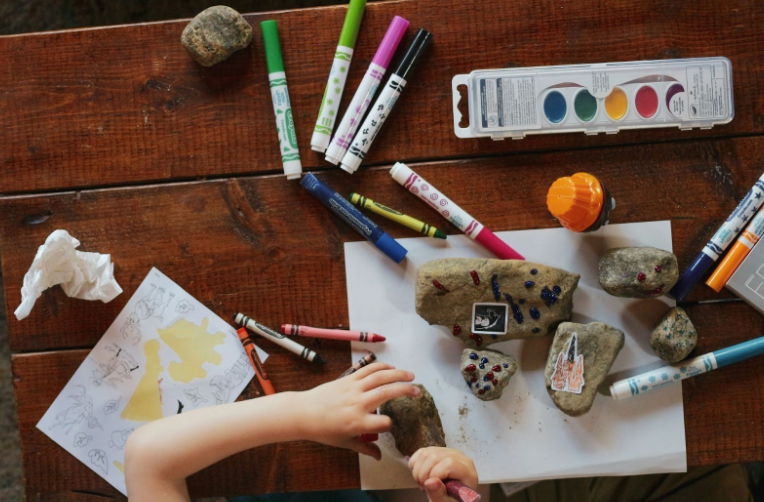
    Photo Courtesy of Unsplash

    Here at NSTEM, we encourage teachers, students, and families of all ages to explore STEM through hands-on experience and participatory engagement. For those of you looking to bring the classroom outdoors, we have collected five low-budget outdoor STEM projects that will engage even the most fickle of young minds to engage with the natural world around them!

    1. Create an Observational Field Book for Your School or Neighborhood

    Scientific observation starts with keeping a field book or journal to document all the wonders that cannot be simply captured in a picture. Throughout history, scientists and naturalists have kept field books to document experiences and sensory observations in the field. In this activity, students are encouraged to create personalized diaries before filling them with observations from their school or local community. This Smithsonian project plan also provides guidelines for a range of grade levels.

    Link to activity: https://siarchives.si.edu/sites/default/files/pdfs/Create_Fieldbooks_TN2012_0.pdf

    2. Make a Backyard Rain Gauge

    Looking for creative ways to address water scarcity and climate change with your students? Try making a backyard rain gauge, which can introduce students to the early concepts of meteorology, mathematics, and statistics. By collecting and recording rainwater over time, students and teachers can track average rainfall over different times of the year to understand how farmers (and you) can mitigate water scarcity!

    Link to activity: https://www.agfoundation.org/files/AFBFA-AgLit-MAF-191008-RainGaugeActivity.pdf

    3. Build a Future Army of Birders

    Birding is a great method for observing how the living world around us adapts to physical and behavioral changes and the roles that humans and other organisms play within those systems. This project can be an inventive way for students to observe, report, and analyze food systems. In this way, they can be further prepared to understand and contribute to complex engineering concepts like biomimicry. This activity will also be an excellent choice for any school or community looking to contribute toward their local bird population!

    Link to activity: https://www.massaudubon.org/content/download/7014/file/Birds_3-5.pdf?inLanguage=eng-US&version=1

    4. Design, Build, and Test Mini-Rockets

    In this engaging and inexpensive activity, your future NASA scientists will engineer and build a prototype Food Transportation Device (FTD) in the form of a rocket. In teams, students will work together to test a propulsion system and a payload container capable of carrying their payload of 4 raisins. The goal is for teams to have a blast while building a mini rocket that is both aerodynamic and durable enough to withstand impact! 

    Link to activity: https://ucanr.edu/sites/YDResources/files/285355.pdf

    5. Catapult Competition

    For teachers looking to introduce concepts of physics and engineering, we recommend the generous use of catapult technology! This activity tackles the study of kinetic energy in the form of rubber bands and plastic spoons through low-budget design and classroom collaboration. By actively designing, building, and experimenting with catapults and projectiles, students will further seek to understand why and how the world moves and changes.

    Link to activity: https://virtualscienceteachers.org/wp-content/uploads/2023/09/Catapult-Activity-2.pdf

    By Rosalinda Cardoso


    These projects were selected to introduce students to concepts of biological science, scientific observation, engineering, and meteorology for Grades 3-5. At NSTEM, we also know the importance of planning for the inevitable, so should emergencies arise, our projects can be printed and easily modified to be used safely indoors!

    Do you want more resources for outdoor biology activities? NSTEM’s vast resources database provides thousands of STEM resources that are searchable by category, school level, and state. This comprehensive library includes info on enrichment activities, curricula, internships, scholarships, and more. Check out a free sampling here. Or get an NSTEM membership today to unlock the complete list. 

    Grades 3-5 continue the STEM education journey, where students are interested in the natural world and how things work, responding to stories told by teachers that give purpose and meaning to STEM disciplines, molding them into thinkers, problem solvers, and creators. The National STEM Honor Society sees grades 3-5 as a critical point in the NSTEM journey. To start your grade 3-5 chapter of the National STEM Honor Society, click here.


  • Eco Explorers: 3 Green Adventures for Grades 3-5

    Eco Explorers: 3 Green Adventures for Grades 3-5

    Photo Courtesy of tirtyl.com.au

    Are you ready to embark on eco-friendly adventures that ignite young minds and cultivate a passion for environmental stewardship? In this blog, we’ll explore three captivating environmental science activities tailored for grades 3-5 students. Each activity fosters a deeper understanding of environmental science and nurtures critical thinking and problem-solving skills essential for our future stewards of the Earth.

    1. Recycling Relay Race

    How It Works:

    Divide students into teams and set up stations representing different recyclable materials (e.g., paper, plastic, aluminum). Each team member must race to the correct bin and sort a designated item before passing the baton to the next teammate. The first team to successfully sort all items wins!

    What It Teaches:

    The Recycling Relay Race teaches students the importance of proper waste management and recycling practices. Students learn to identify common materials and understand their recyclability by actively sorting recyclables. This activity promotes environmental awareness and responsible consumption habits.

    Why It’s Important:

    Encouraging recycling habits from a young age instills lifelong behaviors, contributing to waste reduction and conservation efforts. By emphasizing teamwork and quick thinking this activity instills a sense of collective responsibility for protecting our planet’s resources by emphasizing teamwork and quick thinking.


    2. Nature Scavenger Hunt

    How It Works:

    Provide students with a list of natural items to find in their surroundings, such as leaves, rocks, insects, or animal tracks. Students can explore outdoor areas like school grounds, parks, or nature trails to hunt for these items. Offer bonus points for identifying unique specimens or observing wildlife in their habitats.

    What It Teaches:

    The Nature Scavenger Hunt immerses students in hands-on exploration of their natural environment, fostering curiosity and appreciation for biodiversity. Through observation and discovery, students learn about the interconnectedness of living organisms and their ecosystems, highlighting the importance of preserving biodiversity for a sustainable future.

    Why It’s Important:

    Connecting with nature promotes environmental stewardship by fostering empathy and respect for the natural world. Students develop a sense of wonder and curiosity by engaging in outdoor activities like scavenger hunts, laying the foundation for future conservation efforts and ecological advocacy.


    3. Eco-Friendly Engineering Challenge

    How It Works:

    Challenge students to design and build eco-friendly structures or devices using recycled materials. For example, students can construct miniature solar ovens, wind turbines, or water filtration systems using materials like cardboard, plastic bottles, and aluminum foil. Encourage creativity and innovation in their designs.

    What It Teaches:

    The Eco-Friendly Engineering Challenge integrates principles of STEM (Science, Technology, Engineering, and Mathematics) with environmental consciousness. By designing and building sustainable solutions to real-world problems, students learn about renewable energy, resource conservation, and the engineering design process.

    Why It’s Important:

    Empowering students to tackle environmental challenges through engineering fosters innovation and problem-solving skills essential for addressing global sustainability issues. By repurposing materials and harnessing clean energy technologies, students contribute to a more sustainable future while honing their creative and analytical abilities.


    These engaging environmental science activities provide valuable opportunities for students to explore, learn, and take action in support of a greener future. By incorporating hands-on experiences that promote critical thinking and environmental stewardship, we can inspire the next generation of Eco Explorers to impact our planet positively. Consider starting an NSTEM chapter at your school to enrich students’ learning experiences and empower them to become leaders in environmental conservation efforts.

    By Srihitha Sunkara

    Do you want more resources on the topic of environmental science activities? NSTEM’s vast resources database provides thousands of searchable STEM resources by category, school level, and state. This comprehensive library includes info on enrichment activities, curricula, internships, scholarships, and more. Check out a free sampling here. Or get an NSTEM membership today to unlock the complete list. 

    Grades 3-5 continue the STEM education journey, where students are interested in the natural world and how things work, responding to stories told by teachers that give purpose and meaning to STEM disciplines and molding them into thinkers, problem solvers, and creators. The National STEM Honor Society sees grades 3-5 as a critical point in the NSTEM journey. To start your grade 3-5 chapter of the National STEM Honor Society, click here.

  • Winter Wildlife Wonders: 3 Biology Activities for Elementary Kids

    Winter Wildlife Wonders: 3 Biology Activities for Elementary Kids

    Photo courtesy of Pixabay

    As the winter season blankets the world, it offers a unique opportunity for elementary kids to explore the wonders of wildlife biology in a frosty setting. Engaging with the natural world during this chilly season can be a captivating and educational experience for young minds. Let’s delve into creative and hands-on activities that embrace the beauty of winter and offer insights into the lives of creatures thriving in colder climates. From pine cones to penguins, these winter biology activities are designed to spark curiosity and foster a deeper appreciation for the biological beings of winter.

    1. Keeping Arctic Animals Warm

    In this activity, students explore how penguins, polar bears, and other Arctic animals stay warm with their layers of fat. First, an ice-cold bowl of water is prepared as the testing environment. Then, students will wear latex gloves, dip their hands in a baggie of shortening, and immerse them in the water again. It becomes clear that the fat acts as insulation and protection against the cold. This activity showcases the biological adaptations that animals have developed to live in cold weather.

    Activity link: Arctic Animals Science Experiment

    Materials needed: ice cubes, cold water, shortening, baggies, and latex gloves.


    2. Pine Cone Opening

    In this activity, students learn how pine cones react to different temperature changes and seasons. When placed in a glass of cold water, or “winter,” they respond much differently than in warm water. This experiment showcases how pine cones use their biological adaptations to know when to release their seeds based on external temperature. It also allows students to get outside in the snow or cold and find cool pine cones!

    Activity link: Pine Cone Science Experiment

    Materials needed: glasses or jars, pine cones, warm water, and cold water.


    3. How Penguins Stay Dry

    With this project, elementary school students can explore a metaphorical comparison of how penguins stay dry with their water-repellent feathers. First, they color in a penguin coloring sheet with wax crayons. Then, spray the blue-dyed water on the paper to see how the wax repels the water, just like a penguin’s feathers! This activity teaches students about another biological adaptation that keeps these amazing Arctic animals warm and dry.

    Activity link: Penguins

    Materials needed: penguin coloring sheet, crayons, spray bottle, water, and blue food coloring.


    These three winter biology activities for elementary kids provide a gateway to a deeper understanding of the winter web of life. With these hands-on explorations and observations, young learners will gain knowledge and cultivate a sense of respect for the natural world. As students connect with the wonders of biology, these activities will become memorable experiences that leave lasting marks on their understanding of the balance of winter life. Embark on a journey of discovery with these captivating winter wildlife biology activities for elementary students!

    By Tyler King

    Do you want more resources on the topic of winter biology activities? NSTEM’s vast resources database provides thousands of searchable STEM resources by category, school level, and state. This comprehensive library includes info on enrichment activities, curricula, internships, scholarships, and more. Check out a free sampling here. Or get an NSTEM membership today to unlock the complete list. 

    Grades 3-5 continue the STEM education journey, where students are interested in the natural world and how things work, responding to stories told by teachers that give purpose and meaning to STEM disciplines and molding them into thinkers, problem solvers, and creators. The National STEM Honor Society sees grades 3-5 as a critical point in the NSTEM journey. To start your grade 3-5 chapter of the National STEM Honor Society, click here.

  • The ABCs of STEM: Integrating Science, Technology, Engineering, and Math into Elementary Education

    The ABCs of STEM: Integrating Science, Technology, Engineering, and Math into Elementary Education

    Photo Courtesy of Pixabay

    Are you looking for ways to involve your elementary school students in STEM? If you want to explore a more technical approach to teaching, there are a few key factors you should know about. Here are the three ABCs for elementary school STEM education you need to know to get started.

    A: Application.

    When introducing your kids to STEM, it’s essential to encourage practical applications of what they learn. Introduce real-world scenarios to paint a picture of what STEM looks like in engineering challenges, technological problem-solving, and mathematical applications. Then, use hands-on activities, experiments, and projects to engage your students in their learning. Getting young learners involved with these enjoyable activities captivates and catches their interest, empowering them to embrace and participate in their educational STEM journey. This immersive approach supports deeper understanding and encourages lifelong curiosity and enthusiasm.

    Some activity ideas include making slime, DIY lava lamps, and making s’mores with a solar oven! For more ideas, visit the following website: 50 STEM Activities to Help Kids Think Outside the Box – We Are Teachers.


    B: Basics. 

    While engaging in activities, work on building a solid foundation in the core principles of each STEM discipline through your teaching. Ensure your students grasp the essentials before diving into more complex topics and experiments. Make sure you clearly explain the foundational aspects of STEM before going deeper. Establishing your kids with a solid understanding of the basics will pave the way for future explorations into more advanced learning. This emphasis on a sturdy foundation serves as the basis for their expansion of knowledge and future in STEM education.

    To solidify the basics, try short quizzes, exit tickets, or class questions and answers using personal whiteboards. You can also engage in more fun activities to emphasize the basics of STEM with the following Science Buddies.org website: Elementary School STEM Activities for Kids.  


    C: Collaboration. 

    One of the most critical aspects of teaching STEM to your elementary schoolers is collaboration. Encourage teamwork, group projects, and collective problem-solving in your teaching to promote cooperation. Collaboration stimulates communication, fosters innovation, and expands students’ social skills. Engaging your students in collaborative work enriches their educational experiences and develops their ability to combine the perspectives of the people around them. Collaboration lays the foundation for creative thinking and greater accomplishments in STEM.

    To encourage collaboration, put your students in pairs or groups for activities, assignments, and experiments. For a comprehensive list of collaborative activities, check out the following website: 48 Creative Team-Building Activities for Kids.


    These three tips make integrating STEM into your elementary school teaching easy. Just follow the ABCs!

    We encourage you to consider starting an NSTEM chapter at your school. NSTEM, with its commitment to innovative STEM education, can provide invaluable resources and support. By joining hands with NSTEM, you can help create a brighter future for our children. To get started, explore NSTEM resources to access a wealth of materials and guidance, enriching STEM education in 3-5 classrooms and beyond. 

    By Tyler King

    Do you want more resources on the topic of elementary STEM education? NSTEM’s vast resources database provides thousands of searchable STEM resources by category, school level, and state. This comprehensive library includes info on enrichment activities, curricula, internships, scholarships, and more. Check out a free sampling here. Or get an NSTEM membership today to unlock the complete list. 

    Grades 3-5 continue the STEM education journey, where students are interested in the natural world and in how things work, responding to stories told by teachers that give purpose and meaning to STEM disciplines, which molds them into thinkers, problem solvers, and creators. The National STEM Honor Society sees grades 3-5 as a critical point in the NSTEM journey. To start your grade 3-5 chapter of the National STEM Honor Society, click here.

  • 3 Original Family Activities to Boost Your Child’s STEM Experience

    3 Original Family Activities to Boost Your Child’s STEM Experience

    Photo Courtesy of Pixabay

    Are you seeking engaging family activities to enhance your elementary school child’s STEM experience before they embark on their high school and college journey? Look no further. This article presents three activities the whole family can enjoy: fostering STEM knowledge while creating lasting family memories. These activities stimulate your child’s interest in STEM education and strengthen family bonds through fun and timeless experiences.

    1. Tower Building 

    Who doesn’t love Jenga or Legos? Engage in a friendly family competition to build the tallest tower using materials such as Jenga blocks, Legos, paper cups, cards, or random household items. Set a timer to add a competitive edge and track the time spent constructing the towers. This activity brings laughter and knowledge about engineering, emphasizing the intricacies of creating tall and stable structures. It might even ignite an interest in real-life building design. Consider making this activity a regular part of your family game night.


    2. Paper Circuits

    Transform arts and crafts time into a STEM learning opportunity with paper circuits. Gather paper, copper tape, LED lights, coin batteries, and clear tape. Follow the Science Buddies.org website instructions to create a paper circuit that lights up, teaching your child about circuits and conductivity. Make it a friendly competition to create the fastest or most elaborate paper circuit. This activity combines creativity with STEM education, making it an enjoyable and enlightening experience for the whole family.


    3. Can This Float?

    Turn everyday household items into a science experiment with “Can This Float?” Collect items such as cups, paper plates, paperclips, candle holders, pencils, erasers, and golf balls. Fill a bucket with water and challenge your child to predict whether each item will float or sink based on size, shape, weight, and density. Test their hypotheses by placing the items in the water. This activity teaches concepts of density and volume while encouraging educated guesses. Add an element of fun by having everyone guess, awarding points to those with correct predictions. It is a playful way to explore science and make a splash!


    These are just some activities you can do at home with your family to help boost your elementary school children’s STEM experiences. Encouraging your child to take an interest in STEM will help advance their future and education, and participating in these activities will allow them to feel more comfortable with the unknown. So have fun with these family activities!

    By Rameen Naviwala

    Do you want more resources on the topic of STEM family activities? NSTEM’s vast resources database provides thousands of searchable STEM resources by category, school level, and state. This comprehensive library includes info on enrichment activities, curricula, internships, scholarships, and more. Check out a free sampling here. Or get an NSTEM membership today to unlock the complete list. 

    Grades 3-5 continue the STEM education journey, where students are interested in the natural world and in how things work, responding to stories told by teachers that give purpose and meaning to STEM disciplines, which molds them into thinkers, problem solvers, and creators. The National STEM Honor Society sees grades 3-5 as a critical point in the NSTEM journey. To start your grade 3-5 chapter of the National STEM Honor Society, click here.

  • Snowflakes and Science: 3 Activities Exploring the Unique Patterns

    Snowflakes and Science: 3 Activities Exploring the Unique Patterns

    Photo Courtesy of Pixabay

    As winter blankets the world in a glistening layer of snow, there is an opportunity to turn this season into an educational adventure for elementary school students. We will embark on a journey through the delicate and enchanting world of snowflakes. These unique ice crystals bring joy to snowy landscapes and serve as fascinating scientific exploration subjects. We have found three engaging websites, each offering snowflake science lessons and activities tailored specifically for students in grades 3-5. From the intricate formations to the historical significance of snowflake photography, these resources promise to make learning about the science of snowflakes an unforgettable experience. So, let’s dive into the wonders of winter, where science meets the magic of snow, and discover the captivating world of snowflake STEM activities for young minds.

    1. SnowCrystals.com – Snowflake Science Lessons

    • Significance: SnowCrystals.com, run by physicist Dr. Kenneth G. Libbrecht, is a fantastic resource for snowflake science. This site provides detailed lessons on the science behind snowflakes, including their formation and unique crystalline structures.
    • How it Works: This website offers engaging and interactive lessons suitable for elementary school students. It includes visually appealing diagrams and videos that simplify complex concepts, making it easy for young learners to grasp the science of snowflakes.
    • What it Teaches: Students will learn about the physics and chemistry involved in the formation of snowflakes. The lessons cover water vapor, temperature, and crystal growth topics. Additionally, hands-on activities allow students to create paper snowflakes, reinforcing the scientific principles they have learned.

    2. National Geographic Kids – Snowflake Science

    • Significance: National Geographic Kids is a reputable source known for its educational content. The snowflake science section provides a kid-friendly approach to understanding the science behind these delicate ice crystals.
    • How it Works: This website offers interactive games, videos, and articles that make learning about snowflakes engaging and entertaining. The content is designed specifically for elementary school students, ensuring it aligns with their comprehension levels.
    • What it Teaches: Students will explore snowflakes’ unique characteristics, the snow formation science, and the various types of snow crystals. The interactive elements make learning a fun and memorable experience.

    3. STEM Activities for Kids – Snowflake Bentley Lesson

    • Significance: STEM Activities for Kids provides a lesson inspired by Wilson Bentley, known as “Snowflake Bentley,” the first person to photograph snowflakes. This lesson combines history with hands-on science.
    • How it Works: This lesson plan guides students through the life and contributions of Snowflake Bentley, followed by an activity where they can create their snowflake art using basic materials.
    • What it Teaches: In addition to learning about the science of snowflakes, this activity introduces students to the historical aspect of snowflake photography. It encourages creativity and artistic expression while reinforcing scientific concepts.

    In conclusion, exploring the science of snowflakes through these three engaging activities can spark a festive interest in STEM for grades 3-5 students. NSTEM, with its vast resources and community, complements these activities by providing a platform for students and educators to explore STEM subjects further. To delve deeper into STEM and inspire young minds, consider starting an NSTEM chapter at your school. The National STEM Honor Society offers a supportive community, resources, and opportunities for students passionate about science, technology, engineering, and mathematics.

    By Srihitha Sunkara

    Do you want more resources on the topic of the science of snowflakes? NSTEM’s vast resources database provides thousands of STEM resources that are searchable by category, school level, and state. This comprehensive library includes info on enrichment activities, curricula, internships, scholarships, and more. Check out a free sampling here. Or get an NSTEM membership today to unlock the complete list.

    Grades 3-5 continue the STEM education journey, where students are interested in the natural world, in how things work, responding to stories told by teachers that give purpose and meaning to STEM disciplines, which molds them into thinkers, problem solvers, and creators. The National STEM Honor Society sees grades 3-5 as a critical point in the NSTEM journey. To start your grade 3-5 chapter of the National STEM Honor Society, click here.