Tag: Elementary School – 3rd through 5th Grade

  • Incorporating Robotics in Your Student’s Learning? Get a Head Start with these 3 Mind Blowing Resources

    Incorporating Robotics in Your Student’s Learning? Get a Head Start with these 3 Mind Blowing Resources

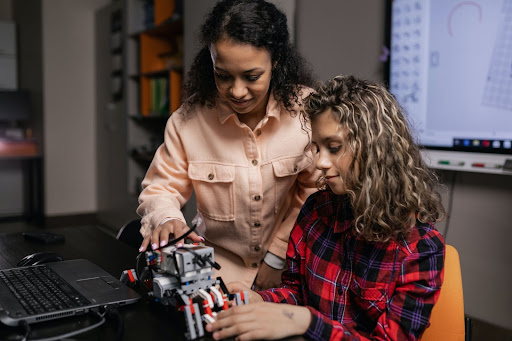
    Parent and child playing with a robot
    (Darmel, 2021)

    Are you looking to introduce your students to the exciting world of robotics? Here are three resources that will give them a head start in that direction!

       1.Code Advantage

    Code Advantage is a platform that offers online robotics classes. To participate, students will need a computer and the Lego WeDo 2.0 kit (which costs $215.00). They have various courses available for 3rd to 5th graders, including:

      • Pokebots: Inspired by the popular show Pokemon, this course allows students to create different creatures using Lego Robotics. They will learn coding to determine how these creatures move. The course covers concepts like gravity, friction, torque, and angular velocity.
      • Jedi Robotics: In this course, students will build droids and learn how to program them. They’ll also explore principles such as the center of mass, energy, and gear ratios.
      • Anibots: Students will use Legos to construct animal robots and gain an understanding of how animals’ bodies function in real life. They will also learn about principles such as torque, traction, and angular velocity.
      • Earthbots: Using Legos, students will explore different parts of the planet and develop programs to tackle challenges like volcanic heat, ocean pressure, and snowy mountains.

       2. iD Tech 

    iD tech is another online platform that offers robotics courses. They have listings available for 3rd to 4th graders, including:

      • Coding with Scratch and VEX Virtual Robotics: In this course, students will learn programming using the coding blocks of Scratch and VEXcode VR. They will work on creating variables, if-else statements, using arithmetic operators, designing and animating sprites, and conducting experiments. The course costs $399 for 2-hour sessions during weekdays, or $449 for 8 private lessons at a time that suits the student. Classes are available between June 5th and August 18th.
      • Roblox Avatar Shop Creation: This course focuses on creating logos for t-shirts in Roblox using image-editing software. Students can then use their designs as clothing for their Roblox avatar in their games. They will learn about making clothing for Roblox avatars and monetizing items. Similar to the previous course, it costs $399 for 2-hour sessions during weekdays, or $449 for 8 private lessons at a flexible schedule. Classes are available between June 5th and August 18th.

    3. Teacher Vision

    Teacher Vision offers valuable resources on robotics, including:

      • Science, Technology, and Society: Robots in Space: This worksheet, created by Scott Foresman, provides 3rd graders with information on how robots are essential for space exploration, as well as the differences between robots and humans.
      • Comparing Humans and Robots: This lesson plan from the Science Teacher Education Partnership Program (STEPP) consists of five activities covering robotics, engineering, and science.
      • Human and Robot Circuits: Another STEPP resource, this worksheet is ideal for 5th graders. It helps students understand the similarities between the circuit structures in humans and robots.

    Overall, there’s no better time than now to teach kids about robotics! These resources can enhance their knowledge and perhaps inspire them to become STEM professionals in the future.

    By Destini Watson

    Do you need information curated to STEM students’ needs? NSTEM’s vast resources database provides thousands of STEM resources that are searchable by category, school level and state. This comprehensive library includes info on enrichment activities, curricula, internships, scholarships and more. These resources are from the National STEM Honor Society Resources section of our website for members. Check out a free sampling here. Or get an NSTEM membership today to unlock the complete list. 

    Grades 3-5 continue the STEM education journey, where students are interested in the natural world, in how things work, responding to stories told by teachers that give purpose and meaning to STEM disciplines, molding them into thinkers, problem solvers and creators. The National STEM Honor Society sees grades 3-5 as a critical point in the NSTEM journey. To start your grade 3-5 chapter of the National STEM Honor Society, click here.

    View the 3-5th grade National STEM Honor Society experience here.

  • 12 Science Fair Project Ideas for Elementary Schoolers

    12 Science Fair Project Ideas for Elementary Schoolers


    Science fair projects for grades 3-5
    Photo courtesy of Unsplash

    Elementary school science fair projects are a fantastic way for students to learn about the scientific process and develop critical thinking skills. They allow students to explore their own interests and passions while also learning about the world around them. Whether you are a teacher looking for ideas for your students or a parent looking to help your child with a science fair project, we have compiled a list of 12 science fair project ideas for elementary schoolers.

    1.  Water Cycle Experiment

    This experiment allows students to observe the water cycle in action. By creating a simple water cycle model, students can learn about the evaporation, condensation and precipitation that occurs in the water cycle. Learn more at the following NSTEM resource: https://www.irwp.org/youtheducation

    2.  Edgerton Center STEM Projects 

    The Edgerton Center’s “Do-It-Yourself” instructional guides promote STEM skills and awareness by providing students with the opportunity to engage in hands-on projects and experiments. These guides contain materials lists and step-by-step procedures that allow students to easily follow along and complete the project. Check them out here. 

    The guides also encourage students to pursue their own personal learning goals by substituting materials, tinkering, and exploring concepts as their interest leads. This allows students to customize their projects and really dive deep into the scientific principles behind them. These guides are perfect for elementary school students participating in a science fair, as they provide a fun and engaging way for students to learn about STEM concepts and demonstrate their understanding through hands-on projects.

    3.  Project WET  

     This is a fantastic resource for elementary school students participating in a science fair. Its focus on water sustainability education makes it perfect for students who are interested in exploring the ways in which we can protect and preserve our water resources. The program’s interdisciplinary approach means that it covers a wide range of topics, making it suitable for a variety of student interests. 

    Additionally, Project WET provides outreach and training for educators, ensuring that they have the knowledge and resources needed to effectively teach students about water sustainability. The hands-on programming encourages critical thinking and helps students develop the skills they need to explore scientific concepts in a deeper, more meaningful way. Overall, Project WET is a fantastic resource for elementary school students looking to learn more about water sustainability and make a positive impact on the world around them.

    4.  Seed Germination

    In this experiment, students will observe the process of seed germination and the factors that affect it. By planting seeds in different types of soil and under different conditions, students can learn about the conditions that are necessary for seeds to grow. Take a look at the following NSTEM resource: https://www.laseagrant.org/education/projects/coastal-roots/. 

    Here are additional projects: 

    5.  Plant Growth: This experiment allows students to observe the effects of different variables on plant growth. Students can choose to test the effects of different types of soil, amounts of sunlight, or amounts of water on a plant’s growth. By the end of the experiment, students can compare the results and draw conclusions about which variables were most important for plant growth.

    6.  Egg Drop: This classic experiment challenges students to design and create a structure that will protect an egg from breaking when dropped from a certain height. This project teaches students about engineering principles and problem-solving skills.

    7.  Color Changing Flowers: In this experiment, students will observe the effects of different colored water on the color of flowers. By placing flowers in different colored water and observing the changes in their petals, students will learn about the movement of water through plants.

    8.  Dissolving Candy: This experiment allows students to observe the effects of different liquids on the dissolution of candy. By placing different types of candy in different liquids and observing the rate at which they dissolve, students can learn about the solubility of different substances.

    9.  Making a Battery: This project allows students to create their own battery using a lemon and other household items. By following a simple set of instructions, students can learn about the principles of electricity and how a battery works.

    10.  Static Electricity: This experiment allows students to learn about static electricity and how it is created. By rubbing different materials together and observing the effects, students can learn about the transfer of electrons and the role it plays in creating static electricity.

    11.  Solar Oven: This project allows students to create their own solar oven and use it to cook food. By following a set of instructions, students can learn about the principles of solar energy and how it can be used to cook food.

    12.  Bouncing Eggs: In this experiment, students will observe the effects of different liquids on the bounciness of eggs. By placing eggs in different liquids and observing their bounciness, students can learn about the density of different substances and how it affects their buoyancy.

    These 12 science fair project ideas for elementary schoolers are just a few of the many options available for encouraging your students’ love for science. By engaging in hands-on learning and exploring their own scientific interests, your students will not only gain a deeper understanding of scientific concepts, but also develop important problem-solving and critical thinking skills. Encourage your students to think creatively and have fun while learning about science with these exciting projects.

    By Lakshya Jain

    Do you want more resources on the topic of science fair projects? NSTEM’s vast resources database provides thousands of STEM resources that are searchable by category, school level and state. This comprehensive library includes info on enrichment activities, curricula, internships, scholarships and more. Check out a free sampling here. Or get an NSTEM membership today to unlock the complete list. 

    Grades 3-5 continue the STEM education journey, where students are interested in the natural world, in how things work, responding to stories told by teachers that give purpose and meaning to STEM disciplines, which molds them into thinkers, problem solvers and creators. The National STEM Honor Society sees grades 3-5 as a critical point in the NSTEM journey. To start your grade 3-5 chapter of the National STEM Honor Society, click here.


  • 4 Ways to use LEGO Projects in your Students’ STEM Learning

    4 Ways to use LEGO Projects in your Students’ STEM Learning

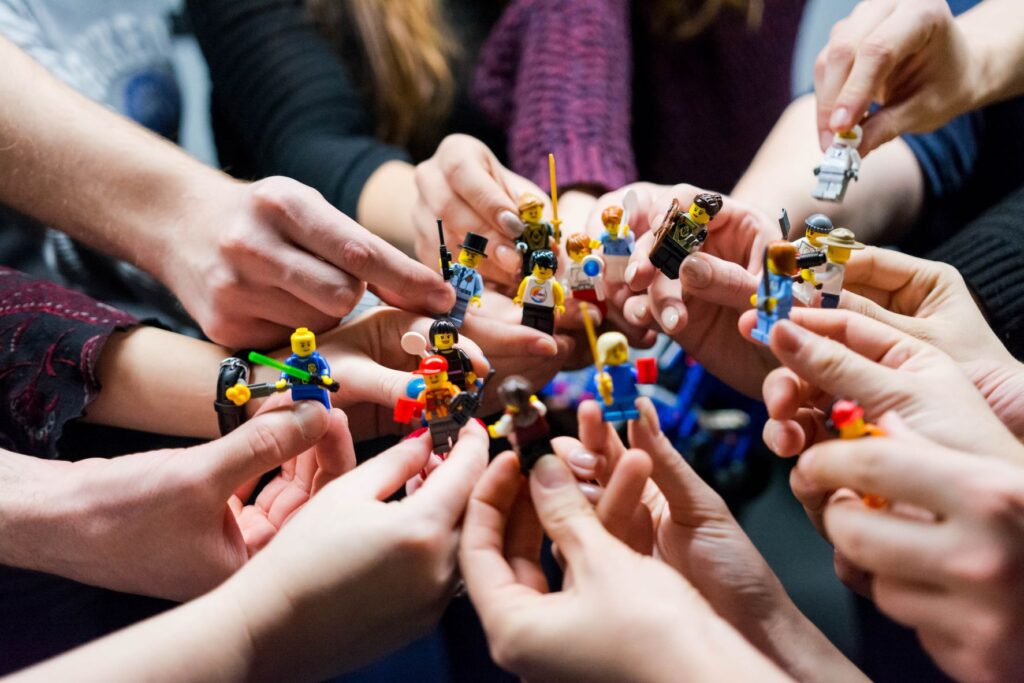
    Lego projects for STEM students
    Image courtesy of Unsplash

    LEGO projects are a fun and engaging way to incorporate STEM (science, technology, engineering, and math) learning into the classroom. Not only do they allow students to think creatively and problem solve, but they also provide hands-on learning opportunities that can make the material more relatable and memorable. Here are four smart ways to utilize LEGO projects in your students’ STEM learning for grades 3-5.

    1. Use LEGOs to teach mathematical concepts. LEGOs can be used to teach a wide range of mathematical concepts, from basic counting and measurement to more advanced concepts like geometry and fractions. For example, students can use LEGOs to build geometric shapes and explore their properties or use LEGOs to create a scale model of a building or structure and learn about measurement and proportion. Here is an NSTEM resource to get you started!
    2. Use LEGOs to teach engineering concepts. LEGOs are a great tool for teaching engineering concepts. Students can use LEGOs to design and build structures, machines and vehicles, learning about concepts like strength and stability, gears and pulleys, and simple machines. They can also learn about the design process and how to iterate and improve their designs. Here is an NSTEM resource to get you started!
    3. Use LEGOs to teach coding and computer programming. LEGOs can be used to teach coding and computer programming, as well. There are many different LEGO kits and software that allow students to create programs and code that control their LEGO creations. This is a great way to introduce students to the basics of coding and programming and how it can be used to control and manipulate real-world objects. Here is an NSTEM resource to get you started!
    4. Use LEGOs to teach scientific concepts. LEGOs can be used to teach a wide range of scientific concepts, from simple machines and forces to more advanced concepts like energy and motion. For example, students can use LEGOs to build simple machines and learn about how they work and how energy is transferred. They can also use LEGOs to build models of chemical reactions or physical phenomena, helping to bring abstract concepts to life. Here is an NSTEM resource to get you started!

    LEGO projects are a fun and engaging way to incorporate STEM learning into the classroom. They allow students to think creatively, problem solve and provide hands-on learning opportunities that can make the material more relatable and memorable. By using these four suggestions, you can help your students learn and grow in a fun and interactive way.

    By Lakshya Jain

    Do you want more resources on the topic of STEM projects? NSTEM’s vast resources database provides thousands of STEM resources that are searchable by category, school level and state. This comprehensive library includes info on enrichment activities, curricula, internships, scholarships and more. Check out a free sampling here. Or get an NSTEM membership today to unlock the complete list. 

    Grades 3-5 continue the STEM education journey, where students are interested in the natural world, in how things work, responding to stories told by teachers that give purpose and meaning to STEM disciplines, which molds them into thinkers, problem solvers and creators. The National STEM Honor Society sees grades 3-5 as a critical point in the NSTEM journey. To start your grade 3-5 chapter of the National STEM Honor Society, click here. 

  • 10 Exciting Math Competitions for Grades 3-5; Unleashing the Potential of Young Mathematicians

    10 Exciting Math Competitions for Grades 3-5; Unleashing the Potential of Young Mathematicians

    Young girl in grade 3-5 doing addition math on a whiteboard, preparing for a math competition.
    Photo courtesy of ParentMap

    Is your mathematics student already showing a competitive spark at 8, 9, 10 years old? A math competition might be just the outlet they need to put their talents on display. Competitions are not just for middle and high schoolers—a good number of math challenges exist for the elementary-school crowd. These matches are a good way for this age group to begin building skills like collaboration, confidence and critical thinking. Below, we have compiled a list of competitions available to students in grades 3-5.

    1. Perennial Math National Championship – https://perennialmath.com/

    Perennial Math hosts online competitions, live on-site tournaments and virtual tournaments for students in grades 3-12. Rules vary by each tournament, so check out the link above to learn more. There are two seasons for the online tournaments (Nov–Feb and Jan–Apr). The in-person tournaments take place throughout the year. All winners of on-site tournaments are invited to the National Championship, typically held in May. Team membership is available for $100.

    2. Art of Problem Solving (AoPS) – https://artofproblemsolving.com/online

    AoPS creates interactive educational opportunities for avid students of mathematics, including lots of activity in the competition arena. Check out the link above for a detailed compilation of contests—upcoming and past competitions, as well as results and practice problems.

    3. Mathematical Olympiads for Elementary and Middle School – https://moems.org/

    The MOEMS International Math Olympiad offers monthly math competitions for elementary school students in teams of up to 35. Schools, organizations and homeschool networks can register for these events and complete competitions in person or online. Participants in the Math Olympiad can win trophies and medals and connect with like-minded students around the globe.

    4. North South Foundation Math Bee –  http://northsouth.org/public/home

    Organized by the North South Foundation (NSF), NSF Math Bee is a national competition for children of the Indian American community. Launched in 2004, its goal is to better prepare children to take standardized tests such as PLUS, PSAT, SAT I, SAT II, and ACT. The competition is open to U.S. students from grades 1 to 8.

    5. Continental Mathematics League –  https://www.cmleague.com/product-category/cml/

    CML hosts contests for students in grades 2 through 12. CML helps students improve their problem-solving skills. Schools can enter their students in the meets and contests as part of larger teams. Students in grades 2 and 3 can enter three meets in a year. Students will be participating with other students on the same grade level from schools all over the U.S.

    6. Noetic Learning Math Contest –  https://noetic-learning.com/mathcontest/index.jsp

    Students have the chance to sharpen their problem-solving skills in a 20-question, 45-minute math extravaganza. The Noetic Learning Math Contest is offered both online and on site in schools. Participants compete for medals, honor roll recognition and bragging rights.

    Young girl smiling and pointing at a chalkboard filled with mathematical equations.
    Photo courtesy of Getty Images


    7. Math Kangaroo – https://mathkangaroo.org/mks/


    Mathematical Kangaroo is an international mathematical competition with over 50 participating countries. It is the largest competition for school students in the world, with over 5 million participants from 47 countries. There are 24 questions for students up to 4th grade, and 30 questions for students of the remaining grades. 

    8. RSM Foundation – https://www.rsmfoundation.org/programs

    The RSM Foundation’s International Math Contest (IMC) is a 30-minute online challenge based on leading math curricula from across the world. Participation in the challenge is free. You can opt in to receive a performance report, which provides your student’s score, placement, percentile, knowledge strengths, gaps as well as insight into their grasp of mathematical concepts mastered by their international peers.

    9. The Math League  https://www.mathleague.org/esevents.php

    Math League is a math competition for elementary school students in the U.S, Canada and around the globe. It offers students the opportunity to participate in an academically oriented activity and gain recognition for mathematical achievements. For fourth and fifth grade students, registrations are open until January 31, 2023 with the competition slated to take place in April.

    10. K-12 Game-a-thon

     https://www.mindresearch.org/gameathon

    The national K-12 Game-a-thon encourages students from pre-kindergarten to grade 12 to think critically and creatively to design a game that, in turn, solves a mathematical problem. One or more students, along with a teacher or parent as a coordinator, can invent card games, board games, apps or outdoor games.

    by Maureen Ryan Thorpe

    Do you want more resources on similar topics? NSTEM’s vast resources database provides thousands of STEM resources that are searchable by category, school level and state. This comprehensive library includes info on enrichment activities, curricula, internships, scholarships and more. Check out a free sampling here. Or get an NSTEM membership today to unlock the complete list. 

    Grades 3-5 continue the STEM education journey, where students are interested in the natural world, in how things work, responding to stories told by teachers that give purpose and meaning to STEM disciplines, molding them into thinkers, problem solvers and creators. The National STEM Honor Society sees grades 3-5 as a critical point in the NSTEM journey. To start your grade 3-5 chapter of the National STEM Honor Society, click here.

  • How To Integrate Useful Technology Into The Classroom To Better Promote STEM Learning

    How To Integrate Useful Technology Into The Classroom To Better Promote STEM Learning

    Over many years, technology has evolved from telegraphs and Gutenburg’s printing press, to highly advanced mobile phones that can send and receive data in seconds and 3-dimensional printing. These technologies and many others have changed our culture in tremendous ways.

    With the path of technology-integrated life comes technology-integrated learning. Many teachers have only been skimming the surface of all the technological capabilities made available to them and their students. 

    The technologies listed below are great for the students who are kinesthetic and visual learners! They are listed by grade level or you can click the category below that best represents your students!

    1. STEM Activities best for K-3:

    Early Engineering learning

    Grab some Legos, sculpture clay, gumdrops and toothpicks, pasta and glue, or whatever you have to spare in your classroom and get building! Your students will love the idea of getting to make (and possibly eat!) their own creations while learning the basics of engineering, architectural design, and science

    Picture by Victoria Wendish via unsplash.com

    Make it a competition and see which group of students can build the tallest structure, the sturdiest structure, or the most eye-pleasing design!

    Another Outlet to be electrifying in STEM

    These types of projects will light up (pun intended) your students’ faces when they get to play with molding dough as well as learn about electricity and how currents flow! This relatively cheap kit comes with all the things you need, including buzzers, colored LED’s, jumper wires, switches, and much more! This is also great for honing the students’ wild imagination with multiple easy-to-follow projects as examples to get you started!

    Picture via squishycircuits.com

    Become a Math Wiz

    From the description “Timez Attack is an educational game that helps children learn and memorise their multiplication tables. It’s a cartoony third-person 3D adventure game that calls on students to guide its green bug/dinosaur of a hero or heroine through a dangerous fantasy world. Along the way they’ll need to quickly solve multiplication puzzles of increasing difficulty in order to keep going. Everything from unlocking doors to boss fights is powered by mastering multiplication.”

    2. STEM Technologies best for 4-6:

    Easy Coding and Designing Resources

    Scratch is a kid-friendly website to get started in the realm of coding! It is also teacher friendly in the fact that it is free! The possibilities are endless with the projects your students can design with this drag-and-drop programming interface: from video games, animations, music, math problem-solvers, and much more! 

    Screenshot by Wilfried Elmenreich via opensource.com

    While having a 3-D printer in your classroom would be cool, knowing the workings and designing the 3-D printed objects would be even cooler! Integrating these things can help inspire your upcoming students to consider the roles and high-income careers of architectural design or mechanical or civil engineering! Want to take it a step further? Make it a strategic and gear-turning competition and have your students gather in groups to design the most useful and well designed object, with the most voted being created!

    3. STEM Technologies best for 7-12:

    Desmos has a multitude of capabilities including its own graphing calculator, matrix calculator, and a geometry tool. Desmos also has 7 different math-based games to choose from, dealing with subjects like lines, points, and parabolas

    Internet of Things Learning

    No, unfortunately it’s not an actual pie…Raspberry Pi is a palm-sized micro-computer that has various capabilities such as Bluetooth connectivity and wireless LAN. It can do most of what a regular computer can do and can be used for any subject you’re teaching! The best part is that any programming language which will compile for ARMv6 can be used with the Raspberry Pi.

     The older students will go crazy over these small yet powerful computers that can perform tasks such as browsing the internet, play HD video, and booting into linux on a SD card. Not into coding and just want learning experiences from it? No problem! Raspberry Pi offers many tutorials and walkthroughs to follow found here

    Picture by Max Alexander via amsat-uk.org

    Arduino is very similar to Raspberry Pi in the fact that it is a micro-computer. “Arduino is an open-source electronics platform based on easy-to-use hardware and software. It’s intended for anyone making interactive projects. Arduino senses the environment by receiving inputs from many sensors, and affects its surroundings by controlling lights, motors, and other actuators. You can tell your Arduino what to do by writing code in the Arduino programming language and using the Arduino development environment.”

    Now go on and let your students’ imaginations SOAR with all of these amazing STEM projects that you can integrate in your classroom to set your students on the right path in STEM for the future!

    Written by: Hope Deckard

    Your NSTEM Journey Begins Here!

  • STEM books for grades 3 to 6th

    STEM books for grades 3 to 6th

    Having trouble getting your children interested in STEM subjects? Reading is one of the best ways to get young children to learn and incorporating STEM into their reading can help get them excited about STEM subjects. Luckily, there are so many books available that can help teach them about STEM subjects in a fun and engaging way. Some publishers even make it easy to find STEM-related books by having an entire categorization for their STEM-related books, fictional and nonfictional alike.

    Image Credit

    Here are some STEM-related books for students in grades three through six to help get children started on their STEM journeys.

    1. Tiny Stitches: The Life of Medical Pioneer Vivien Thomas by Gwendolyn Hudson Hooks

    This nonfiction book, geared toward a 4th-grade reading level, deals with the science of surgical procedures and details the creation of the “Blalock-Taussig shunt,” a surgical technique developed in the 1940’s which increases blood flow to the lungs in certain cases. The procedure was developed by a surgeon named Vivien Thomas, who went uncredited for the procedure. Thomas had to fight discrimination and resistance from his colleagues for the recognition he deserved as a pioneer in medicine. If your child is interested in history, this book may be perfect for exposing them to the wonders of medical science!

    Link: https://www.leeandlow.com/books/tiny-stitches

    2. Prairie Dog Song by Susan L. Roth & Cindy Trumbore

    Does your kid love animals? This book is a great way to introduce them to the field of environmental science! It deals with the ways human activities can affect an ecosystem by describing how farmers and ranchers in the 1800’s completely altered the landscape of North American grasslands, which pushed animals like the prairie dog out. It goes on to celebrate the scientists who are working to bring back the healthy, majestic grasslands of North America.

    Link: https://www.leeandlow.com/books/prairie-dog-song

    3. Selvakumar Knew Better by Virginia Kroll

    For children who are extremely curious about natural disasters and the powerful forces of nature, this book is the one for them! It tells the inspiring story of how a family’s dog, named Selvakumar, saved a boy’s life from a tsunami in 2004. Children who read this will certainly be left wanting to learn more about plate tectonics, ocean waves, and the Earth in general.

    Link: https://www.leeandlow.com/books/selvakumar-knew-better

    Image Credit

    4. Honda: The Boy Who Dreamed of Cars by Mark Weston

    Everyone knows the name “Honda.” It’s a name that has become a dominating force in the automotive industry. But most people don’t know the history of the famous brand. Soichiro Honda was only seven years old when he first saw a car in 1914 rolling into his small Japanese town. From that moment on, young Soichiro would work hard to learn about automotive engineering and the science behind how cars work. As he grew up, he became an expert mechanic and developed a number of motorized vehicles. If your child is interested in cars or engineering, this book may just inspire them to become the next big innovator in mechanical engineering!

    Link: https://www.leeandlow.com/books/honda

    5. Tankborn by Karen Sandler

    This book for kids reading a sixth grade reading level is a science fiction novel about two Genetically Engineered Non-Humans (GEN’s) assigned to work for humans as slaves. As they investigate a series of disappearances, they unveil a shocking conspiracy. This book delves into themes of genetic engineering, a fast-evolving field of science that is explored in many science-fiction stories. For a child interested in mystery and suspense, this book is a great steppingstone for getting them interested in STEM fields!

    Link: https://www.leeandlow.com/books/tankborn

    It is never too late to introduce science to a child, and if you hand them a book that gets them interested in science, you could be starting them down a path that helps them change the world!

    Written by: Matthew Jenkins

    Date: May 2, 2022