Tag: Elementary School – 3rd through 5th Grade

  • Five Tips for Teaching Online Learning

    Five Tips for Teaching Online Learning

    COVID-19 has forced teachers to become Zoom Wizards and GoogleMeet Masters…or at least they’re trying. Teaching online, especially with younger students, is no easy feat. If you are nervous and worried about the effectiveness of teaching remotely, know that you are far from alone. 94% of teachers shifted to remote instruction during school closures and 77% of them stated they felt “stressed” by the task. If you fall into either of these two categories, read on for helpful tips.

    Use Variety

    As opposed to bouncing from room to room to attend their classes, students are clicking from tab to tab in online classrooms. Not only are they redundant, but they often bleed into one another due to the lack of transitions and change in scenery. To grab students’ attention, switch up your class structure. If you typically do lectures, incorporate an activity, demonstration, or video to liven your presentation. If your class is mainly discussion-based, give students time to write on their own. If teaching younger students, engage as many of their senses as possible. Perhaps start with a song and then exciting visuals, followed by a tactile activity they can do from home. By keeping students on their toes, they are far less likely to resign to the abyss of boredom which monotony can easily do.

    Carve Out Time to Speak with Students

    56% of students have reported heightened stress during the pandemic, and among those surveyed, Latino and Black students are experiencing strain at even higher rates of 63%. Students of all ages have missed out on material, valuable social interaction, extracurricular, and one of the most formative periods of their life. Not to mention that

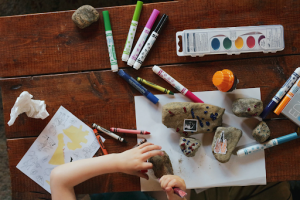
    Photo by Thomas Park

    many have suffered loss all around them, including within their home. It is easy to say this pandemic has hit everyone hard, but students especially have faced difficult obstacles in the last year. Sectioning off just a few minutes of your class time to check in with students may be the only time all week that someone is slowing down to assure they are doing okay. Make sure they are comfortable with the class’s pace, are not overwhelmed by the volume of work, have all the materials they need at home, etc. Not only will your students greatly appreciate you, but this time gives you insight into how well you are conducting your online class. Also give them space and freedom to speak generally about how they are managing, with regards to school or otherwise.

    Consider Open-Note Assessments, or Doing Away with Them Altogether

    Assuring integrity in online school is extremely difficult. Students have laptops, phones, tablets, and other gadgets that can lead them to nearly any answer. Instead of spending hours crafting the perfect test you believe cannot be cracked even by a computer, perhaps just allow students to use their notes and maybe even online resources. Just be sure to craft questions that require an extra layer of thought and force students to use what they previously learned to build their answers. If this process sounds like a hassle, consider saving your class time and instead assign projects, papers, and problem sets that can replace the testing portion of their grade. Teachers can take all the steps possible to eliminate cheating and make the tests equitable, but the truth of the matter is that the playing field will never be completely equal. Therefore, eliminating testing as a tool in your classroom may be one of the best ways to assure fairness.

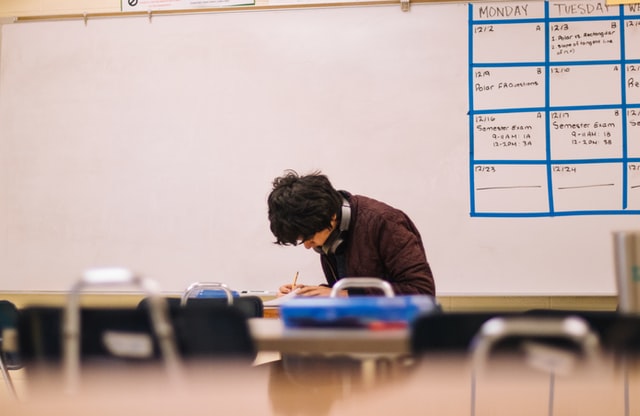
    Photo by Bruce Mars

    Stay Organized

    Some love learning online because it allows them to keep all their study materials in one place, on one device. For others, this situation presents a nightmare. The best way to aid all your students in their online learning is by staying organized. Create a classroom page where students can access all documents, sheets, and materials and have them listed chronologically by the date introduced. Be sure to have a calendar with class times, assignment due dates, and exam dates. If you offer office hours (which is a great bonus tip!), make that clear too. We have all frantically searched for a meeting link as our hearts pounded and the clock ticked. Alleviate this issue by having all links easily accessible at the top of your page. Also create an area dedicated to homework where you detail what is expected of them, where they should submit it, and when it is due. Parents will appreciate this level of organization as well because now it is much easier for them to assist with assignments and know that their child is staying on track.

    Use All Resources Available to You

    This pandemic presents a time to be creative and resourceful even with online learning. If you are lucky enough to have a tablet, consider propping it up and facing it downwards so that students can watch you write on paper. This tip is especially useful if walking students through a math or science problem, or teaching elementary school students to write. If you do not have a tablet, consider purchasing a whiteboard to prop on your wall and write, just as if you were back in the classroom. Lastly, if you cannot access either of these things, use the marker tool available on many video conferencing platforms to draw on your screen. Rely on videos you can find online to demonstrate what you can only show in a classroom. Spend time in an instructional class that teaches you all the features of your video conferencing platform. This will help you become comfortable using the chat box, breakout rooms, etc. Take advantage of the fact that now it is much easier to assist students individually and without distractions due to breakout rooms. Check out websites like this one, which compiles online learning resources for teachers of all grades. 

    Be sure to emphasize the benefits of online learning. Perhaps now you have to work fewer hours and can go to work in pajama pants. Remember that you can reach students more easily and see all their faces at once. And do not forget how lucky we are to have this technology at all. As much as we all wish to return to in-person learning, let’s not forget that there will likely be aspects of remote instruction that we will miss.

    Written by Lucy Reid Lucy Reid
    Your NSTEM Journey Begins Here!

  • How to Explain the Climate Crisis to Young Children

    How to Explain the Climate Crisis to Young Children

    Photo by Sigmund on Unsplash

    As global temperatures continue to increase, children must learn about how the planet is being affected by human activity and what they can do to help. As parents, we should use our knowledge to educate and bring awareness to our current climate crisis. If you are wondering how to do this, here are some tips on explaining the climate crisis to young children.

    Inspire Environmental Wonder

    Younger children will have some difficulty understanding topics like ocean acidification, greenhouse gases, and overconsumption, therefore, we should build up to the current climate crisis. Before diving into the discussion, teach them about the environment and its role in our daily lives. The environment has living things that grow when we take care of them. A great way to show this is by planting seeds and showing them the entire process. 

    Once they start caring for the plant, translate the meaning of the plant to the entire planet. Thus, the child knows that the Earth thrives when we take care of it. The environment, like the plant, must be taken care of and they can help to do that! 

    Give Examples

    Now that the little one is more excited about the planet, it is time to talk about the climate crisis. The way you tell them is entirely up to you. Children are different and process new information differently. However, here is the best way to do so without overwhelming the child (especially since they are currently living through a worldwide pandemic) – give them examples. Below are some ideas! 

    1. Greenhouse Effect – Bring them to a greenhouse or show them a picture. The main lesson is that the glass structure housing the plants traps sunlight and makes it hot. From there, you can bring it to a large scale. Humanity is doing the same thing when we burn fossil fuels, which release greenhouse gas emissions that trap sunlight in our atmosphere. 

    2. Going in the Highway – Drive them around a highway to actively show the burning of fossil fuels. The grayish color that comes out will be a great visual of what harming the environment looks like in real life. 

    3. Tracking Carbon Footprint – Start the activity by placing a “carbon footprint” in the middle of a large piece of paper. The carbon footprint would be made of the child’s black-painted foot since it would make the most sense to them. On one side, have them write everything that makes their footprint increase, and then write all the things that make the footprint go down on the other side. This activity is not only great for motor skills, but it also helps them associate actions with consequences.

    Focus on Action – and Hope

    Photo by Erika Giraud on Unsplash

    Focus on the action by teaching them that they have the opportunity to help the Earth. Giving them a sense of control over the situation might inspire them to learn more and become little environmentalists.

    This is probably the most important tip: Younger children have spent a good amount of time learning about a worldwide pandemic, and thus learning about another threat might cause some stress. Due to this, make sure that the child/children are emotionally ready to learn about the harsh realities of our current world. Remember, they can work with others to fix it.

    Always remember that children, despite their age, are more than capable of understanding complex topics when introduced properly to them. It is all about finding what makes them comfortable and what will help them.

    As the reader, take away what works best for your child/children! All children learn and process things differently.

    Best of luck to all of you! 

     Written by: Isamarie Hernandez Arroyo

    Your NSTEM Journey Begins Here!

  • How to Lead Your Elementary Students Through the Engineering Design Process

    How to Lead Your Elementary Students Through the Engineering Design Process

    Do you find it difficult to introduce a confusing process to elementary students? The engineering design process is difficult to introduce to elementary students due to its complexity. Here are a few ways that the engineering design process can be introduced to elementary students.

    Photo by Daria Nepriakhina

    The Design Process Steps

    The engineering design process has six steps. The first step in the engineering design process is  to ask the student to identify the problem. Imagine is the second step of the process, where the student is tasked with thinking about solutions to the problem and researching ways to solve that problem. Planning is the third step in the engineering design process. This step has students narrow their list of ideas to about three and begin to make their final decision and sketches of that design. Create is the fourth step in the process where students create a model that fits with their design from the planning step. Test is the fifth step. This is where the students collect data and test the design, then analyze the data and the strengths and weaknesses of the design. Improvement is the final step where students reflect on their results to make their design better. 

    How to Help Students with the Design Process

    The students should always be engaged with the material. Introduce the engineering design process to the students by giving them examples or a video that they can watch. NASA has an introduction video that explains the engineering design process and videos for each step of the process. NASA also has activity guides to assist teachers in teaching the process to students for grades K-2, 3-5, and 6-8. Additionally, there are numerous videos that are online that teachers can show to the students to help them understand the engineering design process. Teach Engineering has a whole curriculum that can help teachers when teaching the engineering design process.

    Photo by Clayton Robbins

    Encourage the students to use the engineering design process with the use of projects. There are sources for teachers to use to access project ideas. Students can use the engineering design process to build a balloon car. Projects like these will help students learn and experience what it is like to use this process as a way of thinking. Another project that students can do would be the egg drop project. This project has students use the engineering design process to build a device to prevent the egg from breaking when it is dropped. Students would need raw eggs, egg cartons,  packing, recyclable materials, cardboard, cotton balls, straws, pipe cleaners, wooden skewers, rubber bands, string and plastic bags if they want parachutes, and test eggs which could be plastic eggs or hard-boiled eggs. Once students have built their design, the design will need to be dropped from a high location. There are plenty of examples of projects that teachers can use in their classroom to help the students understand the engineering design process. 

    Written by Lee Metoyer

    Your NSTEM Journey Begins Here!

  • How COVID-19 Negatively Impacted Students’ Health

    How COVID-19 Negatively Impacted Students’ Health

    Image Credits

    Coronavirus has forced people worldwide to create extraordinary solutions, but students have had to perform the impossible, using virtual and even socially distanced learning to work through extraordinary circumstances! Aside from their workload and long days of classes, living through such an unusual time has put a lot of pressure on students’ mental and physical health. During such an important period in their lives, it is essential for steps to be taken to improve their impacted health and academics.

    School During the Pandemic

    Schools have had to adapt their teaching methods constantly as social distancing protocols change. When schools had to close and move entirely to remote learning, it was difficult for the teachers to sort out their curriculum and for the students to access or understand technology. Using technology constantly, with little movement and face-to-face interaction, was a huge detriment to the students’ well-being. Later on, as many students transitioned back to in-person learning, following COVID requirements and readjusting to the unstable learning environment was a new challenge for students’ abilities to focus. 

    Image Credits

    Mental Health

    Aside from the challenges of surviving the global pandemic itself, learning in an unusual space has been its own challenge. Many students have experienced loneliness, a lack of focus, increased stress, and a general decline in mental health. About 56% of young adults reported symptoms of anxiety or depression over the past year. The incorporation of in-person learning has had a positive impact, but excessive screen time and social distancing requirements have made it more difficult to socialize with one another and interact with their teachers as well. 

    Physical Health

    Image Credits

    Although a majority of students usually participate in some form of physical activity, online learning from home and lockdown has made it difficult for students to move as much as during a regular school day. In addition, limitation of intramural sporting events and school sports has made it harder for students to both socialize outside of classes and engage in a healthy amount of physical activity. As restrictions are lifted in many places, there are increasing opportunities for students to exercise, but social distancing and rescheduling are only a few of the obstacles standing in their way. 

    There have been many difficulties for students working through these unprecedented times, but they have been working to overcome the hurdles in their way and create new forms of learning, like Zoom and Google Meets. Students and teachers alike have been working towards improvement that has been necessary since before the pandemic. As the world continues to deal with the effects of the coronavirus, students will continue to be impacted negatively but there will also definitely be positive changes for students around the world as well.

    Written By : Emma Schlosser

    Your NSTEM Journey Begins Here!

  • Winter Water Magic:  3 STEM Activities for Grades K-5

    Winter Water Magic: 3 STEM Activities for Grades K-5

    Photo Courtesy of Pixabay

    As we inch closer to a new year and another winter break, we at NSTEM want to ensure that you are making the best of your time together while taking a little time to enjoy the season. Engaging your students in the science behind snow, snowflakes, and ice can be a fun pathway to STEM learning outcomes while staving off the winter blues. We at NSTEM encourage you to be the spark that ignites curiosity and interest in your winter world, no matter the temperature outside! 

    1. What Makes It Snow

    This activity from the American Chemical Society is designed for kindergarten students and is estimated to take a class period to complete. Using a minimal supply list of cotton swabs, construction paper, and glue, your students will make a model of a six-sided snowflake to understand water in its solid form and how water forms in clouds. This lesson will introduce your students to STEM learning outcomes by investigating nephrology (the study of clouds and temperature) and hydrology. This plan also includes a winter-themed reading list to excite you and your students for some cozy winter story times no matter what’s happening outside!

    2. Snowflake Shapes Activity

    This activity from The Smithsonian Institution Archives is designed to demonstrate categories of snowflakes and how they form. This lesson is designed to take 45 minutes to an hour to complete and only requires minimal supplies (cardboard, glue, and a little bit of velvet fabric). Although this challenge is designed for grades 3-6, it can be easily adapted for a younger audience. Try performing the outdoor exercise as a demonstration instead of small groups, making one single board for your students to share (if you need to stay indoors, gather some snowflakes on a board, take pictures with your phone, and create a slideshow of your samples that can be used for future reference). Emphasizing the final classroom exercise can be a festive way to introduce students to STEM learning objectives by exploring basic shapes through observational and comparative analysis.

    3. Snowman Survival Challenge

    In this Oak Ridge Institute for Science & Education lesson, students will work individually and collaboratively to design and test an insulator for a ‘snowman.’ In this experiment, each group will be assigned a ‘snowman’ with three ice cubes sealed in a plastic bag. This lesson is designed to take three sessions, each estimated to take around 40 minutes, during which students will be introduced to STEM learning processes by using the scientific method to explore heat energy and thermal transference. Although this lesson is designed to target 3rd-grade students, it can also be adjusted for a younger audience by demonstrating the outdoor challenge for the entire class instead of small groups. Be sure to check out the suggested class reading (“The Snowman” by Raymond Briggs) for a full cozy/winter effect. 

    At NSTEM, we believe learning and teaching should be equitable for all. Therefore, our featured activities and lesson plans are free to use and require minimal supplies to enjoy. We also believe that lesson plans and activities should meet the needs of both you and your students, so our featured list allows for simple modifications to better serve the needs of younger or more advanced audiences. So stay warm out there and have a winter-themed blast-and-a-half this season!

    By Rosalinda Cardoso

    Do you want more resources on the topic of Winter STEM activities? NSTEM’s vast resources database provides thousands of searchable STEM resources by category, school level, and state. This comprehensive library includes info on enrichment activities, curricula, internships, scholarships, and more. Check out a free sampling here. Or get an NSTEM membership today to unlock the complete list. 

    Grades K-2 are where it all starts with STEM education. The National STEM Honor Society focuses on “From Pre-K to Career, NSTEM from the Start!” To start your K-2 Chapter of the National STEM Honor Society, click here. Grades 3-5 continue the STEM education journey, where students are interested in the natural world and in how things work, responding to stories told by teachers that give purpose and meaning to STEM disciplines, which molds them into thinkers, problem solvers, and creators. The National STEM Honor Society sees grades 3-5 as a critical point in the NSTEM journey. To start your grade 3-5 chapter of the National STEM Honor Society, click here.

  • 4 STEM-tacular Fall Activities for K-12 Students

    4 STEM-tacular Fall Activities for K-12 Students


    Photo Courtesy of Unsplash

    At NSTEM, we know that any tools and essential life skills learned today can become the bedrock of a student’s foundation for a lifetime; we understand the importance of engaging students safely outdoors. We also want to help you celebrate the season by giving all of your K-12 students (Regardless of secular or religious affiliations) pumpkin to talk about this fall season! So roll up those sleeves and have a gourd-geous day exploring pumpkins with your mad scientists while introducing them to advanced K-12 STEM theories and concepts. 

    1. Exploring the Life Cycle of Pumpkin – Early Elementary (K-2)

    This activity, provided by K6edu.com, will take approximately two days to complete, but don’t be afraid to adapt this to suit your schedule, budget, and available materials. This lesson will develop several STEM skills, such as critical thinking, curiosity, and real-world applications of scientific concepts and theories. The first day of this activity will include a story, group discussion, and a hands-on activity where students will investigate pumpkin seeds and prepare them for observation on the second day. The following day, students will investigate opened pumpkin seeds to further their knowledge of the pumpkin life cycle and other similar organic processes while planting a seed for future observations.

    Link to activity: https://www.k6edu.com/wp-content/uploads/2018/07/Pumpkin-Life-Cycle-Lesson-Plan-PDF.pdf

    2. Agriculture In The Classroom – Elementary School (3-5)

    This activity from National Agriculture in the Classroom is estimated to take approximately two hours to complete and includes four activities to choose from, including two worksheets and two hands-on experiments. Students will collaborate during a hands-on activity growing pumpkin seeds to further study plants’ life cycles in real time. This activity will culminate in a food science experiment where your students will make a batch of pumpkin pie in a bag! We know it’s easy to win over students with edible experiments, but for those with food restrictions, no worries, you can easily skip this activity and feed their curiosity for growing, planting, and decorating gourds instead! 

    Link to activity: https://agclassroom.org/matrix/lesson/131/

    3. Exploding Pumpkin – Middle School (Grades 6-8)

    This activity from Illinois Agriculture in the Classroom is estimated to take 1 hour (Recommended as two 30-minute sessions) and will further your students understanding of chemical reactions. In this demonstration, students will use pumpkins, hydrogen peroxide, and yeast to study exothermic reactions. This demonstration can also be done for the class or in small groups (Depending on the academic needs of your group).

    Link to activity: https://beyondthebarndoor.wordpress.com/wp-content/uploads/2020/10/exploding-pumpkin-1.pdf

    4. Pumpkin Observation Project – High School (Grades 9-12)

    This activity from Northern Illinois University has excellent tips for adapting this lesson to the needs of your students or your class content. Although it will take less than 30 minutes to set up, you will need to decide how much time you want to dedicate (Allowing time for decomposition and the final analysis of the experiment). This lesson can be a great one for true crime lovers interested in forensic science, as it will introduce science and mathematics concepts to understand further advanced concepts like decay and energy rates and long-term qualitative data collection!

    Link to activity: https://niusteam.niu.edu/october-pumpkin-project-for-grades-6-12/

    This collection of activities is designed to be adapted to the needs of your students, so feel free to get creative and cater to the creative side of your future scientists. These lessons can also be an excellent opportunity to introduce your future scientists to unique STEM careers and theorists of sensory scientists, forensic anthropologists, epidemiologists, or plant pathologists! At NSTEM, we believe that you can inspire a new generation of STEM careers tomorrow by having fun today!

    By Rosalinda Cardoso


    Do you want more resources on the topic of fall STEM activities for K-12? NSTEM’s vast resources database provides thousands of searchable STEM resources by category, school level, and state. This comprehensive library includes info on enrichment activities, curricula, internships, scholarships, and more. Check out a free sampling here. Or get an NSTEM membership today to unlock the complete list.

    Project-based learning enrichment provides high school students with college and career readiness. It gives them real-world relevance, transforming students into collaborators and imaginative problem solvers. They will gain the upper hand in a global landscape, stemming from enhanced confidence and grit. NSTEM provides these young STEM enthusiasts with a close community of like-minded fellow students and educators.  To start your 9-12 Chapter of the National STEM Honor Society, click here.