The first way to make the classroom more eco-friendly is to reduce the amount of waste you’re creating. In a classroom, waste gets produced quickly through paperwork, material, or food packaging. According to Solo Resource Recovery, it’s important to reduce your waste in order to conserve landfill space, conserve resources, and most of all save energy. For those curious about how much waste is generated, try creating a trash tracker for your classroom! For every piece of trash, mark it down and count up how many marks you have at the end of the week. This information will make everyone more aware about the idea of waste elimination and can inspire people to start making a change. Instead of bringing your lunch in different bags everyday, maybe switch to a reusable lunch box. A fun way to reduce paper waste is to create a scrap paper box using an old cardboard box. With this, students will have scrap paper available for note taking, classwork, and projects!
Reuse
The next and biggest way to cut down on waste in the classroom is to reuse! As mentioned above, bringing lunch in a reusable box is an easy way to eliminate waste. Similarly, instead of buying water bottles to bring, invest in a reusable water bottle and utilize water fountains around the school. Another way to reuse is through school supplies. Rather than buying a new set of scissors or colored pencils every year, try to hold on to them for the next school year or even donate them to the school for someone else to use. For teachers, a way to reduce paper waste is to print out assignments and laminate them. With this, less paper will be used because students can share and they can be reused multiple times!
Recycle
The final step, and the one most people are familiar with, is recycling! In order to recycle properly, it’s important to know what is recyclable. Some items in a typical classroom that are recyclable are cardboard, magazines, paper, plastic bottles, plastic bags, and aluminum cans. To identify where you can recycle these items, look for blue trash cans with the recycle symbol on them. According to A Union of Professionals, even recycling just one glass bottle can save enough energy to power a lightbulb for four hours.
Now that you’ve learned about how you can help save the environment through your school, go forth and show it off! If you enjoyed these tips, you can check out other blogs at https://nstem.org/staging/blog/
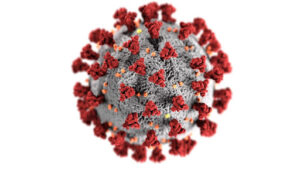
The Coronavirus pandemic has created many changes and new norms for our society. Although many people have been vaccinated in the past for a variety of diseases, the vaccines used to prevent COVID-19 have more buzz around them than has been seen in a long time. Discussions about different vaccination brands, getting one or two doses, and political conflicts around the vaccine have become a regular occurrence. With false information constantly being thrown around as facts, it is important to keep yourself and your family informed. Here are a few facts about the COVID vaccine to make sure your children know before they get confused by misinformation.
One of the biggest debates around the vaccine comes from a disagreement about if taking the vaccine is safe and effective or if it is useless and potentially dangerous. It is important for children to know that modern science has supported vaccinations for decades as preventative protection against disease that incorporates our understanding of both the human body’s defense system and viruses. According to the CDC, the basic biology behind these concepts is that viruses enter the body as germs that attack our cells and multiply. When this happens, our white blood cells are able to fight these germs in several ways, though it takes time for them to learn how to do so. Once these cells figure out how to fight the virus however, they never forget and are able to fight it off much more easily in the future. When explaining this concept to your children, it might be helpful to describe this as a story of good versus evil, with the big bad germs attacking our innocent cells.
A vaccination introduces a weakened variation of a virus (in this case COVID-19) into your bloodstream, allowing the white blood cells to familiarize themselves with it. The version of the virus that is exposed to your system is safe and has been carefully measured and studied. Although it will not be enough to actually make you fully sick, you may experience slight symptoms for a day or two as your body learns how to fight the germs. After your white blood cells know how to fight off the COVID-19 virus, they will remember and be able to respond quickly and effectively if the virus ever returns.
Vaccine Brands
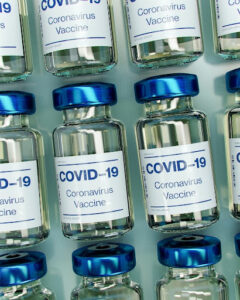
Another major difference between the COVID-19 vaccine and previous vaccines is that the general public knows that several companies are making slightly different vaccines. In the United States, the most common brands are Pfizer, Moderna, and Johnson and Johnson (J&J). These names have become so well-known that it is likely your kids have already heard of them and know they are related to the coronavirus. Although all three of these companies’ vaccines are safe, effective, and FDA approved, there are some differences between them.
One of the most noticeable inconsistencies is that while the Pfizer and Moderna vaccines require two doses, the J&J vaccine only requires one. You can explain this to your children by simply telling them that the vaccines interact differently with the body and Pfizer and Moderna require more exposure to deliver full protection. According to Yale Medicine, another difference is that Pfizer and Moderna have been observed to be slightly more effective, with 95% and 94.1% efficacy respectively, as opposed to the J&J vaccine that has a protection effectiveness of 72%. Despite this, the J&J vaccine is the easiest to transport and store, while Pfizer is the most difficult to work with, showing that there are costs and benefits with each option. Additionally, Pfizer is the only vaccine that is recommended for those under the age of 18. This is an important point to take into account when deciding which brand is the best for your family.
When discussing the COVID-19 vaccine to your children, it is important to acknowledge the social responsibility one bears to protect themselves and others from the virus. When getting vaccinated, an individual is not only benefiting themselves, but they are helping their family and friends to get through the pandemic. This can be understood through the context of herd immunity, a concept stating that when a large percentage of the population becomes immune to a disease or virus, the likelihood of that illness spreading and thriving decreases dramatically. Thus, when your children are getting vaccinated, they are helping protect themselves, their families, their schools, and the larger surrounding community as well.
As the pandemic approaches its conclusion, it is important to be able to decipher between facts and fiction, and it is crucial that your children can do so too. Helping your kids understand that vaccines are helpful and effective and ensuring that they receive a vaccination themselves makes the world a safer place. Keep yourself informed so you can answer any questions your children may have, while keeping them and the rest of your family protected.
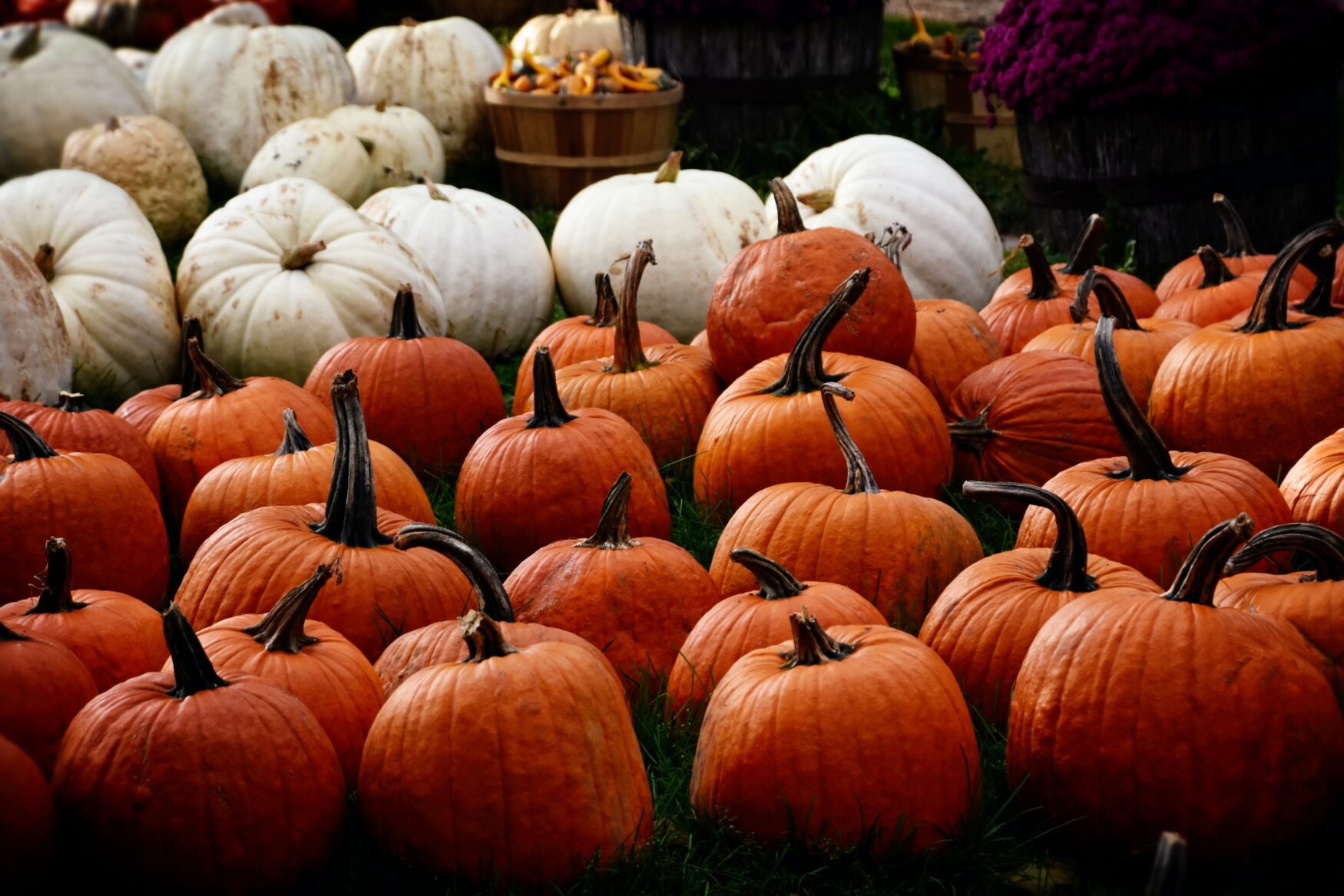
Now that October is finally here, it’s time to prepare for Halloween! What better way to celebrate than to do some fun and easy halloween-themed STEM activities?! Projects should never be exclusive to only kids, so we found some that can involve students of all ages. Through project-based learning, students can learn in a hands-on environment, and it makes their education fun!
First on the list is spooky slime! This project is perfect to get elementary school students thinking about chemicals and velocity. This activity will show you how to make ghost, pumpkin, and frankenstein themed slime. For each batch of slime, the ingredients call for:
6 oz. of white Elmer’s glue
Orange and green food coloring
1/2 teaspoon of baking soda
1½ tablespoons of contact lens solution
It must have boric acid in it! This is what interacts with the glue to form the slime.
¼ cup of Water (if you want to make your slime stretchy!)
Tiny mason jars, black felt, googly eyes, and hot glue (make sure there is an adult around for hot glue!)
To make spooky slime, you want to first get three different bowls to mix everything in together. Pour 6 oz of glue into each bowl. Then mix your green food coloring into one bowl of glue, and do the same with the orange food coloring. Mix up your slime and get it to the shade you want! Add your 1/2 teaspoon of baking soda into each bowl and mix in thoroughly. If you want stretchier slime, this is where you add ¼ cup of water!
Finally, add in your contact solution. It’s important to do this part slowly, because if you add too much it can make your slime hard. If you don’t add enough, though, it might make your slime too sticky! While you mix your slime, you can start to use your hands to knead it to really get the right consistency.
Optional: when your slime is finished, you can put them into mason jars for storage and decoration! This part should be done with an adult because it requires hot glue.
For your ghost (white) slime, just hot glue googly eyes onto the jar.
For your pumpkin (orange) slime, cut out a pumpkin face with black felt and glue googly eyes.
For frankenstein (green) slime, cut out black felt hair and glue googly eyes.
This next activity is perfect to get students thinking about engineering. Pumpkin catapults are great projects for home and school. To do this project, you will need:
7 wide craft sticks (easier to hold)
4 rubber bands
1 small cup (the website uses the top to a juice container)
A hot glue gun (Make sure an adult is around for this part!)
A bag of pumpkin candy corn (or enough candy for everyone involved)
To make a pumpkin catapult, you first need to stack 5 of your craft sticks together and wrap a rubber band onto each side of the sticks. This is the base and fulcrum of the catapult and it will allow a lever to pivot.
Next, stack the 2 remaining craft sticks and bind those together with one rubber band at the end. On the binded end, pry open the sticks (in a “V” shape) and place your stack of 5 sticks at the bottom of the “V”; use your last rubber band to bind everything together.
Finally, with an adult, hot glue the small cup onto the top of the stick, this is where your pumpkin will go). Make sure you leave room to push your stick down to create the catapult effect.
After completing all of these steps, you should have a functional pumpkin catapult. Now, it’s time to launch the candy! Place a piece of candy into your cup, press the end of the stick down, then let it launch!
Click the link on the project title to find ways to fine tune your catapult and play games with this project!
This final project is a bit more advanced than the other two, so it’s best for highschool students! Through this activity, students will get a chance to learn about technology through the process of wiring and lighting their t-shirt up with a pumpkin design.
The supplies needed for this project are:
16.4 feet of El Wire – This is available on Amazon.
Plastic canvas – This can be purchased at any craft store!
2 AA Batteries – For the el wire!
Black or dark electrical tape
Orange t-shirt – Thinner material is better!
4 Safety pins
A Sharpie
A pair of Scissors
Pen or pencil
A sheet of paper
After gathering your supplies, you want to use your paper and pen or pencil to sketch out your pumpkins. Don’t be afraid to get creative, just make sure to get extra lights if you want to fully illuminate your design.
Next, trim your canvas down so it will fit on your t-shirt. Pick the design you want on your shirt, and sketch it onto the canvas (place paper under the canvas so it doesn’t stain!). Also, don’t worry if you mess up some, this sketch will be hidden, it is to give you an idea of how you want your lights.
Now, onto the fun part! Get your El Wire and tape off at least 6 to 9 inches of it, this is to prevent anything you don’t like from shining. Next, thread your wire through your canvas, making sure to follow the outline of your design. Once you get the perimeter of the pumpkin, check to make sure the wire fits snug.
After that, flip over your canvas and attach the wire to the mouth. Follow the same steps with the perimeter, outline the mouth with your wire, and be sure to cover any wire you don’t want showing with electrical tape. Repeat these steps with every addition to your pumpkin (eyes, teeth, etc).
Once you’re done, if you decide you want more to add. Go for it! If you don’t have anything else to add, you can trip and/or tape it up.
To add this design to your shirt, turn the shirt inside out and place your canvas face-side down. Using safety pins, pin each corner and add additional pins if your work is heavier. Finally, turn your shirt right-side out, turn the lights down, and turn your shirt on!
Optional: If you want your design to illuminate brighter, you can go back and add more el wire!
There you have it, three Halloween themed STEM projects for students of all ages to explore and enjoy.
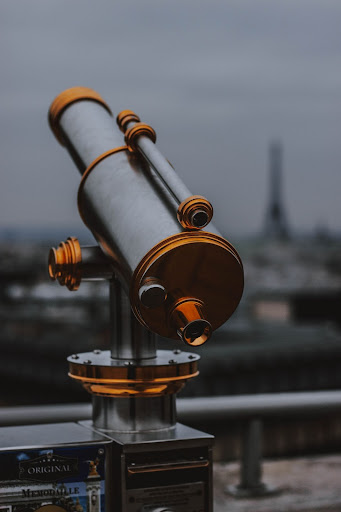
There is so much you can learn about space and where we are in the universe without ever having to leave Earth. With the help of telescopes, people have gotten a much closer look at all those little dots in the sky. It turns out that they are not little holes in a big blanket covering Earth, but actually stars, planets, and galaxies.
Telescopes come in all sizes, from small and personal to absolutely gigantic. Different telescopes can detect visible light, radio, and even x-rays. There is a telescope for every job and there is a lot of work to do so let’s get going!
Optical Telescopes
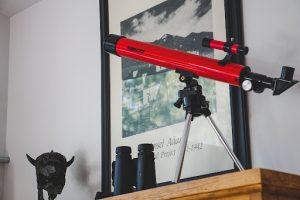
The most common type of telescopes are optical telescopes. This means that they collect visible light to create a large, detailed image. There are two types of optical telescopes: refracting and reflecting. The less common of the two, refracting telescopes, use a lens to focus the light that passes through it in a very similar way to glasses you wear. So in a way, you have two low power telescopes right on your face! The more common optical telescopes use mirrors to bounce and focus light. While refracting telescopes tend to be small due to how much heavier lenses are to mirrors, reflecting telescopes can be small or very, very big.
Telescopes are measured by how large the collection surface is. The largest optical reflecting telescope in the world is the Gran Telescopio Canarias in the Canary Islands with a colossal area of 10.4-meters or 34 feet. There’s no way you could fit that in your living room! That is not to say that you couldn’t find yourself a decent telescope and make your own discoveries with an optical telescope.
Here is a guide to help get your stargazing started.
Radio Telescopes
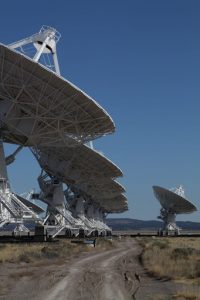
If you thought optical telescopes were big, then you aren’t ready for radio telescopes! Radio telescopes work similarly to optical telescopes. They collect and focus radio waves that can then be studied to tell us information we could never see with our eyes.
The difference between these telescopes and optical telescopes is mostly size and materials. Radio waves are much longer than light waves which means that in order to catch them, you’re going to need a bigger net! Mirrors and lenses are not used on radio telescopes because radio waves do not need a smooth, reflective surface to be captured the same way light is captured.
There are many advantages to being located above the atmosphere. Most obviously, telescopes in space do not have to wait until night time to collect data and are not affected by bad weather. Infrared and ultraviolet light are blocked by the atmosphere and thus can only be collected in space. Also, the atmosphere distorts visible light as well so a clearer picture can be made from space.
Telescopes are an astronomers best friend. An essential tool of the trade, every aspiring astronomer needs their own telescope. Every telescope is different so take some time to get to know yours and who knows, you might just make a discovery that changes the way we look at the night sky.
Powerful pulleys
Length: 30 minutes
This lesson students get to explore how pulleys work in the context of pyramid building. Using a pre lesson assessment to have students brainstorm what simple machines are and why are they important, along with a (KWL) chart to help students on a new topic. Subject areas included here are geometry, science, technology and engineering. Introducing simple machines intrigues students by showing how they were used to build the pyramids. The lesson includes a classroom demonstration with two brooms, approximately 6 meters of rope and three students. The associated activity uses common materials to demonstrate fixed and movable pulleys, with a video to aid in understanding. The post lesson assessment includes finishing the (KWL) chart. This mini lesson is a great STEM lesson on simple machines.
The Sky and Dichotomous Key
Length: 30 minutes- 1 hour
This is a great lesson for students with their head in the clouds, with topics on earth science and engineering. This NASA lesson includes all materials needed to complete the lesson. Some vocabulary for this lesson includes cirrus, cirrostratus, stratus, and every type of cloud. This is a great opportunity for students to make observations and ask questions. This activity also gets students outside of the classroom to look at the clouds and identify them. On the GLOBE S’COOL website, you can input students’ data to create a whole class graph that can be recorded once or continued over time.
Save our shore
Length: 50- 120 minutes
Greening STEM with this lesson teaches the importance of engineering in the protection of our environment. This lesson goes more depth with the role of policy in developing solutions. There are more materials needed for this lesson than most. There are five parts to this lesson; the Scenario, set up standardized wave tanks, develop your management plan, and communicate management plan. Students will learn how shoreline erosion works and the impacts that come with it. Then students come up with a management plan to solve the problem. This activity fosters problem solving and is a great project-based learning lesson.
Move Your Muscles
Length: 15 minutes
Students get to learn about muscles in the human body with this biology focused lesson. Connect this lesson to engineering by introducing it with how astronauts stay healthy while in space, where they are more susceptible to losing muscle. Two activities in this lesson include students trying different exercises to learn more about their muscles, the other letting students investigate muscles and how they are used. Vocabulary included in this lesson includes many different muscles. This lesson gives space for class discussion that allows students to explore the new topic.
Ocean World
Length: less than 30 minutes
This lesson allows students to toss an inflatable globe and collect data on if there is more surface water or labs on planet earth. The NASA site gives all the materials needed and downloadable PDFs. Students will learn about the different types of surface water, different forms of water, and the oceans. Topics covered include data collection, earth science, and probability. This is a great mini lesson that is hands-on and is able to be extended if preferred by going more in depth on the topic with the provided extension links.