Author: webmaster

  • Introduce a Girl to Engineering Day

    Introduce a Girl to Engineering Day

    February 24th is national Introduce a Girl to Engineering Day! It’s an entire day dedicated to inspiring young women to pursue a future in engineering. The number of girls entering engineering fields has increased over the years, but in 2019, only 15 percent of those working in engineering occupations were women! So, to celebrate this holiday, here are some ideas to get girls interested in a future in engineering.

    Image credit
     Image Credit

    1. Teach them about famous female engineers

    • An important part of inspiring any young person is giving them a role model to look up to. To get young girls interested in engineering, it’s important to show them the amazing women who were pioneers in their field. Here are some great examples to get them started:
    • Edith Clarke – The first woman to ever receive a degree in electrical engineering from the Massachusetts Institute of Technology. She went on to become an inventor while working at General Electric, and she  invented the Clarke Calculator. She also became the first female Professor of Electrical Engineering in the United States.
    • Hedy Lamarr – An Austrian-American film actress whose appearance inspired the design of Disney’s Snow White. Despite her fame,Lamarr disliked the celebrity lifestyle and had dreams of becoming an inventor. During WWII, she helped to develop a form of transmission known as “signal hopping.” Her invention would act as an important precursor to Bluetooth and WiFi technologies.
    • Stephanie Kwolek – In 1965, while working for the DuPont company, Stephanie Kwolek discovered Kevlar, one of the strongest synthetic fibers. It’s the material that most bulletproof vests are made out of!
    • Hertha Ayrton – In WWI, when the German army began using poison gasses on the battlefield, Hertha Ayrton developed a fan that created a vortex and would push poison gasses out of the trenches. Her invention saved countless lives on the battlefield.


    2. Help them to explore different engineering careers

    Oftentimes, young people don’t know all the possible careers they can pursue in engineering, and they miss out on jobs that would interest them. Here are a few careers that may inspire young women to learn more about engineering.

    Image Credit
    Image Credit
    • Driving NASA’s rovers – Working for NASA is about more than just being an astronaut. NASA’s engineers are able to do so many amazing things from Earth, too! Imagine being able to operate a rover on Mars, taking photographs of the planet’s surface and collecting rock samples!
    • Architectural Engineering – For young girls who want to utilize their creativity while pursuing a career in engineering, architectural engineering may be the job for them! Being able to design a building and understand how all the pieces fit together is an advanced skill that could make for an interesting and fun career path.
    • Sports Engineering – Athletics are a huge part of childrens’ lives. Not only do many girls look up to sports stars and Olympians as role models, many also have dreams of becoming athletes themselves. But athletics and engineering are not completely separate from one another. Sports engineers can do anything from designing better sports equipment to improving athletic performance, all with their knowledge of math and science.

    Girls and women are the future of STEM and engineering, and by introducing a girl to engineering, you may be setting them on a path to becoming a role model who will inspire others just like them. So make the most out of this year’s National Introduce a Girl to Engineering Day, and help a girl realize her dream!


    Sources:

    Statistic about number of women in Engineering:

    https://www.census.gov/library/stories/2021/01/women-making-gains-in-stem-occupations-but-still-underrepresented.html

    Edith Clarke information:

    https://edisontechcenter.org/Clarke.html

    Hedy Lamarr information:

    https://www.smithsonianmag.com/smithsonian-institution/thank-world-war-ii-era-film-star-your-wi-fi-180971584/

    Stephanie Kwolek information:

    https://www.sciencehistory.org/historical-profile/stephanie-l-kwolek

    Hertha Ayrton information:

    http://journal.sciencemuseum.org.uk/browse/issue-10/the-life-and-material-culture-of-hertha-ayrton/quite-a-flap-the-development-of-the-ayrton-anti-gas-fan-during-the-first-world-war/

    https://massivesci.com/articles/hertha-ayrton-mathematics-bodichon-electric-arc/


    Written by: Matthew Jenkins

    Date: 02/19/2022

  • Cutting Down Waste In The Classroom!

    Have you ever sat back to think about how much waste occurs within your class? A Union of Professionals found that 4.7 pounds of waste is generated every single day, with a majority of that waste coming from schools. Check out these tips to help minimize the utilization of the three R’s in waste management: Reduce, Reuse, and Recycle! 

    Reduce

    The first way to make the classroom more eco-friendly is to reduce the amount of waste you’re creating. In a classroom, waste gets produced quickly through paperwork, material, or food packaging. According to Solo Resource Recovery, it’s important to reduce your waste in order to conserve landfill space, conserve resources, and most of all save energy. For those curious about how much waste is generated, try creating a trash tracker for your classroom! For every piece of trash, mark it down and count up how many marks you have at the end of the week. This information will make everyone more aware about the idea of waste elimination and can inspire people to start making a change. Instead of bringing your lunch in different bags everyday, maybe switch to a reusable lunch box. A fun way to reduce paper waste is to create a scrap paper box using an old cardboard box. With this, students will have scrap paper available for note taking, classwork, and projects! 

    Reuse

    The next and biggest way to cut down on waste in the classroom is to reuse! As mentioned above, bringing lunch in a reusable box is an easy way to eliminate waste. Similarly, instead of buying water bottles to bring, invest in a reusable water bottle and utilize water fountains around the school. Another way to reuse is through school supplies. Rather than buying a new set of scissors or colored pencils every year, try to hold on to them for the next school year or even donate them to the school for someone else to use. For teachers, a way to reduce paper waste is to print out assignments and laminate them. With this, less paper will be used because students can share and they can be reused multiple times! 

    Recycle

    The final step, and the one most people are familiar with, is recycling! In order to recycle properly, it’s important to know what is recyclable. Some items in a typical classroom that are recyclable are cardboard, magazines, paper, plastic bottles, plastic bags, and aluminum cans. To identify where you can recycle these items, look for blue trash cans with the recycle symbol on them. According to A Union of Professionals, even recycling just one glass bottle can save enough energy to power a lightbulb for four hours.

    Now that you’ve learned about how you can help save the environment through your school, go forth and show it off! If you enjoyed these tips, you can check out other blogs at https://nstem.org/staging/blog/

    Written by: Kathryn Cottingham

  • Ultimate College-Preparedness Checklist!

    Ultimate College-Preparedness Checklist!

    Image credit

    College might seem light years away when you enter your first year of high school, but it is closer than you may think. Those four years will fly by and soon you will have to make a decision on which path to take in your senior year. The earlier you start planning for college, the easier the decision will be. Here are some things you should keep in mind during each of your high school years to prepare for college applications!

    Freshman Year

    Freshman year provides you with a clean slate. The first two years of high school are critical for setting up good academic habits, and freshman year is when you should focus on your grades. Master successful study habits and consider taking higher level courses, such as AP classes if your school offers them. Some colleges want to see if you can succeed in taking rigorous courses in high school because that can give them an idea of how you will do in college. If you need help keeping your grades up, make sure to ask for extra help.  

    Also use this time to start figuring out your interests. Joining different types of clubs or other extracurricular activities, such as athletics or volunteer work, can help you determine what you are passionate about.

    Sophomore Year

    Sophomore year is when you should take either the PSAT or the Pre-ACT. These are practice tests that you will take at school which help you prepare for the SAT and ACT. You should take these tests seriously and begin studying the subjects as soon as possible, so ask your counselor when the PSAT or Pre-ACT will occur. You can then use the scores received from the PSAT or Pre-ACT to improve your skills for the following year. 

    Throughout the year, you should start thinking about how you will pay for college. Talk to your parents and see if they will help financially. Find a job to start earning money that you can put towards college, and research scholarships that you can apply to.

    Remember that being involved in clubs and extracurriculars is not only for freshman year, but should last throughout all your high school years. In sophomore year, try to take on a leadership role that will grab the attention of college admissions. 

    Junior Year

    Junior year should be the time when you start putting plans in motion. Research colleges and universities, and try to figure out what field of study you may want to pursue. Do you want to be in-state or out-of-state? Does the prestige of the college matter to you? How do the colleges rank in the fields of study you are interested in?Make a spreadsheet of all the colleges you are considering applying to. You can even start visiting campuses to see if they are the right fit for you.

    You should also register to take the SAT or ACT. You have the option of taking both or just one, but you should choose one that shows off your strengths the best. You can retake these exams until you are satisfied with your scores, but you do have to pay for them. Speak with your school counselor to see if you are eligible for a fee waiver.

    Now you truly have to begin working on your college applications. Start asking your teachers for recommendation letters towards the end of the year. Most schools require them and you should give your teachers enough time to finish them by the start of your senior year. Start drafting your college essays and sign up for Federal Student Aid (FAFSA). 

    Senior Year

    Senior year is the year you will officially start applying for college. In the beginning of the year, narrow down your college options. Meet with your school counselor and see what they think of your college prospects. On another note, ensure you are meeting all your high school graduation requirements so far. 

    The time you apply for college is up to you. Many colleges have different options for applications that vary in the timing of deadlines. For example, you can apply early action, early decision, or regular decision depending on the options that the college offersPay attention to individual college deadlines when applying. Complete all your financial aid forms and apply for any additional scholarships you desire.

    Submitting all your applications does not mean you can slack off. You need to keep an eye out for things like acceptance letters, additional document requests, and financial aid offers. Take in everything one at a time and think about what path is best for you when you have to make your final college decision. 

    Image credit

    Applying for colleges sounds like a difficult task, but if you follow these guidelines, things will be a lot simpler. Please know that you are not the only student going through this so talk it out and get help from your peers if needed. You can all get through it together!  

    Sources:

    1. https://www.goingmerry.com/blog/college-readiness-checklist/
    2. https://studentaid.gov/sites/default/files/college-prep-checklist.pdf
    3. https://www.connectionsacademy.com/support/resources/article/getting-ready-for-college
    4. https://www.hesc.ny.gov/prepare-for-college/your-high-school-path-to-college/checklists/senior-checklist.html
    5. https://goingivy.com/college-admissions-consultants/when-should-i-start/#:~:text=Some%20experts%20recommend%20starting%20as,be%20of%20benefit%20to%20you


    3 Key Phrases:

    1. Those four years will fly by and you will have to make a decision on which path to take in your senior year. The earlier you start planning for college, the easier the decision will be.
    2. Also use this time to start figuring out your interests. Joining different types of clubs or other extracurricular activities can help you determine what you are passionate about.
    3. Submitting all your applications does not mean you can slack off. You need to keep an eye out for things like acceptance letters, additional document requests, and financial aid offers. Take in everything one at a time and think about what path is best for you when you have to make your final college decision.


    Written by: Amanda Aber

    January 19, 2022

  • Why Does Diversity Matter in STEM? (Because it Does!)

    From a young age, people craft a perception of where they fit into the world. Frequently, when people don’t see themselves in STEM workers or educators, they tend to gain a sense of rejection and lose their initial passion and interest.

    But why does this matter? Certainly, the people who are entering STEM fields will do the same work as these underrepresented groups? Well, no, not exactly.

    There is a long list of reasons why diversity is impactful specifically in these fields, but first, let’s talk about what diversity means in a larger context.

    Photo by Christina

    What is Diversity?

    Diversity is the inclusion, promotion, and cultivation of talent of the entire social spectrum. This doesn’t necessarily exclude any well-represented communities we have today; it adds to them. 

    It’s a little more difficult to define the social spectrum in this context, but in the context of careers, it’s often simplified to five diversity categories: cultural, racial, religious, age, gender, sexual orientation, and disability. 

    Each of these identities are not monolithic and intersect with each other frequently, but nonetheless, it’s important to ensure each of these groups are adequately represented, included, and valued in STEM fields.

    Why Does Diversity Matter?

    Taking into account the definition of diversity, it’s important to recognize the importance of their experiences. Many underrepresented groups have experienced different obstacles than their peers. This leads to differences in perspective, problem solving, and idea generation.

    Modern day science is collaborative and not individualistic. Because of this, diversity has become the key to progress both socially and scientifically. The Proceedings of the National Academy of Sciences published a study that concluded a team of diverse researchers often outperforms a non-diverse team even when categorized as having “a greater ability.”

    Perspectives are integral to innovation, and denying diversity is an unethical practice that does nothing but hurt progress in the end. And not only does it hurt company or individual progress, it halts societal, economic, and medical innovation and growth, too.

    What is the Key to Growth?

    In a study conducted in 2019, underrepresented groups performed on par with their white, male peers when given support by their school administrators, professors, and advisors. 

    On the other hand, a study from 2013 suggests there are external factors such as a lack of representation in faculty and peers or systematic discrimination.

    Photo by NEXT Academy

    Fortunately, this study also concluded that representation is a strong adversary against systemic discrimination. By seeing themselves in peers and mentors, they feel less burdened and less alone.

    Fostering an inclusive environment in educational spaces is the responsibility of administrators and teachers alike. And while it may not solve every problem related to diversity in STEM, it’s a strong start.

    The Journey Starts Here 

    At the National STEM Honors Society, we hold, implement, and expect our chapters to follow I.D.E.A values: Inclusivity, Diversity, Equity, and Access. It’s our belief that STEM is better with different people who come from different backgrounds and possess different experiences. 

    Encourage all of your students to learn about and pursue STEM by utilizing these values in your classroom. If you want to learn how and where to start, then click here.


    Written by: Emily Hyser

    July 27th, 2021

  • What is Interdisciplinary Learning?

    What is Interdisciplinary Learning?

    Interdisciplinary means that the learning occurs with knowledge from many different areas of study. For example, a STEM focus on learning occurs when the students learn science, technology, engineering and mathematics at the same time and understand how all of these fields relate to and intertwine with each other.

    A strong example of interdisciplinary learning in college and university is the field of Biomedical Engineering. Biomedical Engineers take classes in Civil Engineering (i.e. Statics), Electrical Engineering (i.e. Systems and Signals Analysis), Sciences (i.e. Biology, Physics and Chemistry), Computer Science (i.e. Computer Coding), Mechanical Engineering (i.e. Mechanics of Solids), Math (i.e. Calculus, Linear Algebra and Differential Equations) and a whole range of other fields of study. Biomedical Engineers are among the most well-rounded engineers in the workforce.

    Image Credits

    Why is Interdisciplinary Learning so important?

    Interdisciplinary learning is critical to the success of the student, as they are exposed to a wide range of materials and fields of study. Academic diversity helps them become more well-rounded. It has been shown that “interdisciplinary thinkers [think] analytically and creatively embrace new ideas.” Interdisciplinary learning also encourages students to work with people of various backgrounds who have different philosophies, perspectives, points of view and ideas of their own. This further encourages students to be more creative than they would be without the exposure to many fields of study and a wide variety of people. When students go out into the workforce, interdisciplinary learning helps them to effectively collaborate with others.

    The ways that colleges and universities allow students to gain a greater breadth of knowledge is by allowing students to take different electives for more specified courses that they are interested in. Also, many colleges and universities offer Honors Programs in which students are required to take courses outside of their major of study—courses that they normally would not take. This requirement creates a huge breadth of knowledge that the students have and that they can pull from when they enter (or join) the workforce. For example, an Engineering student can take an elective in the Honors program about art history or globalization and becoming a global citizen.

    When it comes to the hiring process, if an applicant has a broader range of knowledge and skills than their competitors, the employer is more likely to choose them. This is because they have more experience and a broader perspective. They are more able to think logically and bring two points of view together. They see the interconnectedness of more than one field of study and knowledge. Their ideas pull from all different topics and areas of study.

    Image Credits

    What is a challenge to Interdisciplinary Learning?

    One of the greatest challenges to interdisciplinary learning and education is the lack of time. Time management is incredibly important since there may just not be enough time in a college career to take all the electives that a student wants to take. However, if one takes the time to map out and plan their classes well in advance, it is possible to touch on a great deal of topics and fields of studies as an undergraduate. Coupled with strong study skills, time management, and discipline, there is no limit to what one can learn.

    Written by: Chelsea Kowal

    Your NSTEM Journey Begins Here!

  • 5 Living STEM Leaders Your Students Should Know

    5 Living STEM Leaders Your Students Should Know

    Who doesn’t love to reminisce about STEM rock stars of yore like Marie Curie and Albert Einstein? I sure do! But while it’s always fun to rap about Curie’s two Nobel Prizes and Einstein’s infamous disdain for quantum mechanics, it’s easy to forget great science is still happening today, right now, all over the world!

    Here are 5 living STEM leaders your students should know about (in no particular order):

    1. Andrew Wiles

    Image Credits

    Wiles is a British mathematician whose claim to fame is solving one of mathematics’ greatest mysteries, the proof for Fermat’s Last Theorem. The theorem dates back to 1637 and basically says “xn + yn = zn has no whole number solution when n is greater than 2.” Fermat sent the math world into a 300-year tizzy when beside the theorem he wrote, “I have discovered a truly marvelous proof of this, which, however, the margin is not large enough to contain,” and then promptly died before ever writing it down.

    In 1994, Wiles won the Abel Prize—sometimes called the Nobel of Mathematics—for his proof. Of course, Wiles’ solution is hundreds of pages long and uses methods not available in Fermat’s time, so it’s obviously not the slightly-too-large-to-fit-into-the-margin-of-a-book proof Fermat was thinking of, but Wiles deserves credit for never giving up! His wife deserves credit too for cleaning up after him while he spent literally all day in an attic for seven years in the throes of proofin’. Gross.

    2. Tu Youyou

    Image Credits

    In 2015, Youyou became the first Chinese woman to win a Nobel Prize for creating an anti-malaria drug that saved the lives of millions of people in tropical regions around the world. Youyou accomplished her feat by extracting the active ingredient in a traditional Chinese method for treating malaria and developing a drug that could be distributed via modern medicine around the world. She’s now the Chief Scientist at the China Academy of Traditional Chinese Medicine. So the next time you’re in a tropical environment swarming with mosquitos so bad you resort to unloading your bug spray directly into the air like it’s a can of Raid, thank Youyou for ensuring you at least won’t catch malaria and die!

    3. James Watson

    Image Credits

    The man who helped discover the double-helix structure of DNA is still kicking around, though his health is in decline and as a result he’s been hospitalized since 2019. In 1963, he and his colleagues Francis Crick and Maurice Wilkins were awarded the Nobel Prize for their discovery that helped kick off the field of modern genetics.

    Unfortunately for him, Watson became persona non grata after making unsupported-by-science remarks about racial intelligence in 2007 (guess who he thinks is “genetically smarter”). In 2014, he sold his Nobel medal out of spite. Even with his ostracization from the scientific community, he stood by his racist remarks as late as 2019. Though Watson was perhaps the most influential biologist of the twentieth century, his inclusion on this list more than anything is a cautionary tale of what happens when biases trick extremely smart people into believing obviously wrong things.

    4. Noam Chomsky

    Image Credits

    Chomsky is often called the “father of modern linguistics.” His groundbreaking theory that language is an innate ability all humans are born with kicked off the field of cognitive science in the 1960s as people rushed to test this theory. Remember all those experiments through the 70s and 80s of researchers trying to teach chimps sign language and bringing them home as they would human kids and whatnot? That was all in response to Chomsky’s theory. One famous experiment even involved a chimp named Nim Chimpsky. Alas for the researchers, after decades of trying to teach non-human animals language, they’ve so far achieved middling results at best, nothing near the human capacity for language—proving Chomsky’s theory is most likely correct.

    The moral of the story: don’t take a chimp home and try to raise it like your baby. It’ll probably just rip your face off.

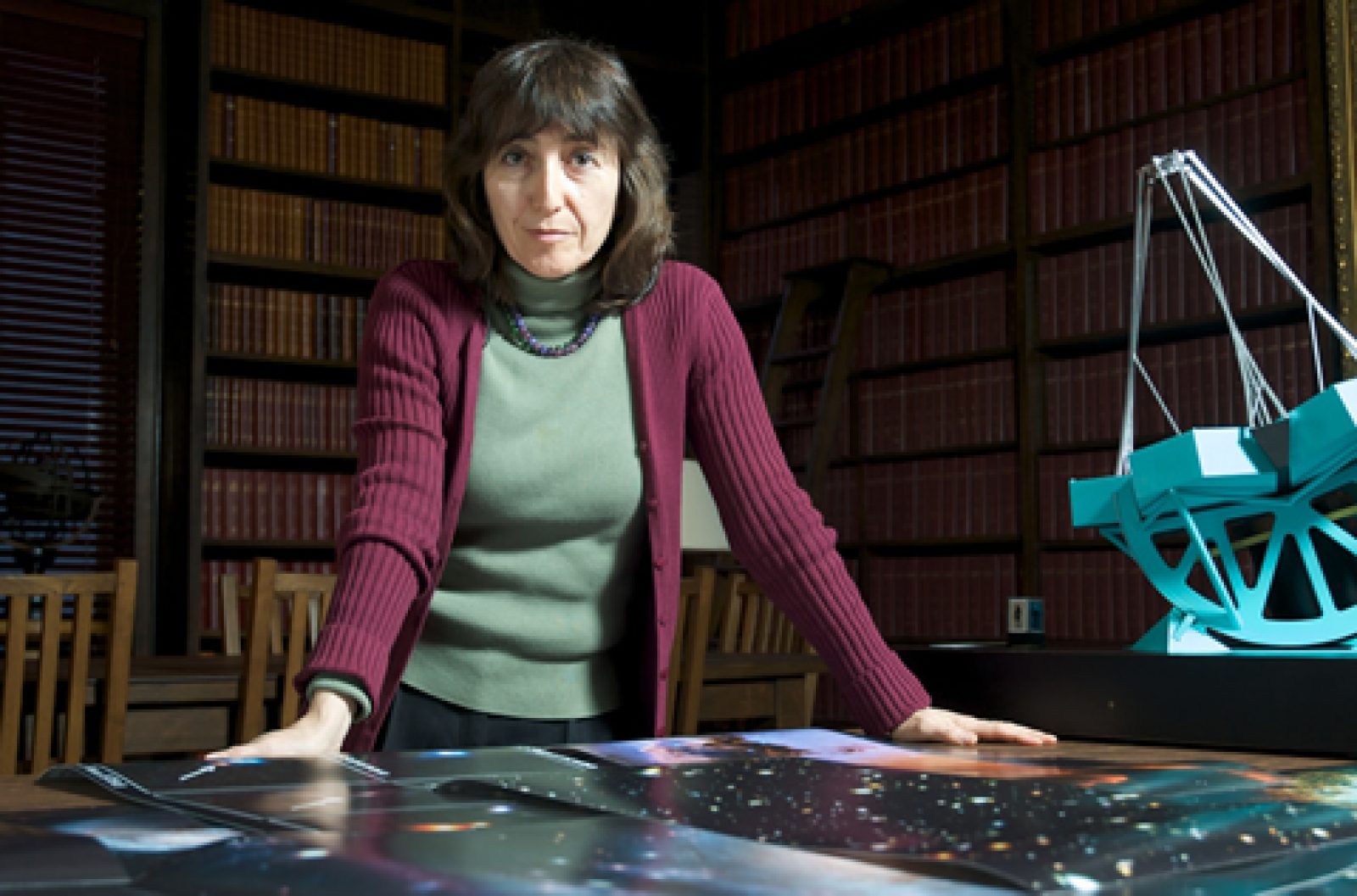
    5. Wendy Freedman

    Image Credits

    Freedman led an international team of astronomers in a project to precisely calculate the galactic expansion rate called the Hubble constant. With the most accurate measurements ever, they were able to recalculate the age of the universe from the previous rough estimate of 10-20 billion years old to 13.7 billion years. Knowing the actual age of the universe is critical to all sorts of other areas of astrophysics, such as understanding dark matter and guessing how the universe might end to make “this is how the universe ends” videos that are cool and also freak people out. Have you ever walked through the astronomy section of a science museum and noticed the “age of the universe” signs have been altered? That’s because of Freedman!

    Written by: Shana Figueroa

    Your NSTEM Journey Begins Here!