Author: webmaster

  • Debunking the Most Popular ADHD Misconception

    Debunking the Most Popular ADHD Misconception

    Attention-Deficit Hyperactivity Disorder (ADHD) is one of many significantly misunderstood diagnoses in the world. In fact, even psychologists have misconceptions about ADHD, so you’re not the only one in the dark. 

    Hopefully, as someone with ADHD, I can shed some light on what this diagnosis actually means for the people who have it.

    “ADHD is Overdiagnosed”

    Photo by Fernando

    This myth is a loaded one. Why? Because it’s just plain wrong, but it’s also wrong in so many ways.

    ADHDers of all ages are wildly underdiagnosed throughout their lives — especially if you’re a woman (or femme presenting), a person of color, an adult, or someone without access to healthcare. 

    Lack of affordable healthcare directly correlates with undiagnosed disorders — both physical and mental. This phenomena is fairly self-explanatory, but what about young girls and other minority groups? Why are they being dismissed?

    Underdiagnosis in Young Girls

    First of all, traits often (but not always) present themselves differently in young girls than they do in young boys. For example, girls often exhibit forgetfulness, disorganization, and issues focusing more frequently than boys. Similarly, boys present more “disruptive” symptoms of hyperactivity and impulsiveness. 

    Both children experience all of these traits, but unfortunately, the hyperactive behavior is more obvious in most boys. Additionally, the inattentive behavior seen in girls is often dealt with internally instead of externally. 

    These variations in presentation could have an array of explanations including differences in socialization and even differences in hormones and puberty. For example, women’s hormones often exacerbate the anxiety or depression experienced alongside ADHD. Because of this, medical providers will treat the anxiety diagnosis without considering comorbid disorders — leading to a delayed diagnosis

    Underdiagnosis in Children of Color

    Hispanic children are 56% less likely to receive an ADHD diagnosis than their white peers. As for African American children, they are 36% less likely to receive a diagnosis, and the remaining minority groups are 48% less likely to receive one. 

    The explanation behind these discrepancies is very complicated. In many cases, the barriers include healthcare provider bias, teacher bias, and lack of “culturally competent” healthcare providers as well. These obstacles are systemic and harder to overcome. 

    Essentially, the same symptoms seen in caucasion children are perceived as defiant and aggressive in children of color as a result of systemic racial bias. Therefore, instead of receiving intervention, they recieve discipline, and this can cause comorbid disorders and mental illness as well as the worsening of their symptoms

    ADHD in Adulthood

    Photo by Christina Victoria Craft

    Sorry, folks! There will be no visits from the neurotypical fairy on your 18th birthday. While it’s true that symptom intensity can decrease over time, ADHD does not disappear when you become an adult. In fact, adults experience many of the same symptoms as children do, but they experience them in a different environment. 

    Here are a list of symptoms experienced by both children and adults with ADHD:

    • Inattention: difficulty starting and completing tasks, difficulty regulating attention, forgetfulness, poor time management, disorganization
    • Impulsivity: fidgeting/restlessness, interrupting, excessive talking
    • Other: emotional dysregulation and low tolerance for frustration

    So, why is it that ADHD isn’t recognized later in life? If they go undiagnosed as children, why does nobody notice it later on? Can’t they see it in themselves?

    Underrecognition of ADHD in adults is, at least in part, likely to be due to the mistaken belief that ADHD does not persist into adulthood, as well as uncertainty about diagnostic criteria in adults and the belief that ADHD is less severe than other comorbid disorders.

    In summation, ADHD in adults isn’t taken seriously at all, and this can lead to a detrimental impact on adult ADHDers lives and mental health. 

    The Impact of Adult ADHD

    ADHD impacts more than school and work. It can impact relationships, finances, substance abuse, and more. If left untreated (or ineffectively treated), it has a significant negative effect on the individual’s mental health, physical health, and quality of life

    Because of this, adults with ADHD commonly have comorbid conditions. In fact, 60%-70% of adult ADHDers have a co-occuring disorder. For example:

    • 40% were also diagnosed with a mood disorder
    • 50% also had an anxiety disorder
    • 30% had social anxiety, specifically. 
    • 12% were also diagnosed with PTSD
    • and finally, approximately 15% had a substance use disorder

    It’s not possible to overstate the importance of treatment for the benefit of the individual. If you want to read more about adult ADHD, please click here

    So, Where do you Learn More?

    Even though ADHD Awareness is only one month, the people who have it struggle with it year-round. Do your best to educate yourself, provide accommodations, and advocate actively every other month of the year. 

    If you want to learn more about common ADHD misconceptions, there is an excellent article you can read right here.

    Written by: Emily Hyser

    October 5, 2021

    Your NSTEM Journey Begins Here!

  • Flying Close To the Sun: Understanding Nuclear Energy

    Flying Close To the Sun: Understanding Nuclear Energy

         One of today’s biggest political and societal issues is that of environmental preservation and reparations. Humanity’s habits of burning fossil fuels and other means of generating energy has had a destabilizing effect on the global ecosystem. Rising temperatures, increasingly erratic and extreme weather, and loss of wildlife are all evidence of the influence that humanity has on the world. Given our immense capability to shape our environment, we must exercise great discipline and responsibility if we want to carry on harmoniously with nature and our environment. While there are many facets to this issue that need to be addressed, one way to mitigate

    white smoke coming out from the factory
    Image Credits: Patrick Federi (Unsplash)

    the adverse effects of current energy consumption is to adopt nuclear energy as a cornerstone to generating clean energy. 

         Relatively speaking, nuclear energy is a new and technologically advanced form of energy generation compared to the combustion of fossil fuels. Nevertheless, the way that nuclear energy works is similar to that of fossil fuel combustion. A nuclear facility works by using a controlled chain reaction of enriched Uranium to heat a body of water to the point that it becomes steam. The heat and energy from the steam spins a turbine which then generates electricity. Uranium is a naturally occurring element that is found practically everywhere in the Earth’s crust. The Uranium is mined and enriched through a chemical process into a solid form which can then be placed in rods to be used as fuel for the reactor. Once this reaction begins to occur, it cannot be stopped until it has run itself out. Having said that, nuclear energy facilities can generate huge amounts of energy for many years, regardless of environmental changes. This is the largest advantage of nuclear energy. On top of that, the carbon footprint of nuclear facilities is almost nothing compared to any other kind of energy source. 

         Despite these huge advantages of nuclear energy over more conventional and renewable energy sources, there are many hurdles in the way for this energy source. The first major obstacle is the public perception of nuclear energy. Most people think of the disasters of Chernobyl, Fukushima, and Three Mile Island when they think of nuclear energy and thus consider it unsafe. However, nuclear energy is one of, if not the safest methods for generating energy for both the workers involved and the environment. There are more casualties and injuries for workers at conventional fossil fuel facilities than nuclear facilities, additionally fossil fuel facilities dump large amounts of carbon dioxide in the atmosphere where nuclear does not. Nuclear energy does possess a weakness, it has a large environmental impact from the waste generated and the fuel spent. The spent fuel can be reprocessed to be used again but it is an expensive process. Mostly the spent fuel is stored in specialized containers that are then placed into a remote location to sit indefinitely. The environmental damage from mishandling the spent fuel or accidents cannot be ignored.

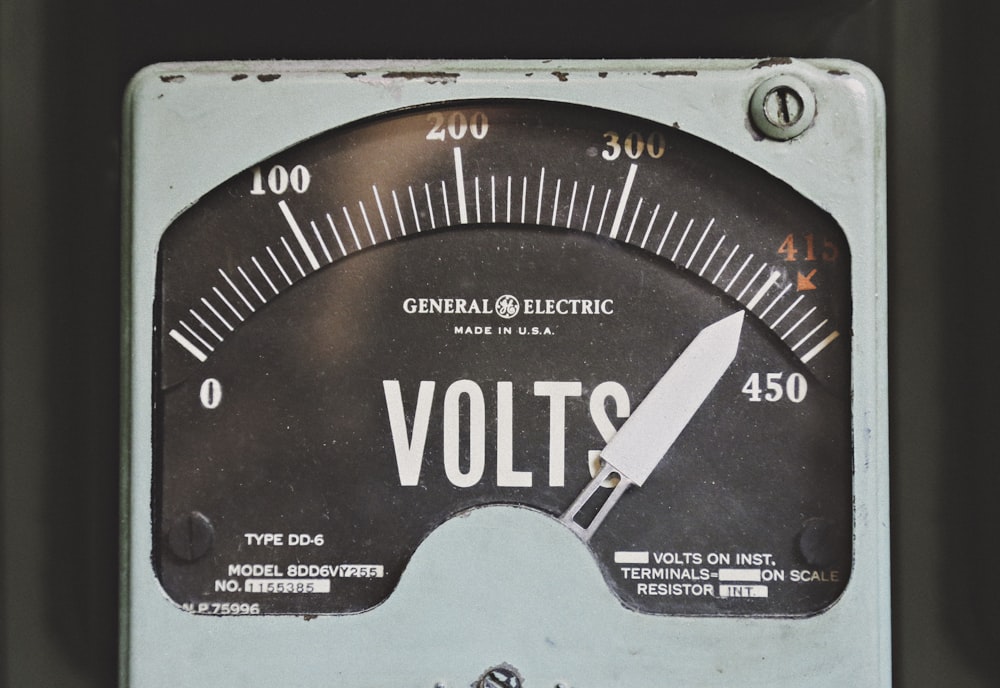
    gray GE volt meter at 414
    Image Credits: Patrick Federi (Unsplash)

         Nuclear energy has yet one more obstacle in its way and it has nothing to do with safety or environmental impact. Nuclear facilities are exorbitantly expensive to build and maintain. This means that it will take much longer to build, operate, and turn a profit with nuclear energy than it would with any other source of power. Also, since nuclear facilities cannot be switched on and off as the market demands change, further commitment must be made to ensure that they run smoothly. Furthermore, nuclear energy does not address the carbon emissions produced through transportation . The technology simply does not exist to shrink nuclear energy to a small enough package to be used in transportation. Perhaps with innovations in the STEM fields, there could one day be nuclear powered vehicles that produce zero carbon emissions. 

         Nuclear energy has many obstacles in its path to becoming a cornerstone of power generation in a more environmentally conscious age. Though its power (pun intended) cannot be overlooked. Nuclear energy has the capacity to generate massive amounts of energy for decades, both safely and with low cost to the environment. It could cover the baseline needs for power easily and be supplemented with conventional fossil fuel facilities when demand for power peaks. Technological innovations to make nuclear energy less expensive as well as consistent public support for such projects are the best means for nuclear energy sources to play a larger role in generating power and minimize humanities environmental impact.

    Written by Alexander Jones

    Edited by Ellie Bennett

    Your NSTEM Journey Begins Here!

  • 3 Halloween STEM Activities For The Classroom!

    3 Halloween STEM Activities For The Classroom!

    Now that October is finally here, it’s time to prepare for Halloween! What better way to celebrate than to do some fun and easy halloween-themed STEM activities?! Projects should never be exclusive to only kids, so we found some that can involve students of all ages. Through project-based learning, students can learn in a hands-on environment, and it makes their education fun! 

    Spooky Slime

    Photo by Kyle Brinker

    First on the list is spooky slime! This project is perfect to get elementary school students thinking about chemicals and velocity. This activity will show you how to make ghost, pumpkin, and frankenstein themed slime. For each batch of slime, the ingredients call for:

    •  6 oz. of white Elmer’s glue
    • Orange and green food coloring 
    • 1/2 teaspoon of baking soda
    • 1½ tablespoons of contact lens solution 
      • It must have boric acid in it! This is what interacts with the glue to form the slime.
    • ¼ cup of Water (if you want to make your slime stretchy!)
    • Tiny mason jars, black felt, googly eyes, and hot glue (make sure there is an adult around for hot glue!)

    To make spooky slime, you want to first get three different bowls to mix everything in together. Pour 6 oz of glue into each bowl. Then mix your green food coloring into one bowl of glue, and do the same with the orange food coloring. Mix up your slime and get it to the shade you want! Add your 1/2 teaspoon of baking soda into each bowl and mix in thoroughly. If you want stretchier slime, this is where you add ¼ cup of water! 

    Finally, add in your contact solution. It’s important to do this part slowly, because if you add too much it can make your slime hard. If you don’t add enough, though, it might make your slime too sticky! While you mix your slime, you can start to use your hands to knead it to really get the right consistency.

    Optional: when your slime is finished, you can put them into mason jars for storage and decoration! This part should be done with an adult because it requires hot glue. 

    • For your ghost (white) slime, just hot glue googly eyes onto the jar. 
    • For your pumpkin (orange) slime, cut out a pumpkin face with black felt and glue googly eyes. 
    • For frankenstein (green) slime, cut out black felt hair and glue googly eyes.

    Pumpkin Catapults

    This next activity is perfect to get students thinking about engineering. Pumpkin catapults are great projects for home and school. To do this project, you will need:

    • ​​7 wide craft sticks (easier to hold)
    • 4 rubber bands
    • 1 small cup (the website uses the top to a juice container)
    • A hot glue gun (Make sure an adult is around for this part!)
    • A bag of pumpkin candy corn (or enough candy for everyone involved) 

    To make a pumpkin catapult, you first need to stack 5 of your craft sticks together and wrap a rubber band onto each side of the sticks. This is the base and fulcrum of the catapult and it will allow a lever to pivot. 

    Next, stack the 2 remaining craft sticks and bind those together with one rubber band at the end. On the binded end, pry open the sticks (in a “V” shape) and place your stack of 5 sticks at the bottom of the “V”; use your last rubber band to bind everything together. 

    Finally, with an adult, hot glue the small cup onto the top of the stick, this is where your pumpkin will go). Make sure you leave room to push your stick down to create the catapult effect. 

    After completing all of these steps, you should have a functional pumpkin catapult. Now, it’s time to launch the candy! Place a piece of candy into your cup, press the end of the stick down, then let it launch! 

    Click the link on the project title to find ways to fine tune your catapult and play games with this project!

    DIY Jack-O-Lantern Halloween T-Shirt

    Photo by Eleni Petrounakou

    This final project is a bit more advanced than the other two, so it’s best for highschool students! Through this activity, students will get a chance to learn about technology through the process of wiring and lighting their t-shirt up with a pumpkin design.

    The supplies needed for this project are:

    • 16.4 feet of El Wire – This is available on Amazon.
    • Plastic canvas – This can be purchased at any craft store!
    • 2 AA Batteries – For the el wire!
    • Black or dark electrical tape
    • Orange t-shirt – Thinner material is better!
    • 4 Safety pins
    • A Sharpie
    • A pair of Scissors
    • Pen or pencil
    • A sheet of paper

    After gathering your supplies, you want to use your paper and pen or pencil to sketch out your pumpkins. Don’t be afraid to get creative, just make sure to get extra lights if you want to fully illuminate your design. 

    Next, trim your canvas down so it will fit on your t-shirt. Pick the design you want on your shirt, and sketch it onto the canvas (place paper under the canvas so it doesn’t stain!). Also, don’t worry if you mess up some, this sketch will be hidden, it is to give you an idea of how you want your lights. 

    Now, onto the fun part! Get your El Wire and tape off at least 6 to 9 inches of it, this is to prevent anything you don’t like from shining. Next, thread your wire through your canvas, making sure to follow the outline of your design. Once you get the perimeter of the pumpkin, check to make sure the wire fits snug. 

    After that, flip over your canvas and attach the wire to the mouth. Follow the same steps with the perimeter, outline the mouth with your wire, and be sure to cover any wire you don’t want showing with electrical tape. Repeat these steps with every addition to your pumpkin (eyes, teeth, etc). 

    Once you’re done, if you decide you want more to add. Go for it! If you don’t have anything else to add, you can trip and/or tape it up. 

    To add this design to your shirt, turn the shirt inside out and place your canvas face-side down. Using safety pins, pin each corner and add additional pins if your work is heavier. Finally, turn your shirt right-side out, turn the lights down, and turn your shirt on! 

    Optional: If you want your design to illuminate brighter, you can go back and add more el wire! 

    There you have it, three Halloween themed STEM projects for students of all ages to explore and enjoy. 

    If you enjoyed this blog, check more out here!

    Written by: Kathryn Cottingham

    October 17, 2021

    Your NSTEM Journey Begins Here!