Author: webmaster

  • How To Integrate Useful Technology Into The Classroom To Better Promote STEM Learning

    How To Integrate Useful Technology Into The Classroom To Better Promote STEM Learning

    Over many years, technology has evolved from telegraphs and Gutenburg’s printing press, to highly advanced mobile phones that can send and receive data in seconds and 3-dimensional printing. These technologies and many others have changed our culture in tremendous ways.

    With the path of technology-integrated life comes technology-integrated learning. Many teachers have only been skimming the surface of all the technological capabilities made available to them and their students. 

    The technologies listed below are great for the students who are kinesthetic and visual learners! They are listed by grade level or you can click the category below that best represents your students!

    1. STEM Activities best for K-3:

    Early Engineering learning

    Grab some Legos, sculpture clay, gumdrops and toothpicks, pasta and glue, or whatever you have to spare in your classroom and get building! Your students will love the idea of getting to make (and possibly eat!) their own creations while learning the basics of engineering, architectural design, and science

    Picture by Victoria Wendish via unsplash.com

    Make it a competition and see which group of students can build the tallest structure, the sturdiest structure, or the most eye-pleasing design!

    Another Outlet to be electrifying in STEM

    These types of projects will light up (pun intended) your students’ faces when they get to play with molding dough as well as learn about electricity and how currents flow! This relatively cheap kit comes with all the things you need, including buzzers, colored LED’s, jumper wires, switches, and much more! This is also great for honing the students’ wild imagination with multiple easy-to-follow projects as examples to get you started!

    Picture via squishycircuits.com

    Become a Math Wiz

    From the description “Timez Attack is an educational game that helps children learn and memorise their multiplication tables. It’s a cartoony third-person 3D adventure game that calls on students to guide its green bug/dinosaur of a hero or heroine through a dangerous fantasy world. Along the way they’ll need to quickly solve multiplication puzzles of increasing difficulty in order to keep going. Everything from unlocking doors to boss fights is powered by mastering multiplication.”

    2. STEM Technologies best for 4-6:

    Easy Coding and Designing Resources

    Scratch is a kid-friendly website to get started in the realm of coding! It is also teacher friendly in the fact that it is free! The possibilities are endless with the projects your students can design with this drag-and-drop programming interface: from video games, animations, music, math problem-solvers, and much more! 
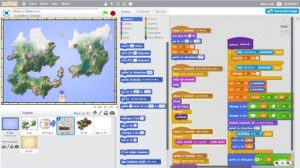
    Screenshot by Wilfried Elmenreich via opensource.com

    While having a 3-D printer in your classroom would be cool, knowing the workings and designing the 3-D printed objects would be even cooler! Integrating these things can help inspire your upcoming students to consider the roles and high-income careers of architectural design or mechanical or civil engineering! Want to take it a step further? Make it a strategic and gear-turning competition and have your students gather in groups to design the most useful and well designed object, with the most voted being created!

    3. STEM Technologies best for 7-12:

    Desmos has a multitude of capabilities including its own graphing calculator, matrix calculator, and a geometry tool. Desmos also has 7 different math-based games to choose from, dealing with subjects like lines, points, and parabolas

    Internet of Things Learning

    No, unfortunately it’s not an actual pie…Raspberry Pi is a palm-sized micro-computer that has various capabilities such as Bluetooth connectivity and wireless LAN. It can do most of what a regular computer can do and can be used for any subject you’re teaching! The best part is that any programming language which will compile for ARMv6 can be used with the Raspberry Pi.

     The older students will go crazy over these small yet powerful computers that can perform tasks such as browsing the internet, play HD video, and booting into linux on a SD card. Not into coding and just want learning experiences from it? No problem! Raspberry Pi offers many tutorials and walkthroughs to follow found here

    Picture by Max Alexander via amsat-uk.org

    Arduino is very similar to Raspberry Pi in the fact that it is a micro-computer. “Arduino is an open-source electronics platform based on easy-to-use hardware and software. It’s intended for anyone making interactive projects. Arduino senses the environment by receiving inputs from many sensors, and affects its surroundings by controlling lights, motors, and other actuators. You can tell your Arduino what to do by writing code in the Arduino programming language and using the Arduino development environment.”

    Now go on and let your students’ imaginations SOAR with all of these amazing STEM projects that you can integrate in your classroom to set your students on the right path in STEM for the future!

    Written by: Hope Deckard

    Your NSTEM Journey Begins Here!

  • How NSTEM™ Can Ease Your Transition to College

    How NSTEM™ Can Ease Your Transition to College

    Transitions, regardless of circumstances, are difficult. It is common to feel overwhelmed by, and underprepared for, many of life’s passages. A particularly challenging one can be the leap to higher education. For many, this period is marked by moving away from family, assignments more complex than any tackled thus far, and a general feeling of disorientation. But this transition does not have to be unpleasant, especially if you take advantage of all that the National STEM Honor Society has to offer. Read on to learn of the three top ways NSTEM™ can alleviate much of the stress that may come along with beginning college.

    Image Credits

    1. NSTEM™ Provides Exposure to Many Career Possibilities

    One of the greatest concerns of college freshmen is not knowing the degree they want to pursue. Although there are many schools that do not require students to commit to a major right away, having a general sense of your key interests will help you in your course selection. Students often tackle their uncertainty by imagining the kind of career they would like. What kind of work setting do you want? Do you want to collaborate with others or be independent? Do you want a job that is active? One that targets certain problems? By pinpointing the careers that interest them, students are already on a great path to finding the degree they would like to earn. But what if you had already begun asking yourself these questions before ever setting foot on your college campus? What if exposure to various STEM fields through NSTEM™ webinars, blog posts, online resources, internships, and projects helped you to confirm your interests sooner? Perhaps NSTEM™ even helps you to clarify that STEM isn’t your preferred path. That’s okay! Learning your affinities and aversions ahead of time will only propel you further in the direction of your choice..

    2. NSTEM™ Highlights Scholarships, Grants, and Other Awards that Can Alleviate the Financial Burden of Higher Education

    NSTEM™ recognizes that cost remains a large barrier to education and its equitability. Unfortunately, American colleges and universities have prohibitive tuition fees that lead to a lack of access for those of underserved backgrounds. It is for this reason that NSTEM™ does all it can to make chapter membership affordable and accessible to as many students as possible. Additionally, NSTEM™ wishes to encourage its members to pursue forms of STEM education beyond their school’s chapter; we highlight scholarships, grants, and work opportunities on our site as much as possible, and partner with organizations and figures who can grant us access to their educational opportunities as well. NSTEM™ even offers its own scholarship program! The program includes a college/university scholarship as well as an extra-curricular scholarship. To learn more, check out this page on NSTEM™.org. 

    3. NSTEM™ Prepares Students for Undergraduate Work

    NSTEM™ prepares its members and interns for many aspects of life, but it especially gives students invaluable work experience and exposure that many are not fortunate enough to have before college. Firstly, involvement with NSTEM™, whether through a chapter or an internship, demonstrates to potential schools that you are a dedicated and intellectually curious student. Your application will stand out in the eyes of admissions officers when they read about the firsthand experience you have had with STEM work. Schools that value this kind of student and their commitment to STEM will be more likely to accept you, and you will find yourself with educational options that better reflect what you hope to gain from a college education. And then, of course, when you get there you will be better accustomed to the responsibilities and higher expectations that come with college, because you already have experience navigating this type of work from your chapter or internship. 

    Image Credits

    In sum, NSTEM™ wishes for all of its students to uncover and pursue their passions. We work to provide as many opportunities and tools to our members as possible, and we hope you will consider taking advantage of them for the betterment of your future.

    Written by: Lucy Reid

    Your NSTEM Journey Begins Here!

  • Earth Day 2022

    By Vivien Chen

    Today is Earth Day, an annual day to celebrate our planet and help the environment. Earth Day takes place every year on April 22, with the first Earth Day being celebrated in 1970. People from all over the world come together to spread awareness and participate in activities to improve the environment. 

    Earth Day was started by Senator Gaylord Nelson, the junior senator from Wisconsin. He wanted to spread more awareness about the environment to college students. He teamed up with a young activist called Denis Hayes to organize events and teach-ins for college campuses. They chose April 22 because it was a date between spring break and finals where they could get a lot of student participation. 

    In 1990, Earth Day became a global event, with more than 200 million people in countries all over the world participating. It boosted worldwide recycling efforts and helped pave the way for the United Nations Earth Summit in 1992. President Bill Clinton also awarded Senator Nelson with the Presidential Medal of Freedom for his work as the founder of Earth Day. 

    Human activities like deforestation, burning fossil fuels, and pollution can disrupt and hurt the environment. Some of the many consequences of these actions are the endangerment of wildlife and global warming. Earth Day is an opportunity to change our everyday behaviors and advocate for policy changes, so that we can save our environment before it’s too late. 

    Here are some ways you can take part in the fight for our planet:

    • Become an Earth Day member here to donate and support the Earth Day foundation.
    • Sign one or more petitions here to encourage policy changes that will help the environment, such as managing plastic waste and stopping mass deforestation.
    • Email your local congressman for policy changes.
    • Watch this Earth Day livestream to learn about ecological problems around the world and how to take action.
    • Check out https://www.earthday.org/ to find a project or activity that interests you. There are many options ranging from trash cleanups to planting trees.
    • Take a quiz here to test your knowledge on the environment and our planet!
    • Help organize an event at your school to promote awareness and activism.
    • Stay educated with online resources, articles, and books.
    • Change your daily habits: pay attention to your hot water usage, recycle, turn off the lights when you’re not in the room, and more! This is one of the best ways you can take action.


    Sources

    Pictures

  • Neptune is Cooler Than We Thought

    Neptune is Cooler Than We Thought

    Scientists are constantly learning about the other planets in our solar system. It’s not something that many people think about, but other planets have weather phenomena that’s just as dramatic and diverse as ours, if not more! Recently, researchers just made a perplexing discovery about Neptune’s climate; one which is shrouded in mystery.


    According to a study published in Planetary Science Journal, after analyzing over 100 infrared images of the planet Neptune, a team of researchers, including scientists from NASA’s Jet Propulsion Laboratory, discovered Neptune’s stratosphere has cooled roughly 8 degrees Celsius (fourteen degrees Fahrenheit) between 2003 and 2018 (ScienceDaily).

    Image Credit

    The researchers used data from NASA’s Spitzer Space Telescope, the Subaru Telescope, the Keck Telescope, the Gemini South and North telescopes, and the European Southern Observatory’s Very Large Telescope , collected over a 17 year period. Since Neptune is a great distance from Earth, observing its temperatures has only been possible for the past two decades or so, ever since large telescopes like these became available to scientists (Sci-News).


    Since 2005, the planet has been in its southern summer season which lasts approximately 40 years. Because it is experiencing its summer season, scientists expected temperatures to have been gradually warming instead of cooling, making the results of the study especially eye-opening. Between 2018 and 2020, scientists were also surprised to find that Neptune’s south pole had risen 11 degrees Celsius. This is the first time that polar warming of this rate has been observed on the planet (ScienceDaily).


    Due to how sudden and unexpected the observations were, the cause for these changes are unknown, although the researchers involved in the study have several theories. “Temperature variations may be related to seasonal changes in Neptune’s atmospheric chemistry,” said Dr. Michael Roman, the lead author on the paper, “but random variability in weather patterns or even a response to the 11-year solar activity cycle may also have an effect” (ScienceDaily).


    Scientists hope that further observation of Neptune from the James Webb Space Telescope in the coming months may provide an explanation as to the baffling temperature fluctuations. The James Webb Space Telescope’s advanced mid-infrared instrument, MIRI, will allow scientists to more clearly understand the chemistry of Neptune’s atmosphere. Mapping this and the temperatures through the telescope will help to figure out why these changes have been happening on the ice giant (ScienceDaily).


    Image Credit

    GIANTCLIMES, the project which this study was funded by, was previously involved in studying the atmospheric temperatures of the gas giants Jupiter, Saturn, and ice giant Uranus. GIANTCLIMES has three main objectives: to study and record climate cycles on giant planets, analyze the stratospheres of Saturn and Jupiter over long periods, and to study the ice giants. With the James Webb Space Telescope, GIANTCLIMES hopes to create the first spatial maps of the ice giants (Cordis).


    These discoveries have thoroughly challenged the current understanding scientists have of Neptune’s atmospheric variability and go to show how much is still unknown about the planets right here in our own solar system. We have only scratched the surface in researching these distant planets, and over the coming years, a treasure trove of information is sure to be uncovered by teams of scientists like the ones that discovered the temperature fluctuations.


    Written by: Matthew Jenkins

    Date: May 15, 2022


    Sources:

    Neptune is cooler than we thought: Study reveals unexpected changes in atmospheric temperatures. (2022, April 11). ScienceDaily. Retrieved from https://www.sciencedaily.com/releases/2022/04/220411101321.htm.


    Neptune is Cooler than Astronomers Thought | Sci-News.com. (2022, April 11). Breaking Science News | Sci-News.Com. http://www.sci-news.com/astronomy/cooler-neptune-10697.html


    CORDIS | European Commission. (2021, March). European Commission. https://cordis.europa.eu/project/id/723890


  • Mental Health in Science

    Mental Health in Science

    By Amanda Aber

    Written on 4/27/22

    There are many competitive career fields that may result in depression and anxiety, but STEM fields have increasingly become more competitive in the last few years, making depression and anxiety more prevalent. One in four adults will experience a mental health disorder in a given year. The odds of having mental health issues increases as a graduate student and in STEM fields. STEM environments can push people to encounter a crushing workload and lead to burnout. Since May is Mental Health Awareness Month, let’s acknowledge the difficulties STEM students and professionals must endure to reach their goals.

    As an Undergraduate

    Studying STEM fields can be harsh on a student’s mental health. As an undergraduate, students have to take a range of difficult courses with never-ending assignments and countless hours of studying for exams. Ali, a Biology student at the University of Washington, expresses how some students will only get three hours of sleep a night “because there’s so much to do.” Students are forced to take on an unmanageable workload across multiple STEM classes. Students are afraid to ask for extensions for assignments even if they feel overwhelmed. STEM class culture suggests that students would not be given extra time if they asked for it, so students continue to struggle on their own.

    There are also the concerns of exams. Ali describes STEM courses exams as “outrageous.” This can be due to difficulty of coursework, the gearing towards memorization, the inclusion of concepts not covered well in class, or testing students on keywords rather than concept mastery. Hannah, a Physiology student at the University of Washington, states that “all STEM majors have really bad test anxiety.” She would shake and have an elevated heart rate before taking an exam. Even students who feel they have mastered class topics may do poorly on tests due to the added pressure. 

    As a Graduate

    Graduate students seem to be at the highest risk of mental health issues in STEM. Approximately 40 percent of graduate students in biological, physical sciences, or engineering reported moderate to high levels of anxiety and moderate to severe levels of depression while the general population reported about 6 percent. Majority of these students named education/school to be the main contributor for mental illness.

    Not only is it academically straining on graduate students, but it is financially straining as well. Graduate students studying STEM fields have to complete academic research. This research is largely funded by the federal government, so researchers typically apply for grants from the federal government to fund their equipment, training, and access to laboratory facilities. The number of people applying for the grants is steadily increasing, while the funding for these grants have remained stagnant. Thus, the success rate for getting a grant has decreased for STEM students. This means funding for research would have to come from their own pockets. Having to worry about finances can cause a person to become discouraged and unmotivated.

    Achieving a STEM degree and graduating does not mean the struggle stops. Recent STEM graduates are typically overworked and underpaid. Lower income is associated with mental disorders, so it is not surprising that the mental health of STEM professionals can take a hit. There is also job insecurity with recent graduates which can cause anxieties and loss of self-esteem as they try to find a stable job after finishing school.

    What Can We Do?

    Institutions need to address the mounting pressure they put on STEM students to succeed. Many schools have implemented mental health awareness campaigns or task forces to provide support and resources for students. 

    However, it is important for people in STEM to take responsibility for their own well-being. Look into healthy coping mechanisms. Make time for yourself to rest and enjoy interests outside of work and school. Reach out to friends, co-workers, supervisors, and counselors for support. 

    Mental health issues tend to be silenced or looked down upon in society, but mental illnesses are possible for anyone to experience. It is time to start the conversation on providing adequate support and understanding to those who may suffer a mental illness. 


    Citations

    Athens science cafe. (2018, September 21). Mental wellness: Understanding the STEM graduate mental health crisis. Athens Science Observer. Retrieved April 27, 2022, from https://athensscienceobserver.com/2018/09/16/mental-wellness-understanding-the-stem-graduate-mental-health-crisis/

    Karpoor, P. (2021, October 21). Mental Health & Women in STEM. All Together. Retrieved April 27, 2022, from https://alltogether.swe.org/2020/06/mental-health-women-in-stem/

    Li, W. (2021, March 5). The Mental Health Crisis in Science. Science in the News. Retrieved April 27, 2022, from https://sitn.hms.harvard.edu/flash/2021/the-mental-health-crisis-in-science/

    Sutherland, A. (2021, November 17). ‘There is a huge crisis happening in STEM classes’. The Daily of the University of Washington. Retrieved April 27, 2022, from https://www.dailyuw.com/special_sections/disability_inclusion/there-is-a-huge-crisis-happening-in-stem-classes/article_fc535cb0-45ba-11ec-b66a-075424a21121.html


    3 Key Phrases:

    • STEM environments can push people to encounter a crushing workload and lead to burnout.
    • Graduate students seem to be at the highest risk of mental health issues in STEM. Approximately 40 percent of graduate students in biological, physical sciences, or engineering reported moderate to high levels of anxiety and moderate to severe levels of depression while the general population reported about 6 percent. Majority of these students named education/school to be the main contributor for mental illness.
    • Mental health issues tend to be silenced or looked down upon in society, but mental illnesses are pretty common for just about anyone to experience. It is time to start the conversation on providing adequate support and understanding to those who may suffer a mental illness.

    Social Media Statement: It’s Mental Health Awareness Month, see how STEM affects the mental health of college students

    Marketing Statement: This blog is targeted towards students who are considering entering a STEM field as a path of study or career. This encourages them to acknowledge that although STEM can be challenging, they are not alone in their struggles. This is also targeted toward friends and family to encourage them to provide support to their loved ones in STEM.

    Featured Images: 

    1. Photo by Daniel Reche from Pexels
    2. Photo by Dio Hasbi Saniskoro from Pexels
  • STEM News – Genetic Testing for Hereditary Cancers

    STEM News – Genetic Testing for Hereditary Cancers

    Since the first widely used cancer screening test was developed in 1923, technology has transformed  for many groundbreaking discoveries in cancer testing (American Cancer Society). One of these was the development of genetic testing for hereditary cancers. These types of tests allow scientists to identify specific genes responsible for a person’s susceptibility to hereditary cancers and allow them to assess an individual’s risk of developing cancer if cancer tends to run in the family. 

    Image Credit

    The process for receiving genetic testing for hereditary cancers can be a lengthy one. According to the American Cancer Society, there are a number of signs that indicate whether someone may have an inherited form of cancer or cancerous tumor. One of these signs is the presence of one type of cancer on one side of a family. Another common sign is when a relative has more than one type of cancer. 

    While many of these signs can raise concerns, none of these are perfect indicators that an individual has or doesn’t have an inherited cancer of some sort. Before genetic testing can be recommended, one should review their family’s history of cancer with a medical professional and take part in genetic counseling (National Cancer Institute).

    Genetic counseling is an important part of the process of testing for hereditary cancers since it is a requirement for informed consent. Normal medical tests only reveal information about a patient, but a genetic test is different because it reveals information about a patient’s relatives as well. Relationships between family members can be affected if test results are disclosed. Some family members may also not wish to know their medical status when it comes to inherited conditions such as cancer (National Cancer Institute).

    Image Credit

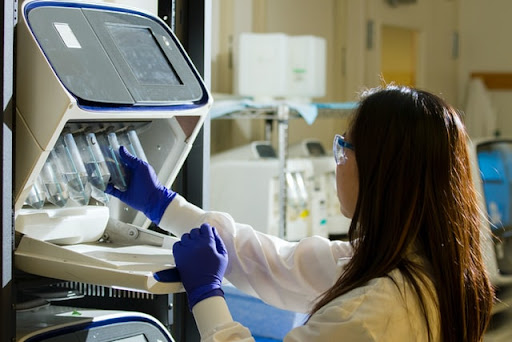
    Genetic testing for cancers can be done through one of several tests, which are usually performed on a blood sample. However, they could also be done on saliva and tissue samples. Once a sample is collected, it is then sent to a genetics lab where the DNA is tested for one of more than 50 cancer-causing genes that are able to be identified through genetic testing. Results may then take a few weeks to return to a doctor after the doctor requests them. (National Cancer Institute). Thankfully, more than 90 percent of insurance companies cover testing for hereditary cancers (McLeod Health).

    Recently, researchers have developed a brand new genetic test that screens for MMR deficiencies, which allows scientists to easily screen individuals for certain types of hereditary cancers. Current tests are known for being ineffective and inefficient, meaning patients sometimes must be tested multiple times in order for conclusive results to be reached. With this new development, known as MultiMMR, the process of testing for MMR deficiencies is optimized, allowing for dependable results from a single test while also determining the cause for the deficiencies. The determination of deficiencies also happens to be a feature that current MMR deficiency screenings lack (SciTechDaily).

    Image Credit

    Receiving a positive result from genetic testing does not necessarily mean that an individual has inherited cancer from a relative. Rather, it may indicate that they are more at risk of developing cancer or a possible tumor and should take steps to prevent cancer from developing. In the case of lung cancer, for instance, one may choose to quit smoking to decrease their chances of developing cancer. Likewise, a negative test does not mean that an individual will not develop a certain type of cancer. It only means that an individual’s risk for having that form of cancer is no higher than that of the general population (National Cancer Institute).

    In any case, it is important that a patient and their doctor maintain strong communication and understanding about what the results mean, and what steps should be taken moving onward.

    Sources:

    https://scitechdaily.com/new-genetic-test-effectively-screens-for-hereditary-cancer/#:~:text=Researchers%20have%20have%20developed%20a%20new,colon%2C%20endometrial%20and%20other%20cancers

    https://www.mcleodthealth.org/news-entry/are-genetics-raising-your-risk-of-inherited-cancer-2022/

    https://www.cancer.org/cancer/cancer-basics/history-of-cancer/screening-early-detection.html

    https://www.cancer.org/cancer/cancer-causes/genetics/genetic-testing-for-cancer-risk/understanding-genetic-testing-for-cancer.html

    https://www.cancer.gov/about-cancer/causes-prevention/genetics/genetic-testing-fact-sheet


    Written by: Matthew Jenkins

    Date: 02/21/2022