
Author: webmaster

  • Social Learning in STEM

    Social Learning in STEM

    Photo by Sara Cottle

    As the years go by, new learning styles become standard practice, and society adapts to those learning styles. Some stay, some are just fads, but one learning style that always seems to be prevalent is social learning.

    While you might not know what social learning is by the name, you definitely know it by practice. Social learning is learning with and from others. 

    What does this mean exactly? Imagine the saying, monkey see, monkey do. This phrase summarizes much of what social learning is, but there’s more to it. Anything that you learn from observing others, or what you are told by others, relates to social learning. 

    A common form of social learning is through social media. You observe all of the most recent trends, and now know what the most popular shoe is, or which water bottle stays the coldest. Social learning makes up a large amount of the learning you do in everyday life. 

    Now I know what you’re thinking, what does any of this have to do with STEM? It has everything to do with STEM! 

    Imagine you are in a lab for your biology class. It’s a big day because your teacher decided to take out the microscopes to examine the plant cells of an onion. You paid attention to the directions, but you are still not sure how to work the microscope properly. Luckily for you, there are three more people at your table using the same type of microscope. At this point you can either observe and see how they work their microscopes, ask them for help, or even ask your teacher for help. 

    Now I know we went off on a tangent, but all three of these options are examples of social learning. This type of learning is so crucial in being able to use STEM equipment. Often, the tools you use for STEM are very complicated, and require instruction from someone who has experience with that tool. Without social learning, figuring out how to use a microscope, or any other equipment, would be very difficult.

    Along with this, we are often told very important information through social learning. Let’s say you are in your chemistry class, and you have a beaker full of water and a large chunk of sodium. If you have already taken chemistry, you know this is bad news. Not knowing the dangers of pure sodium and water, one might just drop the metal into the water, creating a very violent reaction. With a large enough piece of sodium, you could injure yourself and those around you. 

    This is why social learning is so important. You don’t have to figure out that sodium practically explodes when exposed to water through trial and error. You don’t have to find out that lead is dangerous, and that you shouldn’t expose your bare skin to it. This is all because people have already found this out, and through social learning, have spread their knowledge.

    Social learning is extremely important in STEM. It allows us to work off of each other, and learn new things. Without social learning, progression in STEM would be very difficult to achieve.

    Written by: Albert Nova

    May 28, 2021

    Your NSTEM Journey Begins Here!

  • Using Calls to Action to Improve Your Middle Schoolers’ Learning Experience

    Using Calls to Action to Improve Your Middle Schoolers’ Learning Experience

    Now more than ever, students need ways to engage with activities beyond the classroom or Zoom meeting. The pandemic has unfortunately contributed to a large amount of learning loss as many schools have been forced to shut down, move online, have shorter class periods, etc. Therefore, using calls to action to further students’ learning is a valuable teaching tactic in this day and age. Outlined below are action-driven activities and projects geared towards middle school students.

    1. Historical Interviews

    Encourage students to access the experiences and memories of an older relative or friend in order to enhance their understanding of a recent historical period. Perhaps they hear the story of a Vietnam veteran, a Cold War refugee, a survivor of Japanese internment, or someone who can recount the aftermath of more recent events such as 9/11, the Columbine Shooting, or Hurricane Katrina. Hearing someone depict events they themselves lived through livens the narrative far more than a textbook can. Encourage students to share their interview findings with the class.

    2. Having Fun While Raising Funds

    Have students conduct research on an organization they wish to support that relates to their class curriculum. For example, English students may choose to support their local library or a larger organization that promotes literacy and writing. STEM students may want to work with an organization that donates computers and calculators to underfunded school districts, or one that supports minorities in STEM fields. The potential charities to support are endless and so are the ways to raise money. Children can really get creative here—they could host a walkathon or running race where friends and family pledge money for each mile they complete, they can have a bake sale, offer to mow lawns, etc. The added bonus of this activity is that it can also serve as a great opportunity to teach students about topics such as profit and revenue.

    Photo by Dex Ezekiel

    3. Plant Project

    If studying plants in your science classroom, this project is a great way to teach students how to conduct a proper scientific experiment. If working remotely, send each of your students a pouch of seeds. Then, design an experiment with your students that attempts to answer a question they generate. For example, they may pose one of the following: “How does sunlight affect our plants? How does water affect our plants? What happens if we grow our plants in different sized pots?” Next, designate a job to each student such that some act as a control group while others are in an experimental group. Instruct students on how they are meant to care for their plant each day, and ask them to take detailed notes and measurements. By the end of a few weeks, your class should not only be able to answer their initial question and grasp the workings of a proper experiment, but also have beautiful plants as a dividend!

    4. Journaling Journeys

    Students are juggling a lot right now; adjusting to online school, grappling with a major reduction in time spent with friends and extended family, and trying to stay safe from the lethal COVID virus. By journaling and reflecting on their life right now, they gain two benefits. Firstly, they are creating a narrative they can look back on for the rest of their life to remind them of how the world was at this unique time, and secondly they are allowing time to slow down and process their thoughts. Some students may initially struggle with this assignment because they are not used to meditating on their feelings, so it may help to pose a guiding question or provide a prompt they can use to steer their journal entries.

    5. Board Game Fun

    Use the fact that students love board games to your advantage! Charge students with creating a board game that connects to the class material in some way. Perhaps you have to solve a math problem in order to move ahead on the board, or each player gets a historical character to play. Allow students to get creative and artistic. Not only will they enjoy working on this assignment, but they will be left with an effective study tool when they are done. Have students share their finalized products. If teaching in-person and COVID precautions allow, let students test out their games with their classmates. If class is virtual, have students take a picture of their game board that they can project on their screen and split kids up into breakout rooms to play. 

    Photo by Tim Foster

    Creativity is the name of the game when it comes to teaching this year. Don’t be afraid to stray away from typical lectures and worksheets and surprise your students with an assignment unlike anything they have had before. Hopefully the suggestions above can serve as a great launchpad for your ideas!

    Written by: Lucy Reid

    Your NSTEM Journey Begins Here!

  • How to Promote Classroom Learning Through Cognitive Psychology

    How to Promote Classroom Learning Through Cognitive Psychology

    Photo by NeONBRAND

    All students have experienced it at least once: A lecture so boring that sleeping upright feels like the best option. Even if the content of the lecture sounds interesting at first, a boring presentation can cause  students to become completely disinterested in the topic. Thankfully, cognitive psychology can be a helpful tool for promoting effective learning by providing understanding of how the mind processes information.

    Active Recall Methods

    Photo by Alexis Brown

    In-class review time can be difficult to capitalize on. Passive forms of review such as tediously reading excerpts and endlessly drilling facts are very common, but are quite unenjoyable and rather unproductive. Instead, active recall methods like the Feynman technique (explaining the topic) and flashcards can be much more effective. Essentially, the more the information is retrieved, the easier it is for the brain to recall it later on. 

    Topic Comprehension

    Sometimes, students diligently take notes in class but are still left wondering about the information’s purpose. In order to help students learn more effectively, it can be helpful to teach students about the ‘Why’ behind the topic. Understanding how the new information fits into a larger picture within the topic or within the world can make a huge difference in comprehension. 

    Applying New Knowledge

    Photo by Ismail Salad Hajji Dirir

    As the students begin to understand the new material, it is important for them to make connections between what they are learning about and the subject’s impact. By using their acquired knowledge in various situations like explaining a different concept or having a debate, students will begin to understand how what they have learned applies to different scenarios. 

    With technology being increasingly integrated into classrooms and many teachers looking to focus more on Project-Based Learning, students are having more opportunities than ever to learn in different ways. Going forward, using a cognitive learning approach can be beneficial to both teachers and students. Incorporating new strategies and techniques for learning will help to ensure an effective learning environment.

    Written by: Emma Schlosser

    Your NSTEM Journey Begins Here!

  • Top 8 STEM/Sci-Fi Movies and Documentaries to Check Out

    Top 8 STEM/Sci-Fi Movies and Documentaries to Check Out

    Are you looking for something new to watch? Interested in all things STEM? Then this is the article for you! Here are our top eight must-watch STEM-related films in the past year. 

    Image Credits

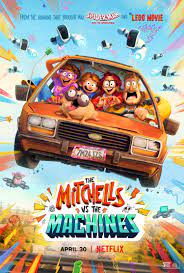
    1. The Mitchells vs. The Machines 

    Genre:  Family Feature/ Comedy/ Sci-Fi

    Rating: PG

    Available On: Netflix (subscription)

    Young Katie Mitchells embarks on a surprise cross-country trip with her parents, younger brother, and beloved dog to start her first year at film school. However, a sudden robot apocalypse puts a halt to their trip. Now it’s up to the Mitchells – the world’s weirdest family – to save the human race. 

    Image Credits

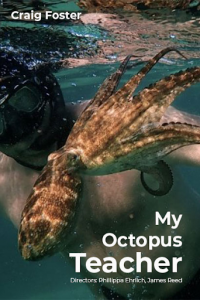
    2. My Octopus Teacher

    Genre: Documentary/ Science & Nature

    Rating: TV-G

    Available On: Netflix (subscription)

    Craig Foster, diver, and filmmaker forges an unusual friendship with an octopus living in a South African kelp forest. Watch him learn as the animal shares the mysteries of her world. 

    Image Credits

    3. I Am Mother

    Genre: Sci-Fi/ Thriller 

    Rating: TV-PG

    Available On: Netflix (subscription)

    Following humanity’s mass extinction, a teen raised alone by a maternal droid finds her entire world shaken when she encounters another human. The movie offers an alternate universe for viewers where humanity must restore itself. 

    Image Credits

    4. David Attenborough: A Life on Our Planet

    Genre: Documentary/ Science & Nature

    Rating: PG

    Available On: Netflix (subscription)

    At 93 years old, David Attenborough, a famous broadcaster and natural historian, has gotten the chance to visit all continents. In this documentary, Attenborough recounts his life and the evolutionary history of life on Earth to grieve the loss of the wild places and offer a vision for the future. 

    Image Credits

    5. The Midnight Sky

    Genre: Sci-Fi/ Based on Books 

    Rating: PG-13

    Available On: Netflix (subscription)

    In the aftermath of a global catastrophe, a lone scientist in the Arctic races to contact a crew of astronauts with a warning not to return to Earth. Not only is this movie packed with suspense and drama, but it is also a great reminder to care about our Earth and to do your part in preventing climate change.  

    Image Credits

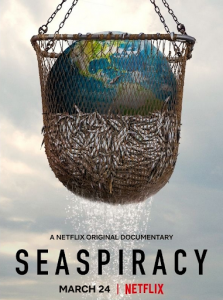
    6. Seaspiracy

    Genre: Documentary/ Science & Nature

    Rating: TV-14

    Available On: Netflix (subscription)

    Filmmaker, Ali Tabrizi, sets out to document the hard reality of humans’ relationship to marine species. Through his exploration, he uncovers alarming global corruption. The documentary became a controversial topic of discussion as it advocates for the termination of fish consumption. 

    Image Credits

    7. Stowaway

    Genre: Sci-Fi/ Drama

    Rating: TV-MA

    Available On: Netflix (subscription)

    A three-person crew on a mission to Mars faces an impossible choice when an unplanned passenger jeopardizes the lives of everyone on board. This thriller not only offers hope for humanity on Mars but also warns us of the dangers that come with it. 

    Image Credits

    8. Black Holes: The Edge of All We Know

    Genre: Documentary/ Science & Nature

    Rating: TV-14

    Available On: Netflix (subscription), Youtube ($3.99), Apple TV ($4.99)

    Follow scientists on their quest to understand and capture the first image of a black hole while exploring the limits of our knowledge of the universe. In this documentary, the Event Horizon Telescope links observatories at different locations across the world and thus resulting in the first-ever image of a black hole.

    Written by: Isamarie Hernandez Arroyo

    Your NSTEM Journey Begins Here!

  • Equity vs Equality: The Crucial Difference

    Equity vs Equality: The Crucial Difference

    NSTEM has loudly and proudly abided by the I.D.E.A. values: Inclusivity, Diversity, Equity, and Access. Just by glancing at our intern page, you’ll see that inclusivity and diversity are not only a part of our mission but a vital part of our organization. 

    But why didn’t NSTEM choose “equality” instead of “equity”? Don’t the two terms mean the same thing? No: though “equity” and “equality” are associated with one another, the two terms are not interchangeable. 

    Let’s delve into the differences between the two and highlight the reasons we chose “equity” for our “E” in I.D.E.A.

    Equality

    Image Credits

    Equality is the state of being equal, and equal means that two subjects are the same in size, quantity, degree, or value. For example, when trying to balance a scale, you need to have the same amount of weight on both ends. In doing so, you achieve equality. Of course, this is a rather simplified explanation because most definitions require context. 

    Social equality is the state of all individuals, and the groups they belong to, having equal rights, autonomy, status, and access to public services. In this context, the tangibility of the weight and the scale is gone. Now, you have to balance a proverbial scale of success. On one side, you have privileged groups, and on the other, you have underserved groups. 

    How do you help them achieve equality? This is where equity comes in. 

    Equity

    Equity recognizes that each person has different circumstances and allocates the exact resources and opportunities needed to reach an equal outcome.” In other words, equity is the action taken to assist groups that lack in privilege in the exact way they require them. 

    To balance our aforementioned success scale, you need to stack resources and opportunities on the side of the underserved groups until the scale tilts to the center. 

    Unfortunately, this point is the furthest the scale metaphor can take us. In reality, there are many different aspects of privilege. For example:

    • Race
    • Gender
    • Gender Identity
    • Sexual Orientation
    • Ability
    • Class
    • Education 

    This is by no means an exhaustive list, but it covers quite a lot of bases. 

    When striving toward equality, you need to provide equity for all groups. For example, if you provide resources for racial equity, but you exclude disabled people of color, you are actively contributing to their oppression.

    Differences

    Image Credits

    Equality is what equity strives to achieve by providing resources to underserved communities and individuals. Equity is the action and equality is the goal. 

    Now, many people hear about this difference and ask, “Isn’t that unfair? Can’t we simply treat everyone the same?” Well, no, you can’t. 

    Treating everyone equally would not account for the systemic issues that make them underserved. Resources and opportunities are given to level the playing field. If you don’t need these resources to succeed, then you already have the advantage. 

    Equity isn’t putting any individual ahead of another. It simply means treating people “justly according to their circumstances.

    Equity at NSTEM

    Equity is not a simple process, and at times, it may seem never-ending. Continuous action, however, is crucial on both large and small scales. 

    The National STEM Honor Society takes precisely this action. To help the effort to achieve equity, we provide numerous resources and opportunities for people in underserved communities who are pursuing STEM fields. Click here to learn more from our CEO & Founder, Eric Magers.

    Written by: Emily Hyser

    Your NSTEM Journey Begins Here!

  • Why Should I Learn to Code?

    Why Should I Learn to Code?

    Coding. What is it, why is it necessary, and do I need to learn it? To answer the first question, it’s best to start with what coding is for. Coding is used to give directions and communicate with computers and machines so they can perform the tasks that we need. It is essentially a language that computers can interpret and respond to. The different ways to write code are called programming languages. There are roughly 700 different programming languages one can learn so there is no shortage of material for a coding enthusiast.

    Responding to the second question, coding is necessary because it enables most of the objects we use every single day. Everything from your washing machine to your coffee maker to the device you are reading this article on required lines upon lines of code. Now that we know what coding is and why it’s such a valuable skill, let’s discuss whether or not you should consider learning it.

    Image Credits

    Coding Careers

    Many coders learn their craft because it is essential for their job. As a matter of fact, in 2015, 20% of “career-track” jobs required a coding background and that percentage only rises by the day. Additionally, jobs that require coding tend to pay better than those that don’t: on average they pay 22,000 dollars more than jobs that do not involve coding. Therefore, coders are in high demand and are compensated accordingly. If you are a student who has yet to decide on your career path, you may want to consider what your future career will look like. This way, you can align your studies with the skills you will need for your desired field. 

    If you enjoy problem-solving, working with machines, engineering, science, etc. learning to code would be an excellent skill to add to your repertoire. Even if it is not a prerequisite for a job, it may make you a more appealing and qualified applicant. Try taking an introductory coding class to see how you like it; some may find it painfully dull while for others it just “clicks” (no pun intended). Either way, you’ll gain a useful tool under your belt. Lastly, it’s a fantastic hobby because you can do it anywhere, from a college campus to the comfort of your own home. 

    Adapting to the Future

    So if I have no plan on entering a career path that involves coding is there no reason for me to learn it? Absolutely not! Many code as a hobby or for personal fulfillment. Perhaps you want to make an animation or you want to perform statistical analysis for a project you are working on. Coding will help you to accomplish these tasks and much more. Furthermore, gaining a better understanding of how our devices are programmed to work will increase your understanding of computers and technology in general. 

    Therefore, don’t write off coding even if it has no value for your line of work. Also keep in mind the fact that many jobs are being replaced by AI, and you never know what your job will look like in the future. You may have to initiate a career change, or your job may become more technology-dependent. Knowing at least some of the basics behind coding will help you to better adapt to the future. 

    Inspiring and Preparing Future Generations

    More and more schools are adding coding to their elementary, middle, and high school curriculum because many believe children should become technologically literate at a young age in order to prepare them for the workforce and our quickly changing society. If you’re a teacher of any grade level, consider adding weekly code classes to your curriculum. Even teaching the most basic elements of coding may pique some of your students’ interest and launch them into a STEM career. Coding is known to improve logical thinking, persistence, and problem solving so it is also a fantastic way to build character in your students. Many computer programmers say that learning to code was the first time they felt they truly understood and had a passion for school material because they never had an affinity for the humanities. 

    Image Credits

    In conclusion, learning to code is an incredible idea for nearly everyone. Regardless of your age or occupation, there is great value in learning to program computers and understand how they work. Taking an introductory coding course is rarely a bad idea and more and more schools are adding coding as part of their curriculum. If you want to become more technologically literate, build character, and open yourself up to many potential career opportunities, give coding a chance.

    Written by: Lucy Reid

    Your NSTEM Journey Begins Here!