Author: NSTEM Media

  • Unveiling the Wonders of Space: 5 Astronomy Activities for Middle-Schoolers

    Unveiling the Wonders of Space: 5 Astronomy Activities for Middle-Schoolers

    Photo Courtesy of techstarter.com

    The universe holds endless mysteries that captivate people of all ages! Middle school students, in particular, are curious and always eager to learn. So, what better way to nurture their interest than by immersing them in the fascinating world of astronomy? From understanding the secrets of our solar system to gazing at the stars, there are so many exciting opportunities for learning and exploration within the classroom walls! In this blog, we’re going on a cosmic journey to discover five incredible astronomy lessons, projects, and activities perfect for middle school students. Each of these classroom adventures serves a unique purpose, from exploring the wonders of our solar system to grasping the principles of rocket science. Here are five astronomy activities for middle school students.

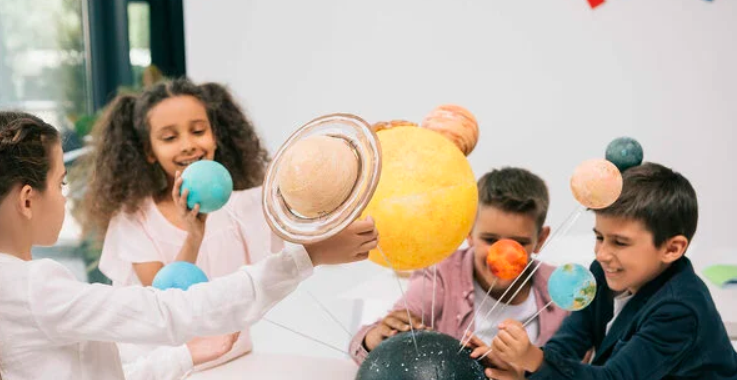
    1. Solar System Model Building

    • Purpose: This astronomy project helps students understand the relative sizes and distances between objects in the solar system, promoting spatial awareness and scientific accuracy.
    • Materials: Styrofoam balls (various sizes), paint, paintbrushes, string, and markers.
    • Steps: Students paint and label the Styrofoam balls to represent the sun, planets, and other celestial objects. Then, they use string to hang these objects in the correct order and distances from one another, creating a scale model of the solar system.
    • Time Duration: 2-3 class periods.

    2. Star Constellation Study

    • Purpose: This activity teaches students about constellations, their historical significance, and how to identify them in the night sky.
    • Materials: Star charts, a dark room with a projector or planetarium software, and pencils.
    • Steps: In a darkened room, project star charts on a screen. Discuss the mythology behind constellations and their names. Then, have students identify and draw their constellations on the star charts.
    • Time Duration: 1-2 class periods.

    3. Phases of the Moon Observation

    • Purpose: This astronomy lesson helps students understand the lunar phases and the moon’s position relative to the sun and Earth.
    • Materials: Moon phase calendars, binoculars, or telescopes.
    • Steps: Each student observes and records the moon’s appearance every night for a month. They compare their observations with the moon phase calendar and discuss their findings.
    • Time Duration: A month.

    4. Rocket Building and Launching

    • Purpose: This project introduces students to the principles of rocket science, including thrust, trajectory, and gravity.
    • Materials: Empty plastic bottles, paper, tape, and vinegar-baking soda mixture for propulsion.
    • Steps: Students design and construct simple rockets using plastic bottles. They load a mixture of vinegar and baking soda into the rocket, producing gas and propelling it into the air.
    • Time Duration: 2-3 class periods.

    5. Exoplanet Hunt

    • Purpose: This astronomy activity teaches students about the search for exoplanets and the characteristics that make a planet habitable.
    • Materials: Computers with internet access, Exoplanet databases, and research tools.
    • Steps: Students explore online databases of exoplanets. They research these planets, their characteristics, and the potential for habitability, discussing what makes a planet suitable for life.
    • Time Duration: 2-3 class periods.

    We encourage you to consider starting an NSTEM chapter at your school. NSTEM, with its commitment to innovative STEM education, can provide invaluable resources and support. By joining hands with NSTEM, you can help create a brighter future for our children. To get started, explore these NSTEM resources to access a wealth of materials and guidance, enriching STEM education in K-2 classrooms and beyond. 

    By Srihitha Sunkara

    Do you want more resources on the topic of astronomy activities? NSTEM’s vast resources database provides thousands of searchable STEM resources by category, school level, and state. This comprehensive library includes info on enrichment activities, curricula, internships, scholarships, and more. Check out a free sampling here. Or get an NSTEM membership today to unlock the complete list. 

    In middle school, students are transformed, entering as children and emerging as young adults. Project-based learning enrichment helps students connect the dots between STEM and real life, making math and science relevant for them and keeping them engaged and interested. With a meaningful middle school experience, students are far more likely to focus on STEM disciplines in high school and beyond.  To start your 6-8 middle school chapter of the National STEM Honor Society, click here.

  • These 4 Influential Elementary School Websites Are Great for STEM Learning Acceleration!

    These 4 Influential Elementary School Websites Are Great for STEM Learning Acceleration!

    Photo Courtesy of Flickr

    Collecting resources to help your students as an elementary school teacher can be challenging, but if you are looking for influential websites great for STEM learning acceleration, look no further. We’ll dive into four such resources and how they can help your students in and outside the classroom. Here are four comprehensive elementary school websites.

    1. National Geographic Kids

    The National Geographic Kids website allows your students to learn more about science and social studies through games, videos, and eye-catching activities. Their game sections enable students to enjoy learning about various topics like biology. This website is an excellent resource for elementary teachers looking to engage their students while helping them learn more about nature and animals in a fun way.


    2. Smithsonian’s History Explorer

    Smithsonian’s History Explorer website is an exceptional resource for students to learn more about history through lessons, interactive media, and activities. The filtering system is particular, so searches by grade, resource type, and historical era are easy to find. You can find plenty of ready-to-reach lessons from this site to engage your students in American history, prepare to teach lessons from this site, and engage students in history.


    3. Zearn Math

    With Zearn, your young students can learn from hundreds of math lessons, including warm-ups, lesson-specific skills, and guided practice with interactive video lessons. Video lessons involve both students and teachers to help your class learn. As a teacher, you can access the curriculum from their dashboard, the option to try out the digital student interactives, and a student report to help track student progress. Zearn is an outstanding way for your students to learn more about math, no matter which kind or what level they are on. The built-in lessons are an asset to understanding and helping your students grow.


    4. Scratch

    Scratch is an educational elementary school website MIT’s Lifelong Kindergarten Group created that teaches block-based coding language. Your students will learn all about how to code and the intricacies of computer programming and science. There are a whole host of activities: creating variables, building functions, using snap drag-and-drop blocks of code together to create programs for animation, digital storytelling, and so much more. This website is a great way to encourage your students to become interested in careers in computer science and learn how to code and create animations.


    These are just some influential elementary school websites can help push your students further in their education. These websites are of great help and a perfect way to help map out lesson plans and have resources for your use so you can keep encouraging your student’s academic growth.

    By Rameen Naviwala

    Do you want more resources on the topic of elementary school websites? NSTEM’s vast resources database provides thousands of searchable STEM resources by category, school level, and state. This comprehensive library includes info on enrichment activities, curricula, internships, scholarships, and more. Check out a free sampling here. Or get an NSTEM membership today to unlock the complete list. 

    K-2 is where it all starts with STEM education. The National STEM Honor Society focuses on “From K to Career, NSTEM from the Start!” To begin your K-2 Chapter of the National STEM Honor Society, click here.

  • Calling All Parents! 3 Innovative Methods to Be Involved in Your Child’s STEM Education

    Calling All Parents! 3 Innovative Methods to Be Involved in Your Child’s STEM Education

    Photo Courtesy of Flickr

    Are you a parent looking for ways to participate in your child’s STEM education? Look no further for methods to be involved in your child’s STEM education in ways that can only push forward their academic careers. Remaining engaged with your children’s education encourages them to move forward and to take a more active role in their education. With encouragement from their parents, they can be set up for success. Here are three innovative methods to be involved in your child’s STEM education.

    1. Places To Visit

    When time abides, take your idle children to visit museums or parks. Visiting sites essential for education is a beneficial alternative to watching television. At museums, they can learn historical processes and several concepts. On nature walks, they can learn about flora and fauna. At STEM offices, they can speak to professionals and job shadow work in related disciplines. These are meaningful and efficient ways to encourage your children to invest themselves in STEM.


    2. Challenges

    Another way to remain active in your child’s STEM education is by developing daily challenges that can induce critical thinking skills. Use everyday problems as an opportunity to get your child’s problem-solving gears working healthily. You can even engage them in hypothetical situations if you choose not to present a realistic problem, which can exercise creativity. This simple practice will aid children in their academic life and career aspirations in the future.


    3. Spatial Learning Activities

    Kids enjoy tinkering with everyday objects; their curiosity leads them to. Promoting that urge to take things apart and understand their system allows them to develop spatial awareness and geometric skills that can assist in mathematics. Legos can encourage an interest in building complex structures. Enable them to learn the different mechanics of these items and help spark a passion for this.


    These are just some innovative methods to participate actively in your child’s STEM education. There are many more ways to be involved in your child’s life and encourage them throughout their academic journey. One way is joining your local NSTEM chapter or starting a chapter in your school.

    By Rameen Naviwala

    Do you want more resources on the topic of methods to be involved in your child’s STEM education? NSTEM’s vast resources database provides thousands of searchable STEM resources by category, school level, and state. This comprehensive library includes info on enrichment activities, curricula, internships, scholarships, and more. Check out a free sampling here. Or get an NSTEM membership today to unlock the complete list. 

    K-2 is where it all starts with STEM education. The National STEM Honor Society focuses on “From K to Career, NSTEM from the Start!” To begin your K-2 Chapter of the National STEM Honor Society, click here.

  • 5 AI Competitions for High School Students: Paving the Way to Innovation

    5 AI Competitions for High School Students: Paving the Way to Innovation

    Photo Courtesy of Forbes.com

    In the expanding new landscape of technology, Artificial Intelligence (AI) stands as a beacon of innovation and opportunity. AI competitions offer an excellent platform for high school students exploring this exciting field. This blog will explore five AI competitions catered specifically to high schoolers. We’ll delve into what each competition is, how participation can benefit young minds, the steps to get involved, the potential awards, and any other details. Here are five AI competitions for high school students.

    AIStars – AIClub

    • What is it? AIStars is a worldwide competition aimed at middle school and high school students. It focuses on developing socially impactful applications using Artificial Intelligence. Students can create mobile applications or websites that utilize AI technologies.
    • Who qualifies? Teams of one to four students aged 10-18 are eligible to participate.
    • Deadline: Registration is typically in July, and the event begins in August.
    • How to Participate: You can visit the AIStars website during registration and follow the provided instructions.
    • Potential Awards: The competition usually offers awards and recognition for outstanding projects.

    Technovation Girls

    • What is it? Technovation Girls is a social good and innovation competition open to girls worldwide. Teams of girls work on creating an app or website that addresses a critical issue within their communities. The competition emphasizes app development, AI, social good, and entrepreneurship.
    • Who qualifies? Teams of girls, comprising one to four members from middle school or high school, can participate.
    • Deadline: Registration and submission deadlines typically fall between March and May.
    • How to Participate: You can visit the Technovation Girls website during registration and follow the provided guidelines.
    • Potential Awards: Participants have the opportunity to win various awards and gain recognition for their innovative solutions.

    Kaggle Competitions

    • What is it? Kaggle is a popular platform that hosts a wide range of data science and machine learning competitions. These competitions cover diverse domains and problem types, providing an excellent opportunity for high school students to apply AI and data analysis skills.
    • Who qualifies? High school students interested in data science and AI can participate in Kaggle competitions individually or in teams.
    • How to Participate: Create an account on Kaggle and browse the available competitions. Choose a competition that aligns with your interests and capabilities and follow the competition guidelines.
    • Potential Awards: Kaggle competitions offer prizes, recognition, and a chance to collaborate with professionals and researchers in AI.

    Bitgrit

    • What is it? Bitgrit is a platform that hosts AI and data science competitions where participants can engage with real-world problems and datasets. Competitions cover a range of topics within AI and machine learning.
    • Who qualifies? High school students interested in AI and data science can participate individually or in teams.
    • How to Participate: Create an account on the Bitgrit platform and browse the available competitions. Choose a competition that aligns with your interests and capabilities and follow the competition guidelines.
    • Potential Awards: Bitgrit competitions offer prizes, recognition, and opportunities to collaborate with professionals and researchers in the AI community.

    Numerai

    • What is it? Numerai is a hedge fund that hosts a data science competition where participants build machine learning models to predict financial markets. It’s an exciting opportunity for students interested in finance and machine learning.
    • Who qualifies? High school students interested in finance, data science, and machine learning can participate individually.
    • How to Participate: To participate, create an account on the Numerai platform, follow the instructions to join the competition, and submit your predictions.
    • Potential Awards: Numerai offers payouts in cryptocurrency (Numeraire) for successful models and accurate predictions, providing a unique incentive for participants.

    By Srihitha Sunkara


    Do you want more resources on the topic of AI competitions? NSTEM’s vast resources database provides thousands of searchable STEM resources by category, school level, and state. This comprehensive library includes info on enrichment activities, curricula, internships, scholarships, and more. Check out a free sampling here. Or get an NSTEM membership today to unlock the complete list. 

    Project-based learning enrichment provides high school students with college and career readiness. It gives them real-world relevance, transforming students into collaborators and imaginative problem solvers. They will gain the upper hand in a global landscape, stemming from enhanced confidence and grit. NSTEM provides these young STEM enthusiasts with a close community of like-minded fellow students and educators.  To start your 9-12 Chapter of the National STEM Honor Society, click here.
  • STEM Storytime: 5 Engaging Books to Inspire Elementary School Students

    STEM Storytime: 5 Engaging Books to Inspire Elementary School Students

    Photo Courtesy of Flickr

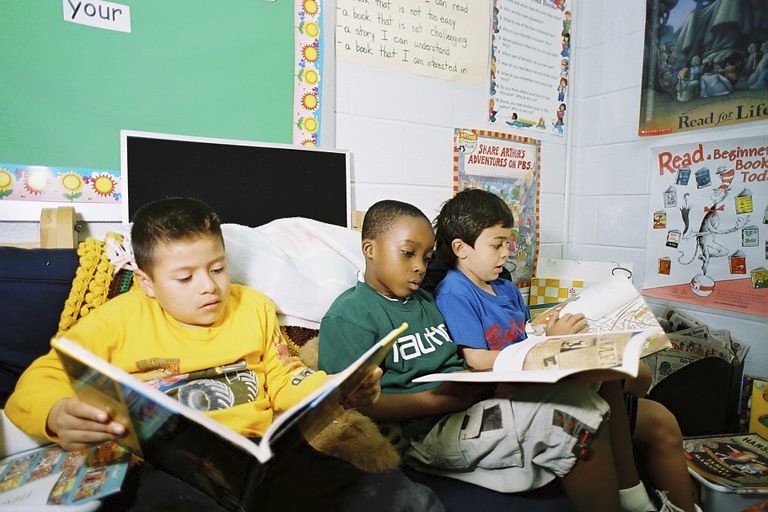
    Are you looking for STEM books to engage young readers and foster critical thinking skills? We’ve curated a list of five captivating books that do just that. These books are informative and enjoyable, making them perfect for students in grades 3-5. Plus, they can be found in your local library, bookstore, or online retailer. Here are five engaging STEM books to inspire elementary school students.

    1. “Rosie Revere, Engineer” by Andrea Beaty

    Rosie is a young engineer who loves to build gadgets and gizmos. When her great-great-aunt Rose inspires her, Rosie embarks on a mission to create something unique. This book is a picture book suitable for grades 3-5. You can find “Rosie Revere, Engineer” at your local library, bookstore, or online retailers like IndieBound. This book encourages children to embrace curiosity, creativity, and resilience when solving problems, essential skills in STEM fields. It empowers young minds to believe in their abilities to engineer solutions.

    2. “The Most Magnificent Thing” by Ashley Spires

    This picture book tells the story of a young girl who sets out to create the “most magnificent thing.” Along the way, she faces challenges and learns the importance of perseverance and problem-solving. This picture book is suitable for all ages, especially for grades 3-5. You can find “The Most Magnificent Thing” at your local library, bookstore, or online retailers like Amazon. This book teaches the engineering design process and the importance of trial and error in problem-solving. It encourages creative thinking and resilience when faced with challenges.

    3. “The Girl Who Thought in Pictures: The Story of Dr. Temple Grandin” by Julia Finley Mosca

    This book follows Temple Grandin’s life, showcasing her unique way of thinking and her incredible contributions to animal science. Despite facing challenges associated with autism, she pursued her passion and revolutionized the livestock industry with her humane livestock handling designs. The book is about 40 pages, suitable for grades 3-5. It is available at local bookstores, Barnes & Noble, or your local library. This STEM book encourages critical thinking by illustrating Temple Grandin’s unique thought process and the importance of embracing diverse perspectives. It emphasizes perseverance, passion, and utilizing one’s special abilities to succeed in STEM.

    4. “The Water Princess” by Susan Verde

    Princess Gie Gie dreams of bringing clean, fresh water to her African village. This story captures her dreams, determination, and the daily challenges of securing this basic necessity. It’s a tale of hope and resilience in the face of adversity. The book is approximately 40 pages, best for grades 3-5. It is available at local bookstores, Amazon, or your local library. This book prompts critical thinking by addressing the global issue of clean water access. It encourages empathy, problem-solving, and discussions about essential global challenges.

    5. “The Watcher” by Jeanette Winter

    This picture book tells the story of Dr. Jane Goodall and her groundbreaking work studying chimpanzees in Tanzania. It highlights her observations and the importance of patience and dedication in scientific research. This picture book is suitable for grades 3-5. You can find “The Watcher” at your local library, bookstore, or online retailers like Bookshop. Dr. Goodall’s story demonstrates how careful observations and critical thinking can lead to groundbreaking discoveries in zoology. It inspires young readers to appreciate the wonders of the natural world.

    These five grades 3-5 STEM books are fascinating and perfect for nurturing critical thinking skills. They encourage young readers to explore, question, and solve problems—essential qualities for future STEM leaders. As you immerse yourself in these stories, consider taking your passion for STEM to the next level by starting an NSTEM chapter at your school. Join a community of STEM enthusiasts and embark on exciting STEM adventures!

    By Srihitha Sunkara

    Do you want more resources on the topic of STEM books? NSTEM’s vast resources database provides thousands of searchable STEM resources by category, school level, and state. This comprehensive library includes info on enrichment activities, curricula, internships, scholarships, and more. Check out a free sampling here. Or get an NSTEM membership today to unlock the complete list. 

    Grades 3-5 continue the STEM education journey, where students are interested in the natural world and how things work, responding to stories told by teachers that give purpose and meaning to STEM disciplines molding them into thinkers, problem solvers, and creators. The National STEM Honor Society sees grades 3-5 as a critical point in the NSTEM journey. To start your grade 3-5 chapter of the National STEM Honor Society, click here.
  • Further Your Middle-School Child’s STEM Learning with These 4 At-Home STEM Projects

    Further Your Middle-School Child’s STEM Learning with These 4 At-Home STEM Projects

    Photo Courtesy of Flickr

    Are you looking for ways to expand your middle-schooler’s STEM education from the comfort of your home? Are you hoping to have a hands-on educational experience for your child while participating with them? You and your child can participate in many at-home STEM projects and gain a broader knowledge base. This blog will present four at-home STEM projects you and your middle-schooler can partake in to further their STEM journey.

    1.  Magnetic Slime

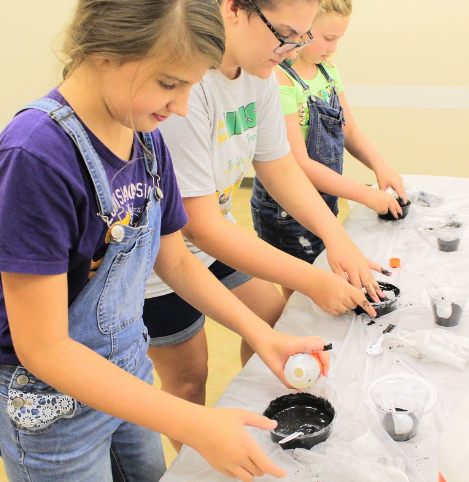
    What are two things that kids hold dear to their hearts? Slime and magnets, of course! You can gather their attention and allow them to learn more about science by conducting this at-home STEM project, magnetic slime. It is fun to play with and effective at capturing your middle-schooler’s attention. The project itself is straightforward. You must get white glue, liquid starch, iron oxide powder, plastic spoons for stirring, a mixing bowl, and a neodymium (rare earth) magnet. You can then follow easy-to-read instructions on how to make the magnetic slime at the following website: How to Make Magnetic Slime.

    2.  Crystal Sun Catchers

    What kids do not love looking at crystals and playing around with sun catchers? This activity is a great way to engage your kids with science with a project whose ingredients are effortless to get from your local grocery store. The materials are simple: Epsom salt, clear recycled plastic lids – use the clearest you can find, water, an empty jar, a bowl or glass measuring cup, a fork, a microwave (optional), tray, string, and a pin. All materials can be found in your house; if not, you can retrieve them at the grocery store. The steps to make a crystal sun catcher are easy to follow and can be found at the following website: How to Make Crystal Sun Catchers. This at-home experience can give your child a new appreciation for science and the many purposes and ways salt can be used.

    3. Stop Motion Animation Video

    If your middle-schooler is interested in technology and watching animated shows, making a stop-motion animation video will be something that will grab their notice, no doubt. There are only a few things you need: a phone or iPad to film, a stop motion animation app, and objects to animate (you can use legos or dolls). You can take it a step further and get a tripod to help keep your camera steady and get foam core to use as a background. This more technical STEM project uses a high level of creativity that every kid loves to explore. Also, who knows, you will be having a weekly movie night with stop-motion animation that your child created.

    4. Oil Spill

    You can always create an oil spill if you want your kids to have a real-world issue to compare and contrast with their projects. All you have to do is mix oil and water in a large bowl and add feathers. Give your child some sponges or spoons and instruct them to fish all the oil and feathers from the water. As they experience difficulty retrieving the items, they can see the real-life impact of oil on other elements and objects and how that translates to real situations. However, this project might become messy, so keep a mop nearby.

    These are just some of the few at-home STEM activities you can do with your middle-school children to help further their education in all things STEM; check out NSTEM’s resource library to discover even more!

    By Rameen Naviwala

    Do you want more resources on the topic of at-home STEM projects? NSTEM’s vast resources database provides thousands of searchable STEM resources by category, school level, and state. This comprehensive library includes info on enrichment activities, curricula, internships, scholarships, and more. Check out a free sampling here. Or get an NSTEM membership today to unlock the complete list. 

    In middle school, students are transformed, entering as children and emerging as young adults. Project-based learning enrichment helps students connect the dots between STEM and real life, making math and science relevant for them and keeping them engaged and interested. With a meaningful middle school experience, students are far more likely to focus on STEM disciplines in high school and beyond.  To start your 6-8 middle school chapter of the National STEM Honor Society, click here.