In a world where climate change and environmental defense are some of the most pressing concerns, empowering the next generation with the knowledge and skills to tackle environmental issues is crucial. Middle schoolers are at the perfect age–their curiosity is spiking, and their capacity to grasp complex topics is growing. Engaging middle-school students in renewable energy activities educates them about sustainability and fosters a sense of empowerment and responsibility towards the planet. So, without further ado, here are three unique renewable energy activities for middle schoolers!
1. Wind Power
This activity showcases the renewable energy form of wind power. First, middle schoolers create their anemometers from limited materials like cardboard, paper cups, and pushpins. Then, they use these anemometers to measure approximate wind speeds in their area. They can use this information to discover how well wind turbines would work in the students’ area that day. Then, students can understand the pros and cons of wind power and learn how to measure wind speed independently!
Materials needed: paper cups, push pins, modeling clay, cardboard, scissors, a stapler, markers, and stopwatches.
2. Build Your Own Hydro-Turbine
In this activity, students will learn about hydroelectricity and the power of water. First, they will put together a model water turbine out of materials like cardboard and soda bottles. Then, they will test out their waterwheels by pouring water on them and observing how they respond. This will show students how hydro turbines spin to create electricity! Discuss with them how the wheel’s spinning generates energy that can be turned into electric power. Through this activity, students can better understand the renewable energy source of hydroelectricity!
Materials needed: 2-liter soda bottles, scissors, duct tape, wooden dowels, string, cardboard, plastic wrap, water, and stopwatches.
3. Solar Oven S’mores
This activity allows middle schoolers to explore solar energy in a fun and tasty way–s’mores! First, students will create an insulated, reflective “oven” from a cardboard box. This box will use the sun’s rays to conduct heat and eventually make enough heat to melt the marshmallows and chocolate on s’mores. This activity is a fun way to show students the true power of the sun and how it can be used to harness energy for many applications. With sweet treats included, this activity will surely be a hit!
Materials needed: a cardboard box with a lid, aluminum foil, clear plastic wrap, glue sticks, tape, a stick, a straightedge, and a box cutter.
By Tyler King
Empowering middle schoolers with knowledge and hands-on experience with renewable energy creates a deeper understanding of environmental defense. It instills a sense of responsibility in creating a more sustainable future. With practical activities like these three, students can become eco-empowered individuals ready to take on the vast world of environmental conservation!
Do you want more resources on the topic of renewable energy activities? NSTEM’s vast resources database provides thousands of searchable STEM resources by category, school level, and state. This comprehensive library includes info on enrichment activities, curricula, internships, scholarships, and more. Check out a free sampling here. Or get an NSTEM membership today to unlock the complete list.
Middle school is where students are transformed, entering as children and emerging as young adults. Project-based learning enrichment helps students “connect the dots” between STEM and real life, making math and science relevant for them and keeping them engaged and interested. With a meaningful middle school experience, students are far more likely to focus on STEM disciplines in high school and beyond. To start your 6-8 middle school chapter of the National STEM Honor Society, click here.
Middle school is a pivotal time for young learners to engage with hands-on learning experiences that shape their understanding of the world. An impactful endeavor to embark on today is a composting journey. Composting reduces waste and teaches important lessons about environmental sustainability and the interconnectedness of ecosystems and organisms. If you are a middle school teacher eager to introduce composting to your students, here are three essential projects to kickstart your composting journey!
1. Compost in a Bag
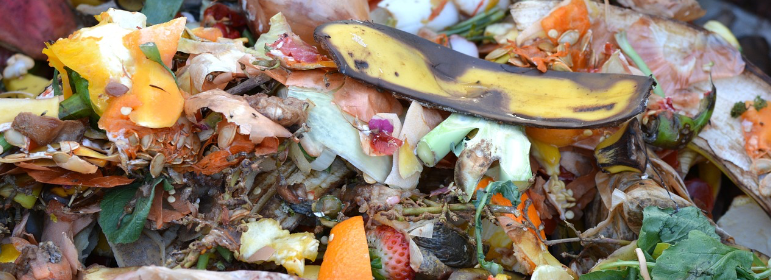
In this activity, middle schoolers will make compost out of organic material such as food. First, they’ll create an Earth-like environment with dead plants, food, and soil in a Ziploc bag. Then, they will mist their materials thoroughly with water and close them tightly to contain the moisture. After waiting for the contents to decompose in the sunlight outside, students will see the effects of real-life composting. This activity showcases the fantastic nature of biodegradation, a crucial process for Earth’s productivity!
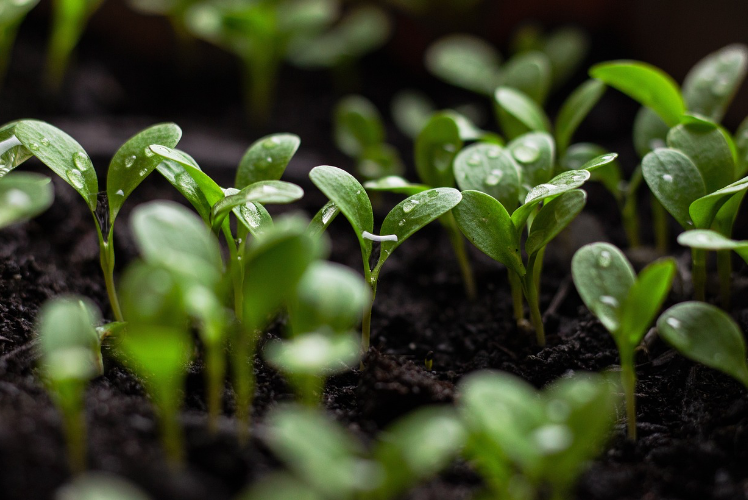
In this activity, middle schoolers will compare the total growth and growth rates of plants grown in regular soil vs. plants grown in compost. First, they will plant seeds of the same variety in a pot of each substrate. After waiting for them to grow and documenting their growth progressions, students will see the difference between plants grown in regular soil vs. compost. This activity is a hands-on way for students to discover the nutrient-filled nature of compost!
Materials needed: plant seeds, pots, soil, compost, and water.
3. Environmental Lunch
This activity for middle schoolers involves discovering what students can actually turn into compost from their school lunches. After bringing in their trash from lunch, they will find just how many items in their lunchboxes are compostable. They will then log these materials to understand how they can work towards more sustainable lunches! This activity is an excellent method to show middle schoolers exactly how to pick compostable and non-compostable materials.
Materials needed: lunch discards, four buckets, and markers.
With these three essential projects, your middle schoolers can start a rewarding composting journey that reduces waste and cultivates a culture of environmental awareness and responsibility. It is so important for students these days to understand the power of ecosystems and ecological interactions. So, let’s turn organic waste into a valuable resource and nurture a greener, more sustainable future for generations to come!
By Tyler King
Do you want more resources on the topic of composting activities? NSTEM’s vast resources database provides thousands of searchable STEM resources by category, school level, and state. This comprehensive library includes info on enrichment activities, curricula, internships, scholarships, and more.Check out a free sampling here. Or get an NSTEM membership today to unlock the complete list.
Middle School is where students are transformed, entering as children and emerging as young adults. Project-based learning enrichment helps students “connect the dots” between STEM and real life, making math and science relevant for them and keeping them engaged and interested. With a meaningful middle school experience, students are far more likely to focus on STEM disciplines in high school and beyond. To start your 6-8 middle school chapter of the National STEM Honor Society, click here.
Are you curious about exploring unique and exciting career paths within STEM? This blog will take a closer look at four unusual STEM careers. From cryptozoologist to forensic artist, each career offers its own fascinating and rewarding aspects.
1. Cryptozoologist
What are cryptozoologists? Cryptozoologists research “cryptids,” or creatures whose existence has not been proven by science. They examine legends, firsthand reports, and anecdotal evidence to find new species or confirm the existence of fabled monsters such as Bigfoot or the Loch Ness Monster. By applying scientific techniques like DNA analysis, field investigation, and habitat monitoring, cryptozoologists try to collect proof that cryptids exist.
What is the average annual salary? The pay for cryptozoologists varies greatly depending on several criteria, including work environment, education level, and experience. Individuals in academic or research roles often make between $40,000 and $80,000 annually. The income of independent researchers and writers may vary significantly based on their publications’ popularity and their projects’ funding.
What aspects of STEM are connected to this career? Cryptozoology intersects with various STEM disciplines, including biology, zoology, ecology, and anthropology. Cryptozoologists use scientific approaches to investigate claims; they assess alleged evidence using concepts from taxonomy, evolutionary biology, and ecological niche modeling. Furthermore, technological developments like DNA analysis and remote sensing support the topic by offering instruments for confirming or refuting reports of cryptid sightings.
Why is this career important? Though the scientific community frequently views cryptozoology with skepticism since many cryptids lack empirical support, the study of cryptozoology encourages curiosity and natural world research. Mainstream scientists and environmentalists often work with cryptozoologists to investigate isolated environments and record biodiversity. Although it is uncommon to uncover new species, cryptozoological study aids conservation efforts by bringing attention to vulnerable environments.
2. Toy Designers
What are toy designers? Toy designers are responsible for conceptualizing, designing, and developing toys and games for children of various ages. They evaluate aspects like safety, durability, and instructional value by generating original concepts, sketching designs, and building prototypes. To bring their ideas to reality, toy designers work with engineers, marketers, and manufacturers, applying design, ergonomics, and child development principles.
What is the average annual salary? The pay scale for toy designers varies based on expertise level, region, and company. While experienced professionals working for well-known toy firms or running their design studios might earn up to $100,000 annually, entry-level designers may only make between $40,000 and $60,000.
What aspects of STEM are connected to this career? Toy designing is closely connected to various aspects of STEM, including material science, mechanical engineering, and product design. Toy designers use STEM principles to create toys that are safe, enduring, and supportive of kids’ learning and growth in addition to being enjoyable. They might include electronics and coding components in interactive toys, encouraging play-based STEM learning.
Why is this career important? Toy designers significantly influence how children perceive childhood and develop their imagination and creativity. To make toys that appeal to modern families and children, they need to keep up with new developments in technology, entertainment, and child development. The dynamic and collaborative world of toy design demands a harmonious blend of technical mastery, artistic ingenuity, and commercial knowledge.
3. Volcanologist
What are volcanologists? To increase scientific knowledge, reduce volcanic hazards, and better understand volcanic processes, volcanologists research volcanoes, volcanic activity, and related phenomena. In the field, they gather information about volcanic eruptions; in the lab, they examine volcanic rocks and fumes; and they remotely sense and track volcanic activity with devices placed on the ground. Volcanologists can also work in emergency response planning, risk assessment, and public education.
What is the average annual salary? Experience, education, and place of work are some of the variables that affect a volcanologist’s pay. While experienced volcanologists working in academia, government organizations, or research institutions might make over $100,000 annually, entry-level roles may pay between $50,000 and $70,000 annually.
What aspects of STEM are connected to this career? Numerous STEM fields, such as geology, earth sciences, physics, chemistry, and remote sensing, are related to volcanology. Volcanologists use concepts from geophysics, geochemistry, and geospatial analysis to investigate volcanic processes, forecast eruptions, and evaluate volcanic hazards. They also use technologies like gas analyzers, seismometers, and satellite images to monitor volcanic activity.
Why is this career important? Volcanologists are essential to comprehending and reducing the effects of volcanic eruptions on the environment and human populations. Their work helps to build early warning systems, enhance monitoring systems for volcanic activity, and provide guidance for land-use planning in volcanic areas. To solve the complex issues related to volcanic risks, volcanologists may also work in interdisciplinary teams, including engineers, social scientists, and emergency responders.
4. Space Archaeologists
What are space archaeologists? Space archaeologists use satellite photography, remote sensing technologies, and geographic information systems (GIS) to find and investigate ancient sites from space. They examine minute changes in the topography, flora, and land use patterns to find hidden buildings or old villages. To evaluate research results and organize on-the-ground excavations, space archaeologists work in tandem with archaeologists and cultural heritage specialists.
What is the average annual salary? Experience, education, and employer are among the variables that affect a space archaeologist’s pay. While experienced professionals working in government organizations, academic institutions, or research facilities can make over $100,000 a year, entry-level roles may pay between $50,000 and $70,000.
What aspects of STEM are connected to this career? Space archaeology interacts with geology, geography, remote sensing, and archaeology, among other STEM fields. Space archaeologists study satellite pictures using physics, optics, and image-processing concepts to locate archaeological features. They also map and visualize spatial data using geographic information systems (GIS) software.
Why is this career important? Space archaeologists help us understand past civilizations, find hidden archaeological features, and monitor the preservation of cultural heritage sites. Their work informs conservation initiatives and heritage management plans while shedding light on human history and cultural change.
Conclusion
In conclusion, STEM careers don’t have to be limited to traditional options. Exploring unique and unusual paths like the above can lead to exciting and fulfilling careers. With the increasing importance of STEM fields worldwide, it’s worth considering these lesser-known opportunities.
By Gayathri Narayanan
Do you want more resources on the topic of STEM careers? NSTEM’s vast resources database provides thousands of searchable STEM resources by category, school level, and state. This comprehensive library includes info on enrichment activities, curricula, internships, scholarships, and more.Check out a free sampling here. Or get an NSTEM membership today to unlock the complete list.
Project-based learning enrichment provides high school students with college and career readiness. It gives them real-world relevance, transforming students into collaborators and imaginative problem solvers. They will gain the upper hand in a global landscape, stemming from enhanced confidence and grit. NSTEM provides these young STEM enthusiasts with a close community of like-minded fellow students and educators. To start your 9-12 Chapter of the National STEM Honor Society, click here.
In today’s world, instilling a sense of environmental stewardship in young learners is crucial. With many concerns about sustainability and renewability, empowering children with the knowledge and tools to protect our future is critical. Promoting sustainability through education is just one way to do that! So, this blog post will explore three sustainable science activities for kindergarten to second-grade students that will empower young minds to foster our planet and care for our future.
1. Watering Leaves
In this activity, elementary schoolers learn how water travels through leaves! First, students snip off the bottom of a leaf stem. Then, they place their leaf in a glass filled with water. After adding red food coloring to the water and waiting a couple of days, the veins of the leaves turn visibly red from their water intake. This experiment is an excellent demonstration for elementary school students to understand how plants stay alive and work to maintain our planet’s health!
Materials needed: leaves, scissors, clear cups, water, and red food coloring.
2. Growing Beans in a Bag
In this activity, elementary schoolers explore the growth of beans in a controlled environment. First, students place beans into a paper towel within a Ziploc bag. Then, they zip the bag shut to allow the seeds to grow. With some regular watering, these beans will sprout into entirely new plants! Throughout this project, young learners can keep track of their plant’s growth and explore differing growth rates between beans. This experiment showcases the incredible nature of plant reproduction.
Materials needed: plant seeds, beans, Ziploc bags, permanent markers, paper towels, and water.
3. Compost in a Bottle
In this activity, elementary schoolers will make compost out of organic material. First, they’ll create an Earth-like environment with dead plants and soil in a bottle. Then, they will spray their materials with water and close them tightly to contain the moisture. After placing the bottle somewhere warm, students will see their materials turn to compost. This activity showcases the fantastic nature of biodegradation, a crucial process for Earth’s productivity!
Materials needed: 2-liter bottles, garden soil, shredded paper, fruit and vegetable peelings, hedge trimmings, water, cello tape, sharp scissors, and permanent markers.
Engaging students in sustainable science enhances their school learning experiences and cultivates a fantastic commitment to environmental stewardship. Activities such as bean-growing experiments, recycling relay races, and composting in bottles can inspire kindergarten to second-grade students to become the next generation of environmentally conscious leaders. With these three sustainable science activities, students will be empowered to positively impact the planet and create a more sustainable future for future generations!
By Tyler King
Do you want more resources on the topic of sustainable science activities? NSTEM’s vast resources database provides thousands of searchable STEM resources by category, school level, and state. This comprehensive library includes info on enrichment activities, curricula, internships, scholarships, and more.Check out a free sampling here. Or get an NSTEM membership today to unlock the complete list.
K-2 is where it all starts with STEM education. The National STEM Honor Society focuses on “From K to Career, NSTEM from the Start!” To start your K-2 Chapter of the National STEM Honor Society, click here.
The K-2 age range is an excellent time to introduce children to STEM topics, but it can be challenging to know where to start. This blog will discuss three exciting family activities to boost your K-2 child’s STEM experience.
1. Storybook Engineering
Pick a kid’s book where the protagonists have to use STEM-related ideas to tackle a problem or issue. The Three Little Pigs short story and Rosie Revere, Engineer by Andrea Beaty are great examples. After finishing the book, discuss the scientific and engineering concepts presented in the narrative. Then, using practical exercises, ask your youngster to visualize or reproduce a portion of the tale. For example, students may utilize various materials to make a more robust house for the three little pigs or design and build an innovation for one of the characters. Storybook engineering stimulates young children’s creativity and problem-solving abilities, blending STEM inquiry with storytelling.
2. Outdoor Math and Nature Exploration
Along the way, add science and math activities to your child’s outdoor activity or nature walk. You could ask them to measure and approximate the lengths of different sticks or rocks or count and categorize the kinds of leaves they find. Urge children to examine the natural environment closely and pose questions about their encounters. Also, you can introduce fundamental scientific ideas like recognizing various animal footprints or noting variations in the weather. This practical learning opportunity fosters scientific inquiry and curiosity and strengthens mathematics abilities.
3. STEAM Art Projects
You can incorporate art into STEM education with STEAM (Science, Technology, Engineering, Art, and Mathematics) programs that prioritize creativity and innovation. Give your kids some tools, like cardboard boxes, recyclables, markers, and art supplies, and set a task to construct a structure or make an artwork based on a given issue or theme. For instance, kids could build a model of a robot, design and decorate a spaceship, or paint a picture of a garden while talking about the function of pollinators in ecosystems. Encourage your child to integrate parts of science and art into their project and think critically about their chosen designs. Through this activity, learners are encouraged to develop interdisciplinary thoughts and make connections between many subjects.
Through these exciting and developmentally appropriate activities, young children can be introduced to STEM topics while developing their critical thinking, problem-solving, and curiosity abilities.
By Gayathri Narayanan
Do you want more resources on the topic of family activities? NSTEM’s vast resources database provides thousands of searchable STEM resources by category, school level, and state. This comprehensive library includes info on enrichment activities, curricula, internships, scholarships, and more.Check out a free sampling here. Or get an NSTEM membership today to unlock the complete list.
K-2 is where it all starts with STEM education. The National STEM Honor Society focuses on “From K to Career, NSTEM from the Start!” To begin your K-2 Chapter of the National STEM Honor Society, click here.
For high school students, project-based learning (PBL) can be a rewarding experience, but financing such programs can be challenging. This blog will uncover three clever approaches to paying for project-based learning in high school.
1. Grant Funding
Many funds are available, especially for PBL and other educational projects. Grants are frequently available to encourage new teaching approaches from organizations, including the National Science Foundation (NSF), the Bill & Melinda Gates Foundation, and the National Education Association (NEA). Nonprofits that promote education and local community foundations may also offer funding opportunities. To improve your chances of receiving grant funding, make sure your bids align with the donor’s goals and objectives and emphasize the educational benefits and outcomes of your PBL projects.
2. Corporate Sponsorships and Partnerships
As part of their efforts to fulfill their corporate social responsibility (CSR) obligations, many businesses are willing to provide funding for educational projects. Speak with companies that are linked to the concept of your project, those that are local, or those that have connections to STEM or education. Encourage collaborations that benefit both parties, wherein the corporation offers resources, financial support, or expertise in exchange for advantages like employee volunteerism, branding, or access to talented students. In addition to providing financing, working with corporate partners can increase PBL’s relevance to the real world by putting students in touch with resources and practitioners in the field.
3. Crowdfunding Campaigns
To raise money for your PBL projects, use online crowdfunding sites like DonorsChoose, Indiegogo, and Kickstarter. Develop persuasive campaigns that detail the goals, implications, and advantages of the initiatives. Remember to include detailed budgets and funding targets. Invite community members, educators, parents, alums, and students to participate in the campaigns. Then, encourage them to be shared on social media and other means to reach a larger audience. Through crowdfunding, you may directly raise money from people who are enthusiastic about innovation and education while also gaining access to grassroots support.
Through grant funding, business partnerships, and crowdsourcing initiatives, high schools can obtain the necessary funds to establish captivating and significant project-based learning opportunities for their students.
By Gayathri Narayanan
Do you want more resources on the topic of project-based learning? NSTEM’s vast resources database provides thousands of searchable STEM resources by category, school level, and state. This comprehensive library includes info on enrichment activities, curricula, internships, scholarships, and more.Check out a free sampling here. Or get an NSTEM membership today to unlock the complete list.
Project-based learning enrichment provides high school students with college and career readiness. It gives them real-world relevance, transforming students into collaborators and imaginative problem solvers. They will gain the upper hand in a global landscape, stemming from enhanced confidence and grit. NSTEM provides these young STEM enthusiasts with a close community of like-minded fellow students and educators. To start your 9-12 Chapter of the National STEM Honor Society, click here.