
Author: NSTEM Media

  • Summer Science Splash: 3 Fun and Easy Experiments to Beat the Heat

    Summer Science Splash: 3 Fun and Easy Experiments to Beat the Heat

    Photo Courtesy of Envato

    Things are beginning to heat up in the STEM sphere, and it isn’t just from the fun projects we’ve been planning! The summer equinox has come and gone, but the sun’s been working overtime to ensure that the great outdoors have kept their blazing temperatures to the maximum. It’s no small wonder that, in light of these conditions, fellow scientists out in the field have reported back with many experiments that will allow students both a gratifying lesson in science and a fun way to test the limits of science in a cooler environment! So let’s dive in and look at a few different educational enterprises to beat the heat!


    1. Paper Ball Run Challenge

    Link to Experiment: https://www.sciencebuddies.org/science-fair-projects/project-ideas/CE_p030/civil-engineering/paper-ball-run-challenge

    Ever since the dawn of time, there have been questions that mankind has yet to answer: What will our future hold, why does music hold such a staple in human culture as a whole, and, of course, why is rolling stuff off an inclined plane so darn fun? To sending tires down a hill to the annual Cooper’s Hill Cheese-Rolling and Wake, Homo Sapiens seem to have developed a dopamine trigger specifically for viewing an object (or themselves) and thinking, “yeah, that’s some premium-grade hill-rolling material.”

    You might as well get some education out of it, right?

    The Paper Ball Run Challenge may not seem like much at first, but it’s surprisingly difficult to create with one key ruleset: make the ball take as long as possible to reach the end. This experiment easily comes with innovative thinking attached. For instance, you can make the run longer and taller, but then it’ll become less structurally sound, requiring bracing to keep it sturdy. Or maybe the student wants to maneuver the ball up and down with a simple pulley system. They’ll have to calculate the weight to go down from the ping pong ball settling into the basket but have the counterweight still be heavy enough to keep the basket up when not in use. Furthermore, they would have to place an angled block below the basket to get the ball to spill out. To put it simply, this project can be as creative as the student, which is always a staple for a good lesson.

    2. Alka-Seltzer Powered Lava Lamp

    Link to Experiment: https://www.sciencebuddies.org/stem-activities/make-a-lava-lamp

    Lava lamps are a true advocate of the statement’s validity, “Some things will never not be cool.” They evoke a mysterious, otherworldly atmosphere to the room, something that kids have long since and long after will find a bemused attraction to. Essentially, the student will take two bottles of water, food coloring, and vegetable oil mixture and heat one while cooling the other. Then, you feed the bottle a portion of the Alka-Setzer tablet and watch as the oil and food coloring coalesce into bubbles flying around the hydrosphere! This experiment displays the role that varying temperatures can fulfill in chemical reactions but does it in a fun way that any student can find some level of engagement with.

    3. Rock Crystal Candy

    Link to Experiment: https://www.sciencebuddies.org/stem-activities/rock-candy

    Come on. I won’t need to explain why this one is an excellent and fun choice for kids, right?

    This experiment is relatively easy to perform and requires little more than your typical cooking supplies, granulated sugar, food coloring, and yarn. Still, it will need some patience on the part of the student, as the process to grow the crystal will take around a week. Another advisement to be aware of is that sugar cooks at an incredibly hot temperature, so if you allow your students to cook this concoction themselves, keep a stern eye on them, as it could cause nasty burns if touched directly. However, suppose you do have a responsible student (or students) with a craving for geology and a sweet tooth to match. In that case, this is a worthwhile experiment to demonstrate how crystalline structures can form in nature!

    By Noah Moster


    Summer is an awesome environment for learning about the great outdoors and all they have to offer. But sometimes, it’s just too hot! Fortunately, science isn’t bound by the outdoors. You can always learn something, no matter where you are, and that’s what matters at the end of the day: learning something!

    Do you want more resources on the topic of STEM Summer Activities? NSTEM’s vast resources database provides thousands of STEM resources that are searchable by category, school level and state. This comprehensive library includes info on enrichment activities, curricula, internships, scholarships and more. Check out a free sampling here. Or get an NSTEM membership today to unlock the complete list. 

    Middle School is where students are transformed, entering as children and emerging as young adults. Project-based learning enrichment helps students connect the dots between STEM and real life, making math and science relevant for them and keeping them engaged and interested. With a meaningful middle school experience, students are far more likely to focus on STEM disciplines in high school and beyond. To start your 6-8 middle school chapter of the National STEM Honor Society, click here.


  • 3 Exciting VR Science Projects and Activities

    3 Exciting VR Science Projects and Activities


    Photo Courtesy of Envato

    Virtual reality.

    If you had told someone from just 40 years ago that we’d be crafting entire worlds to interact with using just the typical VR set or even just a smartphone and a cardboard case, you’d probably be tested for drug use. However, VR has taken the world by storm, and it’s undoubtedly here to stay by the looks of it. So why not utilize it for education and learn how it works?

    Today, we’ll explore virtual reality through three distinct dimensions: the example program as an outside observer, the learning program for starting in the VR field, and finally, powerful software to develop a personal (or professional) career in virtual reality! Strap your goggles in, make sure your surroundings are clear of obstacles, and prepare yourself for a swim in the sea of technology!


    1. Google Arts & Culture

    Link to Website: https://artsandculture.google.com/story/how-to-take-a-virtual-field-trip/QgUxjvlk7ChgnQ

    Let’s start with a simple question: What is virtual reality? Virtual reality is a simulation of any environment using immersive technology to transport the viewer into the target space mentally. When thinking about VR, one’s mind often focuses on fantastical areas, such as a cyborg pirate ship or perhaps a creaky abandoned amusement park with killer clowns. However, virtual reality can just as easily personify places that may exist but that the viewer will likely never see, such as Mars or the Himalayan Mountains.

    The Google Arts and & Culture department has found an engaging way to encapsulate this approach with their virtual field trips explicitly designed for the classroom. This website showcases firsthand the possibilities available in the VR sphere to those who drive themselves to produce and present their craft to the world, and it serves as an example of just the beginning of the advancements this field will hold for those working within.

    2. Unity Learn VR Development 

    Link to Course: https://learn.unity.com/pathway/vr-development

    But you’ve already clicked on this blog post, and you likely don’t need to be espoused about the benefits of gaining more in-depth knowledge of the technological tools of creation. What you likely want to know is: how? How can students start honing their skills with regard to virtual reality?

    Look no further than the VR Development course for Unity Learn. Unity is a very popular engine for video game creation. In the mutual interest of growing more creators in their community, they have constructed a mission-centric training module to help those trying to learn and break the mold of VR experiences. This website will help you understand the basics of virtual reality and its terminology. As a bonus, it even has a link at the bottom for potential job opportunities in the field, which you should check out regardless of whether or not this is just a passion or a profession.

    Something to be said is that this module will (obviously) utilize the Unity program, so if you aren’t familiar with it, you might want to take a look at this website, which has a similar learning course for the Unity Editor (link to website: https://learn.unity.com/pathway/unity-essentials).

    3. Blender

    Link to Website: https://www.blender.org/  

    Okay, you’ve seen where VR can take you and started figuring out the basics. Now, you decide on the next step in creating a virtual sphere: interactivity or realism. Unity is excellent software for making interactive experiences, and if you’re the type of person who inundates yourself deep into one program rather than having a comparatively shallow knowledge of many applications, you’ll likely want to stick with it for the long haul and learn everything you can.

    Blender is a strong competitor if you are more interested in crafting a more narrative-driven environment or desire more authenticity in, say, the walking animations of a character or the facial reactions. The common consensus is that Blender can handle the complexity that Unity may struggle with sometimes. That’s probably because Blender focuses on the 3D animation aspect, which is less suited for making games such as films or scenes. However, both have roughly equal value in the market, so it’s up to you what knowledge you’ll want to cultivate.


    Virtual reality is ever-expanding. This article may not even be accurate in two or three years, but that’s how fast the industry is changing. Fortunately, with those whirlwinds of progression come opportunity, and opportunity is the perfect ally to the prospective amateur. Just remember that, above all else, what matters is that you’re learning and growing. With one learned failure comes a thousand potential successes. And as long as you’re enjoying your journey, it doesn’t matter what you make, only that you’re proud of what you’ve accomplished! So get working! Your future’s waiting for you.

    By Noah Moster


    Do you want more resources on the topic of Virtual Reality? NSTEM’s vast resources database provides thousands of STEM resources that are searchable by category, school level, and state. This comprehensive library includes information on enrichment activities, curricula, internships, scholarships, and more. Check out a free sampling here, or get an NSTEM membership today to unlock the complete list.

    Project-based learning enrichment provides high school students with college and career readiness. It gives them real-world relevance, transforming students into collaborators and imaginative problem solvers. They will gain the upper hand in a global landscape, stemming from enhanced confidence and grit. NSTEM provides these young STEM enthusiasts with a close community of like-minded fellow students and educators.  To start your 9-12 Chapter of the National STEM Honor Society, click here.
  • 3 Inspiring STEM Projects for Families to Try at Home

    3 Inspiring STEM Projects for Families to Try at Home

    Photo Courtesy of Envato

    There are many reasons to enjoy the summer season. It’s warm, school is out, and there’s lots to do! However, one thing that always seems to be overlooked is how colorful the world is. Vibrant green trees, rich blue oceans, and flowers of every hue and shade strive to outcompete each other wherever one goes. Summer is the season of life!

    It can be hard to notice the world’s luminescence when the black letters on the white pages of news articles make life feel so gray. Kids take notice of this mood whether we see it directly or not. So, let’s work to put more color in their lives, eh?


    1. What Colors Absorb Heat the Most?

    Link to Activity: https://www.teachengineering.org/activities/view/colors_absorb_heat_better

    To start it simple, here’s the Ice Cube Color experiment. At a surface-level glance, there isn’t much to this project: simply get your student to create a three-sided box for however many colors you’d like to test, place an ice cube inside said box, and have them check up on them, record the stage of each capsule until all of them have melted, at which point you ask them which colors seem to have sped up the process.

    While this is a relatively straightforward assignment, a learner can glean a surprising amount of knowledge from this innocuous task, as shown on the TeachEngineering website. In an astonishingly impressive way, they stretch out an easily understandable concept to an almost ludicrous degree (just like a blog writer). They also pack it with insightful observations and expertise that benefit the reader greatly (unlike a blog writer). There’s even a Vocabulary and Definition section for the child to retain terminology that can be used in future science courses. A+, TeachEngineering. A+.

    2. Rainbow in a Jar

    Link to Activity: https://www.ontariosciencecentre.ca/science-at-home/diy-science-fun/make-a-rainbow-in-a-jar

    Second on the list comes the Rainbow in a Jar experiment. This one’s a pretty cool demonstration of the different densities that various liquids can hold and makes for a pretty cool tabletop display on top of it all. The Ontario Science Centre website that we found this on instructs the student to use materials like dish detergent, vegetable oil, and rubbing alcohol dyed with different colors to present a multi-hued concoction contained within the average pizza-sauce Mason jar. However, other websites stated that merely utilizing water and varying levels of sugar was enough to craft the outcome of this project. Either way, Rainbow in a Jar demonstrates the beauty that can arise from a simple know-how of STEM logic.

    3. Eggshell Geode Crystals 

    Link to Activity: https://sciencebob.com/eggshell-geode-crystals/

    Finally, let’s end with an experiment that’s both cool-looking AND interactable! The Eggshell Geode Crystal experiment is a perfect example for showing where actual geodes come from. It also rewards students undertaking this project with a cool-looking specimen for their educational endeavors. Something to note about this one is that it will require some patience, as several days are needed to allow the crystals to form on the shells of the eggs. However, what will emerge will surely captivate any eager eyes, as the mesmerizing rocks look shockingly similar to their natural counterparts!

    All they would need to do is crack open the egg (while keeping a sizable section unblemished for the crystals to form on the surface), clean the shell, boil and mix the solution, add whatever food coloring they want to individual portions, pour it into the shell, and place it in a safe spot to allow the water to evaporate. After that, voila! Your very own geodes.

    By Noah Moster


    These blogs are very often about educational pursuits and how to allow your children and students to explore the limits of STEM and encourage them to break past them in the future. Still, it can be easy to forget: learning is nothing without passion, and passion is nothing without love. The purpose of these experiments isn’t just to demonstrate the purely logical elements of science but also to provide a great activity by which student and the teacher can both share a moment of pride in their object of creation, and it’s these memories that will help the student in moments of highest joy, and lowest sorrow.

    Isaac Newton was famously quoted as saying, “If I have seen further, it is by standing on the shoulders of giants.” While the common interpretation of this was to symbolize the role models of the figures of history before him that enabled his forays into innovation, it can also be construed differently: a scientist is nothing without support, nor an engineer anything without encouragement. Help your student grow and flourish, and you’ll be rewarded in a way that dulls the vivacity of geodes or rainbow jars: your very own Isaac Newton and another vital color influencing the kaleidoscope of humanity.


    Do you want more resources on the topic of At-Home Summer Projects? NSTEM’s vast resources database provides thousands of searchable STEM resources by category, school level, and state. This comprehensive library includes info on enrichment activities, curricula, internships, scholarships, and more. Check out a free sampling here. Or get an NSTEM membership today to unlock the complete list.

    Project-based learning enrichment provides high school students with college and career readiness. It gives them real-world relevance, transforming students into collaborators and imaginative problem solvers. They will gain the upper hand in a global landscape, stemming from enhanced confidence and grit. NSTEM provides these young STEM enthusiasts with a close community of like-minded fellow students and educators.  To start your K-2 Chapter of the National STEM Honor Society, click here.
  • Innovate and Inspire: 5 Top Science Fair Project Ideas for High Schoolers

    Innovate and Inspire: 5 Top Science Fair Project Ideas for High Schoolers


    Photo Courtesy of Envato

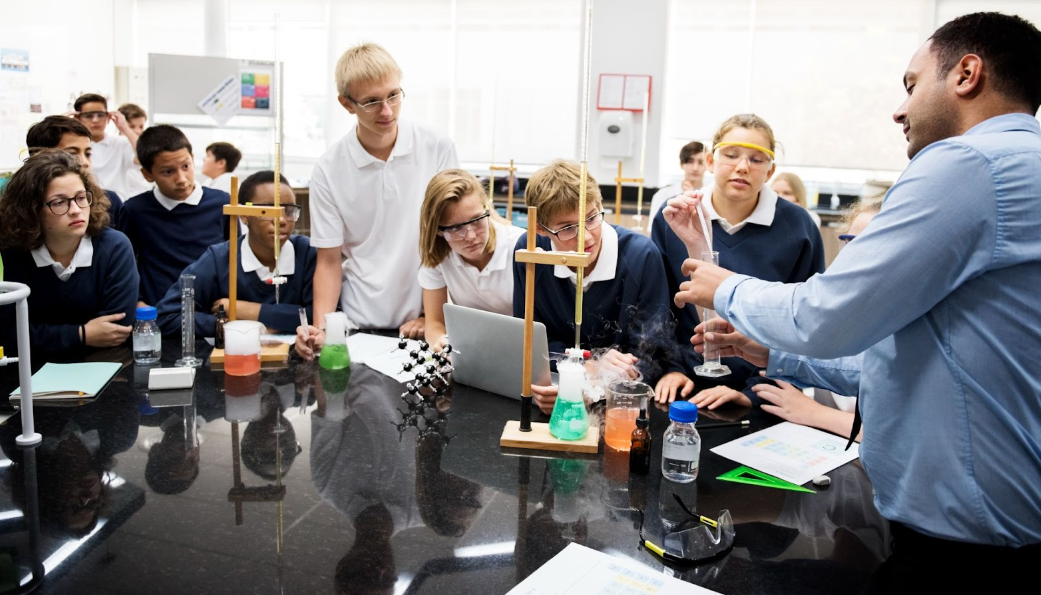
    The science fair is an excellent place for those curious about our world’s composition to demonstrate their educational prowess for others to enjoy. However, it can also be quite daunting for someone who may not know where to start or what would navigate that middle ground between a passionate subject and a physical construction in said area of expertise.

    Where can one find ideas for this task? No worries, we’ve got you covered. Here are five ideas to get you thinking about what you’re looking for in a science fair project! If none of these catch your fancy, they were all taken from ScienceBuddies.org, and there are plenty more experiments to choose from if you feel obliged to give them a look.


     1. Extracting DNA from Strawberries

    Link to Project: https://www.sciencebuddies.org/science-fair-projects/project-ideas/BioChem_p015/biotechnology-techniques/strawberry-dna

    Let’s get down to the basics, such as DNA. There isn’t much to be said about DNA that hasn’t been extensively researched, but that’s also why it is a great project to work with. This example is simple and cost-effective but allows students to become a biotechnological engineer for a day and condense a strawberry into its purest form: its genetic composition.

    To simplify the process so that the average person (or blog writer) would understand it, you use a chemical (dishwashing liquid, so nothing dangerous) to crack the cells open. Then, you attract the DNA with salt to group close to one another, and you separate the whole mixture with rubbing alcohol to show your audience what the biological instructions (DNA) for creating strawberries look like! It’s relatively easy but still pretty cool.

    2. Musical Straws

    Link to Project: https://www.sciencebuddies.org/science-fair-projects/project-ideas/Music_p016/music/do-re-mi-with-straws

    Music is something that everyone inherently understands, but only some ever try to comprehend. How does good noise come from wooden and metal sticks, like clarinets and flutes? Sounds like the perfect idea for a science fair project! In this experiment, the student doesn’t need much more than the materials they likely already have at home: straws, a tape measure, and some sort of tuning app or musical instrument.

    This project entails cutting the straws into a roughly “reed” shape, similar to the device an oboe uses to create its distinct timbre, and snipping off the other end to produce differing pitches of said instrument. While simple in theory, in concept, it can be pretty tricky to find exactly the perfect note, and if you’re off by a couple of cents, the band kids will likely notice! This project would pair well with some graphs explaining how sound travels through the air in wavelengths, with the straws acting as a visual aid rather than the explanation itself.

    3. Homemade Wind Meter

    Link to Project: https://www.sciencebuddies.org/science-fair-projects/project-ideas/Weather_p008/weather-atmosphere/how-does-a-wind-meter-work

    Those weather forecasts…one moment, they tell you it’s sunny, and next thing you know, you’re knee-deep in rainwater. With this experiment, you can be wrong about the weather, too! (or right, preferably).

    Anemometers are measuring devices that meteorologists use to measure wind speed, and surprisingly, they’re not that complicated. For this experiment, you’d need the standard office supplies (scissors, stapler, pencil, etc.) with some paper cups, straws (which is, let’s face it, the most versatile DIY material out there), a pin, and a fan with different speeds. Following the instructions on the website will grant you a homemade anemometer of your own, and once you add in a description of wind’s role in the formation of weather, you’re set to go for this week’s science fair!

    4. Recognizing Faces with Neural Networks

    Link to Project: https://www.sciencebuddies.org/science-fair-projects/project-ideas/ArtificialIntelligence_p016/artificial-intelligence/facial_recognition

    Recognizing faces is something that most humans innately do instinctively, but it’s a whole different story regarding computers. It takes a ton of software, hardware, and lots of years in college to get your laptop to differentiate different humans by appearance…right?

    Apparently not, because it’s on this list of high-school science fair ideas! While there is more prep work than previously mentioned projects, it’s fairly technical but straightforward.

    The simplest explanation is this: You’ll take a bunch of pictures from person A and tell the machine, ” This is the person I want,” designating one as an “anchor image.” The machine will take this “anchor image” and these “positive images” and note the details that make up the person’s face (e.g., “they have a mole on their left cheek” or “their eyes are always blue”).

    Then, you’ll continuously show it “negative images,” pictures of person B, C, D, and so on, and tell it, “This is not the person I want.” With each pass, you’ll train it to identify the person you want and the people you don’t want until this computer can reliably tell you from any picture of a human that “the picture is/is not person A.”

    ScienceBuddies.org provides a more in-depth explanation for this process, but what can be certain is that this is a worthwhile project to explore for any computer geeks out there.

    5. DIY Phonograph

    Link to Project: https://www.sciencebuddies.org/science-fair-projects/project-ideas/Music_p032/music/make-a-phonograph

    This project is likely the most physically complex, and for that, it’s the last on this list. The student will need tin cans, aluminum foil, rubber bands, sewing needles, scotch tape, latex balloons, scissors, and a plastic funnel. Here’s the kicker: three volunteers and a turntable or lazy Susan will be needed. These can be hard to find, so ensure you can acquire them head-on before entering this project.

    The overall concept is that you can remove the tops and bottoms of the cans and keep the balloon (or foil, as it is an alternative material) on one end with the rubber bands and the needle taped an inch from the edge of the balloon/foil side. Then, someone will rotate the lazy Susan or turntable with a record on top, the needle of the can sticking into one of the ridges of the record, and you’ll record the sound quality for each can combination.

    This project provides an exemplary view of the different parts that play into a phonograph and how it operates. It’s a great visual and auditory aid. Hearing the differences in action will definitely surprise other participants and the audience!


    There are many ways to go about creating something for a science fair. As shown above, they come in all shapes and sizes, difficulties and costs. But at the end of the day, every teacher can attest that what matters is that the students learn something and have fun while doing it! Hopefully, these ideas can spur an excitement for an exciting field of study that’ll push forward long after a science fair. If not, then a fun little experiment will have to do. Either way, something of value will have been gained; that much is guaranteed.

    By Noah Moster


    Do you want more resources on the topic of Science Fairs? NSTEM’s vast resources database provides thousands of searchable STEM resources by category, school level, and state. This comprehensive library includes info on enrichment activities, curricula, internships, scholarships, and more. Check out a free sampling here. Or get an NSTEM membership today to unlock the complete list.

    Project-based learning enrichment provides high school students with college and career readiness. It gives them real-world relevance, transforming students into collaborators and imaginative problem solvers. They will gain the upper hand in a global landscape, stemming from enhanced confidence and grit. NSTEM provides these young STEM enthusiasts with a close community of like-minded fellow students and educators.  To start your 9-12 Chapter of the National STEM Honor Society, click here.

  • 3 Science Books Every High Schooler Should Read

    3 Science Books Every High Schooler Should Read


    Photo Courtesy of Envato

    In high school, a stigma can often be found regarding reading material: science stuff is dull and flat, and fictitious stuff like fantasy is fun and creative. That stigma is evidently untrue, and there are no better sources to disprove that claim than these three books! Each one contains elaborate plots and high stakes yet still maintains an integral importance in the STEM field and demonstrates that dragons and magic aren’t the only things that can keep us on the edge of our seats! 

    1. Ender’s Game by Orson Scott Card 

    Ender’s Game is a book that, by this point, almost speaks for itself. It’s received a movie and countless accolades, yet despite these accomplishments, it hasn’t been read that much. Without giving too much detail, it follows the experience of the titular Ender and his thoughts as he is drafted into a futuristic military academy for gifted children. Inside, he learns how to fight the alien insects known as the Formics that had devastated the human species multiple times before, how to lead a company of soldiers in both small- and large-scale engagements, and most importantly, the price of leadership and intellect among one’s peers. While the premise may imply a more action-focused narrative, the novel covers prominent elements in the realities and philosophies of war and a realistic view of what space combat could look like in the future. It’s approximately 352 pages long but a fantastic read for anyone wanting a rounded education in the mind and brain sciences.

    2. Hidden Figures by Margot Lee Shetterly

    Before there were computers, there were “computers.”

    Hidden Figures is, to start, a perfect example of how a compelling story doesn’t need explosions or fictitious elements. It follows Katherine Johnson, Dorothy Vaughan, Mary Jackson, and Christine Darden as they enabled the possibility of space travel through hard work and intricate calculations, all while bearing the brunt of both racism and sexism in 1940s-1960s America. This novel is valuable as a remarkable tale of human perseverance and an essential story of scientific history and the achievements these women accomplished in space travel. The book is around 384 pages long and will undoubtedly provide an educational yet gripping tale for those seeking role models in patience, pride in oneself, and STEM excellence.

    3. The Martian by Andy Weir 

    Ender’s Game takes place in the future, and Hidden Figures takes place in the recent past. It’s only natural to end on The Martian, a novel set in humankind’s imminent but not yet actual reality.

    The Martian, while being science fiction, grounds itself in a staunchly non-fictitious premise: Mark Watney, an astronaut on a space crew charged with the Ares 3 Mars mission, gets left behind after a sandstorm forces the Ares 3 team to abandon their research and quickly leave the planet. While getting aboard the vessel to evacuate, Mark is hit by debris from the weather, which separates him from the rest of the group and causes them to assume his death. Miraculously, Mark survives this impact and now has to navigate the hostile terrain conditions of Mars and ensure his survival in a base meant to be operated by an entire crew in the hopes that if he plays his cards right, he might just escape.

    The Martian is around 333 pages long and offers a much more casual reading experience, as the book’s format takes place in log entries instead of the more traditional omniscient perspective science fiction often takes. Even though the reading is quite digestible, the material itself branches into the technical sphere enough to provide enjoyment in both creative and logical elements. Also, the humor that Mark brings to the bleak situation juxtaposes the stakes of his fate entertainingly. The Martian is technical but not complex. It’s perfect for a high school read.

    These three books are just the tip of the iceberg regarding the many different “scientific stuff” series. Something else of note is that all three of these novels have movie adaptations. So if you enjoyed reading any of them, you can watch the story in a visual format as well! And if three books aren’t enough to sate your curiosity, it’s never a bad idea to ask your librarian what new collections have arrived. They’re an infinitely valuable resource, and chances are, they’ll be more than happy to help you find other promising reads! And above all else, just keep learning. Often, the choice that separates a villain from a hero in a narrative is whether or not they learn from their accomplishments, mistakes, etc. Anyone can be a hero so long as they learn and grow.

    By Noah Moster


    Do you want more resources on the topic of Science Books? NSTEM’s vast resources database provides thousands of searchable STEM resources by category, school level, and state. This comprehensive library includes info on enrichment activities, curricula, internships, scholarships, and more. Check out a free sampling here. Or get an NSTEM membership today to unlock the complete list.

    Project-based learning enrichment provides high school students with college and career readiness. It gives them real-world relevance, transforming students into collaborators and imaginative problem solvers. They will gain the upper hand in a global landscape, stemming from enhanced confidence and grit. NSTEM provides these young STEM enthusiasts with a close community of like-minded fellow students and educators.  To start your 9-12 Chapter of the National STEM Honor Society, click here.

  • Play & Learn: 3 Fun Educational Apps for K-2 Students

    Play & Learn: 3 Fun Educational Apps for K-2 Students

    Photo Courtesy of Envato

    At first glance, the STEM field can be daunting for those just starting to learn in the world around us. Science, Technology, Engineering, and Math aren’t initially concepts that one would introduce in the same vein as learning the alphabet. But that’s the beautiful thing about learning: there is no failure, only success, and experience gained. Additionally, with the advent of mobile devices, lessons don’t have to be taught solely in the classroom. Students are free to grow wherever they’d like to. With that in mind, here are three education-based apps suited for K-2 students that require only a smartphone and an eager brain!

    1. PBS Kids Games

    The Public Broadcasting Station is always a phenomenal educational resource for students of all ages and types, so they’re never the wrong choice regarding mobile learning for younger audiences. PBS Kids Games creates many games covering various topics: Alaskan Native culture, nature, space…they’ve got it all! There’s even an app specifically for STEM-based learning: The Cat In The Hat Invents. When it comes to quantity alone, no other option bests PBS.

    2. ScratchJr

    What’s more fun? Getting a fully built Lego set or assembling the construction yourself? The answer is often, of course, the latter. In that same respect, ScratchJr doesn’t provide a story or game to follow. It lays out the tools in the form of “graphical programming blocks” (in other words, characters, objects, and places controlled by computer language in the visual style of puzzle pieces) so that students can tell their own narratives instead! “Imagination” isn’t the first thing that comes to mind when considering the STEM field. Still, ScratchJr blows that stereotype out of the water by merging creativity and formulaic learning to round out the ideal schooling service.

    3. Duck Duck Moose

    Duck Duck Moose, similar to PBS Kids Games, is a collection of games rather than one app in particular. While it doesn’t have the immense variety of topics that PBS hosts, the advantage of Duck Duck Moose is that it has a tighter target audience, ages 2-10. Whereas other app companies may employ a wide net, this one caters to the focus group by covering grounded topics such as math, reading, and storytelling. If all else fails, it falls to the classic point of interest for kids: trucks and princesses (not in one app, unfortunately). It’s simple and sweet.

    In a world where the smartphone stays with us any day for longer than our wallet, shoes, or even the clothes we wear, it often remains surprisingly unutilized in many cases when it comes to helping children increase their awareness of the vast biome they reside in! The phrase “kids and their dang phones” gets thrown around semi-frequently, and there is undeniable merit in seeing the world through one’s eyes. But if this technology is going to saturate the world as we know it (which it has already accomplished), the best option is to wield these computers to the advantage of the rising generation. There’s an empire of knowledge at their fingertips, and these three apps are merely the stepping stones for a wealth of success and experience gain.

    By Noah Moster

     Do you want more resources on the topic of educational STEM apps? NSTEM’s vast resources database provides thousands of searchable STEM resources by category, school level, and state. This comprehensive library includes info on enrichment activities, curricula, internships, scholarships, and more. Check out a free sampling here. Or get an NSTEM membership today to unlock the complete list.

    Project-based learning enrichment provides high school students with college and career readiness. It gives them real-world relevance, transforming students into collaborators and imaginative problem solvers. They will gain the upper hand in a global landscape, stemming from enhanced confidence and grit. NSTEM provides these young STEM enthusiasts with a close community of like-minded fellow students and educators.  To start your K-2 Chapter of the National STEM Honor Society, click here.