Author: NSTEM Media

  • Beachside Biology: 3 Marine Science Activities for Summer

    Beachside Biology: 3 Marine Science Activities for Summer

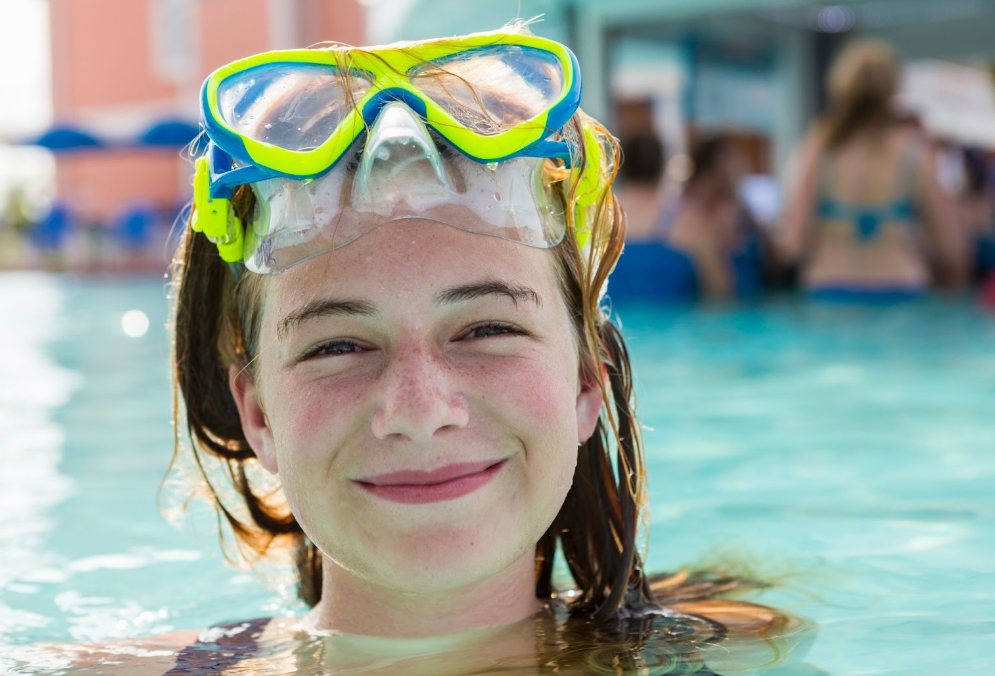
    Photo Courtesy of Envato

    Last week’s blog post focused on ways to avoid the heat of the summer with fun and entertaining STEM projects that students could do indoors as a nice escape from the heat. But do you know what the problem is with indoor science projects? They’re indoors, of course! Summer is all about being outside, and if you spend all your time locked inside, then what’s the point of warm weather?

    But then again, the blazing sun can get pretty hot. So what can a student do to enjoy the fresh air without cooking their brain to be well done in the process? The answer’s clear: H2O is the way to go!

    Here are three aquatic endeavors an aspiring STEM scientist can utilize to do cool activities while being cool themselves!   


    1. Tide Pool Math

    Link to Activity: https://www.boem.gov/environment/tidepool-math

    To start, let’s dive into some math – tide pool math, specifically.

    Tide pools are a fairly common yet often overlooked element of salty seaside surveying! The shallow ecosystems often provide an excellent way for students to explore the lifeforms that reside in their nearby body of water without having to dip their toes into full-fledged aquatic safety practices and other complicated rules/regulations. BOEM (the Bureau of Ocean Energy Management) has prepared a worksheet to explain tide pool-related concepts such as systematic sampling and the Shannon-Weiner Diversity Index to further educate the populace of potential hydro-focused wildlife specialists. The activities are done with laminated photos, so while you could easily just find some online, a field trip to the nearest body of water with a tide pool could just as successfully prove illuminating, with the added bonus of a fun day out in the water for the kids!

    2. Debris Tracker

    Link to Activity: https://debristracker.org/

    Technology is advancing at a speed unlike any other in history, to the point that the Internet, only being 41 years old, would likely cause many jaws to drop in the younger student population. While this has come with some “creases in the lining,” so to speak, the world of technology has largely been a force for good, and this hasn’t changed much regarding the accessibility of education sources. A great example would be the Marine Debris Tracker app, crafted by National Geographic and Morgan Stanley. It allows any student or teacher with a phone to stroll the waterside with a bag in hand to collect any litter they may find. As soon as this data is recorded in the app, it gets uploaded to the cloud with all the other data participants have found. That data can then be sent to scientists to analyze and determine habits or areas that may lie above or below the average regarding water-based pollution. This activity would be more of an activity with the theme and lesson learned left up to the teacher. Still, it is a valuable experience to teach students about the importance of keeping our oceans clean.

    3. Build a Water Strider

    Link to Activity: https://www.sciencebuddies.org/stem-activities/build-a-water-strider

    The last entry here is a very simple one, but it teaches the concept of surface tension quite effectively!

    Many who have gone camping around more contained water areas such as lakes or ponds have seen the fascinating creature known as the water strider, on account of this insect effortlessly gliding across the top of the water almost as if it were figure-skating on ice instead. This is possible due to surface tension, and now you can allow your students to display that themselves with just a bit of wire. The full instructions are on the website linked above, but it more or less boils down to manipulating the wireframe to evenly disperse the weight of the construct on all legs in a way that allows the “bug” to float on top of the liquid. Just make sure to keep track of the object wherever it is! You don’t want wire sitting at the bottom of your pool for anyone to step on.


    In STEM, the strength of the mind often takes a greater priority over the expansion of the body’s strength. Fortunately, these two don’t necessarily have to be exclusive! Water is an awesome substance, not just because it’s the lifeblood of all living creatures but also because it forces our muscles to work differently, just as education does for our brains.

    Be sure to keep your students active while they process in the science sphere. As technology advances, convenience will too. While that is undoubtedly a good thing, one thing it cannot do yet is motivate us to exercise and prevent a sedentary lifestyle. That’s a skill born of willpower and commitment, and it gets harder and harder to persevere the older we get as habits form and harden.

    So encourage your students to enjoy the summer to the fullest! They’ve got all their retirement years to sit inside and watch videos. Who knows, they may just thank you for it one day.

    By Noah Moster


    Do you want more resources on Marine Summer Activities? NSTEM’s vast resources database provides thousands of STEM resources that are searchable by category, school level, and state. This comprehensive library includes information on enrichment activities, curricula, internships, scholarships, and more. Check out a free sampling here, or get an NSTEM membership today to unlock the complete list. 

    Middle School is where students are transformed, entering as children and emerging as young adults. Project-based learning enrichment helps students connect the dots between STEM and real life, making math and science relevant for them and keeping them engaged and interested. With a meaningful middle school experience, students are far more likely to focus on STEM disciplines in high school and beyond.  To start your 6-8 middle school chapter of the National STEM Honor Society, click here.
  • Falling for STEM: Autumn Adventures for Grades 6-12

    Falling for STEM: Autumn Adventures for Grades 6-12


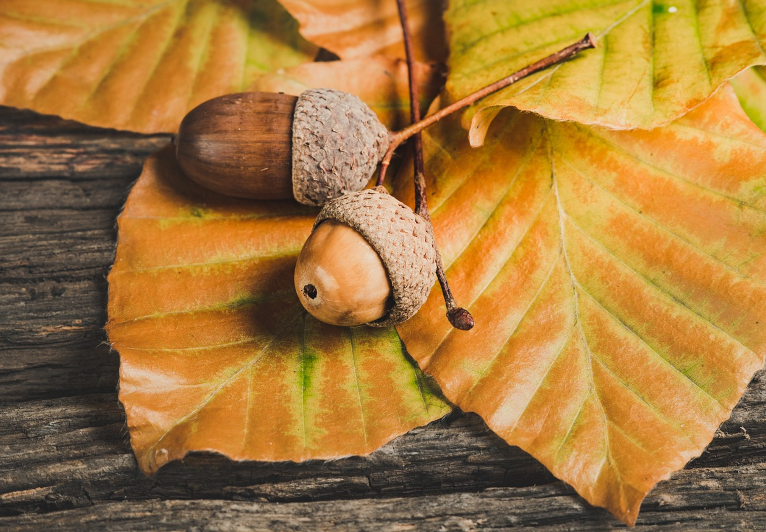
    Photo Courtesy of Pixabay

    Winter is around the corner; at NSTEM, we want to help celebrate this Autumn season by inspiring you to take a walk outside, explore, and engage in the fresh air as winter comes just around the corner! We have collected a few activities for middle and high school students to help you get inspired while inspiring your future scientists! These lessons will have your teenagers developing STEM toolkits, utilizing outcomes like the scientific method while building critical thinking skills in real-world scenarios and doing so collaboratively.

    1. Nature Squares – Middle School (Grades 6-8)

    This lesson from The Science Spot for Grades 6-8 should take your students under an hour to complete. In it, students will explore the scientific method while making real-world observations. They will observe a large nature grid and record their observations (I suggest encouraging them to develop observational field sketches). The lesson culminates in a worksheet explaining the difference between biotic and abiotic organisms in our environment.

    Link to student worksheet: Nature Squares (pdf)

    2. Garden Lesson Plan: Soil: The Nature Conservancy – Middle School (Grades 6-8)

    This lesson plan is suggested to take a week to complete; feel free to adapt it to your schedule and geographical area. In this set of activities, students will learn how to conduct a soil analysis to understand soil classifications further and identify healthy, fertile soil. In this lesson, your future horticulturists will be exposed to STEM learning outcomes through Earth systems and processes to understand further natural resources and the ecosystems that contain them. 

    Link to lesson plan: https://www.nature.org/content/dam/tnc/nature/en/documents/nature-lab-lesson-plans/NLGardens-Soil.pdf

    3. Leaf Arrangement: Kinetic Cognitive Connections – High School (Grades 9-12)

    This lesson for Grades 9-12 is estimated to take at least half an hour and is flexible in design for your students’ unique levels of understanding. We encourage you to take this lesson outdoors to explore any surrounding biodiversity while enjoying some fresh Autumn air! Depending on your locale, you can adapt this lesson to reflect available biodiversity within your geographical area, so if you need to work indoors, no worries; just be sure to collect any materials and field samples beforehand!

    Link to lesson: https://ecosystems.psu.edu/outreach/youth/sftrc/lesson-plans/forestry/9-12/leaf-arrangement

    4. Soil Energy & Temperature Exercise High School (Grades 9-12)

    This lesson, designed for Grades 9-12 by The Paleontological Research Institution, is a great way to develop math, science, and critical thinking skills by further understanding solar energy. In this outdoor activity, your students will test temperature variation at different depths and times of day to demonstrate how soil reacts to solar energy. This activity will take a few days to complete; I recommend setting up your thermometers and having your class take the first readings together on the first day. Then, after your data is collected, students can see the results together and plot them in the second. 

    Link to lesson: https://www.greenschoolyards.org/s/Paleontological-Research_solar-energy-soil-temp-small.pdf

    At NSTEM, we understand the need for activities that can be flexible for your schedule and adaptable to the needs of your students. We appreciate lesson plans encouraging students to get outside and understand our global world collaboratively and safely. These projects were chosen for their simplicity and budget-friendly design, giving you the chance as an educator to spend more time instead making memories and inspiring our next generation of scientists!

    By Rosalinda Cardoso


    At NSTEM, we believe that middle school (Grades 6-8) is where students are transformed, entering as children and emerging as young adults. Project-based learning enrichment can help students connect the dots between STEM and real life, making math and science relevant for them and keeping them engaged and interested. With a meaningful middle school experience, students are far more likely to focus on STEM disciplines in high school and beyond.  To start your 6-8 middle school chapter of the National STEM Honor Society, click here.
    Do you want more resources on the topic of fall STEM activities? NSTEM’s vast resources database provides thousands of searchable STEM resources by category, school level, and state. This comprehensive library includes info on enrichment activities, curricula, internships, scholarships, and more. Check out a free sampling here. Or get an NSTEM membership today to unlock the complete list.

  • Empowering Middle School Innovators: 5 STEM Competitions for 2025

    Empowering Middle School Innovators: 5 STEM Competitions for 2025

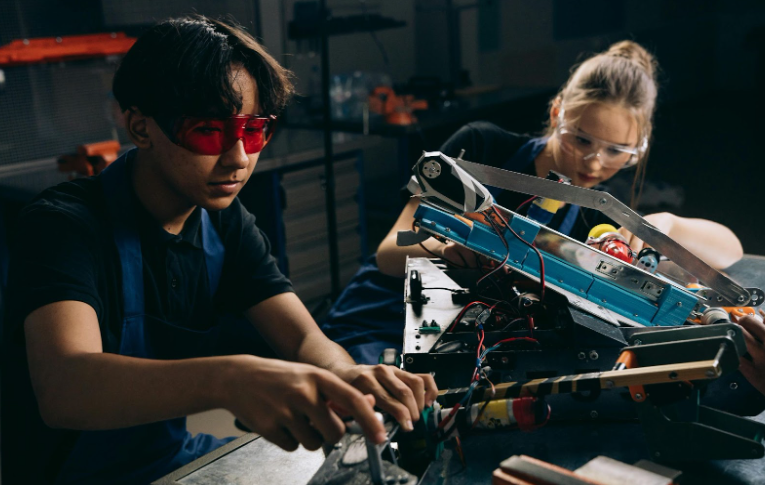
    Photo Courtesy of Pexels

    At NSTEM, we believe that safe and collaborative competition can encourage healthier attitudes for students; emphasizing collaboration and teamwork rather than winning and losing can make all the difference in a student’s long-term path to success and empathy. To ring in the New Year, we wanted to provide a few fun and affordable STEM competitions for middle school students to explore individually or collaboratively, regardless of their interests. These competitions are also annual, so if you miss the deadline for this year, you can always get an early start on next year’s competition! 

    C-SPAN Student CAM Contest is a free national video documentary competition for grades 6-12, where students can enter individually or in teams of three. Students are asked to create a short video documentary, approximately 5-6 minutes, relating to the annual competition theme. All entries for 2025 should follow the theme, Message to the President, identifying which issue is most important to you or your local community. The deadline to submit video entries this year is January 20, 2025. Top Middle School prize-winners will be awarded up to $5,000 (To be announced mid-March 2025) with a chance of being aired on C-SPAN Networks from April 1-April 21, 2025.

    eCYBERMISSION is a free, virtual STEM competition for student teams in grades 6-9 based in the US or Canada. Competition teams should be composed of 2-4 students along with a team advisor and will need to choose one of two pathways to register. Teams can either Ask a scientific question by tackling a scientific problem OR try their hands at solving an engineering problem. In this competition, students can exercise scientific inquiry concerning technology, math, and critical theory. First-place winners will receive a savings bond worth $500, and second-place holders will receive a savings bond worth $250. Student and team registration opens on August 15, 2024, and closes on February 26, 2025.

    ExploraVision is a free science competition open to students in grades K-12. (In this case, we recommend the category for grades 7-9 students.) During this project, a sponsor will lead student teams of 2-4 people while they research and analyze a current technology of their choice. ExploraVision then challenges students to envision and communicate their chosen technology 10 or more years in the future by using collaborative brainstorming and team-based learning to communicate their findings. Team projects can range from 3 weeks to 3 months in duration. Prizes for first place will be a $10,000 saving bond; second place holders will receive a $5,000 saving bond. The project deadline is January 31, 2025, and winners will be announced April 7-May 5, 2025. 

    NASA Student Launch is open to students in grades 6-12 (and students up to college/university levels) interested in physics, math, engineering, and critical thinking. Although there is no application fee, teams are responsible for raising funds to develop their rockets and cover expenses related to the final on-site launch in Huntsville, Alabama. This project should take around 9 months to complete, requiring students in that time to design, build, test, and launch a high-powered rocket and launch vehicle. The experience will culminate in a final launch event to take place on-site in Huntsville, Alabama (due to its proximity to NASA’s Marshall Space Flight Center), taking place from April 30 to May 4, 2025, where first prize winners will receive $5,000 and second place winners will receive $2,500.

    Zero Robotics is a space-based programming competition open for Middle and High school students to enter. This competition uses robots called Synchronized Position Engage Reorient Experimental Satellites (SPHERES), which are basketball-sized robots astronauts use to study fluids in space. During Zero Robotics Championships, teams will work to program SPHERES virtually before they are uploaded to the SPHERES on a space station, where astronauts will judge the championships live! This incredibly cool competition takes place over five weeks in the summer for middle school students and satisfies STEM learning outcomes like engineering, robotics, and computer programming. The tournament is in late July, so look for registration for 2025 to open early in the year and keep your eyes peeled for this one-of-a-kind experience for the future astronaut in your classroom! 

    At NSTEM, we believe self-improvement and achievement should be accessible to all students. STEM competitions such as these require nominal fees (if any at all) to participate in and complete. We are happy to provide students and educators with more accessible opportunities to self-improve, allowing students to celebrate another year of personal milestones and fostering teamwork and self-esteem.

    By Rosalinda Cardoso


    At NSTEM, we believe that middle school (Grades 6-8) is where students are transformed, entering as children and emerging as young adults. Project-based learning enrichment can help students connect the dots between STEM and real life, making math and science relevant for them, and keeping them engaged and interested. With a meaningful middle school experience, students are far more likely to focus on STEM disciplines in high school and beyond.  To start your 6-8 middle school chapter of the National STEM Honor Society, click here.

    Do you want more resources on STEM competitions? NSTEM’s vast resources database provides thousands of searchable STEM resources by category, school level, and state. This comprehensive library includes info on enrichment activities, curricula, internships, scholarships, and more. Check out a free sampling here. Or get an NSTEMI membership today to unlock the complete list.

  • Winter Water Magic:  3 STEM Activities for Grades K-5

    Winter Water Magic: 3 STEM Activities for Grades K-5

    Photo Courtesy of Pixabay

    As we inch closer to a new year and another winter break, we at NSTEM want to ensure that you are making the best of your time together while taking a little time to enjoy the season. Engaging your students in the science behind snow, snowflakes, and ice can be a fun pathway to STEM learning outcomes while staving off the winter blues. We at NSTEM encourage you to be the spark that ignites curiosity and interest in your winter world, no matter the temperature outside! 

    1. What Makes It Snow

    This activity from the American Chemical Society is designed for kindergarten students and is estimated to take a class period to complete. Using a minimal supply list of cotton swabs, construction paper, and glue, your students will make a model of a six-sided snowflake to understand water in its solid form and how water forms in clouds. This lesson will introduce your students to STEM learning outcomes by investigating nephrology (the study of clouds and temperature) and hydrology. This plan also includes a winter-themed reading list to excite you and your students for some cozy winter story times no matter what’s happening outside!

    2. Snowflake Shapes Activity

    This activity from The Smithsonian Institution Archives is designed to demonstrate categories of snowflakes and how they form. This lesson is designed to take 45 minutes to an hour to complete and only requires minimal supplies (cardboard, glue, and a little bit of velvet fabric). Although this challenge is designed for grades 3-6, it can be easily adapted for a younger audience. Try performing the outdoor exercise as a demonstration instead of small groups, making one single board for your students to share (if you need to stay indoors, gather some snowflakes on a board, take pictures with your phone, and create a slideshow of your samples that can be used for future reference). Emphasizing the final classroom exercise can be a festive way to introduce students to STEM learning objectives by exploring basic shapes through observational and comparative analysis.

    3. Snowman Survival Challenge

    In this Oak Ridge Institute for Science & Education lesson, students will work individually and collaboratively to design and test an insulator for a ‘snowman.’ In this experiment, each group will be assigned a ‘snowman’ with three ice cubes sealed in a plastic bag. This lesson is designed to take three sessions, each estimated to take around 40 minutes, during which students will be introduced to STEM learning processes by using the scientific method to explore heat energy and thermal transference. Although this lesson is designed to target 3rd-grade students, it can also be adjusted for a younger audience by demonstrating the outdoor challenge for the entire class instead of small groups. Be sure to check out the suggested class reading (“The Snowman” by Raymond Briggs) for a full cozy/winter effect. 

    At NSTEM, we believe learning and teaching should be equitable for all. Therefore, our featured activities and lesson plans are free to use and require minimal supplies to enjoy. We also believe that lesson plans and activities should meet the needs of both you and your students, so our featured list allows for simple modifications to better serve the needs of younger or more advanced audiences. So stay warm out there and have a winter-themed blast-and-a-half this season!

    By Rosalinda Cardoso

    Do you want more resources on the topic of Winter STEM activities? NSTEM’s vast resources database provides thousands of searchable STEM resources by category, school level, and state. This comprehensive library includes info on enrichment activities, curricula, internships, scholarships, and more. Check out a free sampling here. Or get an NSTEM membership today to unlock the complete list. 

    Grades K-2 are where it all starts with STEM education. The National STEM Honor Society focuses on “From Pre-K to Career, NSTEM from the Start!” To start your K-2 Chapter of the National STEM Honor Society, click here. Grades 3-5 continue the STEM education journey, where students are interested in the natural world and in how things work, responding to stories told by teachers that give purpose and meaning to STEM disciplines, which molds them into thinkers, problem solvers, and creators. The National STEM Honor Society sees grades 3-5 as a critical point in the NSTEM journey. To start your grade 3-5 chapter of the National STEM Honor Society, click here.
  • Through The Eyes Of An Artist:  Exploring STEM Through Art

    Through The Eyes Of An Artist: Exploring STEM Through Art


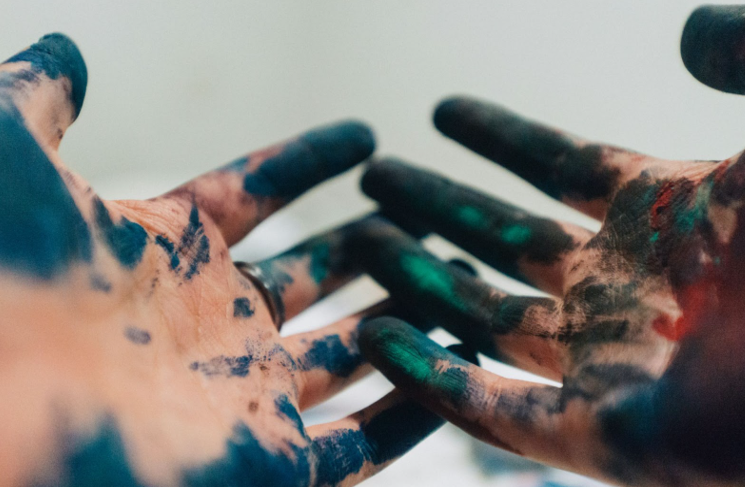
    Photo Courtesy of Unsplash

    As young adults prepare to enter college, discovering new pathways and possible careers, we at NSTEM want to remind students of all ages that science and art are NOT mutually exclusive. We believe that embracing science and art as young adults can enhance the quality of their work throughout their careers while furthering their ability to communicate their findings successfully. We at NSTEM challenge you to try these four hands-on projects that blur the lines of science and art, alongside a few notable examples as references, to help you inspire the next generation of students who see the world as both scientists and artists!

    1. Scientific Illustrations

    This activity from the Garth & Jerri Frehner Museum of Natural History begins with students creating observational drawings of real-life specimens using a microscope or magnifying glass while describing four different viewpoints of the same specimen. Students will then compare and discuss their observations with their peers to identify those specimens. This activity plan is suggested to take four 60-minute sessions, including a relevant and optional field trip, which can be easily replaced with a similar gallery in a virtual setting. This activity is a creative and fun way to learn about the scientific method while encouraging peer collaboration and critical thinking. 

    Link to activity: https://www.suu.edu/natsci/museum/pdf/scientific-illustration-lesson-7-12.pdf

    2. Art and Optics

    In this activity from the Art Institute of Chicago, students will be introduced to eye function and optic science by asking questions, creating initial models, and collecting data while participating in a series of observational experiments, giving your students a chance to revise their initial models. This activity is estimated to take approximately 80–125 minutes to complete and demonstrates STEM learning outcomes of critical thinking and scientific theory while supporting next-generation science standards. This activity can also be a way to explore STEM/Art careers like museum conservation.

    Link to activity: https://aic-web-cms-uploads.s3.us-east-2.amazonaws.com/2a99f5a7-2ede-45d1-8c85-0abf99dcc2ee/ArtandOpticsLessonPlanUpdatedFinal_.pdf

    3. Building Alebrijes

    This Los Angeles Unified School District activity will challenge your students to design alebrijes, a unique subset of Mexican folk art known for its anthropomorphic characteristics (combining two living animals), intricate designs, and bright colors. The Aztecs first designed alebrijes to represent the animals and beings of the spirit world. Though this is estimated to take around 60 minutes, we suggest extending the assignment by another hour to include painted 3D models of their creations made from painted aluminum foil and cardboard!

    Link to activity: https://www.dropbox.com/scl/fi/icy7fy523ilqluyqoxfyu/19-Alebrije-Lesson.pdf?rlkey=h096pira1k4x0tyd1y39ap5gy&e=1&dl=0

    4. Mapping: Utopia or Dystopia

    In this Los Angeles Unified School District activity, your students will learn about mapping and a few artists who use it as an art medium. They will then create an original map using raw scrap materials and their unique storytelling perspectives. This activity is a fantastic opportunity to introduce students to drawing, design, and cartography principles. Students will also demonstrate creativity and critical thinking by learning to analyze works of art contextually. This activity is estimated to take 60-120 minutes to complete.

    Link to activity: https://www.dropbox.com/scl/fi/a4jb806u4sftj02zikxh2/20-MAPPING-Utopia-Dystopia-Lesson.pdf?rlkey=rljlsug7grd4xamazscp44q13&e=1&dl=0

    Notable Scientists Who Also Happened To Be Talented Artists

    (We suggest making a slideshow for your students; here are a few to get you started)

    Santiago Ramón y Cahal

    Neuroscientist, Pathologist, Histologist, Scientific Illustrator & Photographer

    Leonardo da Vinci

    Polymath- Painter, Draughtsman, Engineer, Scientist, Theorist, Sculptor, & Architect

    John James Audobon

    Naturalist, Field Artist & Painter

    Samuel Morse

    Inventor & Painter

    Alfred L. Copley

    Hemorheologist & Expressionist Painter

    Maria Sibylla Merian

    Entomologist, Naturalist & Scientific Illustrator

    Rafael Lozano-Hemmer

    Chemist & Interactive Media Artist

    Anicka Yi

    Conceptual Artist & Olfactory Scientist 

    Anna Atkins

    Botanist & Photographer

    Ralph Eugene Meatyard

    Optician & Photographer

    Storytelling comes in countless shapes and forms; communicating and delivering our observations to others can make or break an audience’s understanding. Learning to observe science through the eyes of an artist can help scientists create unique and creative methodologies to share their findings with the world. An artist, seeing their work through the eyes of a scientist, can strengthen their foundation of artistic theory, allowing them to challenge the status quo to discover, design, and create new creative mediums. Here at NSTEM, we encourage you and the next generation of thinkers to do both!

    By Rosalinda Cardoso


    Do you want more resources on the topic of STEM and Art Activities? NSTEM’s vast resources database provides thousands of searchable STEM resources by category, school level, and state. This comprehensive library includes info on enrichment activities, curricula, internships, scholarships, and more. Check out a free sampling here. Or get an NSTEM membership today to unlock the complete list.

    Project-based learning enrichment provides high school students with college and career readiness. It gives them real-world relevance, transforming students into collaborators and imaginative problem solvers. They will gain the upper hand in a global landscape, stemming from enhanced confidence and grit. NSTEM provides these young STEM enthusiasts with a close community of like-minded fellow students and educators.  To start your 9-12 Chapter of the National STEM Honor Society, click here.


  • 4 STEM-tacular Fall Activities for K-12 Students

    4 STEM-tacular Fall Activities for K-12 Students


    Photo Courtesy of Unsplash

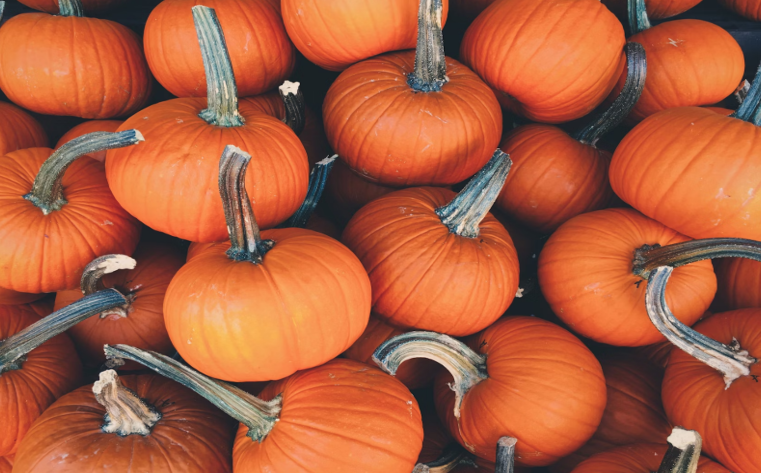
    At NSTEM, we know that any tools and essential life skills learned today can become the bedrock of a student’s foundation for a lifetime; we understand the importance of engaging students safely outdoors. We also want to help you celebrate the season by giving all of your K-12 students (Regardless of secular or religious affiliations) pumpkin to talk about this fall season! So roll up those sleeves and have a gourd-geous day exploring pumpkins with your mad scientists while introducing them to advanced K-12 STEM theories and concepts. 

    1. Exploring the Life Cycle of Pumpkin – Early Elementary (K-2)

    This activity, provided by K6edu.com, will take approximately two days to complete, but don’t be afraid to adapt this to suit your schedule, budget, and available materials. This lesson will develop several STEM skills, such as critical thinking, curiosity, and real-world applications of scientific concepts and theories. The first day of this activity will include a story, group discussion, and a hands-on activity where students will investigate pumpkin seeds and prepare them for observation on the second day. The following day, students will investigate opened pumpkin seeds to further their knowledge of the pumpkin life cycle and other similar organic processes while planting a seed for future observations.

    Link to activity: https://www.k6edu.com/wp-content/uploads/2018/07/Pumpkin-Life-Cycle-Lesson-Plan-PDF.pdf

    2. Agriculture In The Classroom – Elementary School (3-5)

    This activity from National Agriculture in the Classroom is estimated to take approximately two hours to complete and includes four activities to choose from, including two worksheets and two hands-on experiments. Students will collaborate during a hands-on activity growing pumpkin seeds to further study plants’ life cycles in real time. This activity will culminate in a food science experiment where your students will make a batch of pumpkin pie in a bag! We know it’s easy to win over students with edible experiments, but for those with food restrictions, no worries, you can easily skip this activity and feed their curiosity for growing, planting, and decorating gourds instead! 

    Link to activity: https://agclassroom.org/matrix/lesson/131/

    3. Exploding Pumpkin – Middle School (Grades 6-8)

    This activity from Illinois Agriculture in the Classroom is estimated to take 1 hour (Recommended as two 30-minute sessions) and will further your students understanding of chemical reactions. In this demonstration, students will use pumpkins, hydrogen peroxide, and yeast to study exothermic reactions. This demonstration can also be done for the class or in small groups (Depending on the academic needs of your group).

    Link to activity: https://beyondthebarndoor.wordpress.com/wp-content/uploads/2020/10/exploding-pumpkin-1.pdf

    4. Pumpkin Observation Project – High School (Grades 9-12)

    This activity from Northern Illinois University has excellent tips for adapting this lesson to the needs of your students or your class content. Although it will take less than 30 minutes to set up, you will need to decide how much time you want to dedicate (Allowing time for decomposition and the final analysis of the experiment). This lesson can be a great one for true crime lovers interested in forensic science, as it will introduce science and mathematics concepts to understand further advanced concepts like decay and energy rates and long-term qualitative data collection!

    Link to activity: https://niusteam.niu.edu/october-pumpkin-project-for-grades-6-12/

    This collection of activities is designed to be adapted to the needs of your students, so feel free to get creative and cater to the creative side of your future scientists. These lessons can also be an excellent opportunity to introduce your future scientists to unique STEM careers and theorists of sensory scientists, forensic anthropologists, epidemiologists, or plant pathologists! At NSTEM, we believe that you can inspire a new generation of STEM careers tomorrow by having fun today!

    By Rosalinda Cardoso


    Do you want more resources on the topic of fall STEM activities for K-12? NSTEM’s vast resources database provides thousands of searchable STEM resources by category, school level, and state. This comprehensive library includes info on enrichment activities, curricula, internships, scholarships, and more. Check out a free sampling here. Or get an NSTEM membership today to unlock the complete list.

    Project-based learning enrichment provides high school students with college and career readiness. It gives them real-world relevance, transforming students into collaborators and imaginative problem solvers. They will gain the upper hand in a global landscape, stemming from enhanced confidence and grit. NSTEM provides these young STEM enthusiasts with a close community of like-minded fellow students and educators.  To start your 9-12 Chapter of the National STEM Honor Society, click here.