
Tag: STEM Projects and Experiments

  • Counting the Cheers: 3 Festive Math Activities for High Schoolers

    Counting the Cheers: 3 Festive Math Activities for High Schoolers

    Photo courtesy of Pixabay

    As the winter season thrives joyfully, it’s the perfect time to put mathematical magic into the festive cheer. While the air is cold and the aroma of seasonal treats fills the room, high schoolers can engage in math activities that blend the spirit of winter with the power of numbers. These three math activities are enjoyable projects and tools to form a deeper appreciation for the mathematical marvels nestled within our holiday celebrations. Read on as we unwrap these engaging mathematical journeys designed to bring high school students a sprinkle of educational joy during the festive season.

    1. Winter Sports Statistics

    In this activity, students utilize the excitement of winter sports like skiing, snowboarding, and skeletons to delve into statistics and probability. First, they can research and collect data on the performance of athletes’ scores, times, etc. Then, they can use this data to calculate averages, standard deviations, and probabilities. With statistics knowledge, students can even create graphs and charts to visualize the data through graphs and charts to analyze trends.

    Example of data for activity (points throughout the years for a particular World Cup skier): Activity Data


    2. Snowflake Symmetry

    In this activity, students explore symmetry by creating snowflake designs. Students can design various unique snowflake patterns, starting with a basic template by applying rotational and reflective symmetry. Students can be encouraged to use protractors and rulers to measure angles and lines accurately and educationally. With this winter high school project, high schoolers can explore the concepts of angles, geometry, and symmetry while creating intricate snowflake designs. 

    Activity link: Snowflake Symmetry

    Materials needed: construction paper, glue, scissors, and Q-tips.


    3. Hot Cocoa Conundrum

    Dive into the mathematics behind mixing hot cocoa. Students investigate the relationship between cocoa powder, sugar, milk, marshmallows, and temperature to create the perfect cup of hot cocoa. Task them with experimenting with different ratios of ingredients, recording temperature readings, and analyzing the data to determine the ideal combination for the tastiest hot cocoa. This activity integrates data analysis and some algebra to create a fun interactive math activity.

    Here’s a basic recipe to get your students thinking: Hot Chocolate Recipe For One

    Materials needed: paper cups, cocoa powder, sugar, milk, marshmallows, and hot water.


    These three festive math activities for high schoolers offer an exciting mix of winter cheer and mathematical exploration. Blending seasonal themes with hands-on learning provides a dynamic way to grasp mathematical concepts while allowing students to be creative at the same time. Beyond the winter fun, these projects will emphasize the relevance of math in everyday scenarios. So, go ahead and try them!

    By Tyler King

    Do you want more resources on the topic of winter high school projects? NSTEM’s vast resources database provides thousands of searchable STEM resources by category, school level, and state. This comprehensive library includes info on enrichment activities, curricula, internships, scholarships, and more. Check out a free sampling here. Or get an NSTEM membership today to unlock the complete list.

    Project-based learning enrichment provides high school students with college and career readiness. It gives them real-world relevance, transforming students into collaborators and imaginative problem solvers. They will gain the upper hand in a global landscape, stemming from enhanced confidence and grit. NSTEM provides these young STEM enthusiasts with a close community of like-minded fellow students and educators.  To start your 9-12 Chapter of the National STEM Honor Society, click here.

  • Festive Chemistry: 5 Holiday Experiments that Spark Joy in Middle School Labs

    Festive Chemistry: 5 Holiday Experiments that Spark Joy in Middle School Labs

    Photo Courtesy of www.shutterstock.com

    Exploring festive chemistry lab experiments for middle school students promises an engaging and educational journey into the wonders of science during the winter season. Let us discover five exciting lab experiments that add a touch of festivity and provide valuable insights into the principles of chemistry.

    1. Candy Cane Chromatography

    Link to Solution Science: Colorful Candy Chromatography

    Unveil the colorful secrets hidden within candy canes through chromatography. This experiment introduces students to the concept of separating mixtures and understanding the different components of festive treats. Candy Cane Chromatography educates students about chromatography principles, demonstrating how different components move at varying rates, resulting in colorful patterns.

    How It Works: Using chromatography paper and a solvent, students witness the separation of pigments in candy canes. This hands-on activity allows them to explore the science behind the vibrant stripes.

    Materials Needed: Candy canes, chromatography paper, a solvent (e.g., water or rubbing alcohol), and small containers.


    2. Wintergreen Sparkle

    Link to Wintergreen Sparkle Video

    Infuse chemistry with magic in the Wintergreen Sparkle experiment, where students create a winter-themed, sparkling reaction. This experiment explores chemical reactions and the factors influencing them. Wintergreen Sparkle teaches students about chemical reactions, including the role of acids and bases and the release of carbon dioxide gas.

    How It Works: Students witness a fizzing and sparkling reaction by combining wintergreen lifesavers and various household ingredients. This visually captivating experiment introduces them to the concept of chemical reactions.

    Materials Needed: Wintergreen lifesavers, baking soda, vinegar, and a clear container.


    3. Gingerbread Man Chemistry

    Link to Gingerbread Man Chemistry Experiment

    Fuse the joy of holiday baking with chemistry in the Gingerbread Man Chemistry experiment. This activity explores the science of leavening agents and their role in baking. Gingerbread Man Chemistry educates students about leavening agents and the chemical reactions during baking, contributing to the dough’s rise.

    How It Works: Students create gingerbread man cutouts with variations in the amount of baking soda or baking powder. They observe how these leavening agents affect the rise of the gingerbread during baking.

    Materials Needed: Gingerbread dough, baking soda, baking powder, and cookie cutters.


    4. Holiday Slime

    Link to Holiday Slime Inspiration

    Embrace the holiday spirit with a slimy twist in the Holiday Slime experiment. This gooey activity explores the science of polymers and non-Newtonian fluids. Holiday Slime introduces students to the science of polymers and non-Newtonian fluids, showcasing the fascinating properties of slime.

    How It Works: Students create a holiday-themed slime by mixing common slime ingredients with festive additions like glitter or sequins. This experiment delves into the properties of polymers and their unique behaviors.

    Materials Needed: White school glue, liquid starch, water, and optional festive add-ins.


    5. Peppermint Pop Rocks

    Link to Peppermint Pop Rocks Experiment Video

    Experience the pop and fizzle of the holiday season with PeppLink to Peppermint Pop Rocks Inspirationermint Pop Rocks. This experiment explores the science behind carbonation and gas release. Peppermint Pop Rocks teaches students about chemical reactions involving acids and bases, showcasing the release of carbon dioxide gas.

    How It Works: Students combine crushed peppermint candy with baking soda and observe the fizzy reaction when adding vinegar. This engaging experiment provides insights into chemical reactions involving acids and bases.

    Materials Needed: Peppermint candy, baking soda, vinegar, and containers.

    By Srihitha Sunkara


    As we wrap up these holiday chemistry lab experiments, consider the endless possibilities that await a deeper dive into STEM education. NSTEM provides a supportive community and resources to nurture young minds passionate about science, technology, engineering, and mathematics. To explore more STEM opportunities and foster a love for learning, visit NSTEM’s website. Start your journey into the exciting world of STEM today!

    Do you want more resources on the topic of holiday chemistry lab experiments? NSTEM’s vast resources database provides thousands of searchable STEM resources by category, school level, and state. This comprehensive library includes info on enrichment activities, curricula, internships, scholarships, and more. Check out a free sampling here. Or get an NSTEM membership today to unlock the complete list. 

    Middle School is where students are transformed, entering as children and emerging as young adults. Project-based learning enrichment helps students connect the dots between STEM and real life, making math and science relevant for them, keeping them engaged and interested. With a meaningful middle school experience, students are far more likely to focus on STEM disciplines in high school and beyond.  To start your 6-8 middle school chapter of the National STEM Honor Society, click here.

  • Circuit Claus: Lighting Up the Holidays with 3 Technology Activities

    Circuit Claus: Lighting Up the Holidays with 3 Technology Activities

    Photo courtesy of Pixabay

    Sparkling lights and circuitry are bringing a technological twist to this holiday season for elementary schoolers! As the holiday season approaches, students can engage in holiday cheer while meeting the thrill of hands-on learning with technology. You might wonder what we mean, so we will simplify it. Here are three festive circuit activities for teachers to captivate students this season.

    1. Holiday Lights Circuitry

    In this activity, students create a circuit to light up multiple cuttings of holiday light strings atop a sheet of cardstock. A battery powers the circuit, and aluminum foil and brass fasteners connect the electricity to the holiday lights’ wires. This project teaches students about the flow of electricity and the multiple aspects of a circuit, including the power source, connectors, and load. You can also use this activity in lessons regarding closed and open circuits. You can alter this project to teach students about various circuits, both simple and complex.

    Activity link: https://ashevillescience.org/wp-content/uploads/2020/03/Holiday-Light-Circuitry.pdf

    Materials needed: cardstock, aluminum foil, tape, Christmas lights, a 9v battery, and scissors.


    2. Holiday Card Circuits

    In this activity, students make a holiday card with an LED light-up feature on the cover. A flat battery connects to aluminum foil on the inside of the card to power a small LED sticking out of the front cover. To make this activity festive, your students can place the outer light in a holiday drawing, such as Rudolph’s nose or a light-up star atop a Christmas tree. This project teaches students about electric currents and how a power source can be connected to a load with something as simple as aluminum foil.

    Activity link: https://www.kiwico.com/diy/holiday-events/winter-break/holiday-card-circuits

    Materials needed: cardstock, 3v coin cell batteries, aluminum foil, LEDs, tape, glue, and markers.


    3. Christmas Lime Battery

    In this activity, students create a Christmas tree-shaped project with a light-up star at the top. Copper wire is connected to limes with nails to use the electricity found in the citrus fruit. Using the power from the limes, the LED bulb lights up. Students can also decorate the structure with pipe cleaners or other materials. This project teaches students about the conductive properties of ions found in acids and, therefore, acidic fruits. It also teaches students how to connect a circuit and use a power source to light an LED.

    Important: Although the following activity guide link suggests using this activity for young children, we recommend it for students in grades 3-5.

    Activity link: https://www.preschoolplayandlearn.com/christmas-lime-battery-electricity-experiment-for-preschoolers/

    Materials needed: six limes, six nails, heavy copper wire, wire cutters, LEDs, and electrical tape.


    With these three activities, you can engage your students in holiday activities to introduce them to electrical circuitry. Implement them in your lessons or daily activities, and students will indeed have something new to learn and enjoy!

    By Tyler King

    Do you want more resources on the topic of festive circuit activities? NSTEM’s vast resources database provides thousands of searchable STEM resources by category, school level, and state. This comprehensive library includes info on enrichment activities, curricula, internships, scholarships, and more. Check out a free sampling here. Or get an NSTEM membership today to unlock the complete list. 

    Grades 3-5 continue the STEM education journey, where students are interested in the natural world and how things work, responding to stories told by teachers that give purpose and meaning to STEM disciplines, which molds them into thinkers, problem solvers, and creators. The National STEM Honor Society sees grades 3-5 as a critical point in the NSTEM journey. To start your grade 3-5 chapter of the National STEM Honor Society, click here.
  • Unveiling the Wonders of Space: 5 Astronomy Activities for Middle-Schoolers

    Unveiling the Wonders of Space: 5 Astronomy Activities for Middle-Schoolers

    Photo Courtesy of techstarter.com

    The universe holds endless mysteries that captivate people of all ages! Middle school students, in particular, are curious and always eager to learn. So, what better way to nurture their interest than by immersing them in the fascinating world of astronomy? From understanding the secrets of our solar system to gazing at the stars, there are so many exciting opportunities for learning and exploration within the classroom walls! In this blog, we’re going on a cosmic journey to discover five incredible astronomy lessons, projects, and activities perfect for middle school students. Each of these classroom adventures serves a unique purpose, from exploring the wonders of our solar system to grasping the principles of rocket science. Here are five astronomy activities for middle school students.

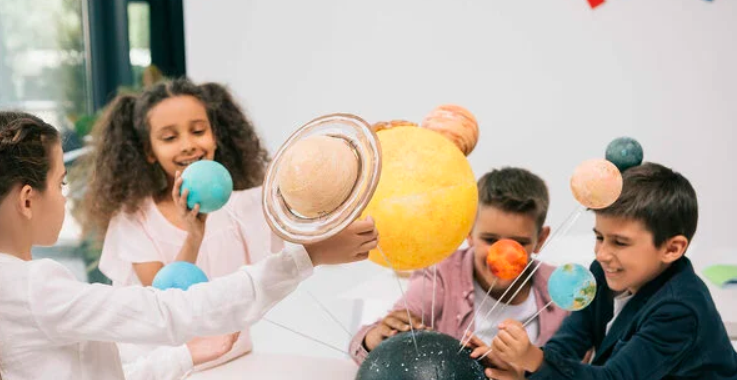
    1. Solar System Model Building

    • Purpose: This astronomy project helps students understand the relative sizes and distances between objects in the solar system, promoting spatial awareness and scientific accuracy.
    • Materials: Styrofoam balls (various sizes), paint, paintbrushes, string, and markers.
    • Steps: Students paint and label the Styrofoam balls to represent the sun, planets, and other celestial objects. Then, they use string to hang these objects in the correct order and distances from one another, creating a scale model of the solar system.
    • Time Duration: 2-3 class periods.

    2. Star Constellation Study

    • Purpose: This activity teaches students about constellations, their historical significance, and how to identify them in the night sky.
    • Materials: Star charts, a dark room with a projector or planetarium software, and pencils.
    • Steps: In a darkened room, project star charts on a screen. Discuss the mythology behind constellations and their names. Then, have students identify and draw their constellations on the star charts.
    • Time Duration: 1-2 class periods.

    3. Phases of the Moon Observation

    • Purpose: This astronomy lesson helps students understand the lunar phases and the moon’s position relative to the sun and Earth.
    • Materials: Moon phase calendars, binoculars, or telescopes.
    • Steps: Each student observes and records the moon’s appearance every night for a month. They compare their observations with the moon phase calendar and discuss their findings.
    • Time Duration: A month.

    4. Rocket Building and Launching

    • Purpose: This project introduces students to the principles of rocket science, including thrust, trajectory, and gravity.
    • Materials: Empty plastic bottles, paper, tape, and vinegar-baking soda mixture for propulsion.
    • Steps: Students design and construct simple rockets using plastic bottles. They load a mixture of vinegar and baking soda into the rocket, producing gas and propelling it into the air.
    • Time Duration: 2-3 class periods.

    5. Exoplanet Hunt

    • Purpose: This astronomy activity teaches students about the search for exoplanets and the characteristics that make a planet habitable.
    • Materials: Computers with internet access, Exoplanet databases, and research tools.
    • Steps: Students explore online databases of exoplanets. They research these planets, their characteristics, and the potential for habitability, discussing what makes a planet suitable for life.
    • Time Duration: 2-3 class periods.

    We encourage you to consider starting an NSTEM chapter at your school. NSTEM, with its commitment to innovative STEM education, can provide invaluable resources and support. By joining hands with NSTEM, you can help create a brighter future for our children. To get started, explore these NSTEM resources to access a wealth of materials and guidance, enriching STEM education in K-2 classrooms and beyond. 

    By Srihitha Sunkara

    Do you want more resources on the topic of astronomy activities? NSTEM’s vast resources database provides thousands of searchable STEM resources by category, school level, and state. This comprehensive library includes info on enrichment activities, curricula, internships, scholarships, and more. Check out a free sampling here. Or get an NSTEM membership today to unlock the complete list. 

    In middle school, students are transformed, entering as children and emerging as young adults. Project-based learning enrichment helps students connect the dots between STEM and real life, making math and science relevant for them and keeping them engaged and interested. With a meaningful middle school experience, students are far more likely to focus on STEM disciplines in high school and beyond.  To start your 6-8 middle school chapter of the National STEM Honor Society, click here.
  • Further Your Middle-School Child’s STEM Learning with These 4 At-Home STEM Projects

    Further Your Middle-School Child’s STEM Learning with These 4 At-Home STEM Projects

    Photo Courtesy of Flickr

    Are you looking for ways to expand your middle-schooler’s STEM education from the comfort of your home? Are you hoping to have a hands-on educational experience for your child while participating with them? You and your child can participate in many at-home STEM projects and gain a broader knowledge base. This blog will present four at-home STEM projects you and your middle-schooler can partake in to further their STEM journey.

    1.  Magnetic Slime

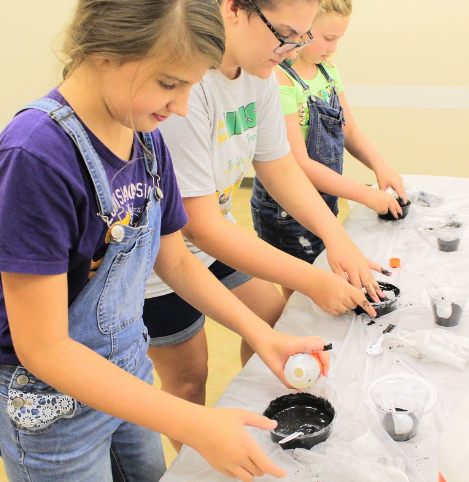
    What are two things that kids hold dear to their hearts? Slime and magnets, of course! You can gather their attention and allow them to learn more about science by conducting this at-home STEM project, magnetic slime. It is fun to play with and effective at capturing your middle-schooler’s attention. The project itself is straightforward. You must get white glue, liquid starch, iron oxide powder, plastic spoons for stirring, a mixing bowl, and a neodymium (rare earth) magnet. You can then follow easy-to-read instructions on how to make the magnetic slime at the following website: How to Make Magnetic Slime.

    2.  Crystal Sun Catchers

    What kids do not love looking at crystals and playing around with sun catchers? This activity is a great way to engage your kids with science with a project whose ingredients are effortless to get from your local grocery store. The materials are simple: Epsom salt, clear recycled plastic lids – use the clearest you can find, water, an empty jar, a bowl or glass measuring cup, a fork, a microwave (optional), tray, string, and a pin. All materials can be found in your house; if not, you can retrieve them at the grocery store. The steps to make a crystal sun catcher are easy to follow and can be found at the following website: How to Make Crystal Sun Catchers. This at-home experience can give your child a new appreciation for science and the many purposes and ways salt can be used.

    3. Stop Motion Animation Video

    If your middle-schooler is interested in technology and watching animated shows, making a stop-motion animation video will be something that will grab their notice, no doubt. There are only a few things you need: a phone or iPad to film, a stop motion animation app, and objects to animate (you can use legos or dolls). You can take it a step further and get a tripod to help keep your camera steady and get foam core to use as a background. This more technical STEM project uses a high level of creativity that every kid loves to explore. Also, who knows, you will be having a weekly movie night with stop-motion animation that your child created.

    4. Oil Spill

    You can always create an oil spill if you want your kids to have a real-world issue to compare and contrast with their projects. All you have to do is mix oil and water in a large bowl and add feathers. Give your child some sponges or spoons and instruct them to fish all the oil and feathers from the water. As they experience difficulty retrieving the items, they can see the real-life impact of oil on other elements and objects and how that translates to real situations. However, this project might become messy, so keep a mop nearby.

    These are just some of the few at-home STEM activities you can do with your middle-school children to help further their education in all things STEM; check out NSTEM’s resource library to discover even more!

    By Rameen Naviwala

    Do you want more resources on the topic of at-home STEM projects? NSTEM’s vast resources database provides thousands of searchable STEM resources by category, school level, and state. This comprehensive library includes info on enrichment activities, curricula, internships, scholarships, and more. Check out a free sampling here. Or get an NSTEM membership today to unlock the complete list. 

    In middle school, students are transformed, entering as children and emerging as young adults. Project-based learning enrichment helps students connect the dots between STEM and real life, making math and science relevant for them and keeping them engaged and interested. With a meaningful middle school experience, students are far more likely to focus on STEM disciplines in high school and beyond.  To start your 6-8 middle school chapter of the National STEM Honor Society, click here.

  • Fund Your College/University Self- Research Projects with These 3 Ultimate Tips!

    Fund Your College/University Self- Research Projects with These 3 Ultimate Tips!

    By Ratchana Ramesh Pandi

    Photo courtesy of Pixabay

    Embarking on self-research projects in STEM can be a fulfilling endeavor, but securing funding can be a challenge. Here are three valuable tips to help you fund your college/university self-research projects, including finding financial support and making the process easier to achieve!

    1. Explore Scholarships

    Scholarships are a fantastic way to fund your self-research projects. NSTEM offers a comprehensive list of STEM scholarships on its resources page (https://nstem.org/staging/resource-library/), and as a member, you can unlock the complete list. NSTEM even has one of its own scholarships: https://nstem.org/staging/nstem-scholarships/. Start by identifying scholarships that align with your academic or research interests, educational achievements, or personal background. After locating such scholarships, you can craft compelling applications that highlight your passion for your research while integrating the importance of your project into the chosen scholarship; an essay will most likely be required for applications. Numerous scholarships are available at the local, regional, and national levels, so cast a wide net to maximize your chances.

    Photo courtesy of Pixabay

    2. Pursue Grants from Research Foundations

    Many research foundations and organizations provide grants to support innovative STEM projects. On NSTEM’s resources page, you can find a curated list of these opportunities (https://nstem.org/staging/resources/stemgrants-com/). To increase your chances of securing a grant, carefully read the requirements and guidelines for each foundation, thus ensuring your research aligns with their mission. You can craft a well-researched proposal that outlines your project’s objectives, methodology, and potential impact. Highlight how the grant will enable you to advance your research and contribute to the STEM community.

    Photo courtesy of Pixabay

    3. Crowdfunding and Online Platforms

    In today’s digital age, crowdfunding platforms and online communities can be a valuable source of funding for self-research projects. Platforms like Kickstarter (https://www.kickstarter.com/), Indiegogo (https://www.indiegogo.com/), and GoFundMe (https://www.gofundme.com/) can help you raise funds from a global audience interested in supporting STEM innovation. When using crowdfunding, it’s crucial to create a compelling campaign that communicates the significance of your research and the impact it can have on the community or field.

    Do you want more resources on the topic of college/university research projects? NSTEM’s vast resources database provides thousands of STEM resources that are searchable by category, school level, and state. This comprehensive library includes info on enrichment activities, curricula, internships, scholarships, and more. Check out a free sampling here. Or get an NSTEM membership today to unlock the complete list. 

    When a college/university student achieves membership in the National STEM Honor Society, the recognition, like many colleges, is in a Greek letter format.  For the National STEM Honor Society, Epsilon Theta Mu is the designated recognition for members at the college/university level. Students are distinguished and stand out as a result of this recognition, increasing appealing employment and educational opportunities, click here.