Tag: Middle School – 6th through 8th Grade

  • 3 Incredible Wind Power Projects for Middle Schoolers

    3 Incredible Wind Power Projects for Middle Schoolers

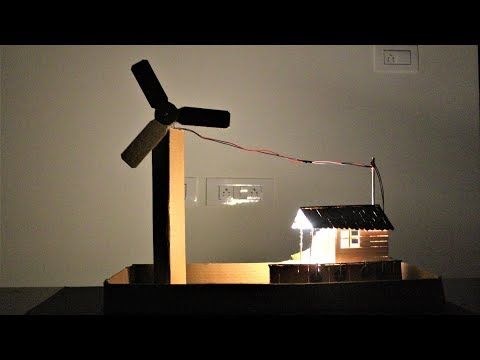
    Photo courtesy of Pinterest

    Wind energy projects can benefit students’ exposure to the functionality and modern applications of natural factors like wind. Wind energy projects utilize standard air to produce a functioning machine. Check out these three easy wind power projects for middle schoolers.

    1.  Ski Boat Air Jet

    One unique wind power project that exploits the power of the air would be ski boat air jets, which can be completed with a parent. The materials required for this project incorporate a wooden base made of popsicle sticks or another block-shaped object, such as a sponge, a wooden skewer, and paper sales. With adult supervision, the student can insert the skewer on the base and then attach the sales by cutting paper triangles on the skewer with tape. Technology can also enhance this project or be designed effectively using additional materials. 

    2. Anemometer

    An anemometer can be a suitable activity for a middle-school science experience, requiring four plastic cups, a thumbtack, tape, a pencil, and two straws. The teacher demonstrates the project by constructing it. The four cups should be cut on both sides and then attached to either straw, completing the top part of the anemometer. Next, the two straws should be arranged in a perpendicular order where they are taped together and thumbtacked for additional security. Furthermore, the thumbtack should be attached to the pencil to make a holder. The anemometer will assist in discovering the air speed of its location.

    3. Enhanced Pinwheel

    Although pinwheels are essential for middle-school students, they can be attached to additional materials to enhance the functionality of pinwheels. This activity should be conducted using adult supervision or in a science class where the adult can use alligator clips to attach the pinwheel to a lightbulb after making a simple pinwheel. After enough static energy has been charged using air power, the light bulb should gain control to light up.

    By Aaryav Walter

    Do you want more resources on the topic of wind power projects for middle schoolers? NSTEM’s vast resources database provides thousands of searchable STEM resources by category, school level, and state. This comprehensive library includes info on enrichment activities, curricula, internships, scholarships, and more. Check out a free sampling here. Or get an NSTEM membership today to unlock the complete list. 

    In middle school, students are transformed, entering as children and emerging as young adults. Project-based learning enrichment helps students connect the dots between STEM and real life, making math and science relevant for them and keeping them engaged and interested. With a meaningful middle school experience, students are far more likely to focus on STEM disciplines in high school and beyond.  Click here to start your 6-8 middle school chapter of the National STEM Honor Society.

  • 6 Ultimate Tips To Be Involved In Your Middle Schooler’s STEM Learning

    6 Ultimate Tips To Be Involved In Your Middle Schooler’s STEM Learning

    Photo courtesy of Unsplash

    It’s summer, you have a middle schooler at home, and you want them to have a fun and enriching summer break, but you don’t know where to start. STEM is the answer to your problem. Children are curious, highly energetic, and love experimenting and trying new things. Creating STEM projects and activities is a great way to utilize your child’s high energy, inquisitiveness, and natural learning ability. Children observe the world, connect ideas, and form hypotheses from their experiences. They build models and break them down. They put together puzzles and mix paint colors. Motivating your child towards STEM doesn’t just enhance their ability to connect ideas and think critically, it puts them on a path toward being a part of the next generation of STEM leaders. Read further to discover six ultimate tips to be involved in your middle schooler’s STEM learning.

     A parent’s influence on their children’s STEM aspirations also dramatically increases their child’s academic success. According to the National School Boards Association, the Program for International Student Assessment (PISA) 2015 report shows that family involvement resulted in higher achievement in math and science for children whose parents were interested in their school activities. U.S. kids who strongly agreed with the following statement: “My parents are interested in my school activities” had a PISA score of 508 in science and 480 in math. This is compared to a score of 466 in science and 444 in math for kids who strongly disagree with the statement.

    Here are six tips to help you get involved in your middle schooler’s STEM learning:

    • First, encourage your middle schooler to identify with STEM

      Look for opportunities to talk with your child about STEM-related topics. For example, you could speak about gravity when your child tosses a ball in the air, chemistry when making pizza at home, or fractions when cutting the pizza. Encourage your middle schooler’s curiosity and questioning. Instead of answering your child’s question or providing them with a solution to their problem, encourage them to research online, develop their possible solutions, and test them out. You can also use this to teach them about the scientific method and how to use it. Watch science, technology, and math-based TV shows with your child and discuss the tv program with them afterward.


    • Create positive learning experiences with STEM

      You want to create opportunities for your child to feel independent and accomplished. Also, vary the topics to cater to your child’s unique interests and learning style. Children need activities that engage their curiosity and kinetic energy. They need to be challenged, but within the confines of their comfort zone so they are not discouraged and are excited and having fun. Middle schoolers that are challenged to the point of being overwhelmed will withdraw and give up. Always provide positive reinforcement and encouragement while motivating your child to participate in STEM activities. Also, remember patience is very conducive to adequate teaching and motivation.


    • Create real-life scenarios

      Using real-world scenarios makes it easier for your child to see the importance of their learning and feel motivated to learn STEM. For example, while playing football with your child, you can teach how the density of a football affects its trajectory when thrown.


    • Find STEM-related toys

      STEM toys can be great tools to help your child stay engaged in STEM at home. They also are an excellent vehicle for project-based learning. A chemistry kit can lead to a hobby of science projects and experiments. Or a rocket-building kit can lead to learning about space and rocket launches.


    • Go on STEM-related recreational trips

      Taking your children to places like the local science museum or Luray Caverns is an excellent opportunity for them to learn about the natural sciences. You can also take them to robotics competitions or the Discovery Cube and encourage them to participate.


    • Look for at-home lesson plans

      When you’re struggling to develop your ideas on how to guide and instruct your child’s learning, you can use many resources online to keep your child busy and learning about STEM. The National STEM Honor Society (NSTEM) cuts out a lot of the online search for you on our website. Below are additional articles from NSTEM that can include tips to support your middle schooler’s STEM learning journey. Also, while browsing our website, consider learning about our NSTEM chapters and how you can get your child to be a member of our chapters.


    By Jacqueline Dua

    Do you want more resources on the topic of tips to be involved in your middle schooler’s STEM learning? NSTEM’s vast resources database provides thousands of searchable STEM resources by category, school level, and state. This comprehensive library includes info on enrichment activities, curricula, internships, scholarships, and more. Check out a free sampling here. Or get an NSTEM membership today to unlock the complete list. 

    Middle School is where students are transformed, entering as children and emerging as young adults. Project-based learning enrichment helps students connect the dots between STEM and real life, making math and science relevant for them, keeping them engaged and interested. With a meaningful middle school experience, students are far more likely to focus on STEM disciplines in high school and beyond.  To start your 6-8, middle school chapter of the National STEM Honor Society, click here

  • Diversify Your Students’ STEM Experience With These 3 Enlightening Field Trips Destinations for Middle School Students!

    Diversify Your Students’ STEM Experience With These 3 Enlightening Field Trips Destinations for Middle School Students!

    person walking in the woods
    Photo Courtesy of Unsplash

    Do you want to take your middle school students on exciting field trips? Field trips are a great way to provide new experiences to your students. These trips also help students learn STEM concepts from a hands-on perspective. Here are three enlightening field trip destinations for middle schoolers. 

       1. Visit A Zoo

    Taking a trip to your local zoo is a great way to teach your kids different types of animals. Zoos have animals of different species such as crocodiles, lions, and emus. Visiting a zoo gives your kids the opportunity to see animals up close and personal. Zoos teach your kids about various animal behaviors as well as the type of habitats they live in. If your kids have any questions, there are zookeepers available to help answer those questions. Another important concept zoos teach is the necessity of conservation. Animals are constantly at risk due to pollution, poaching, and deforestation. Bringing your kids to a zoo will introduce these concepts to them and educate them on the importance of protecting endangered animals. The zoo is a fun place to interact with animals and to learn more about them.     

       2. Embark on a Nature Walk

    Bringing your kids to a local or national park is an engaging way to interact with nature. Nature parks have tons of activities to do such as kayaking, hiking, or birdwatching. These activities are great for getting your kids active and excited to exercise. Depending on the ecosystem in the park, there may be many animals available to be observed. Observing animals is a fun way to develop STEM skills such as recording information, examining a subject, and using critical thinking. Nature parks are useful for giving your students some time to unwind from the traditional school setting. Having your students learn in a different environment will help them feel more engaged with learning new concepts. If nature and exercise interest your students, there is nothing better than visiting a nature park. 

    If you want to learn more about nature parks, check out this NSTEM resource

       3. Explore a Science Museum

    Science Museums are a fun place to learn more about different scientific concepts. The topics covered by science museums range from physics, biology, or astronomy. There are exciting exhibits available at science museums. Kids can interact with the exhibits and have fun with all of them. Science museums are a great way to see if your child has an interest in a certain scientific field. Museum attendants can provide information about each exhibit as well as help to foster an interest in science. Another fun benefit of museums is the programs available. Museum programs are a fun way to get your kids involved with learning STEM concepts. Visiting a science museum will be an engaging and enriching experience for your kids.   

    by Nathan Li


    For more information about science museums, check out this NSTEM resource

    Do you want more resources on the topic of field trips? NSTEM’s vast resources database provides thousands of STEM resources that are searchable by category, school level and state. This comprehensive library includes info on enrichment activities, curricula, internships, scholarships and more. Check out a free sampling here. Or get an NSTEM membership today to unlock the complete list. 


    Middle School is where students are transformed, entering as children and emerging as young adults. Project-based learning enrichment helps students connect the dots between STEM and real life, making math and science relevant for them, keeping them engaged and interested. With a meaningful middle school experience, students are far more likely to focus on STEM disciplines in high school and beyond.  To start your 6-8, middle school chapter of the National STEM Honor Society, click here.

  • Want to Compost at Your Middle School? Here are the Top 3 Tips to Start Today.

    Want to Compost at Your Middle School? Here are the Top 3 Tips to Start Today.

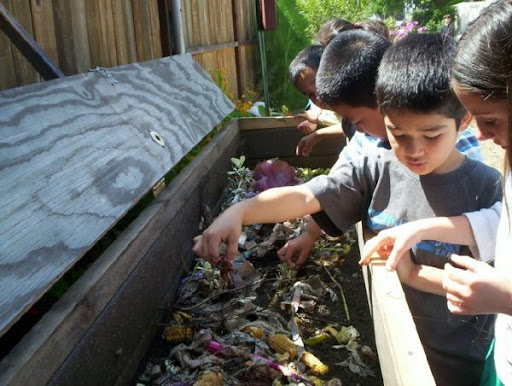
    Sustainability and environmental protection are heated topics nowadays. Knowing where/when to recycle and reuse the compost is a valuable lesson you can advocate to your students and school as a whole. Here are the top three tips to start today. These resources are inspired by the NSTEM resource library.

    kids looking inside a dirt-pit
    Photo courtesy of Clean River

       1. Composting in a Cup!

    Are you looking for the best way to help your students understand the concept and benefit behind composting? Here is a good way you can help your middle schoolers understand the principle behind composting by giving them some hands-on experience. This experiment is simple and easy; you need only ask your students to collect leaves and tree branches around the school or their home and bring them to the classroom. Then, you introduce how composting works by adding water, dirt, and organic materials into a cup and sealing a plastic cover on the top. This way, students will gain a concrete understanding of composting and receive practice on how to do scientific experiments as well. Introduce your students to the “cup” experiment and show them simple ways to protect the planet!

    http://www.sciencemadefunkids.net/experiments.cfm?Exp=2

       2. Building a Multiple Bin System

    As we talk about composting in school, a multi-bin system is crucial for successful and long-lasting compost. Here is the complete guide on how to build your own compost bin system from scratch. Having more bins will allow composting to progress through the movement of materials from bin to the bin as they mature. First, you would need to choose the material for the bins; we usually recommend using wood to ensure good airflow and composting quality. Then, you would need to gather materials for them to enter: lids, sides, and dividers. In the building process, you could set up a workshop for students where you could introduce the purpose of the bin system and help the school finish the final product in no time!

       3. Categorize Your Compost Starting Today

    Do you need help to best facilitate your student’s understanding of what can be composted and what should be avoided? Here are tips and information you need for Composting 101! For instance, compost can be divided into “brown” and “green” categories. Items for “green” are things like vegetable and fruit scraps, tea leaves/bags, garden waste, etc. Brown items can be dry leaves, straw, dry hay, sawdust, woodchips from untreated wood, etc. There is so much more you can learn from this exercise, such as the layout, ingredient, and air/oxygen composition.  Following the guidelines for composting based on scientific research will not only help your school have a healthy and suitable environment but also help your students understand the scientific value of composting.

    Composting is one of the natural ways to help us protect our environment and restore natural order. Following those tips would help you and your students understand the science behind the process and help them explore their own path of learning.

    by Tom Yuan

    Do you want more resources on the topic of composting at your Middle School? NSTEM’s vast resources database provides thousands of STEM resources that are searchable by category, school level and state. This comprehensive library includes info on enrichment activities, curricula, internships, scholarships and more. Check out a free sampling here. Or get an NSTEM membership today to unlock the complete list. 

    Middle School is where students are transformed, entering as children and emerging as young adults. Project-based learning enrichment helps students connect the dots between STEM and real life, making math and science relevant for them, keeping them engaged and interested. With a meaningful middle school experience, students are far more likely to focus on STEM disciplines in high school and beyond.  To start your 6-8, middle school chapter of the National STEM Honor Society, click here.


  • 5 Great Coding Resources for Middle Schoolers

    5 Great Coding Resources for Middle Schoolers

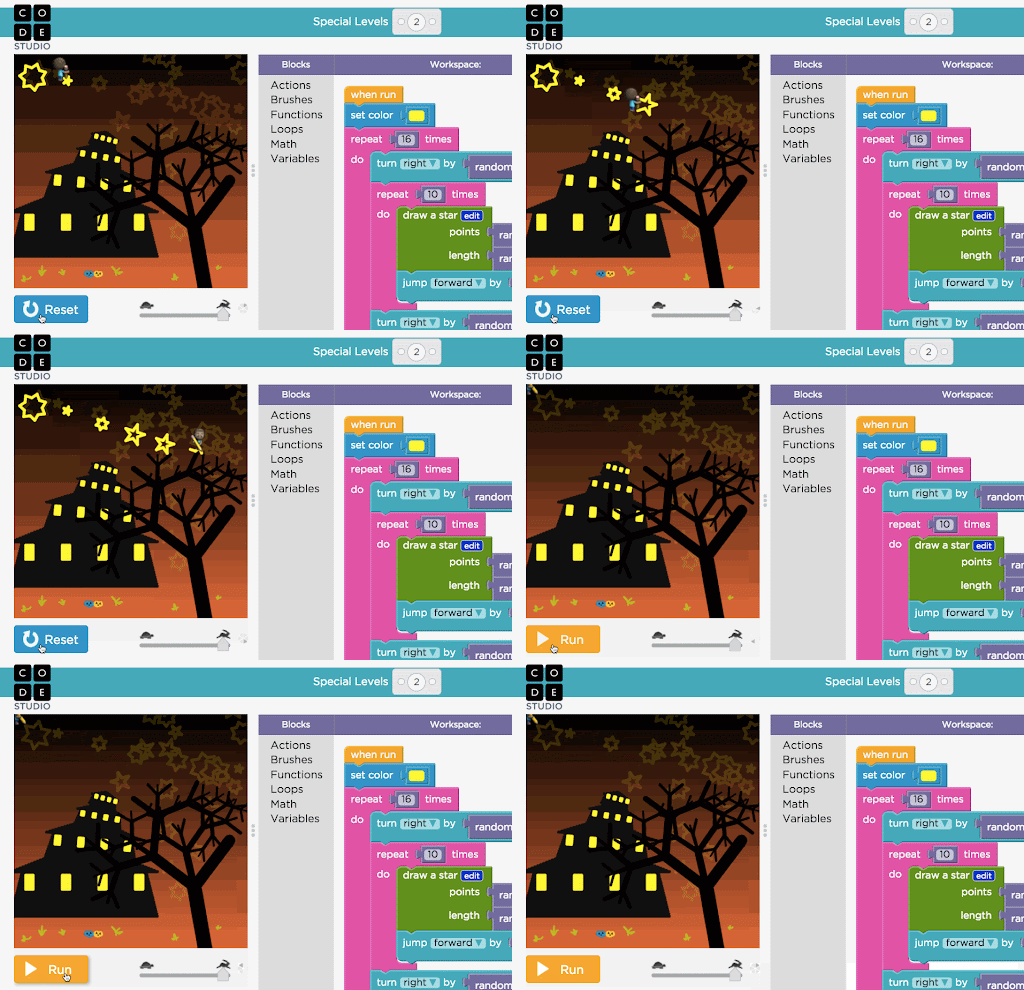
    When was the last time you wrote an essay with paper and pen? What used to be the default for students across the world is now seen as increasingly obsolete. Why tire out your hand so much, and waste so much paper, doing something that is much easier on a writing software such as Microsoft Word or Google Docs? This is just one instance of the increasing prevalence of computers. As our society becomes more and more dependent on these devices, learning how to speak their language is not a bad idea. It’s why coding resources have exploded in popularity. Many students want to take their first steps into this exciting world, but the question is how? With these five coding tools, students as early as Middle School can begin to learn the lingo of the future.

       1.LightBot ($2.99, with a free demo)

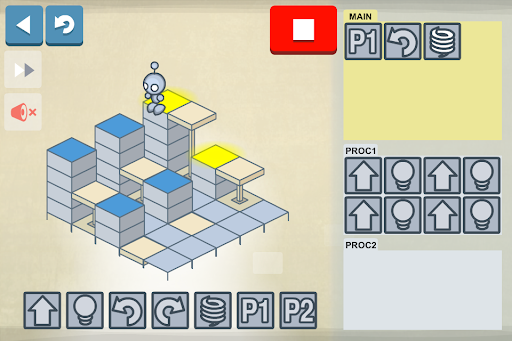
    Made specifically for beginners, LightBot uses a game to teach the basics of coding, so that the skills learned there can then be translated to more complex programs. It’s a great introduction to sequencing (how to put instructions together to create an algorithm), overloading, recursive loops, and more! It’s relatively cheap, only 2.99 to download, but there’s a free demo if you want to try it out first. By all means, do so!

       2. Google CS First (free)

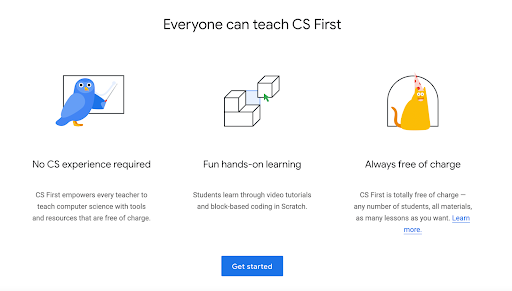
    Straight from Google itself, this Computer Science program divides itself into themes, including game design and animation. A student can choose to study whichever they’re most interested in, and learn how to use code in that specific field. Even without prior knowledge, it’s a fun and engaging experience. However, students who quickly tire of watching instructional videos might want to sit this one out: there’s a lot of that. It’s no doubt important information, but there may be more stimulating ways to learn it.

       3. IBM’s Machine Learning for Kids (free)

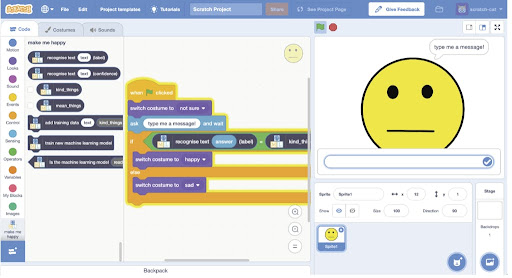
    AI is all the rage nowadays, and IBMs Machine Learning for Kids is a great way to dip your toes into this complex (and growing) field. What’s special about this free software is its ability to show how coding is used in the real world, while still remaining accessible for beginners. You’ll need to create an IBM account, but once you’ve done that, you can participate in a variety of exciting coding projects. Machine Learning for Kids is a perfect fit for any classroom and any inquisitive student.

       4. Code.org (free)

    Code.org (free)

    As one of the most well known coding softwares, code.org has quite the track record. This completely free resource has two curriculums fit for middle schoolers: the Computer Science Discoveries program and the Computer Science Fundamentals Express. Computer Science discoveries is a  nine-week coding course, designed to be used in a classroom setting over the course of a semester. In this program you’ll have the opportunity to create various kinds of apps, websites, and even games. There’s also a unit on programming AI. The second curriculum, the Computer Science Fundamentals Express, is simply an abridged version of the main course, fit for educators who don’t want to spend a whole semester on coding, but want to give their students a taste of it. 

       5. Hour of Code (free)

    Another very famous coding resource, and by the makers of code.org, the Hour of Code is a unique experience that comes once a year (during Computer Science Education Week in December) and serves as a good foundation to build coding skills. As the name implies it’s an hour long course, however their website has all sorts of different resources year round.

    If you’re interested in coding and computer science and want to be more involved in this field, you’re not alone. Working with like-minded students is a worthwhile endeavor, making it easier to build skills and connections, so you can always learn from each other. The National STEM Honor Society is a rapidly growing and fun group that you might be interested in, and we’re always open to bright and curious students of all ages. If you’re interested, starting a chapter at your school is a great way to form a vivid community with people who love the same things you do, and a great opportunity to show initiative and leadership. Happy coding!  

    by Caleb Taran

    Do you want more resources on great Coding Resources for Middle Schoolers? NSTEM’s vast resources database provides thousands of STEM resources that are searchable by category, school level and state. This comprehensive library includes info on enrichment activities, curricula, internships, scholarships and more. Check out a free sampling here. Or get an NSTEM membership today to unlock the complete list. 

    Middle School is where students are transformed, entering as children and emerging as young adults. Project-based learning enrichment helps students connect the dots between STEM and real life, making math and science relevant for them, keeping them engaged and interested. With a meaningful middle school experience, students are far more likely to focus on STEM disciplines in high school and beyond.  To start your 6-8, middle school chapter of the National STEM Honor Society, click here.

  • 3 Robotics Competitions for Middle-School Students

    3 Robotics Competitions for Middle-School Students

    Robotics competitions for middle school.

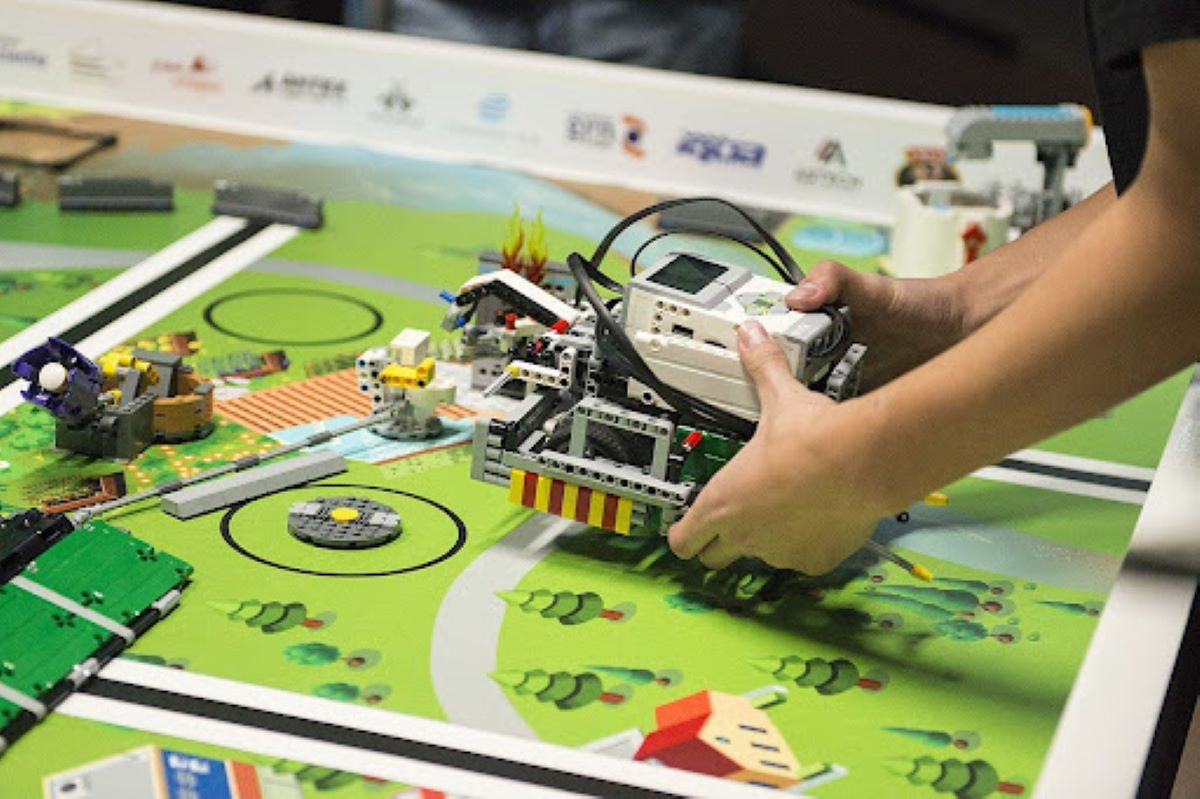
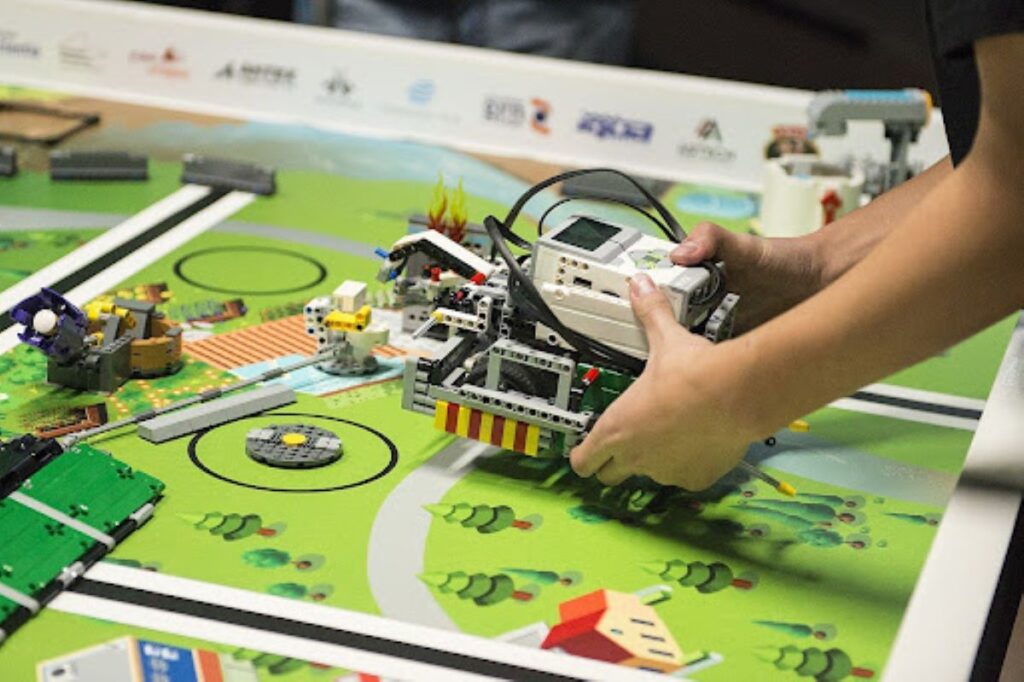
    Photo courtesy of Space.comRobotics competitions allow middle-school students to apply their hobbies and interests to real-world scenarios. Whether you’re a teacher who wants to inspire your students’ academic passion or a parent who wishes to help your child develop more interest in STEM, here are three robotics competitions you can introduce to middle schoolers to help improve their academic and life skills.

    1.  FIRST® LEGO® League Challenge

    The FIRST® LEGO® League Challenge is a competition for grades 4-8 students who assemble their own teams to design, build and program an autonomous robot using SPIKE Prime technology. The students will be able to put STEM concepts into practice and learn about team collaboration throughout the process. This competition is a low-stress and friendly match that helps middle schoolers explore their own passion in the field of engineering and physics. The FIRST® LEGO® League Challenges take place around the world. You simply apply on the website in your local region to have your students compete in this inclusive and educational competition. 

    2.  Regional Robotics

    Regional Autonomous Robots
    Photo courtesy of RARC

    Another fun competition is hosted by the Regional Autonomous Robotics Circuit (RARC), which brings the game home and helps your students compete in a safe and familiar location. The RARC CYBER contest is a virtual cybersecurity game in a “capture the flag” format. This competition will provide sufficient supplies and sophisticated guidance to help competitors engage in a fair and educational match. 

    The location is determined by the middle school divisions that host a RARC-sponsored robotic competition. The purpose of the competition is to help middle-school students develop the ability to collaborate, critically think, and problem solve in a STEM environment. Moreover, hosting events in the local region will give many students the opportunity to explore without extra spending and in a friendly and inclusive environment.

    View RARC Coaches Manual PDF

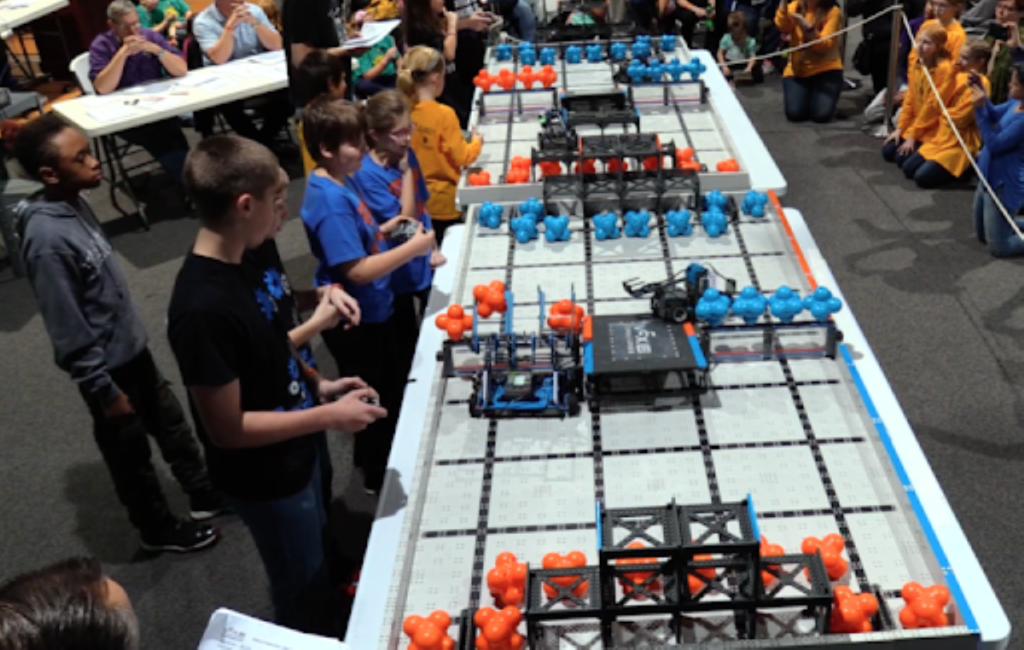
    Children at Vex Robotics competition
    Photo courtesy of Vex Robotics

    3.  Vex Robotics

    Finally, if your students are enthusiastic about robotics and love the spirit of the competition, VEX Robotic competition will offer a range of challenges for competitors to solve. VEX hosts global events, where students can simply stay at home and participate in an exciting journey of robotic competition. Middle-school students can sign up as pairs to win a prize by competing in the 2023 competition, then “spinning” off where individuals need to complete the objectives in one minute. The competition aims to help students develop their virtual skills, such as coding and online collaboration. 

    In addition to this competition, VEX offers several other challenges such as “Robot Skill Challenges,” by completely assembling a robot in a limited time, or “VEX AI Competition,” where they use machine learning strategies to compete with each other. If those sound like your students, definitely sign them up!

    Robotic competition has become an innovative educational method to help middle school students seek their own learning method and apply conceptual knowledge to solve real-world problems.

    To align with a better education system, NSTEM’s chapters aim to improve students’ learning experiences by promoting a robust, interdisciplinary, hands-on, project-based learning approach, helping students gain a deeper understanding of real-world problems while exposing them to potential career interests.

    By Zhe “Tom” Yuan

    Do you want more resources on the topic of robotics competitions? NSTEM’s vast resources database provides thousands of STEM resources that are searchable by category, school level and state. This comprehensive library includes info on enrichment activities, curricula, internships, scholarships and more. Check out a free sampling here. Or get an NSTEM membership today to unlock the complete list. 

    Middle school is where students are transformed, entering as children and emerging as young adults. Project-based learning enrichment helps students connect the dots between STEM and real life, making math and science relevant for them, keeping them engaged and interested. With a meaningful middle school experience, students are far more likely to focus on STEM disciplines in high school and beyond.  To start your 6-8, middle school chapter of the National STEM Honor Society, click here.