Tag: Middle School – 6th through 8th Grade

  • STEM and Social Responsibility: 5 Projects with a Purpose for Middle Schoolers

    STEM and Social Responsibility: 5 Projects with a Purpose for Middle Schoolers

    Photo Courtesy of nca.school

    In the world of education, where STEM takes center stage, infusing these disciplines with a sense of purpose becomes crucial. Middle schoolers, on the brink of discovering their passions and potential, embody not only budding scientists and engineers but also the future stewards of our planet. The following hands-on middle school projects enhance technical skills and nurture a profound understanding of how STEM can address real-world challenges. Each project is designed to spark curiosity, promote collaboration, and instill a sense of responsibility toward our environment and society, from water filtration systems to solar-powered devices. As we delve into the significance of each endeavor, we aim to impart knowledge and inspire a new generation of young minds eager to apply their skills for the greater good.

    1. Water Filtration System

    • Significance: This project focuses on creating a low-cost water filtration system using readily available materials. It teaches students about water pollution and the importance of clean water.
    • Materials: Gravel, sand, charcoal, plastic bottles, and a water source.
    • Individual or Group: This middle school project can be done in groups to promote teamwork.
    • Water Filtration Project Guide

    2. Solar-Powered Devices

    • Significance: Students can design and build solar-powered devices like solar cookers or chargers. This project introduces them to renewable energy and its role in sustainable living.
    • Materials: Solar cells, batteries, simple circuits, and recycled materials.
    • Individual or Group: This project can be done individually or in small groups.
    • Solar-Powered Devices Tutorial

    3. Community Garden for Sustainable Agriculture

    • Significance: This middle school project encourages students to set up a community garden to learn about sustainable agriculture, composting, and the importance of locally sourced food.
    • Materials: Seeds, soil, gardening tools, and compost bins.
    • Individual or Group: Groups are best suited for this project to manage the garden effectively.
    • Community Gardening Resources

    4. Robotics for Recycling

    • Significance: Combine robotics and environmental awareness by creating a robot to identify and collect recyclable materials. This project emphasizes the importance of recycling in waste management.
    • Materials: Basic robotics kit, sensors, and recycled materials for the robot’s body.
    • Individual or Group: It is ideal for small groups to collaborate on robot design and programming.
    • Robotics for Recycling Guide

    5. Air Quality Monitoring System

    • Significance: Develop a system to monitor air quality in the school or local community. Students learn about the impact of air pollution on health and the environment.
    • Materials: Air quality sensors, microcontrollers, and data analysis tools.
    • Individual or Group: This can be done individually or in small teams to cover different locations.
    • Air Quality Monitoring System Tutorial

    In exploring these five impactful STEM projects for middle schoolers, we have witnessed the fusion of technology with social responsibility. From water filtration to robotics, these projects teach science and instill empathy and community commitment. In this blend of science, technology, and responsibility, young minds have the potential to shape a brighter, sustainable future. Let’s envision a world where STEM guides us toward compassion and equity. Today’s seeds planted in these middle schoolers can blossom into an innovative garden addressing tomorrow’s challenges. The question remains: “What will these STEM-inspired leaders do with their knowledge and sense of responsibility?”

    By Srihitha Sunkara

    Do you want more resources on the topic of middle school projects? NSTEM’s vast resources database provides thousands of searchable STEM resources by category, school level, and state. This comprehensive library includes info on enrichment activities, curricula, internships, scholarships, and more. Check out a free sampling here. Or get an NSTEM membership today to unlock the complete list. 

    In middle school, students are transformed, entering as children and emerging as young adults. Project-based learning enrichment helps students connect the dots between STEM and real life, making math and science relevant for them and keeping them engaged and interested. With a meaningful middle school experience, students are far more likely to focus on STEM disciplines in high school and beyond.  To start your 6-8 middle school chapter of the National STEM Honor Society, click here.

  • Festive Chemistry: 5 Holiday Experiments that Spark Joy in Middle School Labs

    Festive Chemistry: 5 Holiday Experiments that Spark Joy in Middle School Labs

    Photo Courtesy of www.shutterstock.com

    Exploring festive chemistry lab experiments for middle school students promises an engaging and educational journey into the wonders of science during the winter season. Let us discover five exciting lab experiments that add a touch of festivity and provide valuable insights into the principles of chemistry.

    1. Candy Cane Chromatography

    Link to Solution Science: Colorful Candy Chromatography

    Unveil the colorful secrets hidden within candy canes through chromatography. This experiment introduces students to the concept of separating mixtures and understanding the different components of festive treats. Candy Cane Chromatography educates students about chromatography principles, demonstrating how different components move at varying rates, resulting in colorful patterns.

    How It Works: Using chromatography paper and a solvent, students witness the separation of pigments in candy canes. This hands-on activity allows them to explore the science behind the vibrant stripes.

    Materials Needed: Candy canes, chromatography paper, a solvent (e.g., water or rubbing alcohol), and small containers.


    2. Wintergreen Sparkle

    Link to Wintergreen Sparkle Video

    Infuse chemistry with magic in the Wintergreen Sparkle experiment, where students create a winter-themed, sparkling reaction. This experiment explores chemical reactions and the factors influencing them. Wintergreen Sparkle teaches students about chemical reactions, including the role of acids and bases and the release of carbon dioxide gas.

    How It Works: Students witness a fizzing and sparkling reaction by combining wintergreen lifesavers and various household ingredients. This visually captivating experiment introduces them to the concept of chemical reactions.

    Materials Needed: Wintergreen lifesavers, baking soda, vinegar, and a clear container.


    3. Gingerbread Man Chemistry

    Link to Gingerbread Man Chemistry Experiment

    Fuse the joy of holiday baking with chemistry in the Gingerbread Man Chemistry experiment. This activity explores the science of leavening agents and their role in baking. Gingerbread Man Chemistry educates students about leavening agents and the chemical reactions during baking, contributing to the dough’s rise.

    How It Works: Students create gingerbread man cutouts with variations in the amount of baking soda or baking powder. They observe how these leavening agents affect the rise of the gingerbread during baking.

    Materials Needed: Gingerbread dough, baking soda, baking powder, and cookie cutters.


    4. Holiday Slime

    Link to Holiday Slime Inspiration

    Embrace the holiday spirit with a slimy twist in the Holiday Slime experiment. This gooey activity explores the science of polymers and non-Newtonian fluids. Holiday Slime introduces students to the science of polymers and non-Newtonian fluids, showcasing the fascinating properties of slime.

    How It Works: Students create a holiday-themed slime by mixing common slime ingredients with festive additions like glitter or sequins. This experiment delves into the properties of polymers and their unique behaviors.

    Materials Needed: White school glue, liquid starch, water, and optional festive add-ins.


    5. Peppermint Pop Rocks

    Link to Peppermint Pop Rocks Experiment Video

    Experience the pop and fizzle of the holiday season with PeppLink to Peppermint Pop Rocks Inspirationermint Pop Rocks. This experiment explores the science behind carbonation and gas release. Peppermint Pop Rocks teaches students about chemical reactions involving acids and bases, showcasing the release of carbon dioxide gas.

    How It Works: Students combine crushed peppermint candy with baking soda and observe the fizzy reaction when adding vinegar. This engaging experiment provides insights into chemical reactions involving acids and bases.

    Materials Needed: Peppermint candy, baking soda, vinegar, and containers.

    By Srihitha Sunkara


    As we wrap up these holiday chemistry lab experiments, consider the endless possibilities that await a deeper dive into STEM education. NSTEM provides a supportive community and resources to nurture young minds passionate about science, technology, engineering, and mathematics. To explore more STEM opportunities and foster a love for learning, visit NSTEM’s website. Start your journey into the exciting world of STEM today!

    Do you want more resources on the topic of holiday chemistry lab experiments? NSTEM’s vast resources database provides thousands of searchable STEM resources by category, school level, and state. This comprehensive library includes info on enrichment activities, curricula, internships, scholarships, and more. Check out a free sampling here. Or get an NSTEM membership today to unlock the complete list. 

    Middle School is where students are transformed, entering as children and emerging as young adults. Project-based learning enrichment helps students connect the dots between STEM and real life, making math and science relevant for them, keeping them engaged and interested. With a meaningful middle school experience, students are far more likely to focus on STEM disciplines in high school and beyond.  To start your 6-8 middle school chapter of the National STEM Honor Society, click here.
  • Unveiling the Wonders of Space: 5 Astronomy Activities for Middle-Schoolers

    Unveiling the Wonders of Space: 5 Astronomy Activities for Middle-Schoolers

    Photo Courtesy of techstarter.com

    The universe holds endless mysteries that captivate people of all ages! Middle school students, in particular, are curious and always eager to learn. So, what better way to nurture their interest than by immersing them in the fascinating world of astronomy? From understanding the secrets of our solar system to gazing at the stars, there are so many exciting opportunities for learning and exploration within the classroom walls! In this blog, we’re going on a cosmic journey to discover five incredible astronomy lessons, projects, and activities perfect for middle school students. Each of these classroom adventures serves a unique purpose, from exploring the wonders of our solar system to grasping the principles of rocket science. Here are five astronomy activities for middle school students.

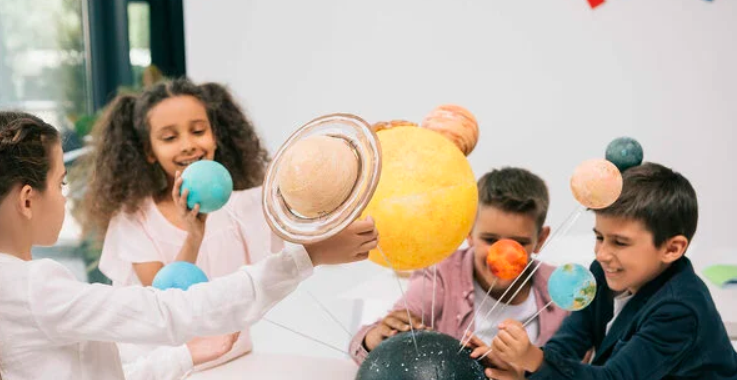
    1. Solar System Model Building

    • Purpose: This astronomy project helps students understand the relative sizes and distances between objects in the solar system, promoting spatial awareness and scientific accuracy.
    • Materials: Styrofoam balls (various sizes), paint, paintbrushes, string, and markers.
    • Steps: Students paint and label the Styrofoam balls to represent the sun, planets, and other celestial objects. Then, they use string to hang these objects in the correct order and distances from one another, creating a scale model of the solar system.
    • Time Duration: 2-3 class periods.

    2. Star Constellation Study

    • Purpose: This activity teaches students about constellations, their historical significance, and how to identify them in the night sky.
    • Materials: Star charts, a dark room with a projector or planetarium software, and pencils.
    • Steps: In a darkened room, project star charts on a screen. Discuss the mythology behind constellations and their names. Then, have students identify and draw their constellations on the star charts.
    • Time Duration: 1-2 class periods.

    3. Phases of the Moon Observation

    • Purpose: This astronomy lesson helps students understand the lunar phases and the moon’s position relative to the sun and Earth.
    • Materials: Moon phase calendars, binoculars, or telescopes.
    • Steps: Each student observes and records the moon’s appearance every night for a month. They compare their observations with the moon phase calendar and discuss their findings.
    • Time Duration: A month.

    4. Rocket Building and Launching

    • Purpose: This project introduces students to the principles of rocket science, including thrust, trajectory, and gravity.
    • Materials: Empty plastic bottles, paper, tape, and vinegar-baking soda mixture for propulsion.
    • Steps: Students design and construct simple rockets using plastic bottles. They load a mixture of vinegar and baking soda into the rocket, producing gas and propelling it into the air.
    • Time Duration: 2-3 class periods.

    5. Exoplanet Hunt

    • Purpose: This astronomy activity teaches students about the search for exoplanets and the characteristics that make a planet habitable.
    • Materials: Computers with internet access, Exoplanet databases, and research tools.
    • Steps: Students explore online databases of exoplanets. They research these planets, their characteristics, and the potential for habitability, discussing what makes a planet suitable for life.
    • Time Duration: 2-3 class periods.

    We encourage you to consider starting an NSTEM chapter at your school. NSTEM, with its commitment to innovative STEM education, can provide invaluable resources and support. By joining hands with NSTEM, you can help create a brighter future for our children. To get started, explore these NSTEM resources to access a wealth of materials and guidance, enriching STEM education in K-2 classrooms and beyond. 

    By Srihitha Sunkara

    Do you want more resources on the topic of astronomy activities? NSTEM’s vast resources database provides thousands of searchable STEM resources by category, school level, and state. This comprehensive library includes info on enrichment activities, curricula, internships, scholarships, and more. Check out a free sampling here. Or get an NSTEM membership today to unlock the complete list. 

    In middle school, students are transformed, entering as children and emerging as young adults. Project-based learning enrichment helps students connect the dots between STEM and real life, making math and science relevant for them and keeping them engaged and interested. With a meaningful middle school experience, students are far more likely to focus on STEM disciplines in high school and beyond.  To start your 6-8 middle school chapter of the National STEM Honor Society, click here.
  • Further Your Middle-School Child’s STEM Learning with These 4 At-Home STEM Projects

    Further Your Middle-School Child’s STEM Learning with These 4 At-Home STEM Projects

    Photo Courtesy of Flickr

    Are you looking for ways to expand your middle-schooler’s STEM education from the comfort of your home? Are you hoping to have a hands-on educational experience for your child while participating with them? You and your child can participate in many at-home STEM projects and gain a broader knowledge base. This blog will present four at-home STEM projects you and your middle-schooler can partake in to further their STEM journey.

    1.  Magnetic Slime

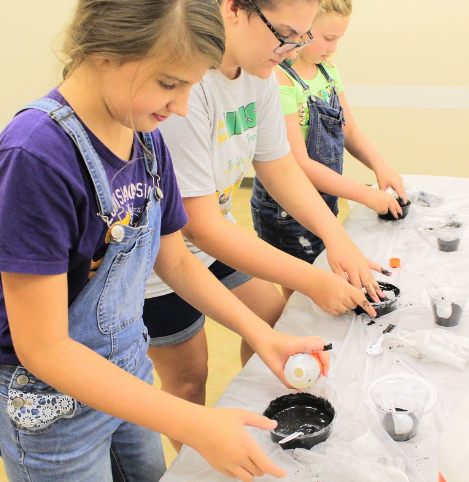
    What are two things that kids hold dear to their hearts? Slime and magnets, of course! You can gather their attention and allow them to learn more about science by conducting this at-home STEM project, magnetic slime. It is fun to play with and effective at capturing your middle-schooler’s attention. The project itself is straightforward. You must get white glue, liquid starch, iron oxide powder, plastic spoons for stirring, a mixing bowl, and a neodymium (rare earth) magnet. You can then follow easy-to-read instructions on how to make the magnetic slime at the following website: How to Make Magnetic Slime.

    2.  Crystal Sun Catchers

    What kids do not love looking at crystals and playing around with sun catchers? This activity is a great way to engage your kids with science with a project whose ingredients are effortless to get from your local grocery store. The materials are simple: Epsom salt, clear recycled plastic lids – use the clearest you can find, water, an empty jar, a bowl or glass measuring cup, a fork, a microwave (optional), tray, string, and a pin. All materials can be found in your house; if not, you can retrieve them at the grocery store. The steps to make a crystal sun catcher are easy to follow and can be found at the following website: How to Make Crystal Sun Catchers. This at-home experience can give your child a new appreciation for science and the many purposes and ways salt can be used.

    3. Stop Motion Animation Video

    If your middle-schooler is interested in technology and watching animated shows, making a stop-motion animation video will be something that will grab their notice, no doubt. There are only a few things you need: a phone or iPad to film, a stop motion animation app, and objects to animate (you can use legos or dolls). You can take it a step further and get a tripod to help keep your camera steady and get foam core to use as a background. This more technical STEM project uses a high level of creativity that every kid loves to explore. Also, who knows, you will be having a weekly movie night with stop-motion animation that your child created.

    4. Oil Spill

    You can always create an oil spill if you want your kids to have a real-world issue to compare and contrast with their projects. All you have to do is mix oil and water in a large bowl and add feathers. Give your child some sponges or spoons and instruct them to fish all the oil and feathers from the water. As they experience difficulty retrieving the items, they can see the real-life impact of oil on other elements and objects and how that translates to real situations. However, this project might become messy, so keep a mop nearby.

    These are just some of the few at-home STEM activities you can do with your middle-school children to help further their education in all things STEM; check out NSTEM’s resource library to discover even more!

    By Rameen Naviwala

    Do you want more resources on the topic of at-home STEM projects? NSTEM’s vast resources database provides thousands of searchable STEM resources by category, school level, and state. This comprehensive library includes info on enrichment activities, curricula, internships, scholarships, and more. Check out a free sampling here. Or get an NSTEM membership today to unlock the complete list. 

    In middle school, students are transformed, entering as children and emerging as young adults. Project-based learning enrichment helps students connect the dots between STEM and real life, making math and science relevant for them and keeping them engaged and interested. With a meaningful middle school experience, students are far more likely to focus on STEM disciplines in high school and beyond.  To start your 6-8 middle school chapter of the National STEM Honor Society, click here.

  • From Classroom to STEM Adventures: Top 3 Experiments and Labs for Middle-Schoolers

    From Classroom to STEM Adventures: Top 3 Experiments and Labs for Middle-Schoolers

    Photo courtesy of Pexels

    Middle-school science experiments serve the budding catalysts for curious young minds. They kickstart critical thinking abilities, instill a sense of wonder, and lay the foundation for a lifelong love of learning. Essentially, they are the secret ingredient that transforms mere students into eager learners and budding scientists. With this in mind, let’s plunge into a more comprehensive exploration of three significant science-based experiments thoughtfully tailored for middle schoolers.


    Photo courtesy of In the Loop

         1. Constructing a Rube Goldberg Machine 

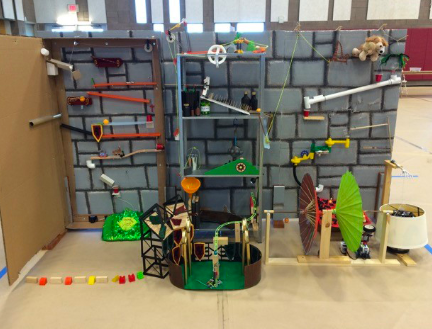
    The Rube Goldberg machine experiment offers middle-schoolers an immersive experience in engineering creativity. Participants can undertake this experiment individually or in pairs. The materials needed are everyday household items like marbles, plastic race car tracks, levers (such as binder clips and rulers), and dominos. The time duration may vary based on the complexity of the machine, typically taking a few hours to assemble. The experiment involves designing a sequence of chain reactions where each component triggers the next in a playful yet complex manner. The purpose is to enhance critical thinking, problem-solving skills, and understanding of cause-and-effect relationships, all while nurturing creativity. This engaging hands-on activity introduces students to engineering concepts and the joy of practical problem-solving, making it an essential tool for fostering a deeper appreciation for STEM fields. If you would like more information, visit https://www.rubegoldberg.com/education/


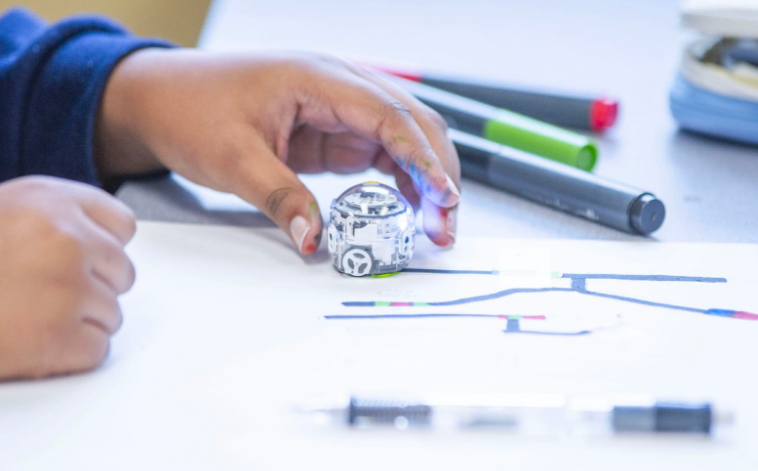
    Photo courtesy of Pocket Lab

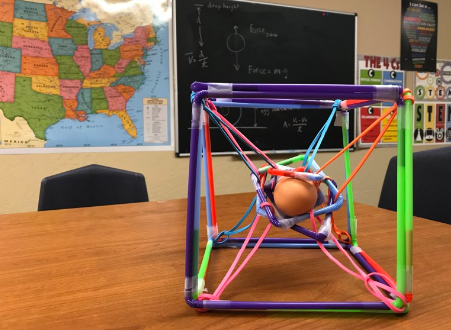
         2. Egg Drop Challenge

    The Egg Drop experiment presents an engaging opportunity for hands-on exploration. Designed to enhance understanding of forces and motion, the activity challenges students to create a protective container for an egg, minimizing its chances of cracking upon impact. The experiment can be conducted individually or in groups of 2–3 students. It requires basic materials such as an extra-large egg, a bag of materials (including cardboard cups, string, tape, balloons, and straws), and two sheets of scrap paper with pencils. Participants brainstorm, sketch mockups, and construct their egg protectors in approximately 45 minutes (including a 20-minute drop period). Subsequently, the eggs are dropped from a consistent height onto a protected surface, followed by an assessment for damage. The goal is to encourage curiosity, creativity, and problem-solving skills while immersing students in a practical learning experience that delves into engineering and design principles.


    Photo courtesy of Pinterest

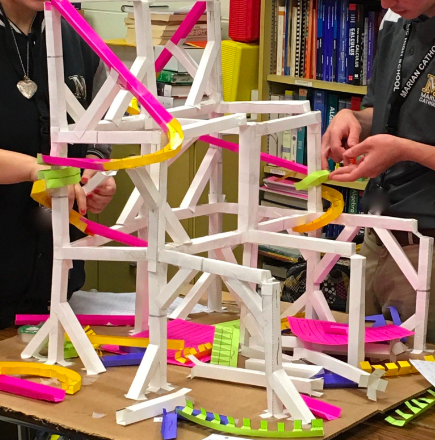
         3. Building a Roller Coaster

    Building a roller coaster is an exciting 2-hour hands-on lab that can be conducted in groups of four. In this activity, students create their own model roller coasters using pipe insulation and marbles. Students construct roller coasters driven solely by gravity by applying physics concepts like kinetic and potential energy, gravity, and friction. The lab emphasizes the engineering design process as students brainstorm, design, and build their roller coasters, testing and iterating their designs for optimal performance. The purpose of the lab is to engage students in the practical application of physics principles while fostering teamwork, creativity, and problem-solving skills. The activity encourages students to think like engineers and analyze the constraints and challenges of designing functional and exciting roller coasters.

    By Ratchana Ramesh Pandi


    Do you want more resources on the topic of STEM science experiments for middle schoolers? NSTEM’s vast resources database provides thousands of searchable STEM resources by category, school level, and state. This comprehensive library includes info on enrichment activities, curricula, internships, scholarships, and more. Check out a free sampling here. Or get an NSTEM membership today to unlock the complete list. 

    Middle School is where students are transformed, entering as children and emerging as young adults. Project-based learning enrichment helps students connect the dots between STEM and real life, making math and science relevant for them and keeping them engaged and interested. With a meaningful middle school experience, students are far more likely to focus on STEM disciplines in high school and beyond.  To start your 6-8, middle school chapter of the National STEM Honor Society, click here.
  • 4 Ultimate Tips to Stay Involved in Your Child’s STEM Learning Today

    4 Ultimate Tips to Stay Involved in Your Child’s STEM Learning Today

    Photo courtesy of Flickr

    As a parent, seeing your child’s passion and excitement about learning is one of your greatest joys. Many students today are interested in and seemingly dedicated to science, technology, engineering, and math. As a parent who understands the value of education, their love for STEM is something to encourage. But concurrently, it can be challenging to keep up with it. Something your child might know, like the back of their hand, might be difficult for you to understand. You want to stay involved in your child’s STEM learning and help them, but how? 

    The good news is you do not have to be an expert in STEM to stay current in your child’s STEM learning. Here are five ultimate tips to stay involved in your child’s STEM learning today.


    Help with Homework/Inquire about it.

    Even if your child’s schoolwork only requires a little hands-on assistance, setting aside time to ask them if they need help will go a long way. You can also ask questions about the work, such as what it’s about, the purpose of the assignment, and their thoughts. In the future, when they need help, they’ll feel more comfortable reaching out to you. This communication and relationship will allow you to learn about your child’s academic status and the content of their education. This kind of collaboration could make them more open to asking for assistance and questions and sharing information about their educational lives.

    Stay in touch with educators.

    Having a clear avenue of communication with your kids’ teachers is essential. Students might be unwilling or unable to explain what is happening in the classroom adequately. While this applies to any subject, it is crucial in STEM, with its high expectations and opportunities. Find out the email addresses of all your child’s STEM-related teachers and ask them for their thoughts, advice on your child’s progress, and how they could improve.

    Read up on STEM yourself.

    If your child truly has an interest in STEM, and you want to stay on top of what they are learning, one of the best things you can do is learn about STEM yourself! It isn’t easy initially, but you can discuss it with your child if you need help understanding something. It will mean a lot to them that you are expressing an interest in one of their passions; if done right, it won’t seem intrusive or heavy-handed. This involvement will also make helping them and communicating with their teachers smoother and easier.

    Give your child space.

    Above all else, it’s important not to hover over your child regarding their STEM education. They will appreciate having the time and space to solve problems and learn independently, and it’s healthier, too. Both you and your child will have lots of work to do throughout their young life and education. But, you do not always have to do it together. Use your judgment to determine the right time and place to get involved.


    The National STEM Honor Society is a group that aims to inspire a lifelong love of science, technology, engineering, and math for students of all ages. Not only is starting a chapter an excellent way to have colleges notice one’s commitment and resourcefulness, but it’s also a perfect way to forge connections with like-minded individuals who can help you throughout your career. In today’s world, STEM educators and parents should foster interest in science, and this is a perfect opportunity to do so. Consider starting an NSTEM chapter at your school.

    By Caleb Taran

    Do you want more resources on the topic of tips to stay involved in your child’s STEM learning? NSTEM’s vast resources database provides thousands of searchable STEM resources by category, school level, and state. This comprehensive library includes info on enrichment activities, curricula, internships, scholarships, and more. Check out a free sampling here. Or get an NSTEM membership today to unlock the complete list. 

    In middle school, students are transformed, entering as children and emerging as young adults. Project-based learning enrichment helps students connect the dots between STEM and real life, making math and science relevant for them and keeping them engaged and interested. With a meaningful middle school experience, students are far more likely to focus on STEM disciplines in high school and beyond. To start your 6-8 middle school chapter of the National STEM Honor Society, click here.