Tag: STEM Community and Connectivity

  • People Say That School Comes First, But What Does That Say About Our Mental Health?

    People Say That School Comes First, But What Does That Say About Our Mental Health?

    Have you ever been torn whether or not you should go out with friends or finish an assignment? Or how about going back and forth on whether or not you have time to squeeze in an hour of exercise after school? Have you ever debated if you have time to cram in a power nap after work before starting your homework? Many of you reading this have probably faced some similar type of dilemma before: sacrifice your mental health or finish an assignment for school. Adults often tell children that school comes first, but this reinforces students to neglect key components of their lives, such as socializing and self-care. It advocates that school is more important  than taking care of one’s mental health.

    Image Credit

    Mental Health Comes First

    Children should be taught at a very early age that they should prioritize their mental health, even more so than their academics. Why should this be the case? It’s because our encompasses our overall well-being, which includes emotional, psychological and social well-being. These three factors contribute to how we feel, function, and interact with one another. If we do not take care of our mental health, then all areas of our lives, including academics, become much more difficult to manage. In other words, we need to make sure that we are successful at preserving our mental health if we want to ensure that we are able to be the most successful in other areas of our lives.

    Mental Health and Learning Go Hand in Hand

    We might not always view our mental health as  a direct contributor to our achievement in school, but it is. Both mental health and learning are linked to how we process information. If someone prioritizes their mental health then this will lead to them feeling better and thinking more clearly and/or rationally. This will initiate a more productive outcome in school because when we feel better, we have a tendency to be more motivated, get less discouraged by small setbacks, and understand things better because our brains are healthier. 

    Ways to Promote Mental Health in the Classroom

    • 1.  Take Breaks

    It is vital that teachers do their best to protect students from experiencing burn-out. Burn-out is essentially when a student is overwhelmed by an unprecedented number of negative emotions because of a deprivation of relaxation and not taking part in activities that they enjoy. To avoid students from experiencing burn-out, teachers should assign a reasonable amount of homework and incorporate breaks into class time. 

    • 2.  Provide More Chances to Interact


    Image credit

    Another way mental health can be prioritized in a school setting is by allowing students the opportunity to talk to their fellow classmates. Instead of speaking in front of the entire class, small group discussions with peers can lead to everyone feeling heard and valued in a less intimidating environment.

    • 3.  Address It

    Image credit

    It should be normalized and required that at the end of every syllabus/course outline, teachers include mental health resources. This may consist of the school counseling center information, highly regarded mindfulness apps, helplines, etc. In this section of the course outline, the teacher should also explain how they understand that mental health comes first and that they are there as a resource for their students to seek help.


    Teachers’ responsibilities are to help and encourage students to learn. However, they should not be limited to only educating their students on the material outlined in their course syllabus, but pushed to enlighten students on how to promote their mental health. To put it simply, if our mental health is thriving then so will our academic performance.

    Written by: Olivia Fitzgerald
    Your NSTEM Journey Begins Here!

  • Empowering Middle School Innovators: 5 STEM Competitions for 2025

    Empowering Middle School Innovators: 5 STEM Competitions for 2025

    Photo Courtesy of Pexels

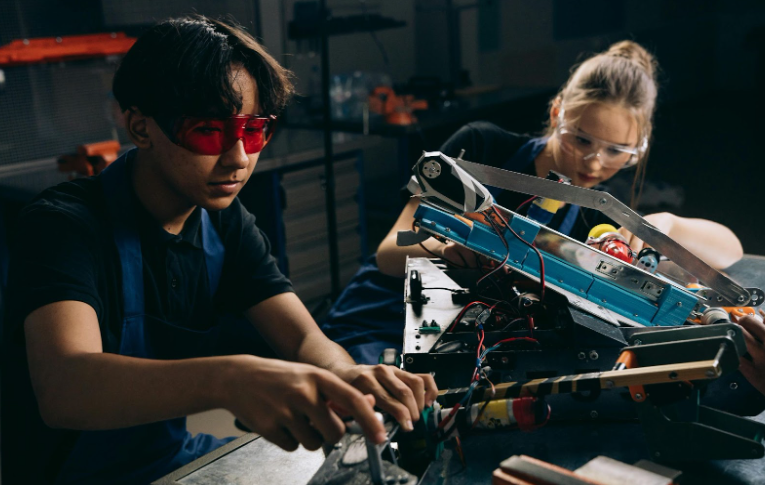
    At NSTEM, we believe that safe and collaborative competition can encourage healthier attitudes for students; emphasizing collaboration and teamwork rather than winning and losing can make all the difference in a student’s long-term path to success and empathy. To ring in the New Year, we wanted to provide a few fun and affordable STEM competitions for middle school students to explore individually or collaboratively, regardless of their interests. These competitions are also annual, so if you miss the deadline for this year, you can always get an early start on next year’s competition! 

    C-SPAN Student CAM Contest is a free national video documentary competition for grades 6-12, where students can enter individually or in teams of three. Students are asked to create a short video documentary, approximately 5-6 minutes, relating to the annual competition theme. All entries for 2025 should follow the theme, Message to the President, identifying which issue is most important to you or your local community. The deadline to submit video entries this year is January 20, 2025. Top Middle School prize-winners will be awarded up to $5,000 (To be announced mid-March 2025) with a chance of being aired on C-SPAN Networks from April 1-April 21, 2025.

    eCYBERMISSION is a free, virtual STEM competition for student teams in grades 6-9 based in the US or Canada. Competition teams should be composed of 2-4 students along with a team advisor and will need to choose one of two pathways to register. Teams can either Ask a scientific question by tackling a scientific problem OR try their hands at solving an engineering problem. In this competition, students can exercise scientific inquiry concerning technology, math, and critical theory. First-place winners will receive a savings bond worth $500, and second-place holders will receive a savings bond worth $250. Student and team registration opens on August 15, 2024, and closes on February 26, 2025.

    ExploraVision is a free science competition open to students in grades K-12. (In this case, we recommend the category for grades 7-9 students.) During this project, a sponsor will lead student teams of 2-4 people while they research and analyze a current technology of their choice. ExploraVision then challenges students to envision and communicate their chosen technology 10 or more years in the future by using collaborative brainstorming and team-based learning to communicate their findings. Team projects can range from 3 weeks to 3 months in duration. Prizes for first place will be a $10,000 saving bond; second place holders will receive a $5,000 saving bond. The project deadline is January 31, 2025, and winners will be announced April 7-May 5, 2025. 

    NASA Student Launch is open to students in grades 6-12 (and students up to college/university levels) interested in physics, math, engineering, and critical thinking. Although there is no application fee, teams are responsible for raising funds to develop their rockets and cover expenses related to the final on-site launch in Huntsville, Alabama. This project should take around 9 months to complete, requiring students in that time to design, build, test, and launch a high-powered rocket and launch vehicle. The experience will culminate in a final launch event to take place on-site in Huntsville, Alabama (due to its proximity to NASA’s Marshall Space Flight Center), taking place from April 30 to May 4, 2025, where first prize winners will receive $5,000 and second place winners will receive $2,500.

    Zero Robotics is a space-based programming competition open for Middle and High school students to enter. This competition uses robots called Synchronized Position Engage Reorient Experimental Satellites (SPHERES), which are basketball-sized robots astronauts use to study fluids in space. During Zero Robotics Championships, teams will work to program SPHERES virtually before they are uploaded to the SPHERES on a space station, where astronauts will judge the championships live! This incredibly cool competition takes place over five weeks in the summer for middle school students and satisfies STEM learning outcomes like engineering, robotics, and computer programming. The tournament is in late July, so look for registration for 2025 to open early in the year and keep your eyes peeled for this one-of-a-kind experience for the future astronaut in your classroom! 

    At NSTEM, we believe self-improvement and achievement should be accessible to all students. STEM competitions such as these require nominal fees (if any at all) to participate in and complete. We are happy to provide students and educators with more accessible opportunities to self-improve, allowing students to celebrate another year of personal milestones and fostering teamwork and self-esteem.

    By Rosalinda Cardoso


    At NSTEM, we believe that middle school (Grades 6-8) is where students are transformed, entering as children and emerging as young adults. Project-based learning enrichment can help students connect the dots between STEM and real life, making math and science relevant for them, and keeping them engaged and interested. With a meaningful middle school experience, students are far more likely to focus on STEM disciplines in high school and beyond.  To start your 6-8 middle school chapter of the National STEM Honor Society, click here.

    Do you want more resources on STEM competitions? NSTEM’s vast resources database provides thousands of searchable STEM resources by category, school level, and state. This comprehensive library includes info on enrichment activities, curricula, internships, scholarships, and more. Check out a free sampling here. Or get an NSTEMI membership today to unlock the complete list.

  • 10 Summer STEM Programs for Middle Schoolers

    10 Summer STEM Programs for Middle Schoolers

    As summer approaches, it also brings forth a lot of new opportunities for middle schoolers in particular. Especially for those interested in STEM, there’s a large number of programs available that delve into every aspect of science, technology, engineering, and math. One of the best ways to explore STEM beyond the boundaries of a classroom is through these engaging summer programs. These programs provide an in-depth learning experience and offer a glimpse into different career paths. 

    iD Tech

    This is a technology camp focused on coding, robotics, and game development/design. Anyone between the ages of 7 to 19 is eligible to participate. These iD STEM camps are an amazing opportunity to help expand your knowledge and learn from incredible teachers while enjoying your summer at prestigious universities. Not only that, students will also be able to advance their skills quickly and join a community of 500,000 aspiring innovators.

    Photo by Eliott Reyna 

    NextWave STEM

    This program offers various STEM courses for children of all ages to explore. Their primary focus lies in emerging technologies. Therefore, they offer courses related to drones, robotics, 3D technologies, and artificial intelligence. Additionally, they incorporate project-based learning into their curriculum. Their classes are designed to help improve critical thinking, creativity, communication, and collaboration skills. Their mission is to ignite a passion for learning that will lead to better grades and increased opportunities throughout their education and career. 

    MakerKids

    MakerKids offers virtual summer STEM courses for kids between the ages of 6 and 13. Students will have the opportunity to do hands-on projects with robotics stimulator technology, video game design, character development, and more. The purpose of this is to help children understand that they can use technology to shape the world around them. Furthermore, the programs are embedded with social skill lessons to help everyone connect with like minded peers. 

    Club Scientific 

    This program has a comprehensive STEM curriculum for children between the ages of 6 to 12. The topics range from forensics, robotics, and food science to engineering, meteorology, and emergency medicine. Instead of reading from textbooks or attending lectures, students can receive real world experience with the things that interest them. They will have the chance to utilize the latest technology by participating in experiments to enhance their knowledge on the subject they’re learning about. 

    Photo by Rachel

    National Computer Camp

    The focus at National Computer Camp (NCC) is primarily on coding, 2D and 3D video game design, Android app programming, cryptography, digital video production, web page design, and software applications. This program is for kids ages 6 to 19 and is open to all levels of experience, from beginner to advanced. Something unique about NCC is that its purpose is to teach life-long computer skills by providing a solid foundation in programming. 

    Overall, the summer is a great time for taking a break from school, but also pursuing education outside of school such as these summer STEM programs. Middle schoolers in particular deserve the vacation but have the opportunity of using it to consider their interests and explore future career paths. Any of these programs or camps can help set the stage up for anyone who’s interested in some aspect of STEM. This allows students to learn more about what they’re interested in while also enjoying their summer as much as possible!

    Written by Anumita Basani

    Your NSTEM Journey Begins Here!

  • 5 Ways Technology is Changing Medicine

    5 Ways Technology is Changing Medicine

    Image credits

    Medicine has gone through a paradigm shift within the recent years. Less than 200 years ago, there were no vaccines, no treatments and often the only way to prevent catching a disease was self-isolation. Now, we have eradicated diseases like Smallpox, developed MRI machines and even made check-ups possible through our phones. Technology has only made medicine and healthcare services more efficient and is changing the way we look at healthcare. Today, NSTEM will be looking at 5 ways technology is changing medicine.                                                                                                                                                                                                                                                                            

    1. Remote Monitoring –   The invention of wearable technology, trackers and sensors like FitBits and Apple Watches make the monitoring of vital health signals like heart rate, sleep routine and overall fitness for both the doctor and patient easier. It allows people to track almost every aspect of their health which allows people to take the initiative to make healthy changes within their own lives, saving money spent visiting a doctor. 
      Image credits


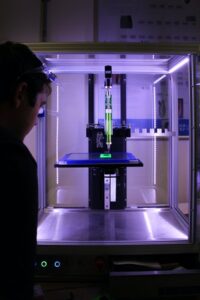
    2. 3D Printing –   As the demand for organ donors increases, a promising field is 3D printing. This is already integrated into medicine with the 3D rendition of critical areas in the body like the heart and lungs for aspiring doctors to practice on and learn how to operate on a lifelike dummy. As well as that, major strides are being made in the 3D printing of bones, with the development of prosthetic limbs that are altered to fit the patient better and even with 3D printing of organs such as the plastic heart, to extend patients lifespan so they can receive an organ donation, and as technology progresses, they may be able to replace the organ itself.

      Image credits
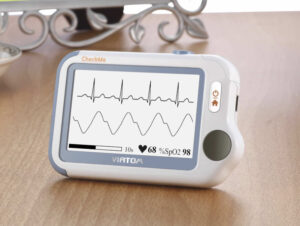
    3. Medical Tricorder – Almost every doctor wishes they had a device to diagnose and analyse all the vital signs and the potential problems a patient is facing, and it seems even more likely with current developments in technology. The development of the Viatom CheckMe Pro is a huge stride in the achievement of that. It is a palm-sized gadget which can measure ECG, heart rate, oxygen saturation, temperature, blood pressure and more from a few samples from a patient all in one device, saving crucial time for doctors especially in critical situations.
      Image credits


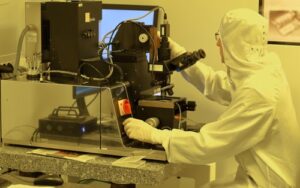
    4. Nanotechnology –    Nanotechnology is science, engineering, and technology conducted at the nanoscale of 1-100 nm. It is becoming more and more prevalent in medicine as being a precise way to deliver medicine to certain parts of the body, with the invention of PillCam, which monitors the colon and helps diagnose GI bleeding. Even larger strides are being made as MIT “recently created an electronic pill that can be controlled wirelessly and relay diagnostic information or release drugs in response to smartphone commands.”
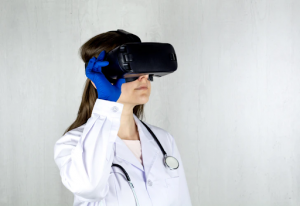
    5.  Virtual Reality –
      Image credits

      Sure, we know that virtual reality makes for some good horror games but it is becoming more and more prevalent in all different sectors of medicine. Aspiring surgeons and doctors are using VR to practice surgeries and it is being proven to be very effective. According to the Harvard Business Review, a study showed that VR-trained surgeons had a 230% boost in their overall performance compared to other traditionally-trained doctors. As well as that, it is being used more and more as a way for pain management. Women in labour are equipped with VR headsets to visualise soothing landscapes to help them through labour pain and even patients with post-surgical pain or during intense surgeries are seen to have lower pain levels when using VR to distract them from the painful stimuli.

    In conclusion, the combination of medicine and technology provides us with better and faster monitoring for both doctors and patients themselves, doctors to gain better experience and even changes to the monitoring and administering of drugs, and even developing new organs. This combination is still developing and at the rapid pace that technology improves, we can hope that there will be continual improvements and changes in the way healthcare and medicine continues to develop. 

        Written by: Hussam Waseem

    Your NSTEM Journey Begins Here!

  • Through The Eyes Of An Artist:  Exploring STEM Through Art

    Through The Eyes Of An Artist: Exploring STEM Through Art


    Photo Courtesy of Unsplash

    As young adults prepare to enter college, discovering new pathways and possible careers, we at NSTEM want to remind students of all ages that science and art are NOT mutually exclusive. We believe that embracing science and art as young adults can enhance the quality of their work throughout their careers while furthering their ability to communicate their findings successfully. We at NSTEM challenge you to try these four hands-on projects that blur the lines of science and art, alongside a few notable examples as references, to help you inspire the next generation of students who see the world as both scientists and artists!

    1. Scientific Illustrations

    This activity from the Garth & Jerri Frehner Museum of Natural History begins with students creating observational drawings of real-life specimens using a microscope or magnifying glass while describing four different viewpoints of the same specimen. Students will then compare and discuss their observations with their peers to identify those specimens. This activity plan is suggested to take four 60-minute sessions, including a relevant and optional field trip, which can be easily replaced with a similar gallery in a virtual setting. This activity is a creative and fun way to learn about the scientific method while encouraging peer collaboration and critical thinking. 

    Link to activity: https://www.suu.edu/natsci/museum/pdf/scientific-illustration-lesson-7-12.pdf

    2. Art and Optics

    In this activity from the Art Institute of Chicago, students will be introduced to eye function and optic science by asking questions, creating initial models, and collecting data while participating in a series of observational experiments, giving your students a chance to revise their initial models. This activity is estimated to take approximately 80–125 minutes to complete and demonstrates STEM learning outcomes of critical thinking and scientific theory while supporting next-generation science standards. This activity can also be a way to explore STEM/Art careers like museum conservation.

    Link to activity: https://aic-web-cms-uploads.s3.us-east-2.amazonaws.com/2a99f5a7-2ede-45d1-8c85-0abf99dcc2ee/ArtandOpticsLessonPlanUpdatedFinal_.pdf

    3. Building Alebrijes

    This Los Angeles Unified School District activity will challenge your students to design alebrijes, a unique subset of Mexican folk art known for its anthropomorphic characteristics (combining two living animals), intricate designs, and bright colors. The Aztecs first designed alebrijes to represent the animals and beings of the spirit world. Though this is estimated to take around 60 minutes, we suggest extending the assignment by another hour to include painted 3D models of their creations made from painted aluminum foil and cardboard!

    Link to activity: https://www.dropbox.com/scl/fi/icy7fy523ilqluyqoxfyu/19-Alebrije-Lesson.pdf?rlkey=h096pira1k4x0tyd1y39ap5gy&e=1&dl=0

    4. Mapping: Utopia or Dystopia

    In this Los Angeles Unified School District activity, your students will learn about mapping and a few artists who use it as an art medium. They will then create an original map using raw scrap materials and their unique storytelling perspectives. This activity is a fantastic opportunity to introduce students to drawing, design, and cartography principles. Students will also demonstrate creativity and critical thinking by learning to analyze works of art contextually. This activity is estimated to take 60-120 minutes to complete.

    Link to activity: https://www.dropbox.com/scl/fi/a4jb806u4sftj02zikxh2/20-MAPPING-Utopia-Dystopia-Lesson.pdf?rlkey=rljlsug7grd4xamazscp44q13&e=1&dl=0

    Notable Scientists Who Also Happened To Be Talented Artists

    (We suggest making a slideshow for your students; here are a few to get you started)

    Santiago Ramón y Cahal

    Neuroscientist, Pathologist, Histologist, Scientific Illustrator & Photographer

    Leonardo da Vinci

    Polymath- Painter, Draughtsman, Engineer, Scientist, Theorist, Sculptor, & Architect

    John James Audobon

    Naturalist, Field Artist & Painter

    Samuel Morse

    Inventor & Painter

    Alfred L. Copley

    Hemorheologist & Expressionist Painter

    Maria Sibylla Merian

    Entomologist, Naturalist & Scientific Illustrator

    Rafael Lozano-Hemmer

    Chemist & Interactive Media Artist

    Anicka Yi

    Conceptual Artist & Olfactory Scientist 

    Anna Atkins

    Botanist & Photographer

    Ralph Eugene Meatyard

    Optician & Photographer

    Storytelling comes in countless shapes and forms; communicating and delivering our observations to others can make or break an audience’s understanding. Learning to observe science through the eyes of an artist can help scientists create unique and creative methodologies to share their findings with the world. An artist, seeing their work through the eyes of a scientist, can strengthen their foundation of artistic theory, allowing them to challenge the status quo to discover, design, and create new creative mediums. Here at NSTEM, we encourage you and the next generation of thinkers to do both!

    By Rosalinda Cardoso


    Do you want more resources on the topic of STEM and Art Activities? NSTEM’s vast resources database provides thousands of searchable STEM resources by category, school level, and state. This comprehensive library includes info on enrichment activities, curricula, internships, scholarships, and more. Check out a free sampling here. Or get an NSTEM membership today to unlock the complete list.

    Project-based learning enrichment provides high school students with college and career readiness. It gives them real-world relevance, transforming students into collaborators and imaginative problem solvers. They will gain the upper hand in a global landscape, stemming from enhanced confidence and grit. NSTEM provides these young STEM enthusiasts with a close community of like-minded fellow students and educators.  To start your 9-12 Chapter of the National STEM Honor Society, click here.


  • 4 Engaging Virtual STEM Programs for College/University Students

    4 Engaging Virtual STEM Programs for College/University Students

    Photo Courtesy of Pixabay

    STEM programs are essential for college and university students because they provide direct exposure to innovative research, technology, and hands-on experience. These skills help students prepare for employment in fields that promote innovation and societal advancement. In addition to expanding students’ knowledge of STEM fields, these programs help them develop the critical thinking, problem-solving, and teamwork abilities necessary to tackle challenging real-world problems. Here are four engaging virtual STEM programs for college/university students!

    1. Research Experience for Undergraduates (REU) Program 

    Undergraduate students can participate in practical research activities in various STEM fields through the REU program. Students acquire valuable skills in data analysis, experimental design, and scientific communication through close collaboration on research projects with faculty mentors. REU programs give students hands-on research experience, allowing them to develop critical thinking and problem-solving skills while exploring possible future routes in academia or industry. Participants usually receive housing, transportation assistance, and stipends. They also participate in seminars, workshops, and networking events to improve their research abilities and establish connections with peers and industry professionals. 

    2. NSF Innovation Corps (I-Corps) Program 

    The goal of the NSF I-Corps program is to train university staff and students in entrepreneurship to accelerate the industrialization of cutting-edge STEM research. Participants learn how to determine clients’ demands, evaluate the market potential of their research, and create viable business models. This program encourages STEM students to apply their scientific discoveries to real-world problems and launch businesses that have a social impact by teaching them entrepreneurial skills. The program includes discovering client interviews, startup team-building advice, and mentorship from seasoned business owners. Funding is given to teams to construct prototypes and perform market research.

    3. NASA Internships 

    NASA provides hands-on experience in aerospace research and technology development to undergraduate and graduate students studying various STEM subjects through internships. By working on projects about robotics, satellite missions, space exploration, and scientific research, interns acquire real-world experience in engineering, programming, and data analysis. NASA internships offer students a rare opportunity to participate in state-of-the-art research initiatives and investigate prospective career pathways in space science and engineering. Interns have access to the latest tools and technology, are mentored by NASA scientists and engineers, and are given a chance to present their work at conferences and meetings. 

    4. Google Summer of Code (GSoC)

    Under the guidance of experienced developers, GSoC is an international program that provides college students with stipends in exchange for their contributions to open-source software projects. By working on actual projects, participants gain practical experience in software development and learn new tools, best practices, and programming languages. GSoC gives students helpful experience working with international teams and making important contributions to projects that benefit the open-source community. Project developers mentor participants, online resources and documentation are available, and opportunities to interact with the larger open-source community via forums, mailing lists, and code reviews are provided. 

    In conclusion, these four virtual STEM programs, supported by NSTEM, offer college and university students invaluable hands-on experience, entrepreneurial skills, and diverse career pathways. These programs prepare students for success in today’s dynamic STEM landscape by fostering critical thinking and problem-solving abilities while promoting diversity and inclusion.

    By Gayathri Narayanan

    Do you want more resources on the topic of STEM programs? NSTEM’s vast resources database provides thousands of searchable STEM resources by category, school level, and state. This comprehensive library includes info on enrichment activities, curricula, internships, scholarships, and more. Check out a free sampling here. Or get an NSTEM membership today to unlock the complete list. 

    When a college/university student achieves membership in the National STEM Honor Society, the recognition, like many colleges, is in a Greek letter format.  For the National STEM Honor Society, Epsilon Theta Mu is the designated recognition for members at the college/university level. Students are distinguished and stand out as a result of this recognition, increasing appealing employment and educational opportunities, click here.