Tag: IDEA (Inclusion

  • STEM News – Genetic Testing for Hereditary Cancers

    STEM News – Genetic Testing for Hereditary Cancers

    Since the first widely used cancer screening test was developed in 1923, technology has transformed  for many groundbreaking discoveries in cancer testing (American Cancer Society). One of these was the development of genetic testing for hereditary cancers. These types of tests allow scientists to identify specific genes responsible for a person’s susceptibility to hereditary cancers and allow them to assess an individual’s risk of developing cancer if cancer tends to run in the family. 

    Image Credit

    The process for receiving genetic testing for hereditary cancers can be a lengthy one. According to the American Cancer Society, there are a number of signs that indicate whether someone may have an inherited form of cancer or cancerous tumor. One of these signs is the presence of one type of cancer on one side of a family. Another common sign is when a relative has more than one type of cancer. 

    While many of these signs can raise concerns, none of these are perfect indicators that an individual has or doesn’t have an inherited cancer of some sort. Before genetic testing can be recommended, one should review their family’s history of cancer with a medical professional and take part in genetic counseling (National Cancer Institute).

    Genetic counseling is an important part of the process of testing for hereditary cancers since it is a requirement for informed consent. Normal medical tests only reveal information about a patient, but a genetic test is different because it reveals information about a patient’s relatives as well. Relationships between family members can be affected if test results are disclosed. Some family members may also not wish to know their medical status when it comes to inherited conditions such as cancer (National Cancer Institute).

    Image Credit

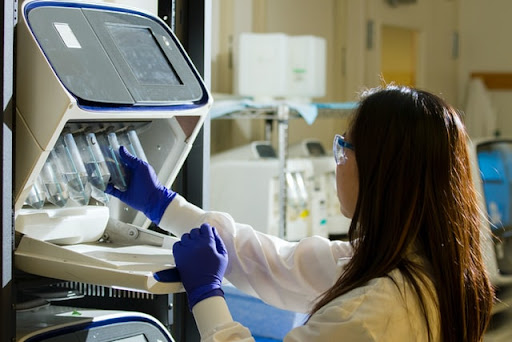
    Genetic testing for cancers can be done through one of several tests, which are usually performed on a blood sample. However, they could also be done on saliva and tissue samples. Once a sample is collected, it is then sent to a genetics lab where the DNA is tested for one of more than 50 cancer-causing genes that are able to be identified through genetic testing. Results may then take a few weeks to return to a doctor after the doctor requests them. (National Cancer Institute). Thankfully, more than 90 percent of insurance companies cover testing for hereditary cancers (McLeod Health).

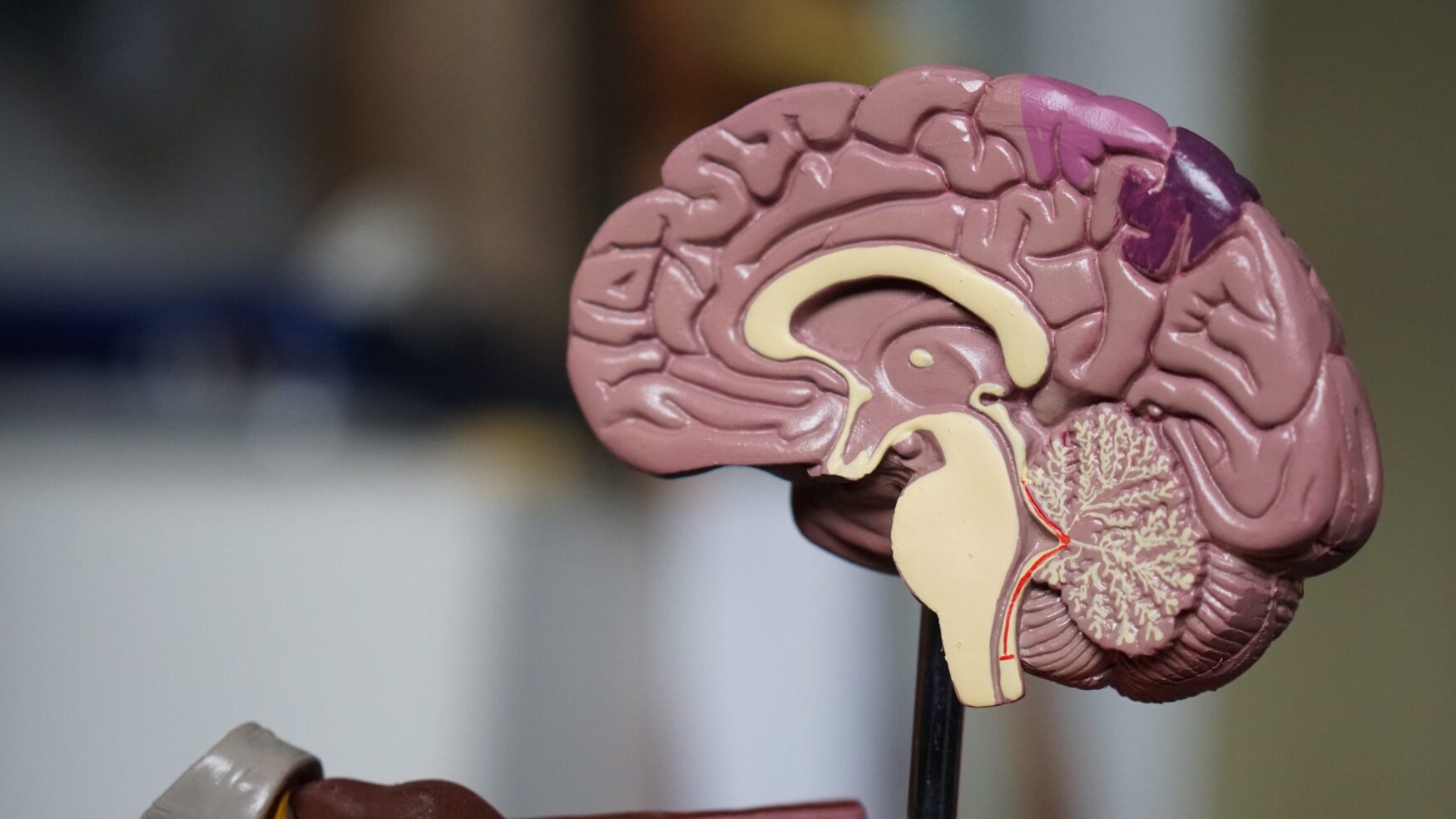
    Recently, researchers have developed a brand new genetic test that screens for MMR deficiencies, which allows scientists to easily screen individuals for certain types of hereditary cancers. Current tests are known for being ineffective and inefficient, meaning patients sometimes must be tested multiple times in order for conclusive results to be reached. With this new development, known as MultiMMR, the process of testing for MMR deficiencies is optimized, allowing for dependable results from a single test while also determining the cause for the deficiencies. The determination of deficiencies also happens to be a feature that current MMR deficiency screenings lack (SciTechDaily).

    Image Credit

    Receiving a positive result from genetic testing does not necessarily mean that an individual has inherited cancer from a relative. Rather, it may indicate that they are more at risk of developing cancer or a possible tumor and should take steps to prevent cancer from developing. In the case of lung cancer, for instance, one may choose to quit smoking to decrease their chances of developing cancer. Likewise, a negative test does not mean that an individual will not develop a certain type of cancer. It only means that an individual’s risk for having that form of cancer is no higher than that of the general population (National Cancer Institute).

    In any case, it is important that a patient and their doctor maintain strong communication and understanding about what the results mean, and what steps should be taken moving onward.

    Sources:

    https://scitechdaily.com/new-genetic-test-effectively-screens-for-hereditary-cancer/#:~:text=Researchers%20have%20have%20developed%20a%20new,colon%2C%20endometrial%20and%20other%20cancers

    https://www.mcleodthealth.org/news-entry/are-genetics-raising-your-risk-of-inherited-cancer-2022/

    https://www.cancer.org/cancer/cancer-basics/history-of-cancer/screening-early-detection.html

    https://www.cancer.org/cancer/cancer-causes/genetics/genetic-testing-for-cancer-risk/understanding-genetic-testing-for-cancer.html

    https://www.cancer.gov/about-cancer/causes-prevention/genetics/genetic-testing-fact-sheet


    Written by: Matthew Jenkins

    Date: 02/21/2022

  • Why Does Diversity Matter in STEM? (Because it Does!)

    From a young age, people craft a perception of where they fit into the world. Frequently, when people don’t see themselves in STEM workers or educators, they tend to gain a sense of rejection and lose their initial passion and interest.

    But why does this matter? Certainly, the people who are entering STEM fields will do the same work as these underrepresented groups? Well, no, not exactly.

    There is a long list of reasons why diversity is impactful specifically in these fields, but first, let’s talk about what diversity means in a larger context.

    Photo by Christina

    What is Diversity?

    Diversity is the inclusion, promotion, and cultivation of talent of the entire social spectrum. This doesn’t necessarily exclude any well-represented communities we have today; it adds to them. 

    It’s a little more difficult to define the social spectrum in this context, but in the context of careers, it’s often simplified to five diversity categories: cultural, racial, religious, age, gender, sexual orientation, and disability. 

    Each of these identities are not monolithic and intersect with each other frequently, but nonetheless, it’s important to ensure each of these groups are adequately represented, included, and valued in STEM fields.

    Why Does Diversity Matter?

    Taking into account the definition of diversity, it’s important to recognize the importance of their experiences. Many underrepresented groups have experienced different obstacles than their peers. This leads to differences in perspective, problem solving, and idea generation.

    Modern day science is collaborative and not individualistic. Because of this, diversity has become the key to progress both socially and scientifically. The Proceedings of the National Academy of Sciences published a study that concluded a team of diverse researchers often outperforms a non-diverse team even when categorized as having “a greater ability.”

    Perspectives are integral to innovation, and denying diversity is an unethical practice that does nothing but hurt progress in the end. And not only does it hurt company or individual progress, it halts societal, economic, and medical innovation and growth, too.

    What is the Key to Growth?

    In a study conducted in 2019, underrepresented groups performed on par with their white, male peers when given support by their school administrators, professors, and advisors. 

    On the other hand, a study from 2013 suggests there are external factors such as a lack of representation in faculty and peers or systematic discrimination.

    Photo by NEXT Academy

    Fortunately, this study also concluded that representation is a strong adversary against systemic discrimination. By seeing themselves in peers and mentors, they feel less burdened and less alone.

    Fostering an inclusive environment in educational spaces is the responsibility of administrators and teachers alike. And while it may not solve every problem related to diversity in STEM, it’s a strong start.

    The Journey Starts Here 

    At the National STEM Honors Society, we hold, implement, and expect our chapters to follow I.D.E.A values: Inclusivity, Diversity, Equity, and Access. It’s our belief that STEM is better with different people who come from different backgrounds and possess different experiences. 

    Encourage all of your students to learn about and pursue STEM by utilizing these values in your classroom. If you want to learn how and where to start, then click here.


    Written by: Emily Hyser

    July 27th, 2021

  • STEM in Film

    STEM in Film

    STEM is involved in so many aspects of our daily lives. In fact, it’s even present in the movies we watch! In this blog, I’ll be going over three films that offer a new perspective on what in STEM can achieve with their passion. These films are great to show to students in class, to watch at home, or even to briefly read about. 

    Hidden Figures (2017)

    Hidden figures movie cover
    Photo by Nino Munoz

    The first film is Hidden Figures. Hidden Figures is a film based on the real-life achievements of African American women at NASA in the 1950s and ’60s. At NASA, Mathematician Katherine Johnson, Dorothy Vaughan, and Mary Jackson calculated the math problems necessary to ensure a safe travel around Earth for the first time. These women, like every black American at the time, were continually obstructed from their work due to segregation and discrimination. Although films can dramatize situations in order to create a more interesting story, this film highlights exactly how racism thrived 60’s and it expresses the importance of representation in the workplace. As a result of the film’s release, conversation started about how to create a more diverse workplace, not only just for people of color, but women as well. In fact, according to the National Science Board, women remain largely underrepresented in the nation’s STEM workforce. We need more budding mathematicians to help us as technology advances and space travel becomes more regular!

    The Lego Movie (2013)

    the lego movie cover
    Photo by Artmachine

    This next film is a personal favorite of mine! The LEGO Movie is about an ordinary Lego guy, Emmet, who is mistaken as “The Master Builder”, an extraordinary person, and recruited to work to take down an evil leader in the Lego world. This plot, though, is just a fictional scenario created by a real-world character in the film, Finn. Finn’s father is intended to be the “evil leader” of the Lego world; he superglues his sets together to prevent Finn from mismatching the pieces. In the Lego world, this means that those super glued pieces are stuck forever. Engineering is expressed through the Legos themselves through their creations of weapons and a robot that helps combat the evil tyrant and save the Lego world. 

    While this movie is so fun and entertaining on the surface, when you investigate how exactly it was made, you can start to be inspired with how talented the engineers who worked in this movie are. This film shows the product of virtual engineering with its use of CGI. It reminds me of the Lego club in my intermediate school that allowed students to get involved in beginner engineering skills though building Lego creations!

    Back To The Future (1985)

    Back to future movie art
    Photo by Drew Struzan

    The final film to highlight is Back to The Future. While time travel isn’t exactly a reality yet, this film still shows the amazing work of Scientist Doc Brown and his hilarious yet nail-biting adventure of making sure to correct wrongs in his world through time travel without changing the path for everyone else. Within the film, it features so much futuristic technology created by Doc. For example, the DeLorean Doc used to travel in time was created from a train engine. Also, this isn’t addressed in the first film, but Doc used components of the hoverboard from 2015, which gave him access to technological inventions in the future. In real life, the DeLorean was also considered way ahead of its time! John DeLorean, owner of DeLorean Motor Company, created the car with the intention of it being an “ethical sports car that would be durable, fuel-efficient and safe”, according to Volocars. The current CEO of this company even considers the DeLorean car to be the “Tesla of the past.” Knowing this, it shows that even the most out-of-this-world inventions or ideas, can become a reality. Although it’s not a moral touched on within the film, looking at the technological concepts this film introduced, it shows that someone with the time and knowledge, could create new technology that some may overlook or judge, but later on they appreciate. This classic movie is way ahead of its time with its futuristic technology, and who knows, maybe someone reading this will become the first scientist to successfully achieve time travel?

    There you have it, three inspiring films that feature the amazing things possible in the world of STEM. If you enjoyed this blog, you can read more at: https://nstem.org/staging/blog/

    Written By: Kathryn Cottingham

    November 12, 2021


  • 5 Living STEM Leaders Your Students Should Know

    5 Living STEM Leaders Your Students Should Know

    Who doesn’t love to reminisce about STEM rock stars of yore like Marie Curie and Albert Einstein? I sure do! But while it’s always fun to rap about Curie’s two Nobel Prizes and Einstein’s infamous disdain for quantum mechanics, it’s easy to forget great science is still happening today, right now, all over the world!

    Here are 5 living STEM leaders your students should know about (in no particular order):

    1. Andrew Wiles

    Image Credits

    Wiles is a British mathematician whose claim to fame is solving one of mathematics’ greatest mysteries, the proof for Fermat’s Last Theorem. The theorem dates back to 1637 and basically says “xn + yn = zn has no whole number solution when n is greater than 2.” Fermat sent the math world into a 300-year tizzy when beside the theorem he wrote, “I have discovered a truly marvelous proof of this, which, however, the margin is not large enough to contain,” and then promptly died before ever writing it down.

    In 1994, Wiles won the Abel Prize—sometimes called the Nobel of Mathematics—for his proof. Of course, Wiles’ solution is hundreds of pages long and uses methods not available in Fermat’s time, so it’s obviously not the slightly-too-large-to-fit-into-the-margin-of-a-book proof Fermat was thinking of, but Wiles deserves credit for never giving up! His wife deserves credit too for cleaning up after him while he spent literally all day in an attic for seven years in the throes of proofin’. Gross.

    2. Tu Youyou

    Image Credits

    In 2015, Youyou became the first Chinese woman to win a Nobel Prize for creating an anti-malaria drug that saved the lives of millions of people in tropical regions around the world. Youyou accomplished her feat by extracting the active ingredient in a traditional Chinese method for treating malaria and developing a drug that could be distributed via modern medicine around the world. She’s now the Chief Scientist at the China Academy of Traditional Chinese Medicine. So the next time you’re in a tropical environment swarming with mosquitos so bad you resort to unloading your bug spray directly into the air like it’s a can of Raid, thank Youyou for ensuring you at least won’t catch malaria and die!

    3. James Watson

    Image Credits

    The man who helped discover the double-helix structure of DNA is still kicking around, though his health is in decline and as a result he’s been hospitalized since 2019. In 1963, he and his colleagues Francis Crick and Maurice Wilkins were awarded the Nobel Prize for their discovery that helped kick off the field of modern genetics.

    Unfortunately for him, Watson became persona non grata after making unsupported-by-science remarks about racial intelligence in 2007 (guess who he thinks is “genetically smarter”). In 2014, he sold his Nobel medal out of spite. Even with his ostracization from the scientific community, he stood by his racist remarks as late as 2019. Though Watson was perhaps the most influential biologist of the twentieth century, his inclusion on this list more than anything is a cautionary tale of what happens when biases trick extremely smart people into believing obviously wrong things.

    4. Noam Chomsky

    Image Credits

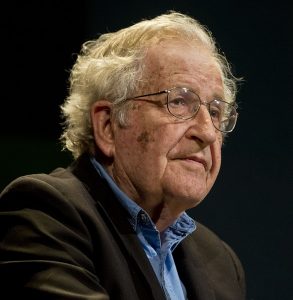
    Chomsky is often called the “father of modern linguistics.” His groundbreaking theory that language is an innate ability all humans are born with kicked off the field of cognitive science in the 1960s as people rushed to test this theory. Remember all those experiments through the 70s and 80s of researchers trying to teach chimps sign language and bringing them home as they would human kids and whatnot? That was all in response to Chomsky’s theory. One famous experiment even involved a chimp named Nim Chimpsky. Alas for the researchers, after decades of trying to teach non-human animals language, they’ve so far achieved middling results at best, nothing near the human capacity for language—proving Chomsky’s theory is most likely correct.

    The moral of the story: don’t take a chimp home and try to raise it like your baby. It’ll probably just rip your face off.

    5. Wendy Freedman

    Image Credits

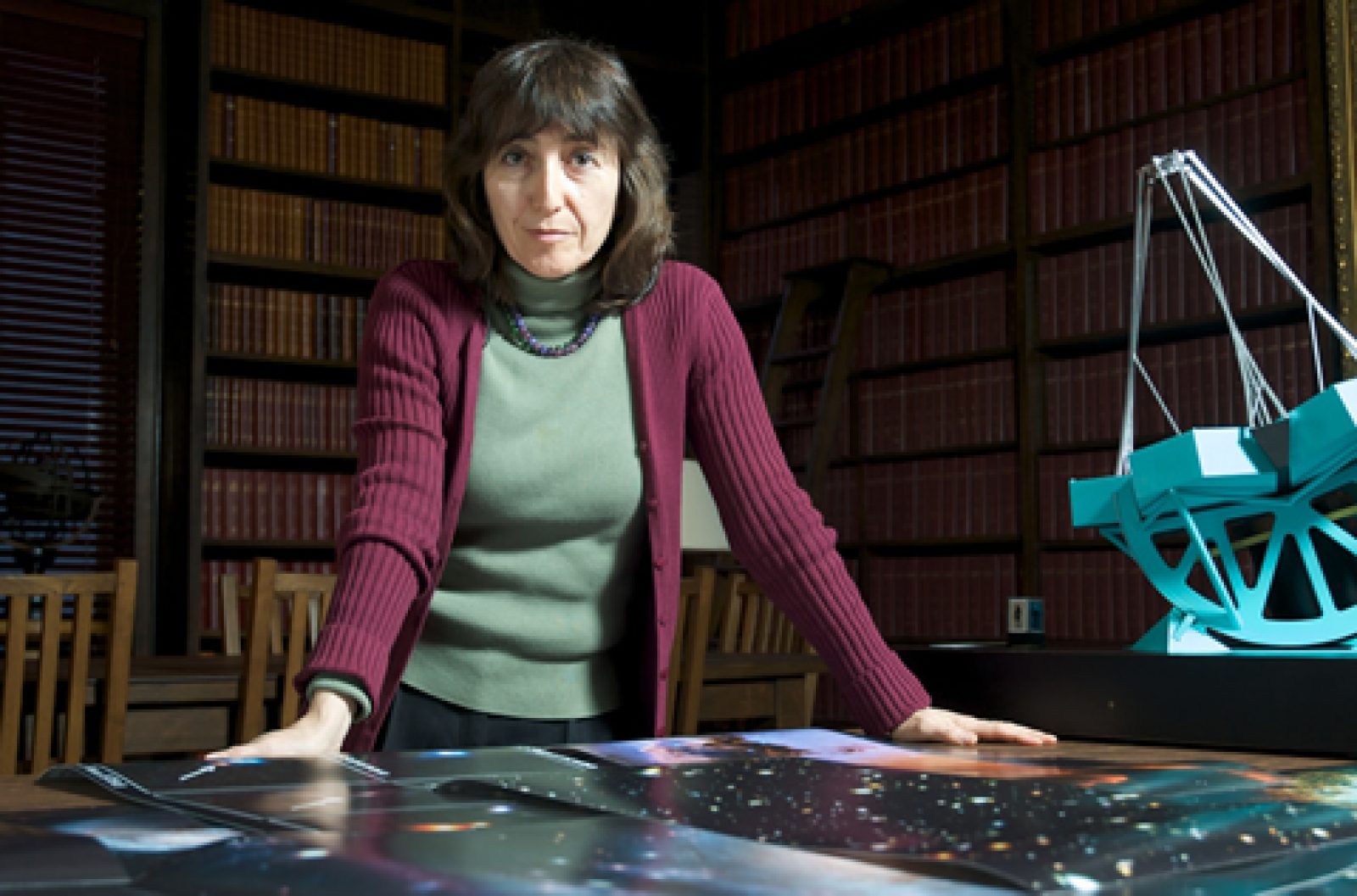
    Freedman led an international team of astronomers in a project to precisely calculate the galactic expansion rate called the Hubble constant. With the most accurate measurements ever, they were able to recalculate the age of the universe from the previous rough estimate of 10-20 billion years old to 13.7 billion years. Knowing the actual age of the universe is critical to all sorts of other areas of astrophysics, such as understanding dark matter and guessing how the universe might end to make “this is how the universe ends” videos that are cool and also freak people out. Have you ever walked through the astronomy section of a science museum and noticed the “age of the universe” signs have been altered? That’s because of Freedman!

    Written by: Shana Figueroa

    Your NSTEM Journey Begins Here!

  • Debunking the Most Popular ADHD Misconception

    Debunking the Most Popular ADHD Misconception

    Attention-Deficit Hyperactivity Disorder (ADHD) is one of many significantly misunderstood diagnoses in the world. In fact, even psychologists have misconceptions about ADHD, so you’re not the only one in the dark. 

    Hopefully, as someone with ADHD, I can shed some light on what this diagnosis actually means for the people who have it.

    “ADHD is Overdiagnosed”

    Photo by Fernando

    This myth is a loaded one. Why? Because it’s just plain wrong, but it’s also wrong in so many ways.

    ADHDers of all ages are wildly underdiagnosed throughout their lives — especially if you’re a woman (or femme presenting), a person of color, an adult, or someone without access to healthcare. 

    Lack of affordable healthcare directly correlates with undiagnosed disorders — both physical and mental. This phenomena is fairly self-explanatory, but what about young girls and other minority groups? Why are they being dismissed?

    Underdiagnosis in Young Girls

    First of all, traits often (but not always) present themselves differently in young girls than they do in young boys. For example, girls often exhibit forgetfulness, disorganization, and issues focusing more frequently than boys. Similarly, boys present more “disruptive” symptoms of hyperactivity and impulsiveness. 

    Both children experience all of these traits, but unfortunately, the hyperactive behavior is more obvious in most boys. Additionally, the inattentive behavior seen in girls is often dealt with internally instead of externally. 

    These variations in presentation could have an array of explanations including differences in socialization and even differences in hormones and puberty. For example, women’s hormones often exacerbate the anxiety or depression experienced alongside ADHD. Because of this, medical providers will treat the anxiety diagnosis without considering comorbid disorders — leading to a delayed diagnosis

    Underdiagnosis in Children of Color

    Hispanic children are 56% less likely to receive an ADHD diagnosis than their white peers. As for African American children, they are 36% less likely to receive a diagnosis, and the remaining minority groups are 48% less likely to receive one. 

    The explanation behind these discrepancies is very complicated. In many cases, the barriers include healthcare provider bias, teacher bias, and lack of “culturally competent” healthcare providers as well. These obstacles are systemic and harder to overcome. 

    Essentially, the same symptoms seen in caucasion children are perceived as defiant and aggressive in children of color as a result of systemic racial bias. Therefore, instead of receiving intervention, they recieve discipline, and this can cause comorbid disorders and mental illness as well as the worsening of their symptoms

    ADHD in Adulthood

    Photo by Christina Victoria Craft

    Sorry, folks! There will be no visits from the neurotypical fairy on your 18th birthday. While it’s true that symptom intensity can decrease over time, ADHD does not disappear when you become an adult. In fact, adults experience many of the same symptoms as children do, but they experience them in a different environment. 

    Here are a list of symptoms experienced by both children and adults with ADHD:

    • Inattention: difficulty starting and completing tasks, difficulty regulating attention, forgetfulness, poor time management, disorganization
    • Impulsivity: fidgeting/restlessness, interrupting, excessive talking
    • Other: emotional dysregulation and low tolerance for frustration

    So, why is it that ADHD isn’t recognized later in life? If they go undiagnosed as children, why does nobody notice it later on? Can’t they see it in themselves?

    Underrecognition of ADHD in adults is, at least in part, likely to be due to the mistaken belief that ADHD does not persist into adulthood, as well as uncertainty about diagnostic criteria in adults and the belief that ADHD is less severe than other comorbid disorders.

    In summation, ADHD in adults isn’t taken seriously at all, and this can lead to a detrimental impact on adult ADHDers lives and mental health. 

    The Impact of Adult ADHD

    ADHD impacts more than school and work. It can impact relationships, finances, substance abuse, and more. If left untreated (or ineffectively treated), it has a significant negative effect on the individual’s mental health, physical health, and quality of life

    Because of this, adults with ADHD commonly have comorbid conditions. In fact, 60%-70% of adult ADHDers have a co-occuring disorder. For example:

    • 40% were also diagnosed with a mood disorder
    • 50% also had an anxiety disorder
    • 30% had social anxiety, specifically. 
    • 12% were also diagnosed with PTSD
    • and finally, approximately 15% had a substance use disorder

    It’s not possible to overstate the importance of treatment for the benefit of the individual. If you want to read more about adult ADHD, please click here

    So, Where do you Learn More?

    Even though ADHD Awareness is only one month, the people who have it struggle with it year-round. Do your best to educate yourself, provide accommodations, and advocate actively every other month of the year. 

    If you want to learn more about common ADHD misconceptions, there is an excellent article you can read right here.

    Written by: Emily Hyser

    October 5, 2021

    Your NSTEM Journey Begins Here!