Using satellites, a group of scientists from France and the United States has successfully identified a number of methane “ultra-emitters” which produce approximately 8-12% of the methane leaking into the Earth’s atmosphere. According to scientist Tom Lauvaux of the University of Paris-Saclay, stopping these leaks would be beneficial to the planet and would save billions of dollars (ScienceNews).
Methane ultra-emitters are sources that leak at least 25 metric tons of methane per hour in irregular bursts. Most of these ultra-emitters are located in six countries, which include the United States, Russia, and Turkmenistan. Turkmenistan contained the most ultra-emitters of the six countries (ScienceNews). In total, the satellite data, which was collected over a period of two years, detected around 1,800 ultra-emitters. These ultra-emitters make up a small fraction of the sources that leak methane into the atmosphere, but account for a disproportionately large amount of the gas emissions (Eco-Business).
Methane is currently the second largest contributor to climate change, just under carbon dioxide. These two greenhouse gasses have different rates of degradation in the atmosphere. Methane usually degrades within ten to twenty years, so it doesn’t accumulate as much as carbon dioxide, which can take centuries to degrade. However, methane also has a much higher potential to warm the atmosphere (ScienceNews). Stopping the methane ultra-emitters from spewing gas into the atmosphere would put the world in a better position to fight global warming (The Economist).
The scientists who made the discovery calculated that stopping the leaks from ultra-emitters would be the equivalent of removing 20 million vehicles from the road each year. This would also prevent around 1,600 annual deaths from heat exposure. Stopping the leaks could be as simple as fixing damaged pipelines, meaning that these improvements would come at very little cost to the countries that contain methane ultra-emitters (Washington Post).
Currently, the United States is already working on regulations which would cut back on methane emissions. The Environmental Protection Agency’s proposed regulations would reduce methane emissions by more than 40 million tons between 2023 and 2035 (NaturalGasIntel). These proposed regulations come after the COP 26 Climate Summit in Fall of 2021 where more than 100 countries, including the United States, signed a pledge to cut back on methane emissions by 30% by 2030. According to President Biden, the agreement will reduce asthma and respiratory illnesses while also increasing food supplies by cutting crop losses (Independent).
Overtime we have witnessed the elaboration and connection that links music and intelligence. Certain studies, typically conducted by universities, show the science that supports the fact that students who incorporate music into their education tend to perform better than their non-musical peers in subjects such as math, science, and language courses.
According to a study of more than 100,000 students conducted by researchers at the University of British Columbia, students who were highly engaged in music were more likely to score higher across all subjects. In fact, students who started learning music early on and continued to do so in high school were shown to be one year ahead of their peers in terms of test scores. This trend was found to be especially true if the students were practicing instrumental music (APA).
One common counterargument to studies like this one is that the correlation between musical ability and academic achievement is not a direct relationship. Rather, some would argue that a variety of other factors are responsible for such findings and that music is not necessarily the link to higher scores or comprehension.
Researchers at the University of Kansas conducted their own study to determine if the relationship between music and academic performance would still be found even if factors such as race and income were controlled. To the surprise of Martin J Bergee, who conducted the study, despite accounting for these variables they did not affect the outcome. Regardless of location, race, and income, students who played any instrument tended to perform better in education such as math comprehension than those who were not involved in any musical activity. (Science Daily).
The researchers at UBC hypothesized that the relationship between music and essential skills in the classroom may come from the teamwork, hand-eye coordination, and better listening skills learned from music classes where students must learn to read musical notation and keep in time with other musicians while also training their ears to recognize the relationships between various pitches (APA).
But classroom benefits from music education are not exclusive to high school students only. One study published in 2014 in the journal Procedia – Social and Behavioral Sciences showed that musical education also enhances the development of children as young as three years old, specifically in the realm of language learning. The study determined that children who participated in music classes were better equipped for learning a second language (Procedia).
Furthermore, based on research and skills developed we can determine that music may have a strong link between education and comprehension and is overall a beneficial subject for students in the classroom. It is beneficial to students of all academic fields, including STEM!
African Americans are extremely underrepresented in STEM careers. Jobs in STEM have increased by 79% since 1990, yet African Americans only make up 9% of the U.S. STEM workforce today. So, here are a few inspiring black inventors and innovators in STEM to celebrate during Black History Month!
Alan Emtage
You would not have Google search today without Alan Emtage. He invented the first ever Internet search engine called Archie. His work is the root of many techniques used by modern public search engines.
Emtage gained his B.S. in Computer Science in 1987 and then his M.S. in Computer Science in 1991, both from McGill University in Montréal, Canada. While enrolled, he began working in the school’s information technology department as a systems administrator. His job was to manually combine various File Transfer Protocol servers for software to be used by students and staff. This process was very time-consuming, so Emtage came up with Archie to do the task automatically in the middle of the night when no one was using the link.
Unfortunately, Archie was not patented. According to Emtage, while other creators of search engines might be “bazillionaires” now, he made no money off this invention since making money off the Internet at the time was unheard of. He does not seem to be fazed by this though, knowing that at the end of the day he was the first!
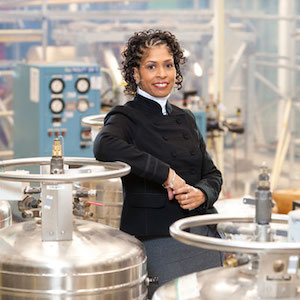
Dr. Aprille Ericsson-Jackson
Dr. Aprille Ericsson-Jackson was the first woman to earn a PhD in Mechanical Engineering from Howard University and the first African American woman to earn a PhD in Mechanical Engineering from NASA GSFC.
Dr. Ericsson-Jackson stated that her interest in NASA and science began when she was in first grade when she watched the Apollo missions on TV. This led to her participating in science fairs, such as the one in eighth grade where she built her first science instrument, and then joining MIT’s UNITE science outreach program for minority students. She earned her B.S degree in Aeronautical/Astronautical Engineering followed by both her PhD’s.
She has been with NASA for over 27 years. Working as an Instrument Project Manager, she has led many space missions and helped develop various instruments, such as the Lunar Orbiter Laser Altimeter. This instrument helps produce improved lunar gravity models and has been orbiting the moon ever since it launched in 2009.
Dr. Ericsson-Jackson has received numerous awards for her contributions. Some include the NASA Goddard Honor Award for Excellence in Outreach, The 2016 Washington Award, and a Science Trailblazers award from the Black Engineers of the Year Award Conference.
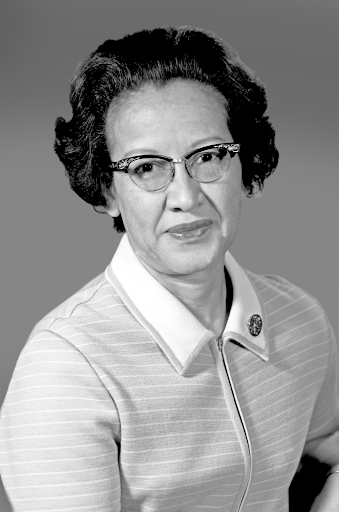
Katherine Johnson
You might have heard of Katherine Johnson through the infamous film, Hidden Figures. Johnson was one of the “hidden figures” who aided in NASA’s mission of sending the first astronaut into space and sending men to the moon.
Johnson’s skills were obvious as a child and she started attending high school at only ten years old. She earned her bachelor’s degree in mathematics and became one of the first three African American students to enroll in a graduate program at West Virginia University.
She joined NACA’s West Area Computing unit before it became NASA and while it was still segregated in 1953. This unit was a group of African American women who were tasked to manually calculate complex mathematical equations. These computations were essential for placing a spacecraft into orbit. Johnson was the first woman in this unit to receive credit as an author of a research report.
Johnson received multiple awards and honors for her work, including the Presidential Medal of Freedom in 2015 and she also has a NASA building named after her!
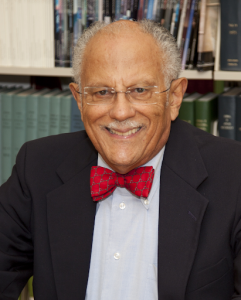
Dr. Warren Washington
Dr. Warren Washington is a renowned climate scientist whose research and computer models helped scientists understand climate change.
Dr. Washington’s parents were not supportive of his interest in science and astronomy, but he went against their wishes and pursued the fields in college. He earned his bachelor’s degree in physics and his master’s in meteorology, both at Oregon State College. He got his PhD in meteorology at Pennsylvania State University, being the second African American ever to receive a PhD in meteorology at the time.
He began working at the National Center for Atmospheric Research and stayed there for over 50 years. He then served a
s a member of the National Science Board from 1994 to 2006 and as its chair from 2002 to 2006. He has over 150 publications, including a book used as a standard reference in climate research called “An Introduction to Three-Dimensional Climate Modeling.”
Dr. Washington’s models, the Parallel Climate Model and the Community Earth System Model, were used in the 2007 Intergovernmental Panel on Climate Change assessment which received the 2007 Nobel Peace Prize. He also received the National Medal of Science in 2009 for his work.
These are just some of the black leaders and innovators who have made a huge impact in STEM fields, inspiring others to become innovators as well for years to come. We hope that during this month we are able to recognize and celebrate more amazing black innovators and leaders!
Since the first widely used cancer screening test was developed in 1923, technology has transformed for many groundbreaking discoveries in cancer testing (American Cancer Society). One of these was the development of genetic testing for hereditary cancers. These types of tests allow scientists to identify specific genes responsible for a person’s susceptibility to hereditary cancers and allow them to assess an individual’s risk of developing cancer if cancer tends to run in the family.
The process for receiving genetic testing for hereditary cancers can be a lengthy one. According to the American Cancer Society, there are a number of signs that indicate whether someone may have an inherited form of cancer or cancerous tumor. One of these signs is the presence of one type of cancer on one side of a family. Another common sign is when a relative has more than one type of cancer.
While many of these signs can raise concerns, none of these are perfect indicators that an individual has or doesn’t have an inherited cancer of some sort. Before genetic testing can be recommended, one should review their family’s history of cancer with a medical professional and take part in genetic counseling (National Cancer Institute).
Genetic counseling is an important part of the process of testing for hereditary cancers since it is a requirement for informed consent. Normal medical tests only reveal information about a patient, but a genetic test is different because it reveals information about a patient’s relatives as well. Relationships between family members can be affected if test results are disclosed. Some family members may also not wish to know their medical status when it comes to inherited conditions such as cancer (National Cancer Institute).
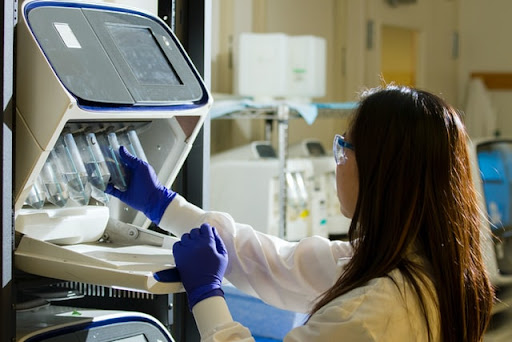
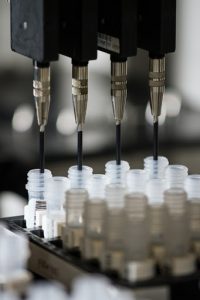
Genetic testing for cancers can be done through one of several tests, which are usually performed on a blood sample. However, they could also be done on saliva and tissue samples. Once a sample is collected, it is then sent to a genetics lab where the DNA is tested for one of more than 50 cancer-causing genes that are able to be identified through genetic testing. Results may then take a few weeks to return to a doctor after the doctor requests them. (National Cancer Institute). Thankfully, more than 90 percent of insurance companies cover testing for hereditary cancers (McLeod Health).
Recently, researchers have developed a brand new genetic test that screens for MMR deficiencies, which allows scientists to easily screen individuals for certain types of hereditary cancers. Current tests are known for being ineffective and inefficient, meaning patients sometimes must be tested multiple times in order for conclusive results to be reached. With this new development, known as MultiMMR, the process of testing for MMR deficiencies is optimized, allowing for dependable results from a single test while also determining the cause for the deficiencies. The determination of deficiencies also happens to be a feature that current MMR deficiency screenings lack (SciTechDaily).
Receiving a positive result from genetic testing does not necessarily mean that an individual has inherited cancer from a relative. Rather, it may indicate that they are more at risk of developing cancer or a possible tumor and should take steps to prevent cancer from developing. In the case of lung cancer, for instance, one may choose to quit smoking to decrease their chances of developing cancer. Likewise, a negative test does not mean that an individual will not develop a certain type of cancer. It only means that an individual’s risk for having that form of cancer is no higher than that of the general population (National Cancer Institute).
In any case, it is important that a patient and their doctor maintain strong communication and understanding about what the results mean, and what steps should be taken moving onward.
February 24th is national Introduce a Girl to Engineering Day! It’s an entire day dedicated to inspiring young women to pursue a future in engineering. The number of girls entering engineering fields has increased over the years, but in 2019, only 15 percent of those working in engineering occupations were women! So, to celebrate this holiday, here are some ideas to get girls interested in a future in engineering.
An important part of inspiring any young person is giving them a role model to look up to. To get young girls interested in engineering, it’s important to show them the amazing women who were pioneers in their field. Here are some great examples to get them started:
Edith Clarke – The first woman to ever receive a degree in electrical engineering from the Massachusetts Institute of Technology. She went on to become an inventor while working at General Electric, and she invented the Clarke Calculator. She also became the first female Professor of Electrical Engineering in the United States.
Hedy Lamarr – An Austrian-American film actress whose appearance inspired the design of Disney’s Snow White. Despite her fame,Lamarr disliked the celebrity lifestyle and had dreams of becoming an inventor. During WWII, she helped to develop a form of transmission known as “signal hopping.” Her invention would act as an important precursor to Bluetooth and WiFi technologies.
Stephanie Kwolek – In 1965, while working for the DuPont company, Stephanie Kwolek discovered Kevlar, one of the strongest synthetic fibers. It’s the material that most bulletproof vests are made out of!
Hertha Ayrton – In WWI, when the German army began using poison gasses on the battlefield, Hertha Ayrton developed a fan that created a vortex and would push poison gasses out of the trenches. Her invention saved countless lives on the battlefield.
2. Help them to explore different engineering careers
Oftentimes, young people don’t know all the possible careers they can pursue in engineering, and they miss out on jobs that would interest them. Here are a few careers that may inspire young women to learn more about engineering.
Driving NASA’s rovers – Working for NASA is about more than just being an astronaut. NASA’s engineers are able to do so many amazing things from Earth, too! Imagine being able to operate a rover on Mars, taking photographs of the planet’s surface and collecting rock samples!
Architectural Engineering – For young girls who want to utilize their creativity while pursuing a career in engineering, architectural engineering may be the job for them! Being able to design a building and understand how all the pieces fit together is an advanced skill that could make for an interesting and fun career path.
Sports Engineering – Athletics are a huge part of childrens’ lives. Not only do many girls look up to sports stars and Olympians as role models, many also have dreams of becoming athletes themselves. But athletics and engineering are not completely separate from one another. Sports engineers can do anything from designing better sports equipment to improving athletic performance, all with their knowledge of math and science.
Girls and women are the future of STEM and engineering, and by introducing a girl to engineering, you may be setting them on a path to becoming a role model who will inspire others just like them. So make the most out of this year’s National Introduce a Girl to Engineering Day, and help a girl realize her dream!